Keywords
FinTech, Good Governance, Financial Sustainability, Exchange Rate Volatility, Sub-Saharan Africa

FinTech, Good Governance, Financial Sustainability, Exchange Rate Volatility, Sub-Saharan Africa
The SDGs set an aspiration to address significant challenges to the world’s well-being, economic prosperity, and environmental protection. It is not a traditional development agenda but rather an integrated one that incorporates multiple dimensions of development. SDG interactions may produce synergies and trade-offs (Pradhan et al., 2017). According to [2], financial sustainability from a research perspective is based on maximizing shareholder value, subject to the acceptable risk principle. You do this by balancing the optimal relationship between investments and financing sources. This means that financial sustainability must be measured in terms of risk and return, both in terms of the ability to generate value and to ensure continuity over time. A study by Guillamón [3] investigates the implications of implementing the Sustainable Development Goals (SDGs) for the financial sustainability of local authorities. The results suggest that greater SDG compliance is associated with shorter supplier payment periods and, in some cases, smaller surpluses. However, it has no significant influence on gross savings or municipal debt. The role of SDGD in linking sustainability performance and financial performance has been emphasized in the paper by Beretta et al. (2024), which showed that SDGD can act as a mediator in this relationship. It highlights the importance of regulations that ensure SDGD is consistently and comprehensively implemented and monitored. Moreover, the research argues that integrating SDGD into corporate sustainability disclosures can better systematize the value creation process.
Another study examines the effect of the banking system stability on financing sustainable development goals (SDGs) in Nigeria (Amadi et al., 2021). Based on annual time-series data from 1992 to 2019 and using Autoregressive Distributed Lag (ARDL) models, the results indicate a significant positive relationship between the stability of the banking system and the financing of these SDGs, which contributes to a sustainable banking system that increases access to credit, opens up entrepreneurship opportunities and promotes growth for sustainable industries. Another study explores how financial stability and the Sustainable Development Goals (SDGs) (1, 5, 8, 9, 10, and 12) influence entrepreneurship development in Sub-Saharan Africa. Using pooled data from 24 countries and applying pooled OLS and random effects methods, this study shows a positive association between financial stability and entrepreneurship development (Arora and Sarker, 2022). Another paper by Alonso-Morales et al. (2024) investigates how local government financial sustainability affects compliance with SDG 2, Zero Hunger. Results show that greater compliance with SDG 2 is associated with shorter payment periods to suppliers. They may be associated with smaller surpluses without significant effects on gross savings or municipal debt per capita. Ozili and Iorember (2024) present an empirical analysis of the influence of financial stability on sustainable development in a panel of 26 countries within the period 2011–2018. Financial stability significantly affects SDG 3 and SDG 10, negatively impacting Asian countries, particularly during economic prosperity. Strong banking capital buffers positively influence SDG 3 and SDG 7. The impact depends on how sustainable development is measured.
The purpose of this study, therefore, is to investigate how FinTech, together with good governance, influences bank performance, with a focus on the mediation effect of exchange rate fluctuation. FinTech innovations have transformed the financial services sector in recent years, improving operational efficiency, expanding reach, and advancing financial inclusion. Therefore, this paper aims to assess the impacts of FinTech adoption and integration on bank performance, considering key dimensions such as profitability, cost efficiency, and customer satisfaction.
This study pursues three key objectives. First, to assess the impact of FinTech on bank performance and performance enhancement through mobile banking, digital payments, and blockchain for increased profitability, efficiency, and customer service; second, to investigate the influence of the quality of governance based on transparency, accountability, and board structure on bank performance and to assess the extent to which good governance underpins sound decision-making and risk management. Thirdly, explores the mediating effect of exchange rate fluctuations in weakening the impacts of FinTech and governance on bank performance, especially in countries that are more exposed to foreign currencies. Overall, these objectives help explain the interlinkages among FinTech, governance, and bank performance in response to fluctuations in the exchange rate.
The following are the research questions we need to answer, depending on our research goals. RQ1: What is the impact of the FinTech innovations on the profitability, operational efficiency and customer satisfaction performance of banks? The question identifies the measure of how the responses to the use of FinTech tools, including digital banking, blockchain, and mobile payment systems, would be applied to the aggregate performance measure of banks. RQ2: What can be the influence of good governance on the relationship between FinTech adoption and bank performance? This research question examines the effect of FinTech on bank performance, and whether governance mechanisms, including board transparency, risk management, and ethical decision-making, moderate or amplify that effect. RQ3: How do exchange rate fluctuations mediate the relationship between FinTech, good governance, and bank performance? The research question is whether the volatility of foreign exchange rates has a greater effect on bank stability, especially in the presence of FinTech innovations and governance mechanisms. It aims to establish the role of fluctuations in exchange rates as a catalyst or a constraint.
The contribution to research in the study is as follows:
This research contributes significantly to the body of literature on financial sustainability, the development of FinTech, the quality of institutions and financial adaptation in Sub-Saharan Africa. The available research tends to focus on FinTech separately from governance or exchange rate volatility. This work unites these strands within a single empirical framework. In this way, it outlines the mutual influence of digital financial innovation and institutional strength in financial sustainability in the environment of macroeconomic uncertainty. This combination approach makes the literature more robust by moving towards a linear, detached explanation of financial performance.
First, the research adds to the literature on FinTech by demonstrating that FinTech innovation enhances both the short-run and long-run financial sustainability. The results show that digital financial services can enhance financial systems by improving operational effectiveness, expanding financial access, reducing transaction costs and fostering broader engagement in formal finance. This finding is relevant to Saharan Africa, where access to banking services continues to be a policy agenda due to financial exclusion and poor infrastructure. Therefore, the study believes that FinTech offers a viable pathway to stronger financial frameworks in emerging economies.
Second, the study adds to the body of governance research by establishing that good governance is positively associated with financial sustainability. The quality of governance, as measured by institutional factors such as regulatory quality, transparency and accountability, enhances trust in financial systems and the institutions’ ability to control risk. The findings indicate that governance is more than a pre-existing situation, but a driver of financial resilience. This aligns with the literature by showing that digital finance is not necessarily adequate. FinTech needs to operate in a sound governance framework to deliver sustainable, continuous financial results.
Third, the study shows that exchange rate volatility plays an asymmetric role. Most past research has assumed that exchange rate movements are a consistent macroeconomic phenomenon. This paper distinguishes between positive and negative exchange rate shocks and demonstrates that they have unequal impacts on financial sustainability. It shows that depreciation has more negative impacts than the benefits that arise from appreciation. This finding is significant for Sub-Saharan African economies, where currency instability tends to affect banks, external debt, imports, investment flows and financial sector confidence. The non-symmetric paradigm offers a more practical rationale for the role of currency shocks in financial sustainability.
Fourth, the research report has a methodological contribution. It uses cross-sectional and nonlinear ARDL methods on panel data of 25 Sub-Saharan African countries between 2004 and 2022. These procedures enable the research to elicit short-run dynamics, long-run connections, cross-sectional dependence, slope heterogeneity and asymmetric impacts. This is an aggressive method compared to traditional linear panel models, in that it incorporates structural differences across countries and the nonlinearity of adjustment to a shock. The inclusion of panel causality analysis also helps determine the direction of influence among FinTech and governance, exchange rate volatility and financial sustainability.
Fifth, the research adds to the knowledge base on policies. It demonstrates that financial sustainability implies comprehensive policy work. FinTech expansion should be encouraged by policymakers, and better governance frameworks and exchange rate risk management systems should be strengthened. The results imply that FinTech can provide more tangible benefits in the presence of favorable currency conditions, whereas the governance can minimize the negative impact of the exchange rate fluctuations. This gives useful advice to regulators, central banks and financial institutions in Sub-Saharan Africa. This research thus advances academic discourse and policy formation by demonstrating how digital innovation, governance, and macroeconomic stability can collaborate to support financial sustainability.
FinTech’s impact on bank performance is complex, with both positive and negative aspects. On the positive side, Fintech improves efficiency, attracts new customers, and offers better avenues for revenue generation and risk management. On the downside, it raises competition and disrupts the traditional business model, creating cybersecurity vulnerabilities and other regulatory complexities and challenges. A couple of key research findings indicate that FinTech has an overall adverse effect on banks’ profitability and competitiveness. As digitization is necessary, it would be better for banks to adapt financial technologies to compete. The results of a study conducted by Haoliang et al. (2024) conclude that FinTech has a lot more negative impacts on banks’ profitability and give pragmatic reasons for banks to adapt and innovate to the changes of FinTech. The practical implications of this study will revolve around the fact that the banks should not only invest in FinTech research and development but also customize strategic action following bank types, as proposed by the research findings of Haoliang et al. (2024).
The effects of FinTech on traditional banking are diverse in different areas or regions. During the year 2024, Haoliang et al. (2024) propose that the influence has been negatively consequential to the profitability of banks in China, while in other countries, such as Indonesia and Nepal, which were considered respectively by Hidayat (2024), Melati (2024) and Bhujel (2024), FinTech raises efficiency and performance. Fang and Wen (2024) also examined the collaborative aspects of banks with FinTech firms, and this can be productive if knowledge sharing, synergy, and perceived risks are carefully considered. As explored, collaboration between banks and FinTech firms can be beneficial but requires careful consideration of knowledge sharing, synergy, and perceived risks. Kharrat et al. (2024) studied the influence of FinTech development on the performance of banks in the Middle East and North Africa (MENA) region. According to the study, bank performance positively correlates with the FinTech index. This implies that FinTech implementation improves the performance of conventional and Islamic banks in that region. Naser et al. (2024) and Ajouz et al. (2024) also found a favorable association between FinTech innovation and all four dimensions of bank performance: marketing efficacy, financial robustness, operational efficiency and strategic competitiveness. The study of Safiullah and Paramati (2024) demonstrated a positive relationship between the development of FinTech companies and bank financial stability. It indicates that the growth of FinTech firms can enhance banks’ financial health.
The integration of FinTech significantly influences financial sustainability.
The study by Fanta and Kemal [64] aimed to determine the effects of internal and external corporate governance mechanisms on the financial performance of commercial banks in Ethiopia. The study applied panel data econometric analysis and found that bank performance was negatively associated with board size and the presence of an audit committee, whilst positively associated with bank size and the capital adequacy ratio. However, there was a nonlinear relationship between the capital adequacy ratio and performance, suggesting an optimal capital adequacy level. The results also show that ownership type, loan loss provision, and loan-to-deposit ratio did not significantly affect performance. The objective of this research by Chughtai [65] was to explore the effect of corporate governance mechanisms on the financial performance of commercial banks in Pakistan. The study, using panel data analysis, reveals that larger boards and audit committees led to higher profitability and productivity gains, whereas inefficient boards and audit committees led to lower profitability and productivity. Findings were also that CEO duality did not have a significant effect on bank performance.
Nevertheless, when the same study applied performance measures, gender diversity harmed all of them. EPS and Technical Efficiency (TE) benefited from foreign ownership. Another study conducted in Bangladesh by Sathye [69] aimed to develop a unique corporate governance index and evaluate its impact on bank performance. According to the Wilcoxon signed-rank test, the findings indicate that introducing the Code of Corporate Governance significantly enhanced corporate governance practices. However, no significant relationship was observed in the regression analysis between the comprehensive corporate governance index and bank performance. Rashid et al. (2020) explored the impact of corporate governance on bank productivity in Bangladesh. In a two-step approach, bank productivity is first measured using the Malmquist Productivity Index, followed by regression analysis to identify the underlying factors driving it. The results show that ownership structure and other board characteristics under corporate governance are strong predictors of bank productivity. These facts have important implications for policymakers and bank managers when devising policies to improve bank productivity and overall economic growth.
Corporate governance mechanisms significantly impact the financial performance of commercial banks.
The impact of exchange rates, interest rates, and global risk on each bank’s returns is covered in the scope of this study by Çiçek and Yıldırım (2024). Using the multivariate diagonal BEKK-GARCH(1,1) model, it is found that private banks exhibit relatively significant interest rate fluctuations, while public banks are insensitive to shocks. Another study finding is that the spillovers are significant, mainly due to global volatility factors. The findings indicate that the Turkish banking sector was more sensitive to domestic interest rate shocks than exchange or global shocks. This study found evidence of structural breaks in the interest rate covariance equations, indicating that any model of financial volatility must account for them. Yemi and Nakawooya (2024) analyzed the impact of foreign exchange rates on the profitability of Nigerian banks. A descriptive study design was used, and a Pearson correlation analysis was performed. Hence, data from 23 First Bank branches in Lagos and Ondo States were analyzed. From this, it was found that a higher foreign exchange rate positively influences bank profitability. This means that banks stand to gain through currency fluctuations, especially the devaluation of the home currency.
The study by Kush (2022) sought to ascertain how exchange rate fluctuations affect the performance of Centenary Bank Uganda Limited’s head office. This descriptive correlational survey research design was collected through interviews and questionnaires. The results show that the bank’s financial performance is primarily affected by its economic stability, monetary policies, and competitiveness in international trade. It indicates that the FED considers a stable economic environment conducive to good earnings, effective monetary policies, and a competitive international trade environment. Whereas Keshtgar et al. (2020) examined the effect of exchange rate fluctuations on the performance of Iranian banks. Panel data regression with random effects was employed to analyze data from 14 Iranian banks from 2007 to 2017. In other words, exchange rate volatility negatively affects bank profitability (return on investment) but positively affects the loan-to-deposit ratio. This means that exchange rate fluctuations can increase credit risk and reduce banks’ profitability. In addition, omitting bank-specific characteristics, including liquidity, equity and efficiency, can hinder the ability of exchange rate volatility to exert adverse impacts.
Exchange rate fluctuations significantly affect bank performance and financial sustainability.
In the case of FinTech and Financial Sustainability, financial sustainability improves with FinTech innovations, which unlock greater efficiency and lower transaction costs. We can maximize resource utilization and improve operational performance by using FinTech solutions. However, the disposition between FinTech and financial sustainability might not be linear. Early stages of FinTech integration can increase uncertainty at the small scale and heighten the risk of disruptions. The Resource-Based View emphasizes internal resources and capabilities in generating competitiveness. The ability to use FinTech can become a major advantage to banks, whether implementing already available features (e.g., data analytics) or inventing new services (e.g., AI-based solutions), which will result in an increased competitive edge in dealing with customers, costs, risks, and so on (Ferilli et al., 2024). The agency theory is a useful perspective for aligning stakeholders’ interests. FinTech can help reduce the agency problem by boosting transparency and accountability, and by improving communication between banks and stakeholders. With institutional theory, on the other hand, the focus is on the role of external forces - regulation, societal pressures, and stakeholder interests - in organizational behavior on a more general level. FinTech, therefore, helps banks adapt to regulatory changes and evolving customer needs, thereby enhancing their long-term sustainability.
Good governance reduces agency costs by aligning management and shareholders. Independent boards are more effective at assessing long-term financial sustainability. Studies affirm that sound corporate governance reduces managerial opportunism and fosters decision-making aligned with social norms and profitable financial outcomes (Sulimany et al., 2021). One that dwells on the long-standing principle of stakeholder theory. This assists in establishing improved connections with customers, employees, and communities, enhances reputation, reduces risks, and increases the financial sustainability (Sulimany et al., 2021). Resource-Based View: Not only does Good governance help firms utilize their resources effectively, manage risks and create value, but it can also result in the firm achieving better long-run financial performance. Purchasing Power Parity (PPP) involves the exchange rates that are sensitive to the prices of goods. Fluctuating exchange rates affect pricing, profitability, and inflation. A devalued currency would lead to higher import costs, and profits would be limited until they are transported to the consumer. Interesting rates, exchange rates, output: The Mundell-Fleming model. Flexible exchange rates can influence financial viability relative to monetary policy, whereas fixed exchange rates cannot.
This study investigates the dynamic and asymmetric relationships among FinTech innovations, good governance, and financial sustainability, with a particular emphasis on the mediating role of exchange rate volatility (Qamruzzaman, 2026). The empirical model employs a nonlinear autoregressive distributed lag (NARDL) and cross-sectional ARDL (CS-ARDL) approach, capturing both long-run equilibria and short-run asymmetries.
The general form of the model is specified as:
Where: FS: Financial Sustainability is the dependent variable whose measures are proxied using such indices as the ratio of internal financing, return on assets, and net profit ratio. An increased FS reflects greater long-term financial resilience. . Both positive and negative shocks in FinTech innovations can be quantified using indicators such as digital adoption, transaction volumes, and cost-efficiency metrics. It is assumed that 1 > 0: Positive FinTech shocks will enhance FS by operational efficiency, as well as financial inclusion. Furthermore, 2 < 0: FS can be hindered by adverse FinTech shocks, particularly technological turmoil or a lack of regulation. : Good Governance change, positive or negative, based on regulatory quality, transparency and accountability indices. In the literature, 0 corresponds to 0.75x. If the entire policy process is more efficient and equitable in resource distribution, then improvements in governance are likely to increase the FS. Also, 02 0, implying declines in even governance, can lead to corrective institutional reactions of both positive and negative impacts in the short run. : Exchange Rate Fluctuations are divided into positive shocks (appreciation) and negative shocks (depreciation). +: Positive shocks (appreciation) can reduce the costs of export competitiveness, thereby weakening FS. X: FDI and Trade Openness are control variables, which are likely to have a positive impact on FS when they are under stable macroeconomic environments, as indicated by Table 1.
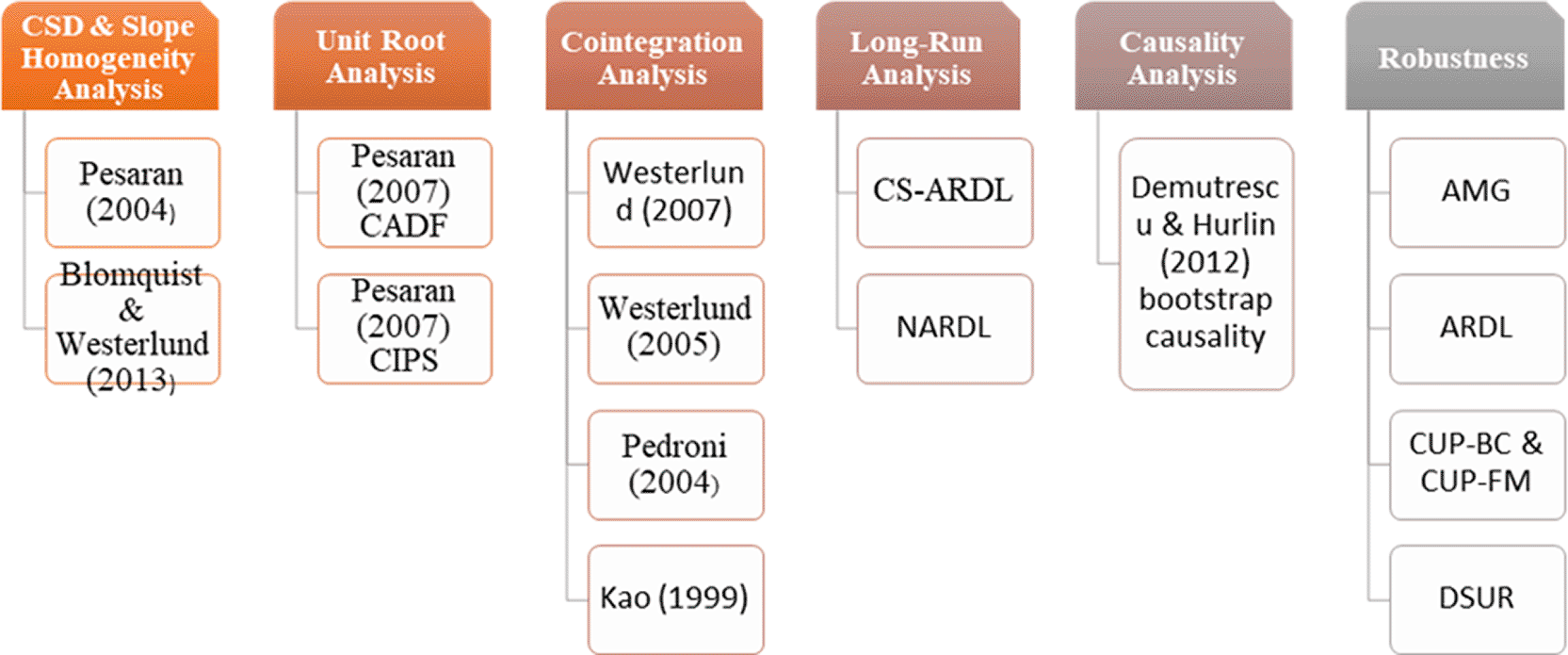
This study applies a sequential panel estimation strategy (see Figure 1) to examine the relationships among FinTech development, good governance, exchange rate fluctuations and financial sustainability in Sub-Saharan Africa. The empirical design uses panel data for 25 Sub-Saharan African countries from 2004 to 2022. The dependent variable is financial sustainability (FS), while the main explanatory variables are FinTech development (FinTech), good governance (GG) and exchange rate fluctuation (EXf ). Foreign direct investment (FDI) and trade openness (TO) are included as control variables, consistent with the study’s data structure and variable definitions.
The baseline functional relationship is specified as follows:
Before estimating the long-run model, the study tests slope heterogeneity and cross-sectional dependence. These tests are necessary because countries in Sub-Saharan Africa may differ in their financial structures, institutional capacities, exchange rate regimes and digital finance readiness. Ignoring these differences can produce biased estimates and misleading inferences.
The slope heterogeneity test follows Pesaran and Yamagata (2008), with the adjusted Delta statistic expressed as:
Cross-sectional dependence is examined using the Pesaran (2004) CD test. The test statistic is written as:
After confirming the panel structure, the study tests the integration order of each variable. Given the possibility of cross-sectional dependence, first-generation unit root tests may not be sufficient. Therefore, the study applies the cross-sectionally augmented Dickey-Fuller (CADF) and cross-sectionally augmented IPS (CIPS) tests developed by Pesaran (2007). The CADF regression is specified as:
The null hypothesis states that the variable contains a unit root. Rejection of the null confirms stationarity. Establishing the integration order is important because the CS-ARDL and NARDL frameworks require variables to be integrated at level, first difference, or a mixture of both, but not at second difference.
Once the integration properties are confirmed, the study tests for long-run cointegration. Cointegration confirms whether the variables move together over time despite short-run fluctuations. The study applies Westerlund (2007) error-correction-based panel cointegration tests because they are suitable for heterogeneous panels and can account for cross-sectional dependence. The error-correction form is:
The long- and short-run effects are then estimated using the cross-sectional autoregressive distributed lag (CS-ARDL) model developed by Chudik and Pesaran (2015). This estimator is appropriate because it controls for cross-sectional dependence by including cross-sectional averages of the dependent and independent variables. The CS-ARDL specification is:
The short-run CS-ARDL error-correction model is expressed as:
To capture asymmetric effects, the study uses the nonlinear autoregressive distributed lag (NARDL) model, following Shin et al. (2014). This model separates positive and negative changes in FinTech, governance and exchange rate fluctuation. The partial sum decomposition is specified as:
The asymmetric long-run model is specified as:
The corresponding NARDL error-correction model is:
This specification allows the study to determine whether positive and negative shocks in FinTech, governance and exchange rate fluctuation have different effects on financial sustainability. Long-run asymmetry is examined by testing:
Short-run asymmetry is tested through Wald restrictions on the differenced coefficients:
Rejection of these restrictions confirms asymmetric adjustment.
Finally, the study applies the Dumitrescu and Hurlin (2012) panel causality test to identify the direction of causal relationships among the variables. This test is suitable for heterogeneous panels because it allows causal effects to differ across countries. The causality model is expressed as:
The alternative hypothesis allows causality for at least some countries:
The average Wald statistic is computed as:
The standardized statistic is expressed as:
A significant statistic rejects the null of non-causality and confirms directional linkage among the variables. This final stage helps explain whether FinTech, governance and exchange rate fluctuation act as drivers of financial sustainability or whether financial sustainability also feeds back into these variables over time.
Estimation and interpretation
The slope heterogeneity (SH) test, see output in Table 2, developed by Bersvendsen and Ditzen (2021), examines whether relationships differ between groups or change over time. For the model, it is highly significant at the 1% level (*) on both the Delta Statistic (4.6529) and Adjusted Delta Statistic (5.4082), proving the effects of variables are not constant. These results reveal differential effects between groups, suggesting that such analyses should account for slope heterogeneity.
As shown in Table 3 below, the test variables exhibit considerable cross-sectional dependence. For all variables, the highest Breusch-Pagan statistics [110] were recorded for FS (346.615), EXf (330.299), and FINTECH (302.922), respectively. Under the assumption of cross-sectional dependence, the unit root assumptions affect Pesaran (2006) because the strength of the dependency differs across variables. While other tests reduced the residuals to values below the threshold for statistical significance, Juodis and Reese (2022) also report significant dependence.
Panel Unit Root Tests Results (see Table 4): most variables are nonstationary at the level. Due to this nonstationary regression, the results cannot be trusted and need to be corrected. However, once the first differencing has been applied, all variables are stationary, where the associated test statistics are highly statistically significant (*). This indicates that the variables are (1) order integrated.
The table on the panel cointegration test, see Table 5, presents the results from the cointegration tests by Westerlund and Edgerton (2008) test statistics, LMг and LMΦ, are statistically significant for all test scenarios (no shift, mean shift, and regime shift) (P < 0.05 or P < 0.01). This shows that these variables are cointegrated, meaning they have a long-run equilibrium relationship in the presence of the shifts. Particularly for model 1, LMг and LMΦ remain significant at −4.8688* (no shift), −4.7273* (mean shift), and − 3.3095* (regime shift), indicating that the variables are cointegrated over time. In addition, the Westerlund and Edgerton (2007) cointegration test, using Gt, Ga, Pt, and Pa test statistics, provides similar but strong evidence of a cointegrating relationship (results are reported in Table 1).
| Panel B: SH test of Bersvendsen and Ditzen (2021) | |||
|---|---|---|---|
| Delta statistic | Adjusted delta statistic | SH exits | |
| Model | 4.6529*** | 5.4082*** | Yes |
| (Breusch and Pagan 1980) | Pesaran (2004) | Pesaran, Ullah et al. (2008) | Pesaran (2006) | Juodis and Reese (2022) | |
|---|---|---|---|---|---|
| FS | 346.615*** | 21.051*** | 235.489*** | 18.986*** | 11.2355*** |
| FINTECH | 302.922*** | 21.805*** | 206.272*** | 36.226*** | 11.987*** |
| EXf | 330.299*** | 39.172*** | 100.586*** | 38.201*** | 11.1148*** |
| GG | 219.705*** | 45.913*** | 225.228*** | 38.636*** | 9.3934*** |
| FDI | 242.365*** | 35.513*** | 223.879*** | 24.051*** | 12.0537*** |
| TO | 232.768*** | 37.815*** | 182.084*** | 46.001*** | 8.4177*** |
| Variables | CADF test statistic | CIPS test statistic | Herwartz and Siedenburg (2008) | |||
|---|---|---|---|---|---|---|
| Level | First difference | Level | First difference | Level | First difference | |
| FS | −2.182 | −3.187*** | −1.237 | −5.751*** | 1.0278 | 4.1744*** |
| FINTECH | −1.112 | −3.499*** | −1.58 | −2.921*** | 1.9917 | 6.9216*** |
| EXf | −1.908 | −5.093*** | −2.088 | −6.062*** | 1.1813 | 5.4675*** |
| GG | −2.522 | −2.565*** | −2.322 | −5.944*** | 0.1171 | 6.944*** |
| FDI | −2.734 | −3.889*** | −1.746 | −6.602*** | −0.0688 | 5.8748*** |
| TO | −2.659 | −7.099*** | −2.596 | −6.635*** | 0.9593 | 4.0698*** |
| No shift | Mean shift | Regime shift | ||||
|---|---|---|---|---|---|---|
| LMг | LMΦ | LMг | LMΦ | LMг | LMΦ | |
| Model 1 | −4.8688*** | −2.5975*** | −4.7273*** | −3.743*** | −3.3095*** | −3.0351*** |
| Gt | Ga | Pt | Pa | |||
| Model | −12.892*** | −15.81*** | −15.133*** | −11.487*** | ||
For Fintech, the long-run (short-run) coefficients in Table 6 indicate a positive association with financial sustainability, suggesting that financial expansion driven by technological innovation fosters financial sustainability. More precisely, a 1% positive change in FinTech will accelerate FS by 0.0923% (0.0534%). As for Exchange Rate Fluctuation (EXf ), the long-run coefficient is positive: a 1% increase in EXf is associated with a 0.0623% rise in financial sustainability. However, in the short term, EXf undermines financial sustainability: a 1% increase reduces it by 0.0298%. Our study is supported by Aizenman et al. (2024) and Yemi and Nakawooya (2024). GG has a positive relationship with long-run and short-term coefficients of financial sustainability. The long-run impact of a 1% increase in GG is an improvement of 0.0212% in FS, while the short-run increase is 0.0327%. This portion is supported by the literature of (Athar et al., 2023), (Tashkandi, 2023), and (Hoque et al., 2013). Concerning foreign direct investment (FDI), the findings confirm a significant positive impact on financial sustainability. A 1% increase in FDI results in 0.0584% (long-run) and 0.0571% (short-run) increase in financial sustainability. In contrast, the long-run and the short-run effects of Trade Openness (TO) are positive. Holding all else equal, a 1% increase in TO increases the financial sustainability by 0.0524% (long-run) and 0.0276% (short-run). Finally, the Error Correction Term (ECT) is significant and bears a negative value (−0.1499), which implies a high adjustment speed to the long-run equilibrium when deviation occurs. Approximately 14.99% of the disequilibrium is absorbed/semi–convergence in the short run.
Table 7 displays the asymmetric coefficients. As for FinTech, the positive (FinTech+) and negative (FinTech−) shocks have a significant pass-through effect in both the long and short run. Over the long run, a positive change in FinTech increases financial sustainability by 0.1112%, while a negative change decreases it by 0.1081%. Positive and negative shocks lessen financial sustainability by 0.0517% and 0.0508%, respectively, over the short term. This part is supported by Naser et al. (2024). Concerning Exchange Rate Fluctuation (EXf ), a positive shock leads to a drop in financial sustainability, FSD by 0.1117% (in the long-term) and by 0.0292% (in the short-term). A negative shock (EX−) has a greater effect than a positive one. It plays a role in the long term, decreasing financial sustainability by 0.1271%, while, more conveniently, but not yet fully, increasing sustainability by 0.011% in the short term. Our study is supported by Çiçek and Yıldırım (2024), Aizenman et al. (2024), and Yemi and Nakawooya (2024). In the case of Good Governance (GG), a positive change (GG+) leads to a 0.0978% improvement in long-run financial sustainability, while the short-run effect is 0.007%. This finding is supported by Rashid et al. (2020). The long-run impact of an adverse change (GG−) is much more pronounced and enhances financial sustainability by 0.1497%, whereas its short-run impact is insignificant (0.0009%). Furthermore, it is supported by Saha and Uddin (2024). This is evident in the long-run coefficient of Trade Openness (TO), which negatively affects financial sustainability by 0.1102%. It reduces financial sustainability by 0.0081% in the short term. Specifically, there is a strong long-run impact on Foreign Direct Investment (FDI), with a 1% increase leading to a 0.1506% improvement in financial sustainability. FDI also impacts positively on financial sustainability in the short run, increasing it by 0.0179%. The ECT is statistically significant at −0.1465, indicating that approximately 14.65% of the disequilibrium in financial sustainability returns to equilibrium within one period.
Based on the results of the causality test (see Table 8), a unidirectional relationship exists between FS and FinTech. FS influences Fintech [FS➔FinTech]. Similarly, a unidirectional relationship is observed between FS and EXf [FS ➔EXf], where FS influences EXf. Additionally, FS influences GG [FS➔GG)] and FDI [FS (FDI)], as per the results. Finally, FS influences TO [FS➔TO].
Conversely, bidirectional relationships can be found between GG and FS [FS🡰 ç➔GG], where both variables influence each other. Similarly, a bidirectional relationship exists between FinTech and EXf [FinTech➔EXf]. A bidirectional relationship is also seen between FDI and TO [FDI➔TO]. These results emphasize the complex, interdependent relationships among variables in promoting financial sustainability and economic development.
Financial sustainability (FS) has taken centre stage as a major goal in the contemporary financial landscape, and this study isolates the transitional impacts of FinTech, quality shocks and exchange rate shocks on FS. Fintech or FinTech can contribute greatly to financial sustainability in numerous ways, thereby improving efficiency, inclusiveness and the competitiveness of the banking industry. Banks can use FinTech to leverage digital solutions and automation in their operations and also enter new markets. The contribution of FinTech to the FS revolves around more efficient operations, as technologies such as blockchain, artificial intelligence, and robotic process automation reduce the time taken (processing) and the money spent (operations). Moreover, financial inclusion has been facilitated by FinTech through the use of digital payment systems and mobile banking services, particularly among unbanked individuals in developing nations. This encourages further involvement in the financial system. FinTech applies personalized service, predictive analytics and real-time customer support to enhance its customer satisfaction. Cointegration tests confirmed a stable long-run relationship between FinTech and FS; causality tests revealed a bidirectional relationship, with both serving as protective factors and promoters. Moreover, its capacity to be compliant, to deal with green finance, and to manage risk is multiple, in aid of sustainable financial development. Competition from other viable banks, regulatory challenges and the risks associated with them are leading to a need for strategic adaptations to ensure its benefits are optimized. Furthermore, FinTech enables banks to gain the agility and innovation needed to survive in a constantly changing financial landscape, thereby enabling sustainable finance.
FinTech is a double-edged sword; its impact on bank performance is both positive and negative. On a different note, research has shown that, through improved operational efficiency, enhanced customer service, and increased profitability, FinTechs can significantly contribute to financial performance. For instance, Haddad and Hornuf (2023), da Silva (2022), Wang and Nor (2022), and Neethu [59] found that integrating FinTech also improves performance and supports the concept of financial inclusion. For example, Kharrat and others found that the development of FinTech positively impacts bank performance in the MENA region. This evidence was further supported by Sultanova [39] and Ajouz and Shehadeh [40], who noted that FinTech innovation enhances strategic competitiveness and financial stability. These positive results are also consistent with empirical findings on the significant, long- and short-run effects of FinTech on FS. Confirming a long-run relationship between FinTech and FS, cointegration tests by Westerlund and Edgerton [114] are used. Asymmetrical effects are observed: positive shocks to FinTech increase FS in the long and short run, while negative shocks decrease FS in the long and short run. This, therefore, justifies the view that FinTech has a significant and positive impact on bank performance; this is also evidenced by causality tests, which show that there exist bidirectional relationships between FS and FinTech, which shows that FinTech contributes significantly to economic growth as well as influencing governance and foreign direct investment.
Good governance is a critical factor in financial sustainability through various means, such as maintaining stability, resilience, and efficiency in the financial systems. The Slope Heterogeneity Test proves that its impact is context-dependent. While nonstationarity was apparent at the first order of this series, the first-differenced series was indeed stationary; thus, the Cointegration Tests showed evidence of a robust long-term relationship between GG and FS. Empirical evidence indicates that a 1% increase in GG improves FS in the short and long run, underscoring its crucial impact. Conversely, the asymmetrical effect indicates that whereas positive governance shocks (GG +) enhance FS in the long term with an insignificant short-term effect, negative shocks (GG -) enhance it in the long run with a significant short-term effect. It also means that even undesirable circumstances in governance can offer avenues for long-term improvement, provided they are appropriately addressed.
The results are consistent with previous studies highlighting governance systems, including board size, the effectiveness of the audit committee, and the ownership structure, to improve performance and stability. Overall, GG is a building block of sustainable financial systems, which require adaptive, forward-thinking governance policies that enhance performance in the present and provide stability and sustainability amid changing worldwide financial conditions. Statistical analyses across studies could empirically prove these claims. The Slope Heterogeneity Test findings indicate that there is no constant effect across groups, though the effects of good governance mechanisms will differ across contexts. The Panel Unit Root Test indicated that the data were nonstationary at the level; after the first differencing, they became stationary, indicating that the analysis level was appropriate. The existence of a long-term relationship between GG and FS was confirmed using cointegration tests, specifically those conducted by Westerlund and Edgerton (2008), to support the assumption that good governance has a sustainable effect on financial systems.
Asymmetrical effects of GG can also indicate it: positive shocks increase FS in the long run, but this is negligible in the short term. Conversely, negative shocks have a greater long-run impact and little effect in the short term. This observation is consistent with a previous study by Hoque and Islam [68] and other studies on the same topic, which suggest that board size, the effectiveness of the audit committee, and ownership structure are critical indicators of stability and performance improvement. The causality tests also indicated that GG has significant unidirectional and bidirectional causality with FS affecting FDI and TO in EX. The hypothesis that good governance is necessary to the effective functioning of financial systems would thus be validated by the study, and some empirical studies do support a positive nexus between good governance practices and enhanced performance. Nevertheless, the subtle impact of positive or negative shocks underscores the importance of appropriately adjusted governance practices that are flexible enough to respond to diverse situations and strengthen the resilience-performance nexus of financial institutions.
This uncertainty is now a strong justification for both policy makers and risk managers to investigate the possibilities of maximizing the benefits of exchange rate variation and reducing financial health costs. After exploring the factors behind aggregate volatility and structural breaks within the framework of financial models, Çiçek and Yildirim (2024) investigated financial models. They found that interest rate shocks that are locally based in Turkey affect private banks significantly, but not public banks. On the same note, Yemi and Nakawoya [77] affirm that there is a positive relationship between currency devaluation and the profitability of Nigerian banks, implying that currency devaluation increases profitability through foreign exchange trading. Among the determinants of the financial performance of Ugandan banks, Kush (2022) identified economic stability, monetary policy, and trade competitiveness. Keshtgar et al. (2020) noted that exchange rate volatility negatively affected the profitability of Iranian banks. Contrastingly, the same factor had a positive influence on the loan-to-deposit ratio, which can be considered a two-edged sword: volatility increases credit risk, but liquidity is adjusted at the same time. In addition, Ho [82] demonstrated that international reserves in underdeveloped financial systems cushion the negative impacts of terms-of-trade shocks on exchange rates with moderate exposure to capital inflows. Empirically, the impact of exchange rate fluctuations is nonlinear; the series are nonstationary at the level but stationary when first differenced; and cointegration is validated. The causality analysis suggests that there exists high bidirectional causality between EXf and FS, as it has a high interaction with governance, FDI and trade openness, as well as with evidence of interrelated macroeconomic stability. Together, they suggest that EXf presents both opportunities and risks, and that governance, sound monetary policies, and effective reserve management should be applied to mitigate its negative impact and enhance FS performance. This lesson is valuable for policymakers and financial institutions experiencing tricky exchange rate dynamics.
The study’s findings indicate that the financial sustainability game is now more relevant than ever to FinTech, good governance and fluctuations in exchange rates and that it offers a popular combination of opportunities and challenges for the management of the banking industry. This beneficial role played by FinTech in influencing FS by efficiency in its operations, addressing financial exclusion, mobile banking, and AI, is thus a key element for increased customer satisfaction. Another fact is that FinTech’s potential is immense. It can also be a challenge for old-fashioned banks, a challenge of new regulation, a challenge of new risk management. FinTech bankers must develop strategies to address these challenges effectively. With an opportunity and an obstacle, they should position themselves so that they can gain sustainable development as well as be strategic in staying competitive. Next is good governance, which also concerns FS as it encourages stability, resilience and responsiveness. The research indicated that an effective oversight board structure is also based on effective governance structures to provide high financial performance in the long run. However, the economic payoffs must not be straightforward. With good governance practices, banks are effectively managed, go the furthest to reduce risks, and adjust to market changes to remain viable in the long run. Lastly, the changes in exchange rates have the most significant impact on FS but are not that complex. This evidence showed that, although in the long run depreciation of exchange rates increases banks’ profitability, in the short term FS tends to decline, exposing a liquidity risk. Whereas a positive change in the exchange rate could be a welcome occurrence, the risks associated with a negative one cannot be ignored. The outcomes indicate that good governance, sound monetary policy, and proper management of reserves are the most crucial factors in mitigating the risks of exchange rate volatility and capitalizing on the potential positive impacts. This research therefore points to the need for financial sustainability to achieve a sense of balance in developing financial service sectors, which ought to integrate technological innovation, good governance and sound risk management.
| Views | Downloads | |
|---|---|---|
| F1000Research | - | - |
|
PubMed Central
Data from PMC are received and updated monthly.
|
- | - |
Provide sufficient details of any financial or non-financial competing interests to enable users to assess whether your comments might lead a reasonable person to question your impartiality. Consider the following examples, but note that this is not an exhaustive list:
Sign up for content alerts and receive a weekly or monthly email with all newly published articles
Already registered? Sign in
The email address should be the one you originally registered with F1000.
You registered with F1000 via Google, so we cannot reset your password.
To sign in, please click here.
If you still need help with your Google account password, please click here.
You registered with F1000 via Facebook, so we cannot reset your password.
To sign in, please click here.
If you still need help with your Facebook account password, please click here.
If your email address is registered with us, we will email you instructions to reset your password.
If you think you should have received this email but it has not arrived, please check your spam filters and/or contact for further assistance.

Comments on this article Comments (0)