Keywords
Modified Run Length Encoding (MRLE) Compression; Steganography; Tele Diagnosis; Modified Kekre Algorithm (MKA

This article is included in the Fallujah Multidisciplinary Science and Innovation gateway.
Modified Run Length Encoding (MRLE) Compression; Steganography; Tele Diagnosis; Modified Kekre Algorithm (MKA
A subtle technological phenomenon that essentially involves concealment information is also quite versatile and widely employed in numerous vocations including the medical profession. To ensure that different types of medical information are transmitted and saved the following objectives must be understood: Encryption and compression helps a lot in maintaining the infor- mation as it is for the benefit of its user without distorting it, and size reduction is very impor- tant in ensuring that one does not have some problems in his/her communication.1 Over the last decade or so, there has been a lot of work done with regards to developing techniques in digital image steganography. Steganography, which embeds messages (medical information included),2 works by altering nominal bits in digital images. StegoImages are images that have concealed inside a secret message and are employed for communication through public channels.3 If there is any confusion about using open channels then some of the StegoImages will be attacked by an opponent randomly while in the transmission process. L8. For secure communication, StegoImage and CoverImage must be similar in size and as close as possible to each other in other parametric features.4 Secret data in5 is further protected by a Ste- goKey. Nevertheless, secret information can be concealed in the least-significant bit (LSB) of each pixel to steganograph images. Jarno Mielikainen’s improved LSB matching method offers better imperceptibility because it embeds the same amount of secret data with fewer alterations to the CoverImage. A statistical detection method based on LSBs is proposed in.6 PAN card details, Form 16, and other sensitive and valuable information are stored in this system that many people have access to. Secret messages can be embedded directly into the spatial domain using LSB-based methods, disregarding the different concealment abilities of edges and smooth surfaces. There is always a greater tolerance for modification in smooth areas than in edges.7,8 The rest of paper consists of many sections. Section 2, include 2, an approach to concealment medical data using a keypixel cipher. In Section 3, the steganography and cryp- tography was presented. The Kekre’s Algorithm Modified was introduced in Section 4. Sections 6 describe the proposed methodology. A modified Run-Length Encoding was mentioned in Section 7. Encryption and Decryption was presented in Section 8. Finally, Results and Discussion was outlined in Section 9.
The method of the least significant bits (LSB) is used in MKA.9 MKA can process grayscale or RGB images 24 bits in width and height. Each pixel embeds data using up to five LSBs. The intensity of pixels in the CoverImage can be used to embed several secret data bits.10 A secret key of 8 bits is used by MKA to XOR all the bytes in the secret message to increase its security. XOR is also performed using the same key during message extraction.11 For extraction of the secret concealed message, a matrix of pixels containing up to five bits of concealed message is maintained during the embedding algorithm.12 The "don’t care" bit is represented by’x’ in Table-2, which can be either’0’ or’1.’ The "Pixel intensity" display shows the intensity of pixels.13 In the "Data Bit to Embed" field,14 there is an embedded message bit. As an example, take a look at rows 1 and 2 of Table-2, which each have pixel intensities of 245 pixels. Depending on the data bit to embed, five or four LSBs can be utilized. Bit values determine how data bits are embedded. The CurrentBit is used if it is 0, otherwise the CurrentBit is used if it is 5. The maintained matrix pixel position should be marked with a 1 bit entry if this pixel contains 5 bits of data.15,16
Information can be concealed within images using a variety of techniques, such as image Steganography. There are advantages and disadvantages to each technique, as well as their own importance. Champakamala suggests replacing the Least Significant Bit (LSB) with the LSB. Based on B. S et al,1 simplicity and ease of implementation are the focus, but efficiency is the lucky outcome. The original information is not disclosed when the concealment encrypted data is exposed, even if the concealment encrypted data is revealed. RS detection should be avoided by compressing and encrypting secret data using KeyPixel cryptography, as recommended by Dilpreet Kaur et al.4 Some techniques focus heavily on the encryption component to make it hard to identify steganographic information.2 With the help of code word substitution, Dawen Xu et al11 added additional data to encrypted H.264/AVC bitstreams. Based on the modified Data Encryption Standard (DES), paper3 proposes a combination of encryption/decryption and image steganography. The S-Box mapping used in DES is utilized. Using modified DES algo- rithm, it encrypts the data and conceals the encrypted CipherText in the CoverImage. This paper presents a simple LSB steganography algorithm that conceals CipherText behind each pixel. A problem with the size of the key is identified in this dissertation. The key is made up of two eight-bit bits, which is very weak. A computer can easily solve this value by solving only 216 combinations (i.e. 65536). In addition, the implementation of this paper results in a possible improvement in timing and distortion.4 Another steganography algorithm is proposed in,5 which combines encryption/decryption algorithms with steganography algorithms. They used several X-boxes with unique data to achieve Image Steganography using LSB using X-box map- ping. The Steganography algorithm conceals the secret information by mapping each value of the X-box to one of four LSBs of the CoverImage, using four unique X-boxes with sixteen val- ues (representing four bits). Since the mapping rules prevent anyone from eavesdropping on the secret data without knowing them, the payload is protected and secure. There has been proposed a new cryptographic algorithm named BEST in.6 It encrypts the plaintext using 10 random keys and is time-efficient. However, the paper’s avalanche effect is very low, which is a problem. To store the random secret key, both parties (sender and receiver) share a common database. In the event that intruders gain access to this database, the entire security system is rendered useless. This algorithm is also less desirable due to the maintenance and manage- ment of the database. There has been some criticism that steganography and cryptography are insufficient individually for complete or effective information security; therefore, combin- ing both techniques can yield a more reliable and robust mechanism, as shown in this section. Researchers have demonstrated an improved result by combining Cat Map (ACM) with RSA and embedding the encrypted result in a CoverImage containing two-bit LSB steganography.17 To improve image steganography, Sofyane et al.14 reduced the message length first using the AES algorithm. By splitting messages into two parts and sending them separately, De Rosal et al.16 improved message security. The algorithm is based on Arindam et al.,18 which imple- ments an XOR binary-based algorithm. The sequence algorithm was added to LSB algorithms to select pixels. An MSB encryption process based on three bits was proposed by Yani et al.19 A random key is extracted from all MSB bits that contain the same length text with LSB using a simple, effective, and truly random double XOR operation.
LSBs are used to conceals data based on the proposed method.9,10 Using MKA, this approach will be evaluated for its maximum ability to conceals data. Only the lower LSB bits of all pixels can conceal a bit of secret data. Data is hidden from four LSBs. Both gray level and RGB color images can be processed with the proposed approach. An RGB color image is composed of three values: R, G, and B. This approach enhances the StegoImage’s quality and enhances the CoverImage’s data concealment abilities. KeyPixel ciphers are used in this approach. KeyPixel ciphers encrypt data using CoverImages. Consequently, the cipher cannot be broken in a reasonable amount of time. MRLE compression method is used to compress the secret data.11,12 It is therefore possible to conceal more data with CoverImages. There is no lossless compression technique more popular than the MRLE technique, which has great compression ratios. Figure 1 below, shows the methodology of the proposed system.
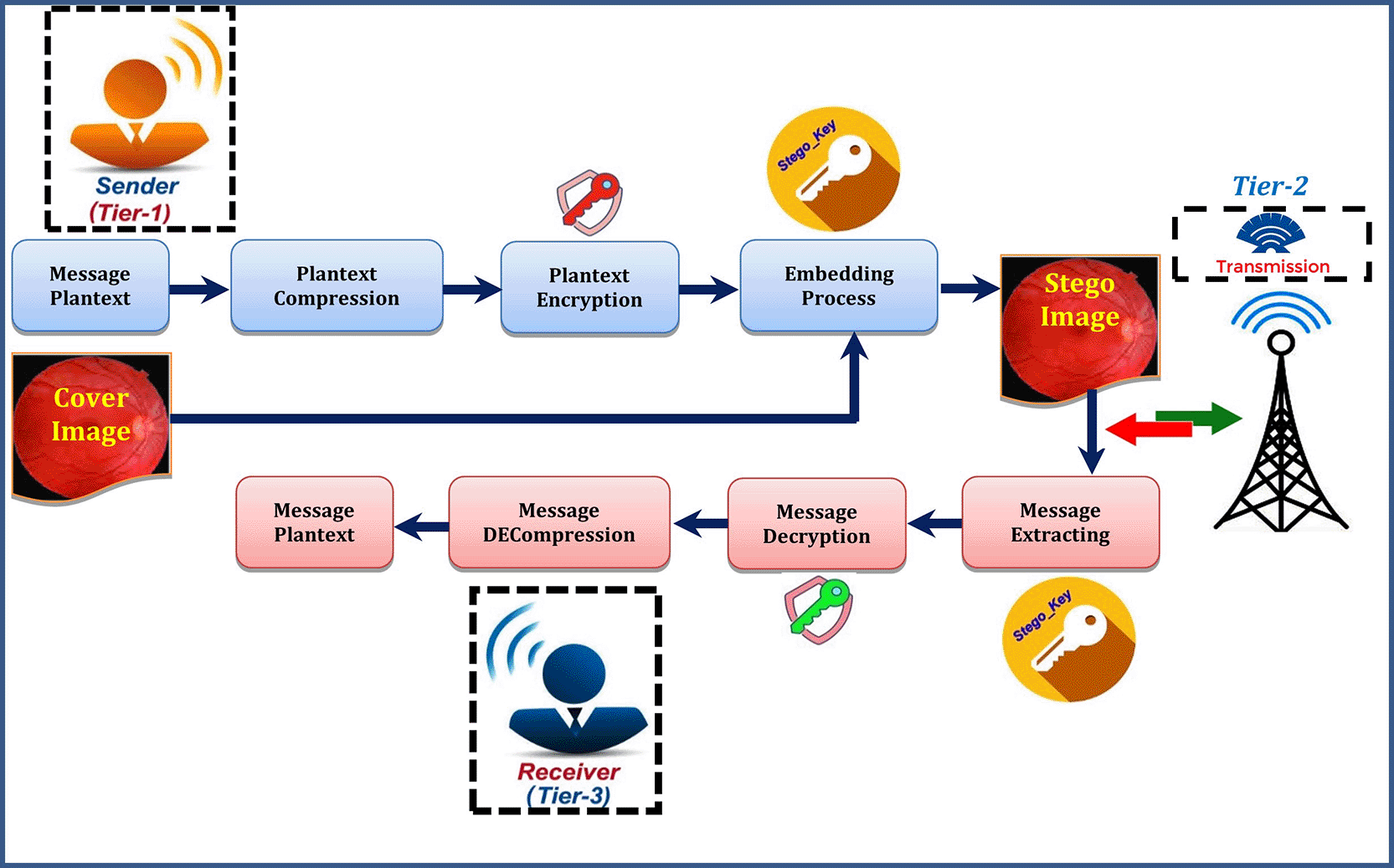
Image compression is necessary when network bandwidth and storage space are limited. MRLE compresses the input image. When applying MRLE to image data, it works best when the same values are repeated over and over again. Below is the algorithm for the proposed scheme (19). The compression algorithm for MRLE: (1) Array M is created by reading the input image matrix and converting it into an array. (2) Divide M by adjacent elements and store the difference in P. (3) P should be converted to logical format. Elements without repetition are denoted with one, while elements repeated with zero. (4) Assume that P has an element with the value one, and find its position in step 3. (5) With the positions obtained in step 4, find the unique element values and store them in an array. (6) In step 4, find the occurrence of the first element only in the matrix. The difference of the matrix should be found in step 4 for the remaining elements. (7) During step 6, determine which elements do not repeat and how many times they occur. (8) Create an array C by concatenating Run value and Run count. (9) Use R= C mod 256 to find the remainder.
Sending the R to the destination is the next step. The original image can be obtained by reversing the above steps. In Figure 1, you can see how MRLE compression and decompression work.20
A step-wise explanation of this Encryption/decryption process is given below:
Stage-1: Begin collecting keywords, plain text, and images from the user. Stage-2: Create the variables index, direction-flag, CurrentPixel, nextpixel, bit-position, totalpixels, and totalbits. Stage-3: Use XOR to assign the index variable (The range of values is 0-255, and the binary value is 8 bits). Stage-4: A total of all bits of the index (0 or 1) are XORed to assign the direction-flag variable (0 or 1). Stage-5: KeyStrings are created by concatenating the binary values of keyword characters. Stage-6: Bit-position and CurrentPixel should be set to 0. Stage- 7: Assign the total-pixels variable the number of pixels in the image. Stage-8: Determine how many bits the KeyString has and enter them into total-bits. Stage-9: Using plain-text characters, repeat Step 9. (a) Take a plaintext character (p) and read it. (b) A direction-flag of 0 means the next-pixel is equal to (CurrentPixel + index) mod total-pixels. In other cases, next-pixel = (CurrentPixel - index) mod total-pixels. (c) The four most significant bits of the NextPixel (k1) should be read from the NextPixel position. (d) A KeyString is composed of four bits (k2) at position bit-position. (e) To obtain CipherText character (c), XOR this plain text character (p) and this CipherText character (c). (f ) In CipherText, the index (c) corresponds to the character of the CipherText. (g) Currently, the NextPixel is equal to the current one. (h) Adding four bits to bit-position multiplies total-bits by bit-position. (i) To assign a direction-flag, XOR all bits of the index. Stage-10: Create CipherText by concatenating all CipherText characters.21
Stage-1: Collect keywords, CipherTexts, and images. Stage-2: Index, direction-flag, Cur- rentPixel, nextpixel, bit-position, total-pixels, and total-bits are the variables to create. Stage-3: Using an XOR operation, compare all characters of the keyword to determine the index variable (range 0-255, 8-bit binary value). Stage-4: Using the XOR function, assemble the direction-flag variables (0 or 1). Stage-5: Assign each keyword character a binary value (concatenate them) and create the keyString. Stage-6: Bit-position and CurrentPixel variables should have input value 0. Stage-7: Assign the total-pixels variable the number of pixels in the image. Stage-8: Determine the KeyStrings total bits by modifying the total-bits variable. Stage-9: The Cipher- Text should be applied to each character according to Step 9. (a). Using the CipherText, select character (c). (b). The NextPixel is calculated as follows: (CurrentPixel + index) mod total pixels. When (CurrentPixel - index) mod total-pixels, next-pixel equals (CurrentPixel - index). (c). From the NextPixel in the image, take the four most significant bits (K1). (d). Using this KeyString, read four bits (k2) to determine the position of the KeyString. (e). The lower parts of these two bits (4 + 4 = 8 bits) are concatenated, and the upper parts of these two bits (4+ 4 = 20 bits) are XORed to obtain plain text character (p). (f ). The index (p) is a character in plain text. (g). Pixels equal the NextPixel in the CurrentFrame. (h). There are total bits of (bit-position+14) mod total-bits. (i). To assign direction-flag, XOR all bits of index. Stage-10: Concatenate all plain text characters.22
Stage-1: Get the user’s secret message, key, and CoverImage. Stage-2: Using the key for encryption, apply the KeyPixel Cipher to the secret message. The CipherText will be produced. Stage-3: To make the CipherText compact, apply the MRLE compression scheme. Compressed- message refers to this compact message. Stage-4: At the end of the compressed message, concatenate a termination-string. Stage-5: CoverImage’s compressed message can be concealed by traversing it from the top-left corner to the bottom-right corner by following these rules. (a). Read the least significant bit of the compressed message for every pixel where the most significant bit is 1. After concealing the entire compressed message in Step 6, move on to the next step. (b). Using the CoverImage’s two most significant bits and the CoverImage’s two least significant bits, a bit from the compressed message should be read. Upon concealment of the entire message by the compressed message, proceed to Step 6. (c). Read a bit from each pixel if three of the most significant bits of the compressed message are 1. In this case, go to Step 6 if the compressed message contains all of its contents. (d). Conceal a bit in the fourth least significant bit of the pixel if the four most significant bits of the CoverImage are 1. In case the compressed message has been concealed by the entire message, go to Step 6. (e). Select a large CoverImage in setp1 to conceal the entire message. Stage-6: CoverImage has become StegoImage.23
Stage-1: Get StegoImage and key from user (used by sender). Stage-2: To extract the concealment message from the StegoImage, follow these rules from its top-left corner to its bottom-right corner. (a). Name an empty string extracted-bits. (b). Combine each pixel’s LSB and its most significant bit if its most significant bit is 1. Identify the binary value of termination- string if it exists in the extracted bits. (c). Each pixel’s least significant bit is concatenated with its second least significant bit if both most significant bits of the StegoImage are 1. The extracted bits may be converted into a termination-string binary value when possible. (d). Concatenate the 3rd least significant bit of each pixel in the StegoImage with its 3 most significant bits. In Case Of Binary Termination String Values In The Extracted Bits, go to Step 3. (e). If the 4 most significant bits of a StegoImage are 1, read the 4th least significant bit. In Step 3, you should be able to detect the binary value of the termination string based on the extracted bits.
Stage-3: Extraction and termination of the extracted message. Stage-4: Decompress extracted messages using MRLE decompression. Stage-5: Decrypt the extracted-message with KeyPixel Cipher using the key for decryption.24
In the digital data storage and transmission the above mentioned RS detection is also known as Reed-Solomon detection. The male patent holder inventors of the invention are Reed and Solomon. In encoding, some bits are appended to the data to enhance the number of redundancy bits added to be included. Some of the extra bits can help receiving nodes make corrections for data transmission and storage errors.
Since the RS detection method is employed in numerous applications, it principally covers telecommunication, digital communication systems, and data storage facilities such as CDs, DVDs, and hard drives. Interference with channel information, or unstable storage media are examples of contingencies conditions that precipitate errors. To help understand how the RS detection method works, here are some key components:
Arithmetically, symbols are introduced to each message block coming from the original data based on the redundancy measure. These redundant symbols are computed from the finite fields. This is achieved because during the encoding of data the data can be checked, verified, and corrected if errors are detected, but the data is larer.
RS is widely used to correct errors in data once it is received through the channel. The receiver also computes the decoded symbols when the received symbols are not similar to the encoded symbols. Interference can be detected and reported if the interfering signals distort the received symbols.
The RS detection method above can also correct errors if these are identified, and correct them the method will. The method in question helps to restore initial data since it is possible to calculate when symbols within a sequence become corrupted. Depending on the particular code parameters as well as the kind of redundancy, the RS method has an ability to correct several errors. A key feature of RS detection is that there is always a tradeoff between the degree of redundancy that is incorporated and the level of fault checking and correction that can be made. By using this technique, signal transmission and data storage and retrieval systems can be enhanced for reliability.
Various image quality assessment metrics are used in this part to evaluate the system perfor- mance. This method is implemented using MATLAB 7.6.0 R2008a. Multiple experiments from different perspectives are used to evaluate standard color images of different dimensions.
The CR method measures the ratio between the compressed and original image bits. CR is a goal that is aspired to be relatively high. When achieving high compression ratios, algorithms must ensure admissible fidelity. PRD and CR are usually related.
• Signal to noise ration (SNR)
The peak signal-to-noise ration, represented as decibels (dB), can be calculated as follows:
As a measure of reconstructed image quality versus the original image, SNR is extensively used in the literature regarding image data compression.
RMS provides measurements of image error based on reconstructed image data. According to RMS, the following is true:
An image’s RMS error is calculated by comparing it with the reconstructed image.
The gray_img and brain_gray covers (256 x 256 pixels each) were compared to two RGB covers, brain_rgb and rgb_img (256 x 256 pixels each). Matlab 7.6.0 (R2008a) was used for compilation and implementation. LSB, MKA, and the proposed approach were evaluated in three runs. A StegoImage of the proposed method is shown in Figures 1(b), 1(d), 1(f ), and 1(h). Figure 2 below shows Image Covers and StegoImages for Gray and Color Images.
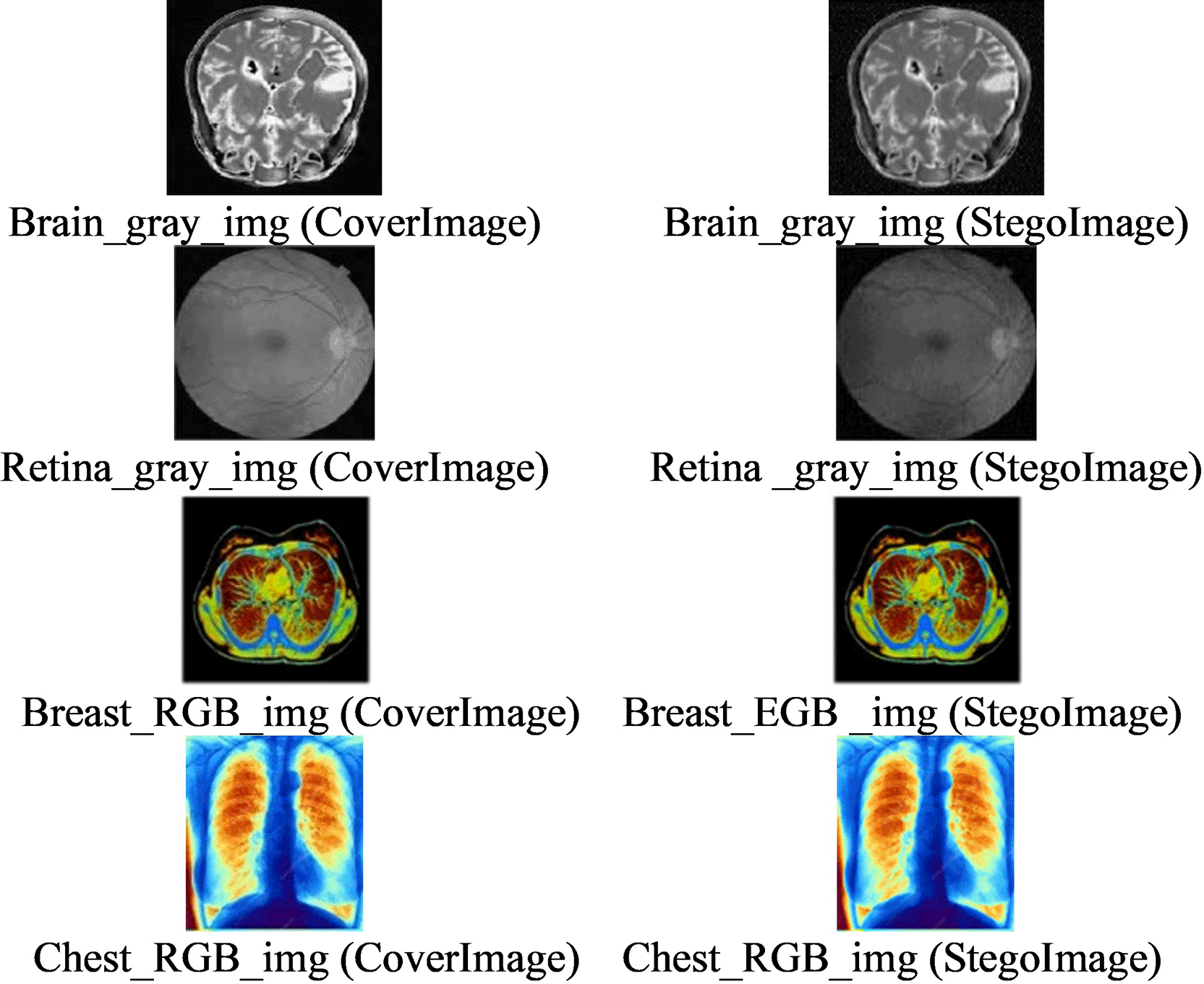
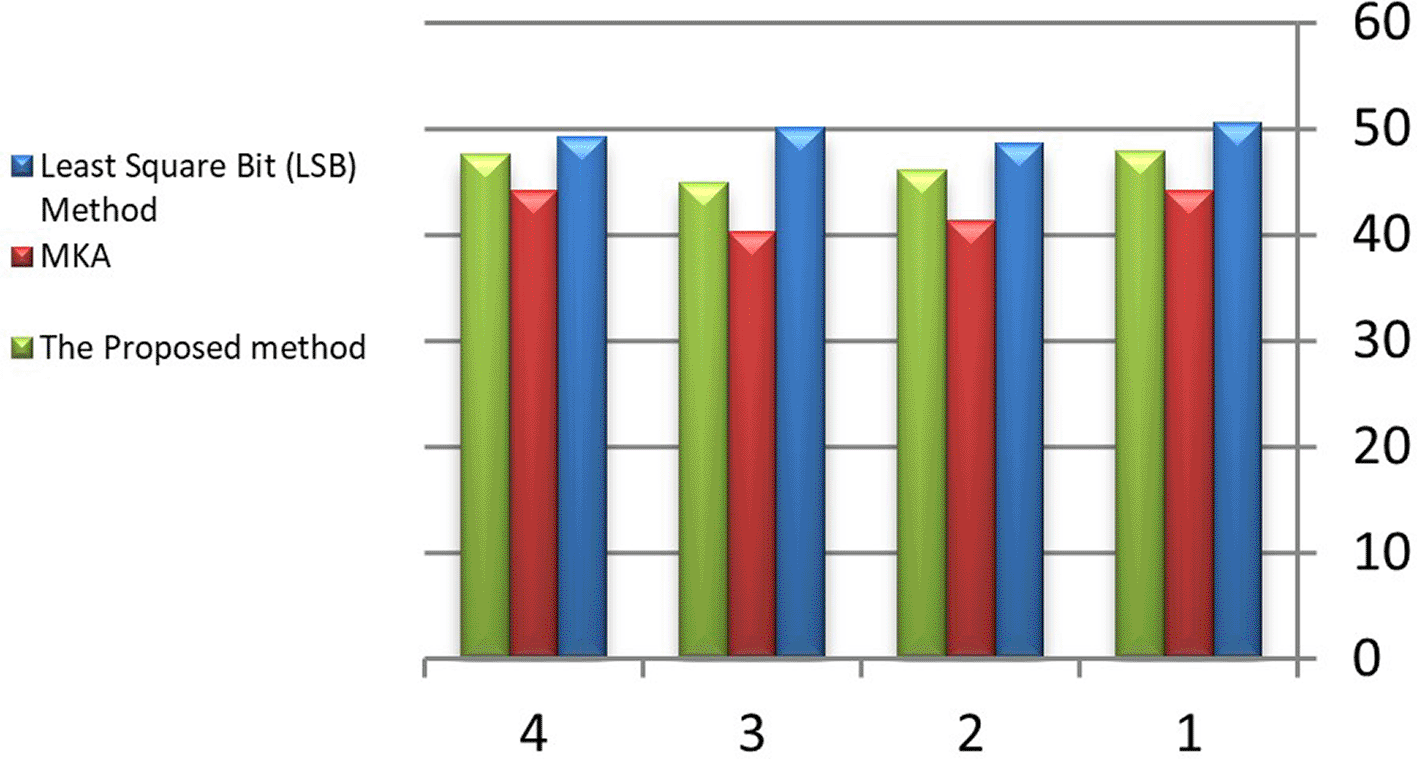
Table 1 below, shows Spectral density for Gray_img (CoverImage) and RGB_img (Cov- erImage) (dB). Figure 3 below, shows a spectral density for Gray_img (CoverImage) and RGB_img (Cover- Image) (dB)
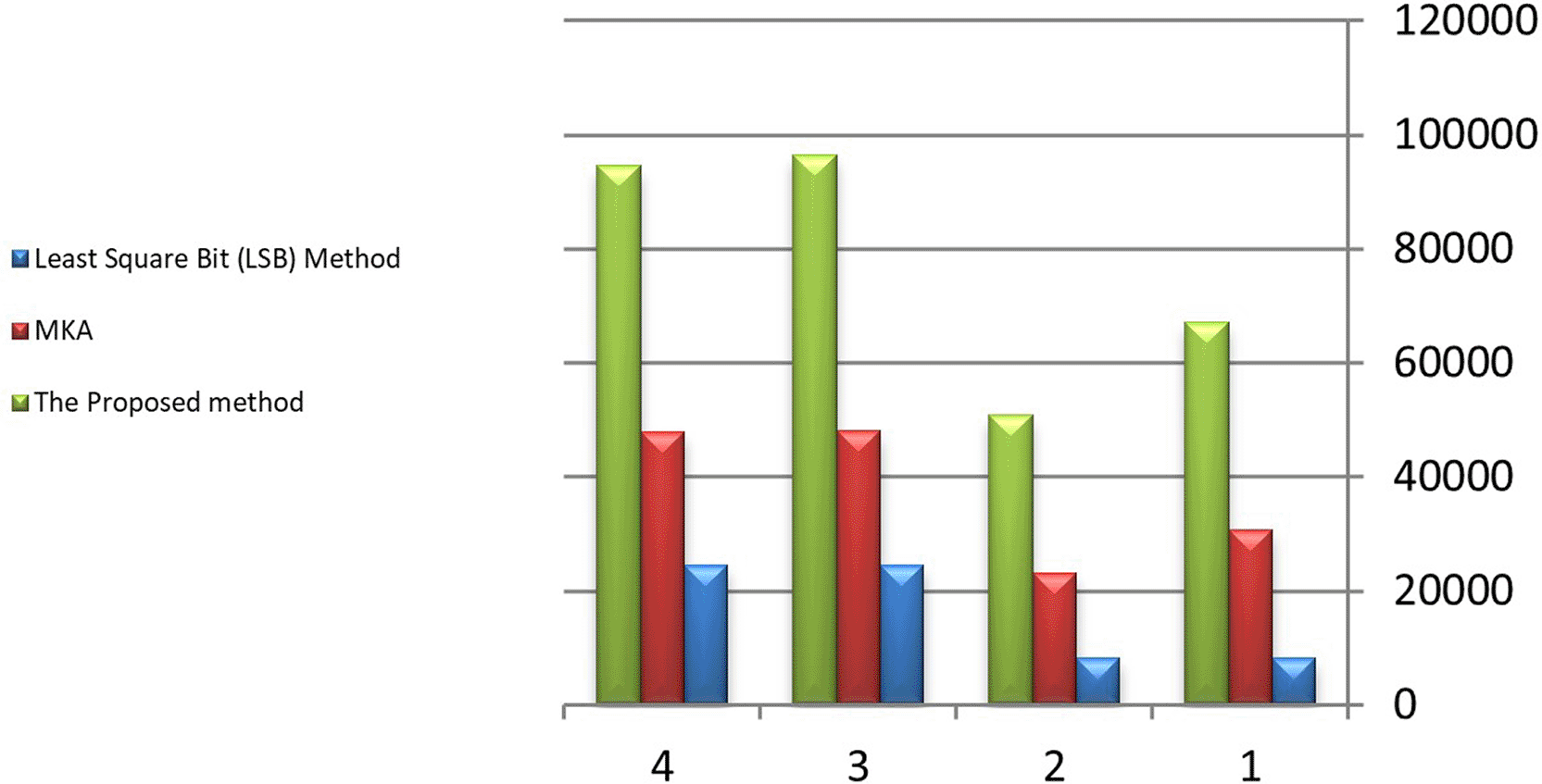
In the Table 2, the proposed method for MSE and PSNR has been calculated for a range of text sizes with varying pixel sizes ( Table 2) was shown.As shown in Figure 4, the capacity for concealing data for Gray_img (CoverImage) and RGB_img (Cover-Image).
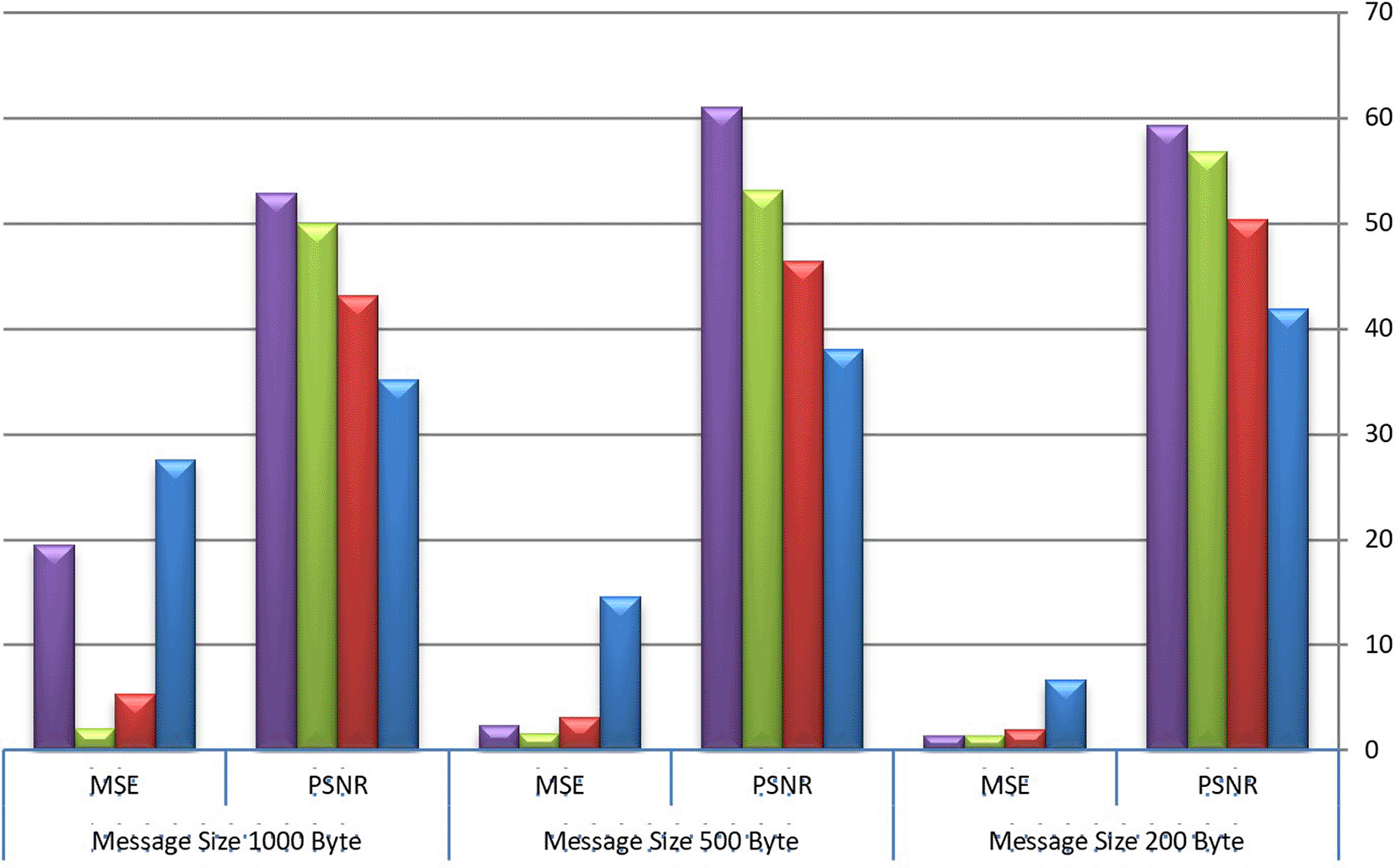
A comparison of PSNR and MSE for various text sizes using the proposed method shows in Table 2.
Based on the StegoImages quality, the proposed technique outperforms MKA by 1.10 times and LSB’s method by 0.94 times. Using the proposed method, ego-images of the original image cannot be distinguished from ego-images of the proposed method. Additionally, it is resistant to RS detection attacks. In Table 3, we have illustrated the concealment capacity of experimental images. The proposed method is characterized by its ability to conceal data. The data conceal- ment capacity is increased using the MLRE compression scheme. The capacity for concealment data is approximately doubled. Compared to the LSB method, the proposed method conceals data by 4.71 times better than MKA by 2.06 times.
| Med-img-name | Med-img | Med-img-size | CR (%) |
|---|---|---|---|
| Brain_gray_img (CoverImage) | 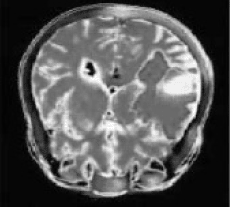
| 256 256 | 81.49 |
| Retina_gray_img (CoverImage) | 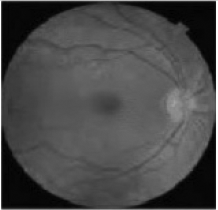
| 256 256 | 56.19 |
| Breast_RGB_img (CoverImage) | 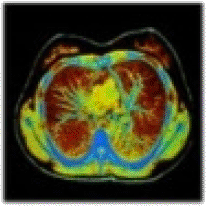
| 256 256 | 70.41 |
| Chest_RGB_img (CoverImage) | 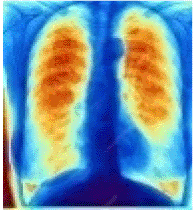
| 256 256 | 49 |
The below Table 4, illustrates the fact that your proposed steganographic framework achieves variable but substantial compression ratios across a wide range of medical imaging modalities, which validates the claim that MRLE allows for the concealment of twice as much secret infor- mation as conventional methods. Compression ratios (CR) on different types of medical images are presented in table 4. This table documents compression ratio (CR) results achieved on different types of medical images. Figure 5 illustrates the MSE and PSNR of the proposed method were for various text sizes found.
A data hiding approach is presented that utilizes LSB embedding combined with pre-processing of the secret data. This pre-processing involves a modified Key-pixel cipher and MRLE compression to reduce the payload size. Performance evaluation using Matlab 7.6.0 (R2008a) shows that the proposed method surpasses MKA in terms of both data concealment capacity and image quality metrics. Quantitatively, the stego images generated by this method exhibit a 1.10 times improvement in quality and a 2.26 times increase in embedding capacity compared to MKA. Robustness against RS detection is also demonstrated.
This study is a computational algorithm evaluation study and does not involve direct human participants, clinical interventions, or biological samples. The medical images used are anonymized standard benchmark images employed for algorithmic testing purposes only. Ethical approval was sought from the Institutional Review Board (IRB) of the University of Anbar (Reference: IRB-UOA-CS-2025), which confirmed that this category of computational research using anonymized benchmark datasets is exempt from full ethical review in accordance with national research ethics regulations.
This study did not involve the recruitment of human participants. The medical images used in this research are anonymized benchmark images routinely employed in image steganography and compression research. No individual patient data were collected, and no personally identifiable information is present in the dataset. Therefore, individual informed consent was not required. This exemption was confirmed by the Institutional Review Board (IRB) of the University of Anbar (Reference: IRB-UOA-CS-2025).
| Views | Downloads | |
|---|---|---|
| F1000Research | - | - |
|
PubMed Central
Data from PMC are received and updated monthly.
|
- | - |
Provide sufficient details of any financial or non-financial competing interests to enable users to assess whether your comments might lead a reasonable person to question your impartiality. Consider the following examples, but note that this is not an exhaustive list:
Sign up for content alerts and receive a weekly or monthly email with all newly published articles
Already registered? Sign in
The email address should be the one you originally registered with F1000.
You registered with F1000 via Google, so we cannot reset your password.
To sign in, please click here.
If you still need help with your Google account password, please click here.
You registered with F1000 via Facebook, so we cannot reset your password.
To sign in, please click here.
If you still need help with your Facebook account password, please click here.
If your email address is registered with us, we will email you instructions to reset your password.
If you think you should have received this email but it has not arrived, please check your spam filters and/or contact for further assistance.

Comments on this article Comments (0)