Keywords
Responsible Citizenship; Sustainability-Oriented Science Education; Citizenship Education; Socioscientific Issues

Responsible Citizenship; Sustainability-Oriented Science Education; Citizenship Education; Socioscientific Issues
Sustainability issues necessitate an education that encompasses not only knowledge acquisition but also the skills required to comprehend public issues and meticulously evaluate socio-ecological impacts and decisions. Furthermore, UNESCO (2019) explicitly emphasizes within Target 4.7 of Sustainable Development Goal (SDG) 4 the importance of knowledge and skills for sustainable development, human rights, peace, global citizenship, and cultural diversity. This targeted emphasis is corroborated by UNESCO (2024), which views education for peace, human rights, global citizenship, and sustainable development as foundational to building peaceful, just, inclusive, and sustainable societies. Consequently, educational citizenship is not merely a legal concept; rather, it refers to the capacity to think critically, participate actively, and act creatively and ethically in response to complex socio-ecological issues (Hazelkorn, 2015; Mueller et al., 2020).
This is vital for science education, as sustainability challenges are deeply interconnected with science, technology, health, energy, the environment, and public policy. Science education is no longer just about conceptual understanding; rather, it aims to connect science with society, values, the environment, and life. Hazelkorn (2015) suggests that science education should contribute to responsible citizenship by helping people understand science and technology, as well as solve problems. In this review, sustainability-oriented science education is defined as science education that integrates science with social responsibility, ecology, citizenship, and sustainability action (Georgiou & Kyza, 2023; Trott & Weinberg, 2020; Van Harskamp et al., 2024).
Citizenship in science education for sustainability can be applied in various ways. Environmental citizenship emphasizes students’ knowledge, responsibility, and action regarding socio-ecological issues (Mueller et al., 2020; Van Harskamp et al., 2024). Responsible citizenship is linked to scientific literacy to critically explore issues of sustainability, such as engaging with socio-scientific issues like biofuels (Georgiou & Kyza, 2023). Participatory citizenship encompasses participation, agency, equity, and engagement with science-based public issues (Kyza & Georgiou, 2025); thus, the elements of environmental science citizenship comprise knowledge, values, responsibility, reflection, justice, participation, and action.
Evidence shows that citizenship can be promoted through science learning centered on student-relevant sustainability issues. Trott & Weinberg (2020) demonstrated that children can engage more deeply with science through place-based, participatory, and action-oriented learning on climate change. Georgiou & Kyza (2023) showed that socio-scientific inquiry regarding biofuels can develop scientific literacy for citizenship through individual actions. Environmental citizen science can also help promote learning and action for environmental citizenship, especially when students engage in other pedagogical and participatory activities beyond classroom discussions (Hadjichambi et al., 2023; Van Harskamp et al., 2024).
There are conceptual, theoretical, and empirical works on citizenship within sustainability-oriented science education across diverse research fields. Adamou et al. (2021) investigated environmental citizen science as a platform to educate for environmental citizenship, while Hadjichambi et al. (2023) discussed environmental citizen science within K-12 education. Other reviews have examined teachers’ attitudes and professional development concerning environmental citizenship education, socio-scientific issues, environmental socio-scientific issues, scientific literacy, climate change, digital technology, and decision-making within science education (Georgiou et al., 2021; Högström et al., 2025; Kumar et al., 2024).
Although these reviews are valuable, they remain fragmented regarding the intersections among citizenship concepts, sustainability issues, learning environments, pedagogical approaches, and outcomes. Thus, this review synthesizes empirical research on citizenship within sustainability-oriented science education, guided by the following research questions:
RQ1: What are the forms of citizenship in science education for sustainability?
RQ2: Which types of sustainability issues and contexts are promoted and how are they related to citizenship?
RQ3: What pedagogies, and learning models or designs, are explored to enhance citizenship in sustainability-oriented science education?
RQ4: What are the citizenship outcomes in sustainability-oriented science education?
In this study, we employed a systematic literature search to identify empirical studies on citizenship within sustainability-oriented science education. To prevent database-specific biases and coverage limitations, the search was not restricted to a single database; relying on a single database may omit significant peer-reviewed articles (Wanyama et al., 2022). This comprehensive approach is particularly vital for educational research, which is inherently interdisciplinary and lacks a unified database encompassing all relevant publications (Heck et al., 2024). To address this, we searched four databases: Scopus, Web of Science, ERIC, and Dimensions. The selection of Scopus and Web of Science was guided by their status as leading multidisciplinary databases widely utilized for searching and mapping scientific literature, despite subtle differences in their coverage (Mongeon & Paul-Hus, 2016; Singh et al., 2021). Additionally, ERIC was selected as a specialized education database, while Dimensions was integrated to expand the overall search coverage (Singh et al., 2021). Utilizing multiple databases optimized the retrieval of relevant literature and mitigated database-specific bias. The database names, search strings, and search dates were rigorously documented to ensure the reproducibility and transparency of the search strategy (Rethlefsen et al., 2021). The search was done on 4 March 2026.
This review looked at research on citizenship in sustainability science education. The keywords were structured around four primary thematic categories: educational context, science education, sustainability issues, and citizenship. The objective of this categorization was to ensure that the search retrieved a comprehensive selection of literature while strictly aligning with the established scope of the review. The search keywords were formulated in accordance with systematic review protocols, wherein synonyms within each category were linked using the Boolean operator OR, and the distinct conceptual categories were intersected using the Boolean operator AND. Quotation marks, Boolean operators, and truncation symbols were customized to fit the specific search syntax of each database, as search attributes vary across platforms. This approach was used to increase the transparency of the search process, its specificity and its replicability (Gusenbauer & Gauster, 2025; Rethlefsen et al., 2021). Furthermore, the PRISMA-S recommend detailing search strategies to a degree that permits thorough scrutiny. The final search string utilized in this review was as follows:
((“school* OR universit* OR college* OR “higher education“ OR classroom* OR student* OR teacher*) AND (“science education“ OR “science learning” OR “science teaching” OR “science classroom” OR “science curriculum” OR “STEM education“) AND (“socio-scientific issue*“ OR SSI OR sustainability OR “sustainable development“ OR climate OR environmental) AND (citizenship OR “environmental citizenship” OR “scientific citizenship” OR “global citizenship” OR “civic engagement” OR “civic participation”))
To mitigate potential selection bias, titles and abstracts were screened against predefined inclusion and exclusion criteria using the Rayyan platform. In the initial screening phase, records unrelated to the objective of the review were excluded. Subsequently, the full-text articles of the remaining studies were retrieved and evaluated for eligibility using the same criteria. The sequential process of identification, duplicate removal, screening, eligibility assessment, and final inclusion of records is illustrated in the PRISMA flow diagram in Figure 1. We used Fleiss’ kappa to measure agreement among the three coders to determine the reliability of the screening. For the title and abstract screening process, the Fleiss’ kappa was 0.895 (95% CI: 0.827, 0.963) and for the full-text screening process, the Fleiss’ kappa was 0.720 (95% CI: 0.577, 0.864) calculated from 275 and 62 records, respectively. For the full-text screening phase, the Fleiss’ kappa was 0.720, 95% CI: 0.577–0.864 (n = 62). These findings suggest that the coders achieved high agreement, with almost perfect agreement for the title and abstract screening, and substantial agreement for the full-text screening. This process aligns with the systematic review principles of transparency, traceability of selection, and reproducibility of the search and screening processes. Table 1 presents the inclusion and exclusion criteria used to build the dataset for this study (Gusenbauer & Gauster, 2025; Heck et al., 2024).
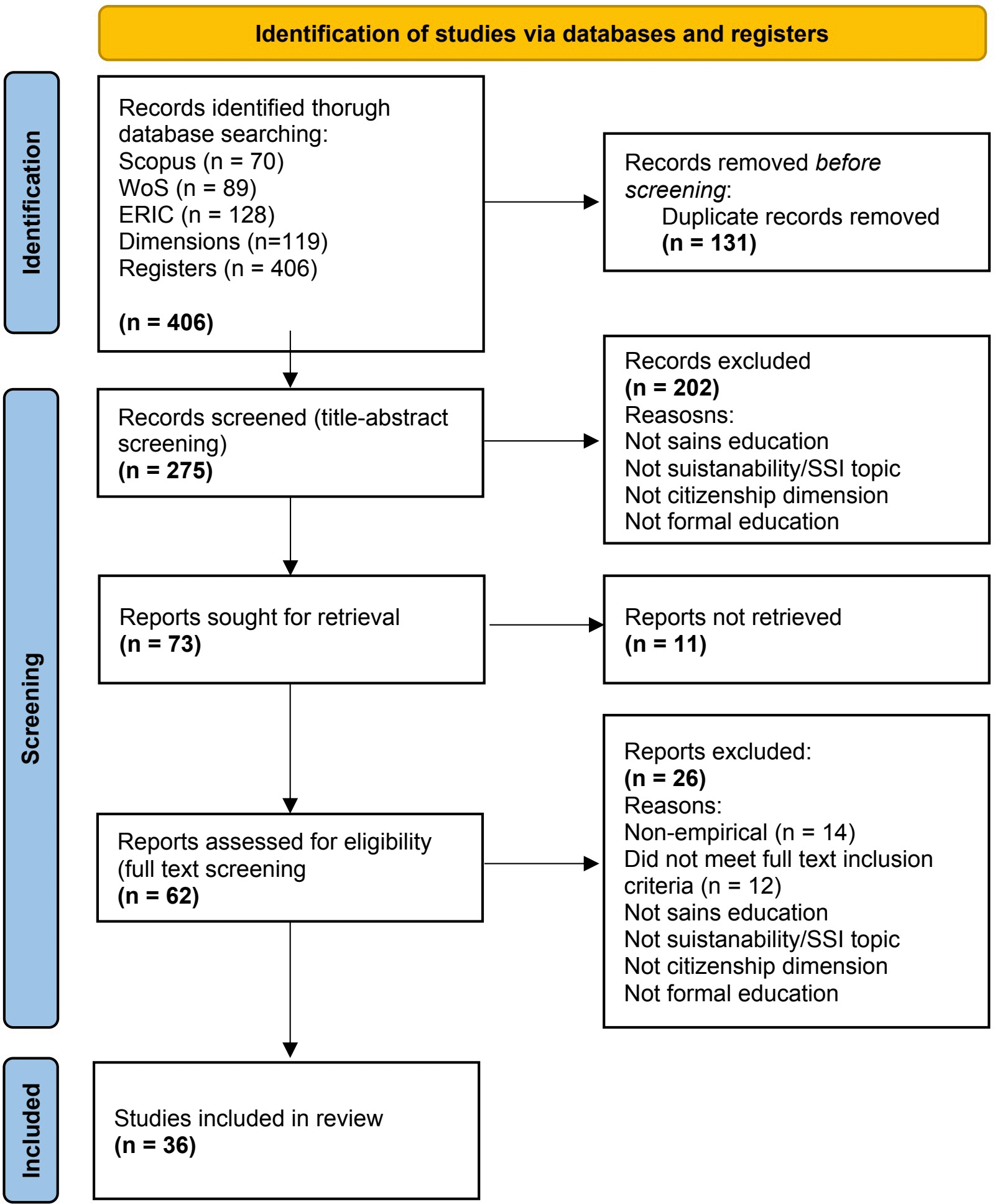
The diagram summarizes the identification, duplicate removal, title-abstract screening, full-text eligibility assessment, exclusion reasons, and final inclusion of 36 empirical studies in the systematic review.
We gathered information about the publications (e.g., titles, abstracts, keywords, bibliographic data) to manage and remove duplicates. Once duplicates were removed, the articles were screened at the title, abstract, and full-text levels. When articles met the inclusion criteria, the documents were coded in the four key areas of the review: (a) the conceptualizations or terms used to refer to citizenship, (b) the issues and contexts related to sustainability, (c) the pedagogical approaches or learning designs used, and (d) the outcomes related to citizenship. We also collected descriptive information about the level of education, context, participants, and design of the study. The results were then analyzed and presented narratively and in tabular format (Bramer et al., 2016).
To provide a more comprehensive background for the substantive review synthesis, this section first presents the backdrop of publication trends concerning research on citizenship in sustainability-oriented science education. This aligns with the review’s approach, which, in addition to the coding of the conceptual domains, issue contexts, pedagogies, and outcomes of the reviewed studies, also gathered information on the descriptive features of the studies, including publication journals, countries, research designs, and educational levels. Thus, the trend analysis is seen not only as a descriptive add-on but as a starting point for understanding the evolution of this research field, the areas where the evidence is situated, and where the representation of research is weak.
Annual publication growth
Figure 2 shows the trend analysis suggests that interest in this field of study has been increasing; however, the growth of interest is not yet consistent. It started with a limited number of studies, followed by a rapid increase to reach a peak, then a decrease, and subsequently another increase in the following period. This indicates that this research field is in a transitional stage from its infancy to maturity, rather than being an established research field. That is, the increasing interest in this field reflects its development, but the increase in publication volume does not necessarily reflect theoretical advancement or consistency in research trajectories. This observation aligns with the assertion in our Introduction that the issue within the literature is not an absence of studies, but an absence of synthesis that integrates the ideas, contexts, pedagogies, and impacts.
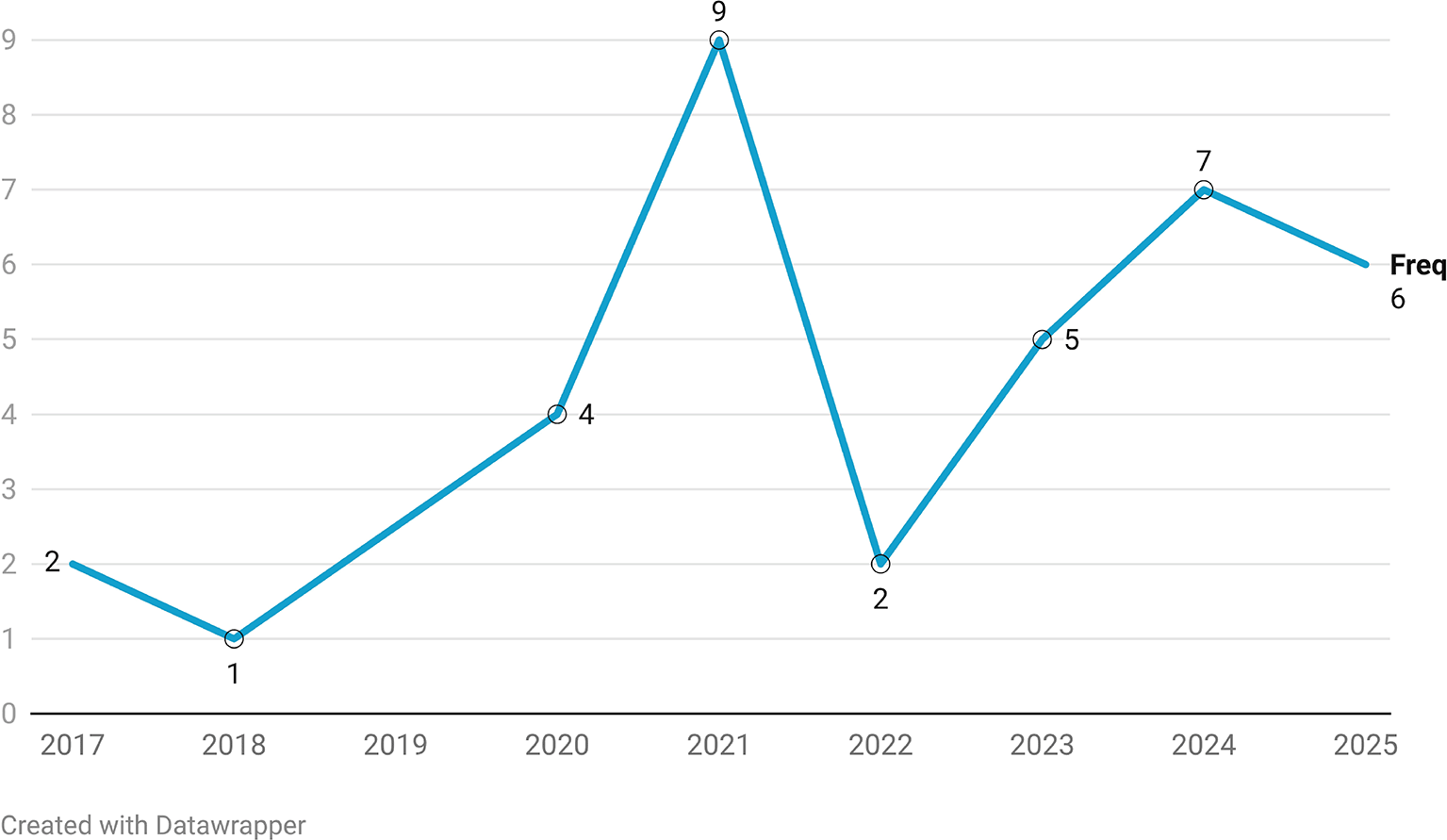
The figure shows the yearly distribution of the 36 included studies and indicates the development of scholarly attention to citizenship within sustainability-oriented science education.
Publication Outlets
The main publication outlets represented in the reviewed studies are summarized in Table 2. We found that research on citizenship in sustainability-focused science education is published in journals related to science education, sustainability education, environmental education, social education, and general education. Sustainability and the International Journal of Science Education were the most prominent publication outlets, but there was no definitive hub of publication. This is significant as it reflects the interdisciplinary nature of the field: alongside science learning, citizenship in science education is also addressed within sustainability education, environmental education, and social education. Conversely, the wide range of publications indicates that the field is not yet established regarding dedicated publication outlets. This explains why various citizenship concepts were utilized in the reviewed studies to accentuate different elements, such as responsible citizenship, environmental citizenship, scientific citizenship, civic participation, and global citizenship.
Geographical distribution
Figure 3 illustrates the geographical distribution of the included studies. The dominance of specific contexts was evident not only in the publishing journals but also in the geographical representation of the studies. Although the reviewed studies were conducted across several countries, the evidence base remained dominated by specific geographical regions, with the US being the most frequent, followed by several European and Asian countries. This aspect has significant implications for the content of the studies, as citizenship in science education is not a culture-free concept (see also Curriculum and Pedagogy). It is embedded within the curriculum traditions, priorities for sustainability issues, public participation, and educational policy goals of the respective countries.
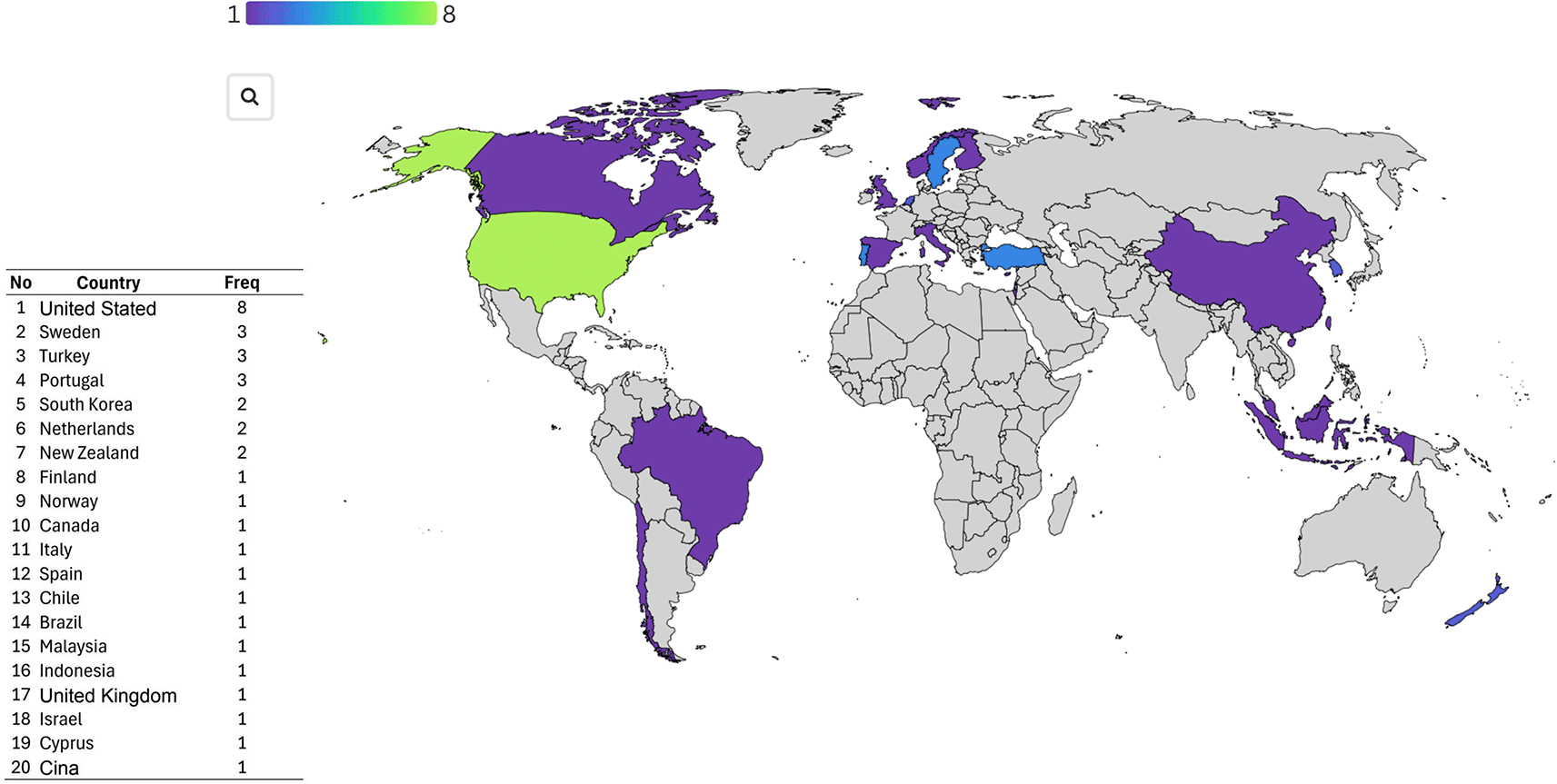
The figure presents the country settings represented in the reviewed studies and highlights the geographical concentration and international spread of research in this field.
Consequently, the dominance of a few contexts suggests that knowledge development in this area has yet to be internationalized. This is also a consequence of the review’s search strategy, which included English-language, peer-reviewed journal articles from four databases. Therefore, the geographical map observed is not solely a depiction of the sites of research production, but also of the sites of research published within the internationally indexed system.
Research methods
Research methods are intrinsically linked to the research designs of the reviewed studies. There are many ways of categorizing research designs in education, but for the purposes of this review, the research designs were grouped into three categories: quantitative, qualitative, and combined or mixed methods. The classifications of research designs, sub-types, frequencies, and names of the studies are presented in Appendix A . The majority of the studies were qualitative (n = 18), followed by combined or mixed methods (n = 13), with the lowest frequency being quantitative studies (n = 5). There was only one quantitative survey study, compared to four quantitative intervention studies of a pre-post and/or quasi-experimental nature. Qualitative studies included case studies (n = 8), interview-based studies (n = 3), discourse, classroom discussion, text or content analyses (n = 4), and qualitative intervention studies, evaluations, action research-guided, or design-based studies (n = 3). A combination of quantitative and qualitative methods was used in studies that were mixed-methods case studies, program evaluations, or design-based research (n = 5); classroom, educational intervention, or field-experience studies (n = 4); quasi-experimental, naturalistic experimental, or pre-post studies with qualitative follow-up (n = 3); and one convergent parallel mixed-methods study. These patterns indicate a preference among researchers for qualitative and mixed-methods approaches, which aligns with the interpretive, contextual, and applied nature of citizenship research within sustainability-focused science education.
Educational level
Figure 4 displays the distribution of research across each educational level indicates that the majority of the studies in this collection were based in secondary education. Most of the studies (n = 14) were conducted in upper secondary education, followed by mixed secondary education (n = 7), lower secondary education (n = 6), higher education (n = 6), and primary education (n = 3). This implies that the most frequent settings in which citizenship has been researched within sustainability-oriented science education have involved older students, in contexts where they must engage with evidence, argumentation, decision-making, and public issues regarding sustainability. However, the limited number of studies in primary education suggests that the literature, thus far, has not focused on the introduction and development of citizenship skills at early stages of education. Therefore, the educational level is not merely a descriptive feature of this corpus but also highlights a research gap in the development of citizenship across educational levels.
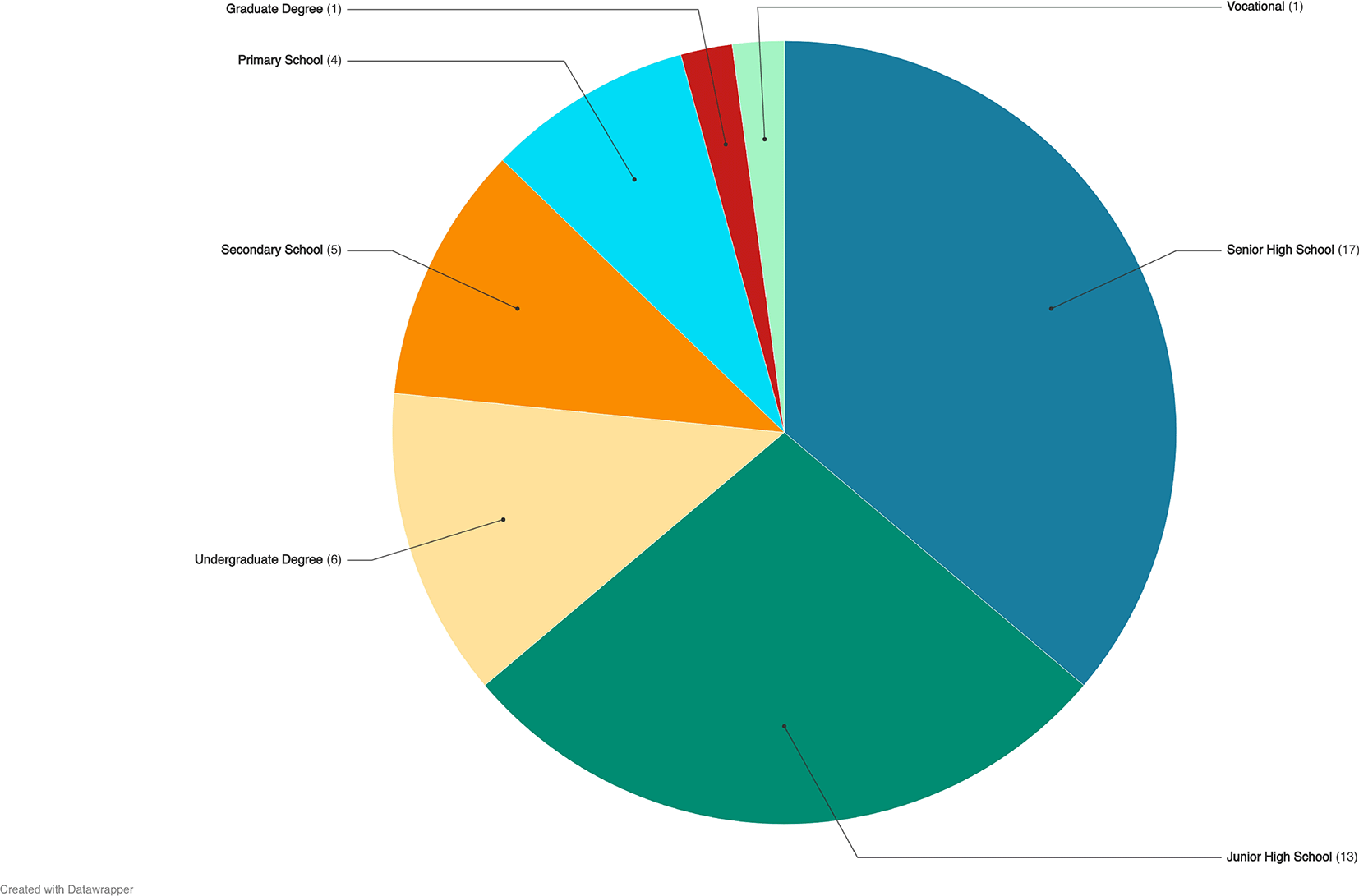
The figure shows the frequency of included studies across primary education, lower secondary education, upper secondary education, mixed secondary settings, and higher education.
The identification of the citizenship-related concepts suggests that the application of citizenship within sustainability-oriented science education is not a standardized concept. Instead, these studies employ a spectrum of partially overlapping terms, such as environmental/ecological citizenship, global citizenship, sustainable citizenship, democratic citizenship, civic/political participation, scientific citizenship, science-civic participation, and responsible citizenship through scientific literacy. Through the coding process, these labels were classified into five clusters: environmental/ecological citizenship (n = 13), global/world/sustainable citizenship (n = 6), democratic/civic/political participation citizenship (n = 7), science-civic/scientific/evidence-based citizenship (n = 7), and implicit/proxy citizenship framings (n = 3).
Environmental/ecological citizenship . The most common conceptual grouping was that of environmental/ecological citizenship. These comprised studies that conceptualize citizenship as environmental responsibility, ecological literacy, environmental citizen identities, and environmental action for sustainability. Häyrynen et al. (2021) defined environmental citizenship in terms of ecological knowledge, citizens’ rights and responsibilities, action, and reflection based on scientific arguments. Iversen & Jónsdóttir (2019) focused on the practice of environmental citizenship as active participation in environmental-political processes, and Van Harskamp et al. (2024) framed environmental citizenship as responsible pro-environmental behavior, including private and public, individual and collective, as well as local and global levels. Other research expanded this definition in terms of environmentally literate citizenship, environmental citizenship competence, ecological citizenship, environmental citizen identities, citizen science, and local environmental action (Ayar & Özalp, 2021; Carson et al., 2021; Olsen et al., 2020; Park & Kim, 2020; Tierney et al., 2020). Therefore, citizenship within this category is not defined solely by environmental knowledge, but rather constitutes a composite of competency, responsibility, identity, participation, and socio-ecological action.
Global/world/sustainable citizenship . Global/world/sustainable citizenship was identified in studies that emphasize the moral, ethical, and global aspects of sustainability. Wiblom et al. (2021) employed the concept of world citizenship to stress critical self-reflection, empathy, and narrative imagination for students’ critical reflection on issues connected with science. Yeoh (2017) linked global citizenship education with local/global identity, global citizenship, and scientific literacy for participation in a democracy. Cabello et al. (2024) envisioned sustainable citizenship in terms of critical scientific literacy, participation, human rights, and responsible citizenship within teacher training. Celestino & Gentili (2024) connected global citizenship with systems thinking, ethics and sustainability, while Erumit et al. (2024) operationalized global citizenship with an ecological worldview, social and moral compassion, socio-scientific accountability, and action. In these instances, citizenship is primarily regarded as an ethical-global attitude rather than a strictly political practice.
Democratic/civic/political participation citizenship . Democratic/civic/political participation citizenship was used to refer to students’ (or teachers’) engagement with public issues, deliberations, community issues and decision-making. Park (2023) explicitly framed democratic citizenship as a competence model encompassing critical thinking, communication, collaboration, information management, empathy, social accountability, self-directed planning, and decision-making. Dunlop et al. (2024) linked science education with political participation, by exploring connections between environmental issues and civic and political engagement. Dunlop et al. (2024) connected the environment to political participation by focusing on how environmental issues are related to civic and political forms of engagement. Ottander & Simon (2021) treated democratic participation in an SSI discussion and Kim et al. (2020) connected community-based SSI learning with a sense of place and character as citizens. Furthermore, de Freitas et al. (2023) considered citizenship as a multi-dimensional construct comprising legal, moral, identity, and common-good elements within an argumentative socio-scientific process. Thus, this category primarily associates citizenship with participation and public decision-making.
Science-civic/scientific/evidence-based citizenship . Science-civic/scientific citizenship was related to the use of science, evidence and scientific practices in public discourse. Zummo (2022) explored science-civic learning through disagreement and students using discursive resources to respond to civic questions in science. Zummo et al. (2021) examined the use of scientific argumentation in young people’s civic participation in climate change. Georgiou & Kyza (2023) defined responsible citizenship in terms of science literacy, particularly students’ ability to make informed decisions and to take social-political action for the good of all. McGregor et al. (2023) explored scientific citizenship skills and abilities through thinking scientifically, questioning evidence, evaluating validity, making decisions, and problem-solving. Wallace & Bodzin (2017) linked scientific citizenship identity with mobile learning and emergent citizen science practices, while Carson et al. (2025) linked scientific citizenship skills with environmental monitoring, public engagement, stewardship, and local environmental action. Here, citizenship is understood as informed public reasoning with science, rather than merely as environmental concern.
Implied and proxy citizenship. A select few studies framed citizenship implicitly or through proxies Aurélio et al. (2022) referred to the ocean-literate citizen as one who understands ocean concepts, can communicate them, and can make ocean-informed and responsible decisions for ocean sustainability. Rahmawati et al. (2021) did not explicitly develop citizenship as a construct but considered students to be socially responsible citizens engaging in ethical decision-making, collaborative decision-making, empathic communication, and critical social thinking. Lesnefsky et al. (2025) mentioned global citizenship, agency, stewardship, responsibility, empowerment, and informed decision-making within an SSI-oriented curriculum, but did not explicitly develop citizenship as a variable. These studies demonstrate that citizenship is sometimes subsumed within other concepts of literacy, values, stewardship, empowerment, decision-making, and responsible action, rather than being explicitly developed as an independent construct.
Sustainability issues, educational contexts, and their links to citizenship
The findings of the analysis of sustainability issues show that the analyzed studies did not focus on sustainability in general. Rather, the issues were foregrounded through seven main (but interconnected) issue clusters: sustainable consumption and production (n = 10), biodiversity and land-use (n = 9), climate change (n = 8), sustainable energy (n = 7), water (n = 6), marine/coastal sustainability (n = 3), and local community sustainability (n = 2). Several studies addressed multiple issues and/or educational contexts; therefore, the above numbers represent the number of issue clusters addressed within the dataset, not the number of studies. Across the studies, we identified a correlation among the issue, context, and citizenship fostered. Issues introduced in classroom, deliberative, and scenario-based contexts were more likely to foster evidence-based public reasoning and/or simulated participation. Issues delivered through field-based, place-based, community-facing, citizen science, and action-oriented contexts, however, were more likely to foster participatory/action-oriented citizenship, and sometimes civic/public participation.
Climate action. Climate issues were usually framed in terms of climate change controversy, urban energy policy, impacts of public transportation, climate policy, socio-natural disasters, peer campaigns, and public communication. In classroom-based simulations of SSI, climate issues primarily allowed for evidence-based public reasoning and public participation—for instance, as students or pre-service teachers negotiated public goods, trade-offs, and policy/risk choices (Park, 2023; Zummo, 2022). In pre-service education, climate issues also provided the foundation for critical scientific literacy, human rights considerations, and global citizenship, but with participation mediated through teaching (Erumit et al., 2024; Cabello et al., 2024). Climate issues associated with school projects, citizen science, or letters to the public also led to more active or civic/political engagement, but tended to limit citizenship to the school, science, or communication, rather than to broader political processes (Dunlop et al., 2024; Park & Kim, 2020; Wallace & Bodzin, 2017; Zummo et al., 2021).
Sustainable energy. Energy studies included topics of renewable energy, wave, water and biofuels, energy supply, resource issues, diesel alternatives, and structured policy analyses. These issues were predominantly featured in student participation in SSI deliberation, structured decision-making, and science or chemistry classroom inquiry. Ottander & Simon (2021) discussed energy and resource issues in relation to democratic processes in the classroom, while Georgiou & Kyza (2023) offered biofuels as a chemistry SSI for scientific literacy and responsible citizenship. Energy was also included in teacher preparation and policy-based decision-making, which promoted reasoning, collaboration, and evaluation, but seldom included public participation outside of the classroom (Erumit et al., 2024; Dauer et al., 2021; Park, 2023). Consequently, sustainable energy most likely results in evidence-based public reasoning, hybrid citizenship, or pseudo-participation, but is less likely to lead to public/civic participation.
Biodiversity and land-use. Biodiversity and land-use issues included lapwing habitats, biodiversity loss, deforestation, Indigenous rights, displacement, pollinators, habitat destruction, pesticide use, native plants, campus biodiversity, and invasive species. Relating such issues to fieldwork, local “ecological conflicts,” stakeholder inclusion, or campus and community projects tended to promote active citizenship. For example, Iversen & Jónsdóttir (2019) related lapwing habitats to fieldwork and public decision-making, while Linhares & Reis (2023) used nature-based solutions to lead pre-service teachers from inquiry to stakeholder interviews, and subsequently to campus and community action and communication. de Freitas et al., (2023) linked biodiversity loss to justice and power relations, while Gal (2025) held an invasive species hackathon for local action. However, if biodiversity issues were tackled through curriculum analysis, classroom simulations, or school inquiry, then citizenship resembled simulated participation and hybrid reasoning (Ayar & Özalp, 2021; Aydın-Çanakkale, 2025; Kim et al., 2020; McGregor et al., 2023).
Water. Water problems included water pollution, water conservation, droughts, water treatment, choices regarding ecosystem services, stormwater runoff, sewer spills, impacts on aquatic life, and irrigation shortages. Here, participatory approaches for community outreach, place-based professional learning, and action were most visible. da Silva et al. (2024) empowered students as “co-investigators” to identify local water issues, and engage with community stakeholders and advocate and present solutions publicly. Olsen et al. (2020) connected watershed and ecosystem-service governance to teachers’ multiple-perspective decision-making, and Haines & McClure (2020) connected watershed literacy to school and field experiences and “action projects.” Guevara-Herrero (2024) used water scarcity in the avocado industry to inform decisions about environmental, economic, and political issues. Water issues within this cluster tended to promote participatory/action-oriented citizenship and, occasionally, public/civic participation because they connected learning to local stakeholders, public policies, public needs, or a public issue.
Marine/coastal sustainability. Marine/coastal issues were foregrounded by ocean literacy, sustainable fisheries and fish consumption, dredging and sedimentation, biodiversity and intertidal life, species monitoring, marine pests, marine protection (conservation), resource consent, and kaitiakitanga. Aurélio et al. (2022) connected traditional fish markets with ocean literacy, sustainable fish consumption, and school-community engagement. Carson et al. (2021) used local citizen science to link sedimentation and intertidal biodiversity to environmental citizenship, and Carson et al. (2025) linked marine monitoring to stewardship, community engagement, and scientific citizenship. These projects involved field studies, school/community citizen science, and public/community engagement; therefore, citizenship in these studies was most akin to participatory/action-oriented citizenship. In some cases, it also approached civic/public participation (if the data collected from monitoring were connected to community decision-making or resource consent processes), but it was often still more aligned with stewardship than politics.
Responsible consumption and production. Responsible consumption and production encompassed the highest number of issues. These included dairy versus oat milk, avocados, palm oil, school lunches, food culture, labor, human rights, certification, markets, domestic energy and water use, waste, recycling, plastics, used cooking oil, batteries, ecological footprints, and sustainable products. Commodity and consumption dilemmas that were more likely to encourage evidence-based decision-making in the public sphere involved sources, commodity chains, environmental impacts, justice, and local/global impacts (Guevara-Herrero, 2024; Lesnefsky et al., 2025; Wiblom et al., 2021). Palm oil was used to connect chemistry with systems and ethics, but the educational outcome was to provide advice to consumers and to foster awareness of personal ethics (Celestino & Gentili, 2024). However, sustainability, recycling, prolonging product lifespans, and ecological footprints were more likely to lead to private-sphere responsible citizenship, as sustainability was framed in terms of practices and individual (family) responsibility (Rahmawati et al., 2021; Tierney et al., 2020; van Harskamp et al., 2021; Van Harskamp et al., 2024). Consequently, this issue cluster exhibited a diversity of perspectives, ranging from the systemic to the individual, as consumption was positioned within either the public sphere or private life.
Local community sustainability . Local community sustainability involved urban public spaces (e.g., pedestrian zones), local energy, road-salt issues, fine dust, stray dogs, recycling, local services, residents’ perspectives, and local knowledge. Häyrynen et al. (2021) incorporated local socio-cultural heritage and local problems into school-community projects and demonstrated how local issues can contribute to environmental responsibility and action when linked to students’ local contexts. Kim et al. (2020) leveraged a local community-based SSI program concerning fine dust, stray dogs, and recycling to build students’ sense of place and citizenship character through surveying locals, interacting with experts, sharing, and action. In this cluster, citizenship was cultivated when topics were tied to genuine community concerns, sharing and interacting with others, and experiencing action. Yet, the data also show that local connections alone are insufficient; if connections to a local problem are not authentic enough to prompt interaction and sharing, citizenship will remain weak or inconsistent.
Approaches taken to support citizenship in sustainability science education
The pedagogical analysis indicates that citizenship was not fostered by a single educational model within sustainability-oriented science education. Rather, the studies employed several pedagogical families, which were not necessarily explicitly referred to as formal pedagogies (e.g., PBL, PjBL), but exhibited similar instructional designs. We found seven clusters: SSI-centered pedagogies (n = 8), place−/community-based pedagogies (n = 6), dialogic/reflexive/perspective-taking pedagogies (n = 5), citizen science pedagogies (n = 3), project−/design−/action-oriented pedagogies (n = 3), context-based/interdisciplinary/STEAM pedagogies (n = 3), and explicit environmental citizenship pedagogies (n = 2). These approaches transcended the simple transmission of knowledge by utilizing sustainability issues to provide contexts for inquiry, discussion, evidence use, reflection, participation, and action.
SSI-centered pedagogies . The most common approaches were those focused on SSIs. This cluster utilized sustainability issues as the central context for discussion, argumentation, deliberation, inquiry, perspective-taking, and rational decision-making. Georgiou & Kyza (2023) linked chemistry learning about biofuels to scientific literacy for citizenship, while Dauer et al. (2021) used structured decision-making in several SSI contexts to explore students’ self-efficacy in engaging in civic activities. SSI discussions were also used to foster democratic participation and meaning-making in the context of energy and food Ottander & Simon (2021), while food-consumption controversies were used to promote critical reflection, compassion, and global citizenship (Wiblom et al., 2021). Other studies focused on SSI designs through community-based SSI learning, scenario-based land-use planning, eco-social deliberation, and Grand Challenges programs (Guevara-Herrero, 2024; Kim et al., 2020; Kim et al., 2025; Lesnefsky et al., 2025). In these studies, citizenship was largely developed through students’ encounters with evidence, multiple perspectives, values, conflicts, and decisions regarding public issues affecting sustainability.
Place−/community-based pedagogies . Place- and community-based pedagogies explored citizenship through community and local issues, community and school partnerships, fieldwork, stakeholder engagement and out-of-school research. Häyrynen et al. (2021) used place-based education and SSI to bring local socio-cultural practices into environmental citizenship, while Iversen & Jónsdóttir (2019) engaged fieldwork and local land-use issues to practice environmental citizenship. Haines & McClure (2020) combined Chesapeake Bay water quality with field experience and citizen engagement in pre-service teaching; Olsen et al. (2020) conducted social-ecological systems professional development through adventure learning. Formal and non-formal education were linked through traditional fish markets and ocean literacy in Aurélio et al. (2022) and place-based SSI was used with role-playing on climate issues in Erumit et al. (2024). This cluster suggests citizenship was more tangible when sustainability issues were contextualized with places and people, fieldwork, and community engagement.
Dialogic/reflexive/perspective-taking pedagogies. Dialogic, reflexive and perspective taking pedagogies involved disagreement, argumentation, ethical reflection, storytelling, role/position taking and critical reflection. Zummo (2022) engaged students in science-civic learning via disagreement, through class discussion of climate and energy options. Cabello et al. (2024) implemented podcasts in pre-service education to engender critical reflection, perspective-taking and sustainable citizenship. Rahmawati et al. (2021) used ethical dilemma story pedagogy to inform chemistry to promote empathic communication, collective decision making and social responsibility. de Freitas et al. (2023) related biodiversity, argumentation and citizenship through socioscientific McGregor et al. (2023) used dramatized participatory inquiry to practice scientific citizenship skills. In this group, citizenship was not so much fostered through action, but instead through students’ ability to listen, reason, reflect, take stances and understand the impacts of different possibilities.
Citizen science pedagogies. Citizen science pedagogies engaged students in real science through their citizenship. Carson et al. (2025) applied local citizen science in the Sediments and Seashores program, involving local surveys, data entry and analysis and links to environmental citizenship. Carson et al. (2021) scaled this approach in school and community engagement in marine environmental monitoring, which involved identifying species, uploading data, graphing and interpreting data in a stewardship-oriented manner. Wallace & Bodzin (2017) employed mobile learning and real citizen science with Project Budburst, involving students in species identification, data collection (phenology), and data uploading. These studies demonstrate citizenship was encouraged through understanding sustainability issues as well as making contributions to science and knowledge regarding environmental and community concerns.
Project−/design−/action-oriented pedagogies. Project-, design-, and action-oriented pedagogies involved a focus on projects, challenges, solution design, campaigns, social practices, or change agent positioning. Park & Kim (2020) engaged students in project activities within a high school climate club, transitioning them from scientific modeling to local community investigation, climate action, and engagement at their school. Tierney et al. (2020) redesigned a project-based AP Environmental Science course to engage students as change agents within increasingly larger systems, starting with household environmental footprint projects and expanding to other environmental systems. Gal (2025) organized a hackathon in response to an invasive-species issue to have fifth-grade students work collaboratively and technologically to find solutions. This cluster considered citizenship as something to be designed and experimented with, which was often limited to the local level, the school, or the intervention framework.
Context-based/interdisciplinary/STEAM pedagogies. Contextualized, interdisciplinary, and STEAM pedagogies supported citizenship through contextual science learning, systems thinking, ethics, and design. Park (2023) implemented an action-reflective teacher education course for STEAM lessons (wave energy), science activity analysis, and science panel design to promote citizenship competencies. Celestino & Gentili (2024) adopted a chemistry issue related to palm oil as a context-based learning approach that led to interdisciplinary and systems-based sustainability learning. Aydın-Çanakkale (2025) delivered STEAM activities to biology teachers in ecological contexts that included laboratory settings, out-of-school contexts, environmental issues, digital technologies, and lesson planning. In this group, citizenship was supported by contextualizing scientific content into applied and interdisciplinary contexts that were also oriented toward sustainability.
Explicit environmental citizenship pedagogies. Explicit environmental citizenship pedagogies utilized learning geared toward environmental citizenship and/or environmental activism. Linhares & Reis (2023) employed nature-based solutions with pre-service teachers by engaging them in inquiry, action planning, participation, networking, long-term actions, and evaluation. da Silva et al. (2024) used the Healthy Waters program to involve students as co-investigators to identify local water issues, gather data from the community, visit a laboratory, and make recommendations to school, scientific, political, and water management stakeholders. This cluster was unique in its explicit link to the pedagogy-citizenship connection: learning was not solely directed toward becoming an informed person who could understand environmental issues, but also toward participating, feeling efficacious, planning to take action, and engaging in socio-ecological change.
Citizenship-Related outcomes of sustainability-oriented science education
The results of the analysis of citizenship-related outcomes indicate that the reviewed studies did not report a single type of learning outcome related to citizenship. Rather, they were categorized into four areas that overlap but fundamentally relate to four types of outcomes: knowledge and conceptual understanding (n = 7), civic-scientific reasoning and skills (n = 7), civic values, attitudes, identities, and dispositions (n = 15), and civic action, participation, and agency (n = 6). These categories suggest that the outcomes for citizenship within sustainability-oriented science education vary from learners’ knowledge to reasoning, and from their position as citizens to their participation and actions in response to socio-ecological issues.
Knowledge and conceptual understanding. These are outcomes related to learners’ understanding of citizenship, sustainability, the environment, and science. Environmental literacy was reported in terms of how curriculum goals dealt with environmental concepts, issues, and decision-making in the context of environmentally literate citizenship (Ayar & Özalp, 2021). Democratic citizenship was reported as pre-service teachers’ conceptions of democratic citizenship competencies Park (2023), while teachers’ understanding of sustainability and citizenship was related to environmental citizenship education (Van Harskamp et al., 2024). Other research reported conceptual outcomes regarding students’ understanding of biodiversity and citizenship for socio-scientific argumentation (de Freitas et al., 2023), and understanding of sustainability and scientific citizenship skills for participatory inquiries (McGregor et al., 2023), perceptions of science as a human enterprise for SSIBL chemistry learning (Georgiou & Kyza, 2023), and contextualized NOS views for place-based SSI on climate change (Erumit et al., 2024). Overall, this category indicates that citizenship was primarily reported as a foundational concept for understanding sustainability issues as public and science-related problems.
Science-citizenship reasoning and skills. Results in this category related to students’ use of science, evidence, perspectives and argumentation to address sustainability issues. Wiblom et al. (2021) Reported critical examination as students analyzed the production of dairy and oat milk from different points of view. Kim et al. (2025) reported perspective-taking and decision-making in forest and land-use case studies, while Guevara-Herrero (2024) explored the use of evidence and consideration of ecological, social, economic, political, health and ethical perspectives in an avocado sustainability case study. Ottander & Simon (2021) reported on democratic participation and the role of science in SSI discussions, while Carson et al. (2021) found science skills and knowledge were developed via local citizen science. McGregor et al. (2023) demonstrated scientific citizenship skills, such as critiquing ideas, evidence and decision-making and problem solving. Zummo et al. (2021) also demonstrated the use of scientific argumentation by youth to engage in climate change discussions. Consequently, this category conceptualizes citizenship as public reasoning involving science.
Citizen values, attitudes, identities and dispositions. This category encompassed the most diverse collection of outcomes. A number of studies reported environmental citizenship in terms of knowledge, attitudes, behaviors, reflection, values, and responsibility (da Silva et al., 2024; Häyrynen et al., 2021; Van Harskamp et al., 2024). Environmental citizenship or ecological citizenship was also reported through project-based learning, adventure learning, STEAM education and nature-based solutions (Aydın-Çanakkale, 2025; Linhares & Reis, 2023; Olsen et al., 2020; Park & Kim, 2020). Other studies reported students’ sustainability awareness and ethical consciousness (Celestino & Gentili, 2024), their attitudes and behavior toward the marine environment (Carson et al., 2021), scientific citizenship identity (Wallace & Bodzin, 2017), environmental citizen identity (Tierney et al., 2020), their values as global citizens (Erumit et al., 2024) and self-efficacy, attitudes, and skills for civic engagement (Dauer et al., 2021). Evidence of global citizenship was also reported by students’ views of themselves as regional or global citizens, anger at social injustice, and readiness to take action toward equity and sustainability (Yeoh, 2017). In these instances, citizenship was primarily reported as a change in values, identity, affect, self-efficacy, and willingness to participate.
Engagement, participation and action. The final category pertained more to action and participation. Iversen & Jónsdóttir (2019) described how they practiced environmental citizenship through political participation associated with a local environmental issue. Ayar & Özalp (2021) reported learning outcomes that involved social action and were linked to critical environmental literacy. Dunlop et al. (2024) reported political participation in environmental science through how forms of civic and political action were planned, mentioned, shunned, or limited in school science. Linhares & Reis (2023) report on activist competences in the design of nature-based solutions with pre-service teachers and Yeoh (2017) included involvement in national, regional and global affairs in global citizenship education. Carson et al. (2025) reported the participation of citizens in a marine citizen science project through sign-ups, data uploads, and ongoing participation. These outcomes were more closely linked to participant actions, intentions, or readiness to act as citizens in sustainability contexts than the outcomes in the other categories.
Suggestions and future directions
This review reveals that responsible citizenship within science education for sustainability is a multifaceted, not monolithic, concept. The reviewed studies defined citizenship in terms of environmental or ecological citizenship, democratic and public participation citizenship, scientific and evidence-based citizenship, and global or sustainable citizenship. This is because the role of science education is broadening: sustainability issues are scientific as well as social, ethical, political, and citizenship issues. As a result, science learning should not focus solely on mastering scientific conceptual knowledge, but also on understanding sustainability issues, engaging in evidence evaluation, considering values, engaging in public affairs, and taking action.
However, the review suggests that these concepts need to be defined more precisely. Citizenship was often characterized by environmental concern, pro-environmental action, “identity,” or “preparedness.” Although valuable, these do not necessarily indicate responsible citizenship. A learner might be concerned about environmental issues, but might not yet be ready to consider arguments, evidence, or options for policy; to engage in discussion with other citizens; or to participate in action. As a result, responsible citizenship should be considered a comprehensive construct that integrates understanding, judgment, participation, and action.
The review also shows that learning for citizenship is not necessarily promoted simply by the use of sustainability issues. The type of citizenship generated is highly dependent on the pedagogical approaches at play. The issues of climate and energy, when primarily used in classroom-based SSI discussions, argumentation, or simulations, tended to encourage evidence-based thinking and role-playing. By contrast, the issues of water, marine and coastal sustainability, biodiversity, land-use, and local community issues tended to promote participatory and action-based citizenship when linked to fieldwork and citizen science with stakeholders, community-based inquiry, or action projects. Therefore, the critical pedagogical question is not only what issue is taught, but how it is enacted in learning.
This also applies to the pedagogies. Learning, discussion, argumentation, inquiry, and reflection based on SSIs can be beneficial for engaging students in the use of evidence, taking other perspectives, and making justified decisions. However, these approaches can be limited without engaging in actual participation. On the other hand, place-based learning, community and citizen science, field experiences, project work, and local action can link science learning with practice, but action without reflection may become routine. The field, therefore, needs instructional designs that link reflection and action to guide students to explore issues and evidence, to take a stance, to engage with communities, and to practice participation.
The findings also demonstrate that citizenship is a progressive process that advances from knowledge to understanding and reasoning, and subsequently to values, identity, dispositions, participation, and action. However, the existing evidence base is stronger regarding knowledge, attitudes, identity, awareness, and self-efficacy than it is for actual civic action or participation. This discrepancy may indicate a disconnect between conceptual claims regarding the development of citizenship and the empirical evidence presented. Consequently, further research is required to document more observable and performative outcomes of citizenship, such as decision quality, evidence-based arguments, action plans, public communication, community engagement, citizen science, and reflections on the consequences of action.
In response to these findings, this review proposes the Understanding-Judgment-Participation-Action (UJPA) model for responsible citizenship within sustainability-focused science education. This framework ( Figure 5) posits that citizenship is a plural construct defined by the interplay of sustainability issues, contexts, and pedagogy. It delineates a core pathway progressing from understanding sustainability issues and scientific concepts, to judging evidence and value conflicts, participating with communities or relevant stakeholders, and ultimately designing, communicating, or evaluating science-based action.
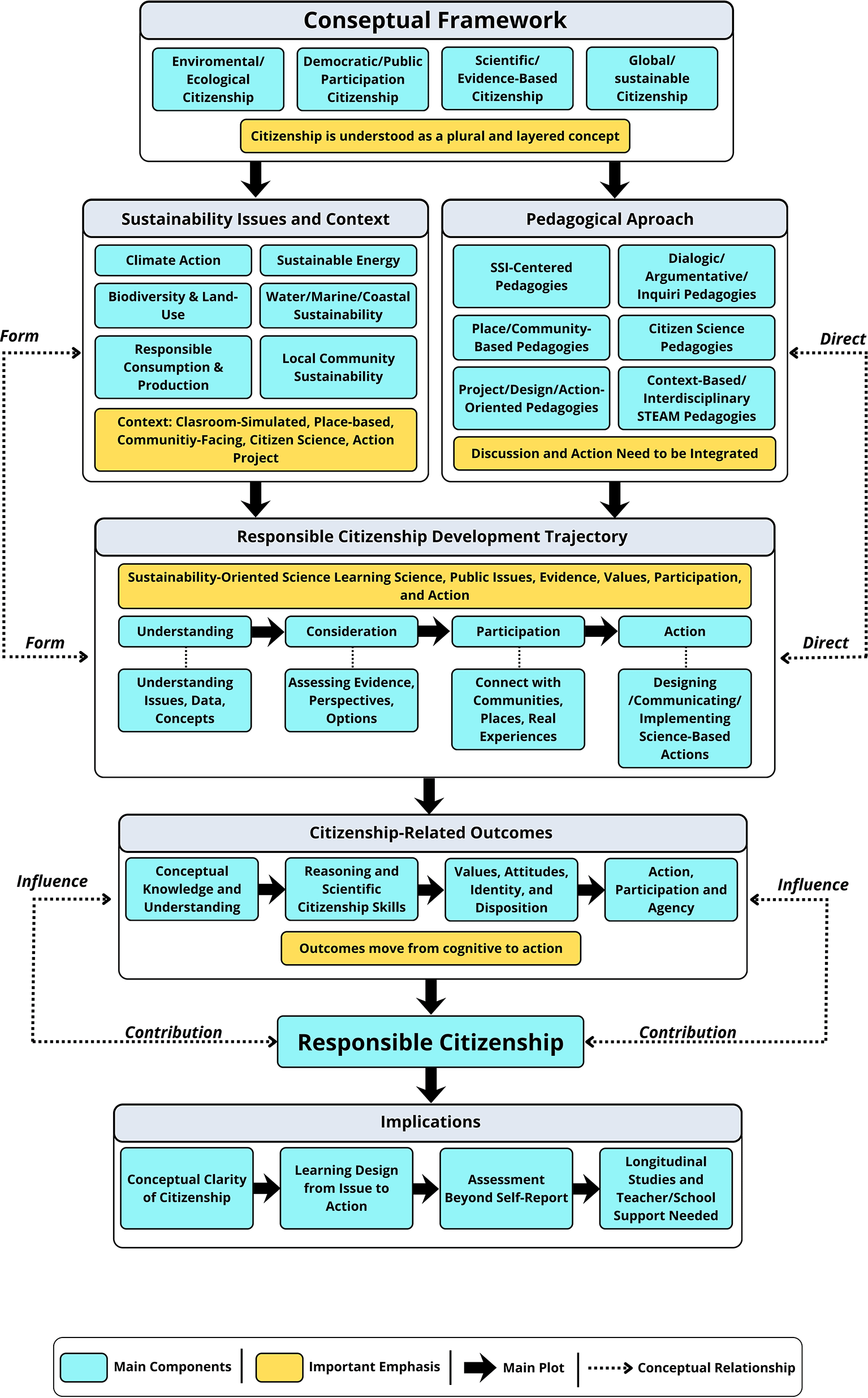
The framework conceptualizes responsible citizenship as a developmental process involving understanding sustainability issues, judging evidence and value conflicts, participating with communities or stakeholders, and taking informed science-based action. It also highlights that sustainability-oriented science education operates through intersecting disciplinary lenses, including biological, chemical, physical, mathematical/data-oriented, social, economic, ethical, and civic perspectives.
The framework also foregrounds the interdisciplinary nature of sustainability-oriented science education. Sustainability issues such as climate change, sustainable energy, biodiversity loss, water pollution, marine degradation, and responsible consumption cannot be adequately addressed through a single disciplinary lens. Instead, they require the integration of biological, chemical, physical, mathematical, social, economic, ethical, and civic perspectives. Within the UJPA framework, these perspectives operate as intersecting lenses that support learners in moving from understanding scientific and socio-ecological problems, to judging evidence and value conflicts, participating with relevant communities or stakeholders, and designing or evaluating responsible action.
This framework demonstrates that developing responsible citizenship is not merely an endpoint but a gradual process mediated by conceptual understanding, issue selection, pedagogical methods, contexts, and opportunities for participation. It also offers a theoretical foundation for analyzing citizenship-related outcomes: while learning may commence with knowledge and reasoning, it should progressively advance toward identity, agency, participation, and action. The next generation of research should, therefore, clarify the conceptual boundaries of citizenship, transcend discussion-based SSI learning, consider the long-term development of citizenship, employ measures other than self-report, and explore the systemic impacts of teachers, curricula, school culture, institutional policies, and community engagement.
In summary, the future of this domain lies not merely in questioning whether citizenship can be fostered, but in investigating what kind of citizenship is cultivated, with respect to which sustainability issues, under what pedagogical conditions, utilizing what evidence, and to what extent. Science education for sustainability holds immense potential to foster responsible citizenship, provided that learning is designed in ways that dynamically link conceptual, evidence-based, participatory, and action-oriented education.
Limitations of the study
There are several limitations to this review. First, the synthesis is based on the specific terminology and reporting of findings within the reviewed studies; some research may have been highly citizenship-focused without explicitly employing the term “citizenship,” while others utilized the term without providing a clear definition. Second, because this review focused specifically on sustainability-oriented science education, the findings may not be directly generalizable to the broader fields of general citizenship education, environmental education, or education for sustainable development (ESD). Third, the majority of the reported outcomes pertained to knowledge, attitudes, identities, self-efficacy, or preparedness to take action, whereas very little empirical evidence was documented regarding actual engagement in action, the societal impact of such action, or long-term engagement. Finally, variations in educational stages, geographical countries, curriculum frameworks, research designs, and pedagogical approaches indicate that the results across studies can only be compared to a limited extent. These points do not undermine the utility of this synthesis but rather suggest that the conclusions should be interpreted within the scope of science education research that links sustainability issues, pedagogy, and citizenship-related outcomes.
This synthesis demonstrates that responsible citizenship within sustainability-focused science education is a diverse and multifaceted concept that transcends simple environmental awareness. It encompasses the rigorous use of science and evidence, awareness of ethical values, active participation in public issues, and responsible action. The manifestations of citizenship reported in the literature were highly contingent upon the conceptual framing of citizenship, the specific sustainability issues addressed, and the pedagogical design. Classroom-based (or simulated) socio-scientific issue-based learning contexts tended to facilitate evidence-based reasoning and simulated participation. Conversely, place- and community-based learning, authentic data utilization, citizen science, and action project-based learning were more effective in facilitating actual citizen participation and action.
Furthermore, this review suggests that citizenship-related learning outcomes progress sequentially from understanding to reasoning, identity, disposition, participation, and action. However, the existing literature provides robust evidence primarily for knowledge, attitudes, and identity, while empirical evidence regarding actual participation and action remains sparse. Therefore, future research and educational practice must develop deeper instructional designs and assessment frameworks that target observable, performative, and contextualized citizenship. The Understanding-Judgment-Participation-Action (UJPA) model proposed in this review provides a theoretical foundation for a more holistic design and assessment of responsible citizenship. By implementing this model, sustainability-oriented science education can empower learners not only to comprehend sustainability challenges but also to respond to them rationally, ethically, participatively, and responsibly.
| Views | Downloads | |
|---|---|---|
| F1000Research | - | - |
|
PubMed Central
Data from PMC are received and updated monthly.
|
- | - |
Provide sufficient details of any financial or non-financial competing interests to enable users to assess whether your comments might lead a reasonable person to question your impartiality. Consider the following examples, but note that this is not an exhaustive list:
Sign up for content alerts and receive a weekly or monthly email with all newly published articles
Already registered? Sign in
The email address should be the one you originally registered with F1000.
You registered with F1000 via Google, so we cannot reset your password.
To sign in, please click here.
If you still need help with your Google account password, please click here.
You registered with F1000 via Facebook, so we cannot reset your password.
To sign in, please click here.
If you still need help with your Facebook account password, please click here.
If your email address is registered with us, we will email you instructions to reset your password.
If you think you should have received this email but it has not arrived, please check your spam filters and/or contact for further assistance.

Comments on this article Comments (0)