Keywords
Artificial Intelligence, Recruitment, Human Resource Management, Quantitative Analysis, Algorithmic Fairness, Candidate Experience, Recruitment Efficiency, Reproducibility

Artificial Intelligence, Recruitment, Human Resource Management, Quantitative Analysis, Algorithmic Fairness, Candidate Experience, Recruitment Efficiency, Reproducibility
In recent years, the adoption of Artificial Intelligence (AI) in human resource management (HRM) has grown significantly, especially in talent acquisition processes. From résumé screening algorithms to automated interview scheduling and chatbot-based candidate engagement, AI is reshaping traditional recruitment frameworks. Advocates of these technologies argue that AI enables faster, more objective, and cost-effective hiring (Upadhyay & Khandelwal, 2018; Meijerink et al., 2021). However, the implementation of AI in recruitment also raises critical questions about transparency, algorithmic bias, and the dehumanization of decision-making (Binns et al., 2018).
While existing literature highlights the potential of AI to streamline workflows and reduce human error, empirical evidence on its real-world effectiveness remains limited especially from a quantitative perspective. Most studies to date are conceptual or qualitative in nature, often focusing on ethical debates or technological descriptions without measuring concrete organizational outcomes (Van Esch et al., 2019; Chamorro-Premuzic et al., 2019). This gap underscores the need for rigorous, data-driven investigations into how AI tools affect key recruitment indicators such as time-to-hire, candidate experience, and the mitigation or reproduction of bias.
Moreover, the integration of AI into recruitment must be analyzed within broader organizational and societal contexts. For example, Chandad and Abakouy (2025), in their review of women’s well-being in Morocco’s automotive sector, underscore the influence of HR systems on perceptions of fairness, trust, and inclusivity. These findings suggest that AI tools cannot be evaluated solely through metrics of speed and efficiency they must also be assessed in terms of their social and ethical impacts, particularly when applied to contexts already marked by structural inequities.
This study responds to these gaps by presenting a comprehensive quantitative analysis of AI’s impact on recruitment processes. Drawing on a multi-industry survey of 423 HR professionals, we assess how AI influences four central dimensions: efficiency, candidate experience, bias mitigation, and decision-making quality. Our aim is to provide empirically grounded insights for HR practitioners, policymakers, and AI system designers, contributing to both academic discourse and practical implementation.
The promise of AI in recruitment is often centered around gains in operational efficiency. Tools such as machine learning–driven résumé parsers, predictive analytics for job matching, and automated scheduling systems are credited with reducing time-to-hire and administrative burden (Upadhyay & Khandelwal, 2018; Meijerink et al., 2021). According to Chamorro-Premuzic et al. (2019), companies implementing AI-enabled screening systems reported up to 40% faster shortlisting processes, especially in high-volume hiring contexts.
However, these improvements are not uniform. As noted by Liem et al. (2018), the effectiveness of AI varies depending on dataset quality, job specificity, and recruiter adaptability. Moreover, efficiency does not always translate into accuracy systems trained on outdated data or biased hiring histories may replicate inefficiencies rather than resolve them.
Candidate experience is another area reshaped by AI technologies. Chatbots, automated emails, and self-service platforms aim to create smoother, faster interactions. Research shows that applicants appreciate timely responses and clear communication, which AI tools can help deliver at scale (Suen et al., 2019; Dastin, 2018). Nevertheless, perceived fairness and transparency play a central role in whether candidates trust automated systems.
Recent studies have shown that applicants often feel alienated when recruitment decisions are made by “black-box” systems. Langer et al. (2021) argue that while digitalization offers operational benefits, it may erode the human connection valued in recruitment, particularly in early career or sensitive roles.
Perhaps the most contested dimension of AI in recruitment is algorithmic bias. Studies have documented how AI tools can perpetuate or even exacerbate existing inequalities, especially in terms of gender, ethnicity, and disability (Binns et al., 2018; Raghavan et al., 2020). A notable example is Amazon’s abandoned recruitment engine, which was shown to penalize CVs that included words associated with women (Dastin, 2018).
These risks have spurred calls for stronger auditing and fairness-by-design approaches. Zhang and Dafoe (2020) advocate for “algorithmic hygiene”—regular monitoring and bias mitigation protocols—to avoid unintended discrimination. Despite these initiatives, the lack of industry-wide standards and the proprietary nature of many algorithms hinder transparency and oversight.
The trustworthiness of AI-based recruitment systems hinges on their transparency and explainability. Yet many commercially available tools offer limited insight into how decisions are made. This lack of explainability is particularly problematic in jurisdictions with emerging data protection and anti-discrimination laws (Binns et al., 2018; Mehrabi et al., 2021).
Research by Chandad and Abakouy (2025) illustrates how perceptions of fairness and psychological safety are crucial for employee well-being in industrial contexts. Their findings highlight that opaque systems whether human or algorithmic tend to erode trust, particularly among underrepresented groups. Consequently, the deployment of AI in recruitment cannot be seen as a purely technical exercise; it must also be understood as a cultural and ethical challenge within organizations.
This study adopts a quantitative cross-sectional research design, aimed at examining the impact of AI-based recruitment systems on key performance indicators in talent acquisition. We developed a structured survey instrument to capture HR professionals’ perceptions and experiences regarding the use of AI in their recruitment processes. The study follows ethical standards for data collection and analysis and complies with reproducibility standards.
The sample consists of 423 human resource professionals from diverse industries, including manufacturing, technology, financial services, and logistics. Participants were selected using a stratified purposive sampling method to ensure representation across firm sizes (SMEs and large enterprises), geographical regions (Europe, North Africa, and the Gulf ), and AI adoption levels (pilot vs. fully deployed).
Data were collected between January and March 2025 via a secure online survey platform. Participation was voluntary and anonymous, with informed consent obtained electronically prior to the start of the survey.
The questionnaire comprised 28 closed-ended items organized into four dimensions:
• Recruitment Efficiency (e.g., time-to-hire, cost per hire, resource allocation)
• Candidate Experience (e.g., communication clarity, application follow-up)
• Perceived Fairness and Bias (e.g., bias reduction, equity in shortlisting)
• Trust and Transparency (e.g., explainability of decisions, user confidence in AI tools)
Responses were captured using a five-point Likert scale (1 = strongly disagree to 5 = strongly agree). The instrument was pre-tested on 15 HR professionals to ensure clarity, internal coherence, and face validity.
We conducted descriptive statistics, exploratory factor analysis (EFA), and multiple linear regression models to identify patterns and assess the relationship between AI usage and perceived recruitment outcomes. Cronbach’s alpha was used to test internal reliability for each construct (α > 0.80 for all dimensions).
Regression diagnostics were performed to test for multicollinearity, normality, and heteroscedasticity. Statistical analyses were carried out using SPSS v28 and R (v4.3).
The final dataset included 423 valid responses. The majority of participants (62%) held managerial or senior HR roles, with 38% representing operational or mid-level positions. Regarding company size, 54% worked in firms with over 500 employees, whilst 46% were from small and medium enterprises (SMEs). AI-based recruitment systems were in full deployment in 39% of the companies surveyed, and at pilot or testing stages in 61%.
Table 1 summarises the demographic and organisational characteristics of respondents.
Respondents generally reported positive perceptions of AI’s impact on recruitment.
• The mean score for recruitment efficiency was 4.12 (SD = 0.68), suggesting strong agreement on improved time-to-hire and screening speed.
• The candidate experience dimension scored a mean of 3.87 (SD = 0.73), indicating moderately favorable impressions of responsiveness and interaction clarity.
• Perceived bias reduction had a more mixed evaluation (mean = 3.41, SD = 0.89), with concerns raised about gender and socio-economic disparities.
• Trust and transparency scored the lowest, with a mean of 2.96 (SD = 0.94), highlighting ongoing doubts about algorithmic decision-making and explainability.
An exploratory factor analysis (principal axis factoring, Varimax rotation) confirmed the validity of the four predefined dimensions.
We ran multiple linear regressions to assess the impact of AI tool usage (independent variable) on each recruitment dimension (dependent variables). Control variables included company size, industry sector, and geographic location.
• AI usage was a strong predictor of recruitment efficiency (β = 0.61, p < 0.001), even when controlling for firm size.
• A positive but weaker association was observed with candidate experience (β = 0.38, p < 0.01).
• Bias mitigation showed a significant but modest effect (β = 0.21, p < 0.05), with variations across sectors.
• Trust and transparency were not significantly improved by AI deployment alone (β = 0.08, n.s.), suggesting that explainability features must be deliberately designed.
See Table 2 for full regression results and Figures 1–3 for visual summaries of the effects by job category and AI maturity stage.
| Dependent variable | Beta (β) | p-value |
|---|---|---|
| Recruitment Efficiency | 0.61 | < 0.001 |
| Candidate Experience | 0.38 | < 0.01 |
| Bias Mitigation | 0.21 | < 0.05 |
| Trust & Transparency | 0.08 | n.s. |
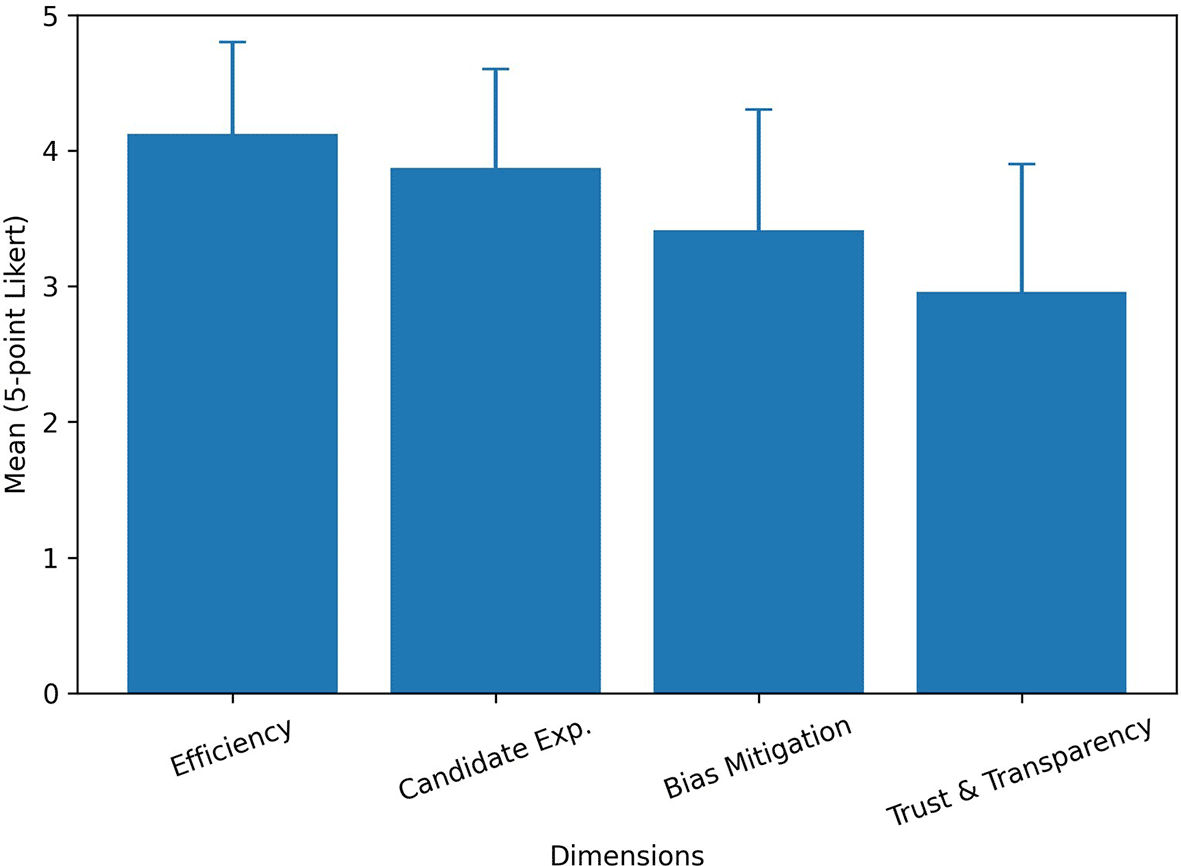
Mean scores across recruitment dimensions with standard deviation error bars (5-point Likert scale).
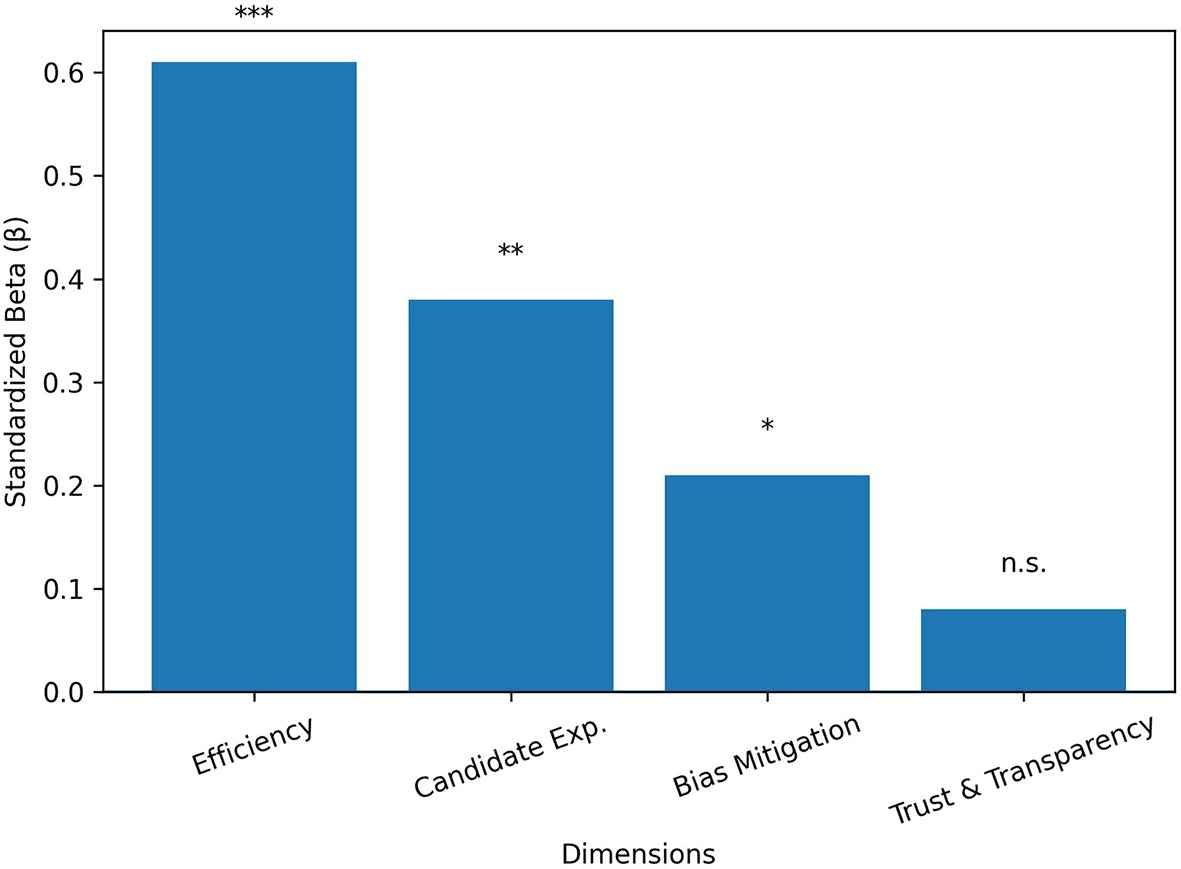
Standardised regression coefficients showing the impact of AI usage on recruitment outcomes. Significance levels: *** p < 0.001; ** p < 0.01; * p < 0.05; n.s.: Not significant.
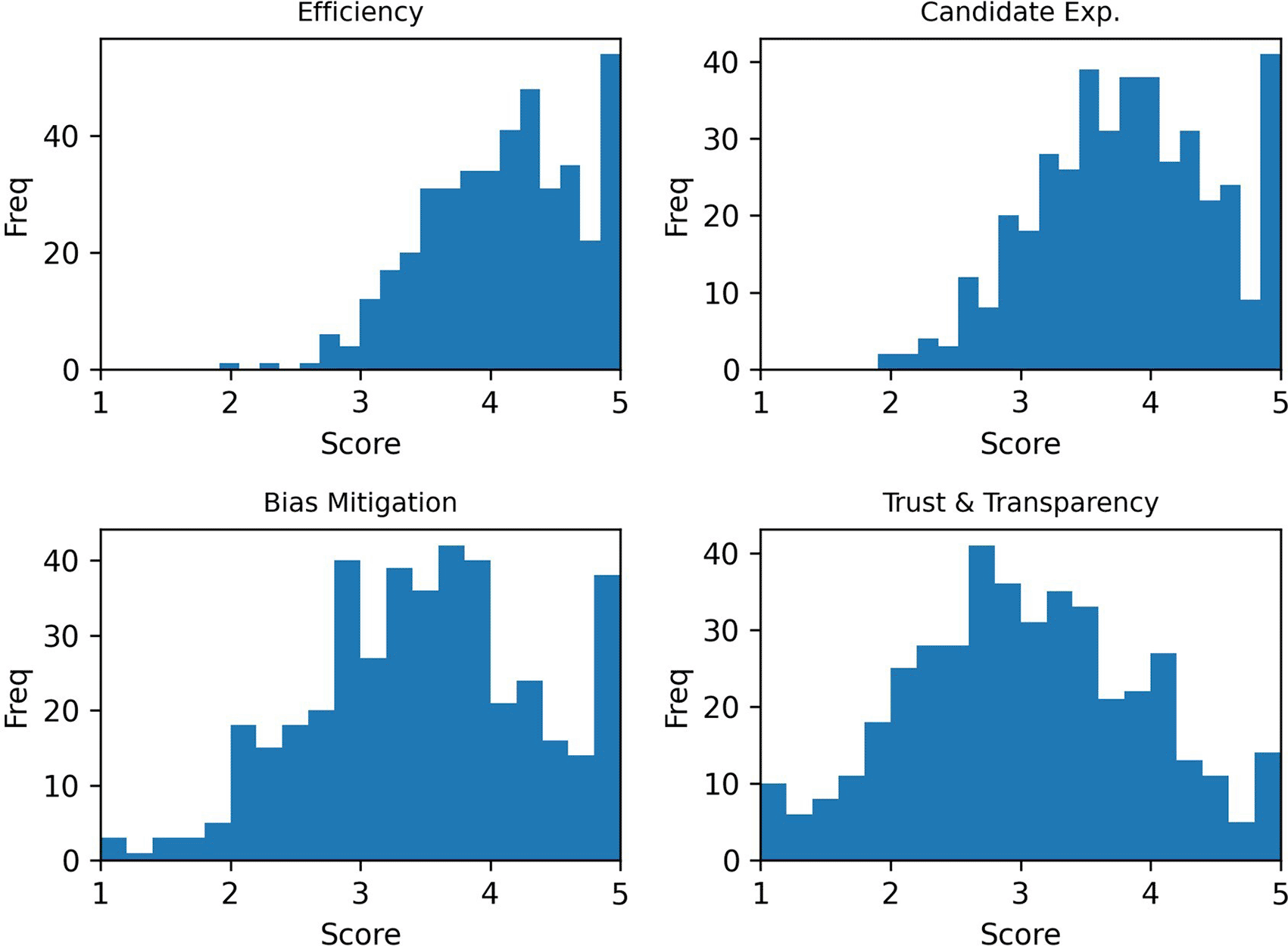
Distribution of responses across recruitment dimensions (N = 423).
The findings of this study provide empirical support for the growing consensus that AI has the potential to enhance recruitment efficiency and streamline administrative processes. The significant positive relationship between AI usage and time-to-hire confirms earlier observations by Meijerink et al. (2021) and Upadhyay and Khandelwal (2018), who emphasised automation as a driver of operational gains in talent acquisition. Our results further show that AI tools can improve applicant screening and communication flows, supporting the claim that digital tools improve recruitment logistics at scale.
However, these operational benefits do not automatically translate into improved fairness or transparency. Although participants acknowledged marginal gains in perceived bias mitigation, the effect size was modest. This finding aligns with concerns raised by Binns et al. (2018) and Raghavan et al. (2020), who noted that algorithmic systems often inherit the biases present in historical datasets. The weak association between AI and trust further underscores the limitations of current systems in delivering explainable and ethically aligned decisions.
Interestingly, our results echo the organisational dynamics described in Chandad and Abakouy's (2025) work on gendered well-being in Morocco’s automotive sector. Their research demonstrated that perceptions of fairness and transparency in HR processes are deeply linked to employee trust and psychological safety factors that are not easily substituted by algorithmic efficiency. The present study reinforces the idea that whilst AI may optimise certain procedural aspects of recruitment, it cannot, on its own, foster inclusive or equitable hiring environments.
From a practical standpoint, these findings suggest that organisations should not implement AI in recruitment merely as a cost-saving or time-saving tool. Instead, the deployment of such systems should be accompanied by deliberate efforts to ensure transparency, user training, and ethical oversight. For instance, HR departments might prioritise AI tools that include built-in explainability features, bias-detection audits, or human-in-the-loop decision frameworks.
Finally, these results contribute to theoretical discussions around the role of AI in decision-making. Rather than positioning AI as a replacement for human judgement, our study supports a complementary view in which AI enhances but does not replace human discretion. This hybrid model is particularly important in contexts where trust, equity, and human connection remain central to candidate evaluation.
This study provides one of the few quantitative analyses to date on the effects of Artificial Intelligence in recruitment processes. Based on a multi-sector survey of 423 HR professionals, the findings demonstrate that AI tools significantly improve recruitment efficiency and contribute to a more structured candidate experience. However, these technological gains are accompanied by persistent concerns related to fairness, transparency, and the risk of reproducing systemic biases.
Our results highlight that AI, whilst effective in automating certain phases of hiring, does not inherently guarantee equity or trust. These dimensions depend not only on the algorithmic design but also on the broader organisational culture, regulatory frameworks, and ethical safeguards put in place. As emphasised in the literature (Binns et al., 2018; Chandad & Abakouy, 2025), meaningful adoption of AI in HR must go beyond operational logic and engage with deeper issues of accountability and inclusion.
From a managerial perspective, these findings suggest that AI should be integrated into recruitment as part of a hybrid human–machine decision-making model, where human oversight remains central. Developers, HR practitioners, and policymakers should collaborate to co-design tools that are both technically robust and ethically defensible.
While this study offers valuable insights, several limitations must be acknowledged:
• Cross-sectional design: The data reflects a single time point, limiting our ability to infer causal relationships.
• Self-reported measures: The study relies on subjective perceptions, which may introduce social desirability bias or misjudgments in evaluating AI’s performance.
• Sector and geography: Although we included participants from multiple sectors and regions, the results may not generalize to all organizational contexts—particularly in low-AI-adoption environments.
Future studies could address these limitations by adopting longitudinal designs, enabling an understanding of how perceptions and outcomes evolve over time with AI implementation. Moreover, experimental studies comparing traditional and AI-assisted recruitment pipelines could offer stronger causal evidence on performance differences.
Additional research is also needed on the candidate perspective, particularly among underrepresented groups, to assess how AI shapes their trust, comfort, and perceived fairness throughout the hiring process. Finally, interdisciplinary work combining data science, labor law, and organizational behavior would enrich the field by bridging technical insights with human-centered values.
This study was conducted in accordance with the Declaration of Helsinki (2013).
Given that the research involved an anonymous online survey of human resource professionals, with no collection of sensitive personal data, no vulnerable populations, and no clinical intervention, the study was exempt from formal Institutional Review Board (IRB) approval according to applicable institutional and national guidelines.
All participants were provided with an information sheet detailing the purpose of the study, data handling procedures, and their rights as participants. Informed consent was obtained electronically prior to participation. Participation was voluntary and anonymous, and respondents could withdraw at any time without consequence. All data were collected and stored in compliance with GDPR and data protection best practices.
The analytical code used in this study is openly available.
Source code available from: https://github.com/amina-chandad/ai-recruitment-study
Archived source code at time of publication: https://doi.org/10.5281/zenodo.19244452
License: MIT License.
| Views | Downloads | |
|---|---|---|
| F1000Research | - | - |
|
PubMed Central
Data from PMC are received and updated monthly.
|
- | - |
Provide sufficient details of any financial or non-financial competing interests to enable users to assess whether your comments might lead a reasonable person to question your impartiality. Consider the following examples, but note that this is not an exhaustive list:
Sign up for content alerts and receive a weekly or monthly email with all newly published articles
Already registered? Sign in
The email address should be the one you originally registered with F1000.
You registered with F1000 via Google, so we cannot reset your password.
To sign in, please click here.
If you still need help with your Google account password, please click here.
You registered with F1000 via Facebook, so we cannot reset your password.
To sign in, please click here.
If you still need help with your Facebook account password, please click here.
If your email address is registered with us, we will email you instructions to reset your password.
If you think you should have received this email but it has not arrived, please check your spam filters and/or contact for further assistance.

Comments on this article Comments (0)