Keywords
festival marketing; tourism marketing; local creative economy; digital marketing; sustainable tourism; systematic literature review

festival marketing; tourism marketing; local creative economy; digital marketing; sustainable tourism; systematic literature review
In recent years, the global tourism industry has shifted from conventional approaches toward experiences rooted in culture, creativity, and community participation. One notable trend is the increasing use of festival marketing as a strategy to attract tourists through the organization of events such as cultural, culinary, music, and local arts festivals.1,2,3,4 In Indonesia, this trend is becoming evident as many regions develop festivals to promote their destinations while simultaneously strengthening local identity and fostering the growth of the creative economy.4,5,6,7 Festivals serve not only as a form of entertainment but also as an effective marketing communication medium, as they create memorable experiential marketing experiences for tourists.8,9
This research topic is important because festival marketing has multidimensional impacts, spanning economic, social, and marketing dimensions.30,15 From an economic perspective, festivals can increase tourist visits, extend the length of stay, and create opportunities for local businesses such as creative SMEs.10,11,12,13 From a marketing perspective, festivals possess high visual and emotional appeal, making them easy to promote via social media and potentially serving as viral content that expands the global reach of destination promotion.4,6,15,14 Furthermore, within the local creative economy, festivals serve as platforms for cultural preservation while fostering sustainable innovation in creative products.16,17,18 In recent tourism studies, festival-based tourism has also been increasingly associated with sustainable tourism development and the achievement of Sustainable Development Goals (SDGs), particularly through community participation, cultural preservation, and local economic empowerment.65 Therefore, a study of festival marketing within tourism marketing, grounded in the local creative economy, is essential to understand how this strategy is implemented, its effectiveness, and its contribution to the development of competitive destinations.19,20,21,22,23
Although festival marketing is increasingly being used as a strategy in tourism marketing based on the local creative economy, in reality, its implementation still faces complex challenges.24,25,26 One of the main issues is the lack of consistency in festival planning and management, resulting in varying quality and impact across regions. Many festivals are organized on an ad-hoc basis without long-term strategic planning, making them less capable of providing sustainable contributions to enhancing the competitiveness of tourist destinations.27,28,29
The effectiveness of festival marketing in increasing tourist visits to drive local creative economy growth remains inconsistent with expected outcomes.31,32,33,34 Some studies indicate that festivals can enhance brand awareness and tourist engagement; however, findings also suggest that their impact on visit conversion and local revenue growth remains limited, indicating a gap between the potential and actual benefits of festivals as tourism marketing tools.35,36,37
Another issue is the lack of integration between festival organizers and the digital marketing strategies currently favored by tourists. Many festivals have not been able to fully leverage digital platforms to expand promotional reach and create viral effects. The involvement of local creative economy actors is also not yet optimal in terms of product innovation and active participation in the tourism value chain; consequently, the economic benefits generated are not evenly distributed, making it difficult to gain a comprehensive understanding of the most effective strategies, success factors, and key challenges in implementing festival marketing based on the local creative economy.38,39,40
The literature on festival marketing in the context of tourism and the creative economy is indeed beginning to grow, but a significant research gap remains.18,30,2,3 First, most studies focus on a partial analysis of the festival’s impact—such as increased tourist visits or brand awareness—without comprehensively examining how festival marketing contributes to the local creative economy ecosystem as a whole, including the involvement of MSMEs, the creation of cultural value, and economic sustainability.41,19,9 Second, previous studies are generally contextual and limited to specific types of festivals or regions, resulting in fragmented findings that are difficult to generalize. Third, there is inconsistency in research findings regarding the effectiveness of festival marketing.11,2,3,10 Some studies indicate significant positive impacts on tourist engagement and destination image, while others find that the effects on visit conversion and local revenue growth remain limited.3,9,11 This inconsistency highlights the need for a systematic literature review to identify patterns of findings, key success factors, and moderating variables that influence the effectiveness of the strategies employed. Fourth, there is a lack of research on festival marketing that leverages digital marketing strategies, particularly to create immersive tourism experiences and expand promotional reach through social media. Yet, in today’s digital era, a festival’s success is determined not only by offline events but also by the ability to foster sustainable digital engagement.10,11,30
Based on the research gaps outlined above, a Systematic Literature Review (SLR) approach is necessary to comprehensively integrate, evaluate, and synthesize previous research findings. Thus, this study is expected to provide a more holistic understanding of trends, strategies, and the effectiveness of festival marketing in supporting tourism marketing based on the local creative economy.
This study aims to synthesize the literature on festival marketing within local creative economy-based tourism marketing, focusing on identifying strategies, evaluating effectiveness, and analyzing its contributions to destination development and the creative economy. This study also aims to identify research trends, gaps in the literature, and key success factors for implementing festival marketing within the context of modern tourism marketing. Several research questions are posed to achieve the study’s objectives by addressing the following: 1. What are the characteristics and forms of festival marketing implementation in tourism marketing based on the local creative economy across various destination contexts? 2. How effective is festival marketing in enhancing tourist engagement, brand awareness, as well as tourism visits and economic impacts? 3. What factors influence the success and failure of festival marketing implementation in tourism marketing? 4. What is the role and integration of festival marketing with the local creative economy and digital marketing in supporting the development of sustainable tourism destinations? Thus, answering these research questions will provide a tangible contribution to the implementation of festival marketing within tourism marketing grounded in the local creative economy.
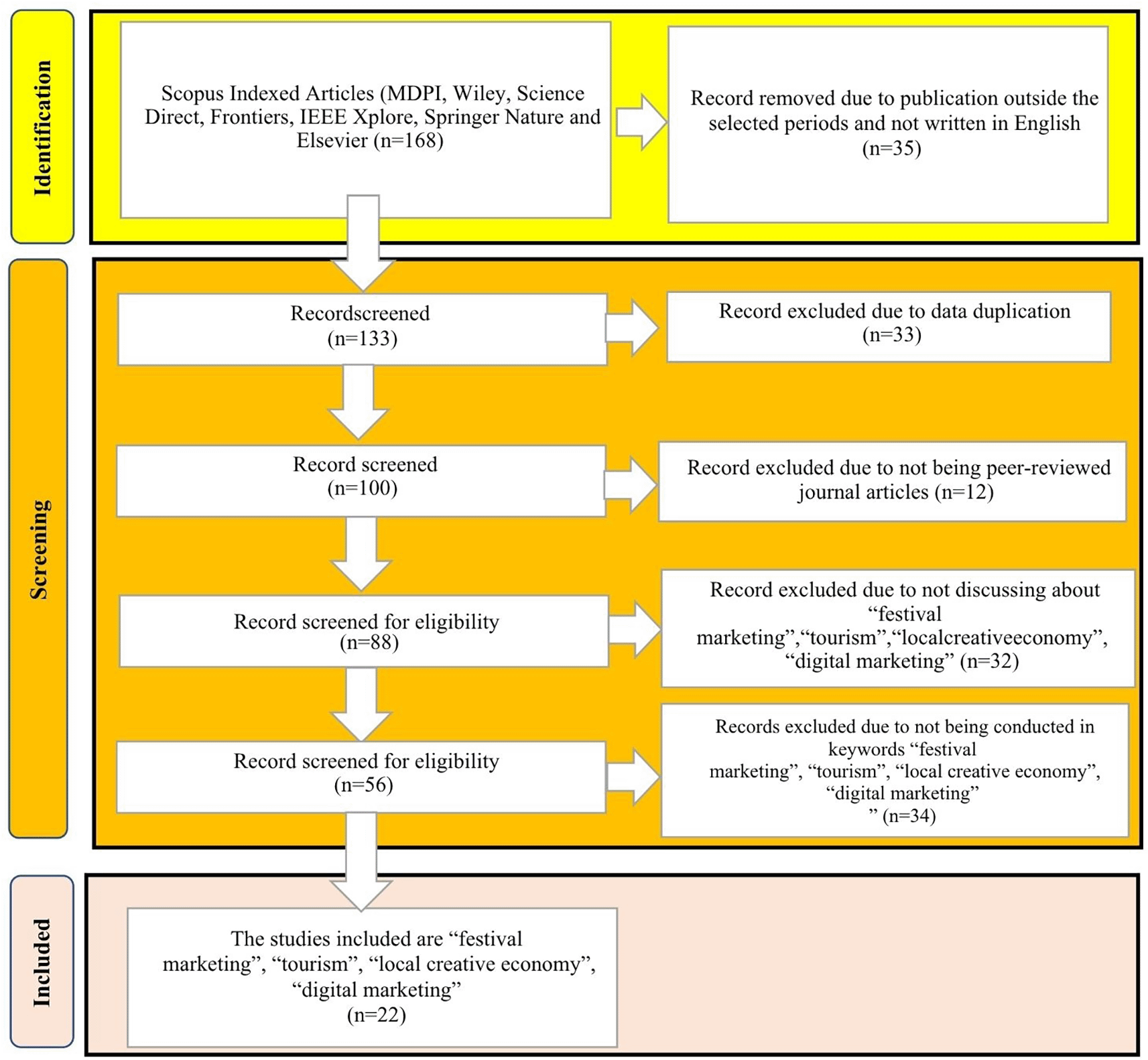
This study employs a systematic literature review and a PRISMA-compliant meta-analysis to examine festival marketing within the context of tourism marketing in the local creative economy. The PRISMA method42 is a comprehensive and structured approach to literature review designed to establish the scientific standing of the research being conducted. The PRISMA method is implemented in four stages: (1) identifying the research question (RQ), (2) identifying paper sources, (3) searching for papers relevant to the RQ, and (4) analyzing the search results. The article selection process followed the PRISMA framework and is illustrated in Figure 1.
A systematic literature review was conducted to answer research questions on festival marketing in tourism marketing within the local creative economy. The focused research questions are:
1. What are the characteristics and forms of festival marketing implementation in tourism marketing based on the local creative economy across various destination contexts?
2. How effective is festival marketing in enhancing tourist engagement, brand awareness, as well as tourism visits and economic impacts?
3. What factors influence the success and failure of festival marketing implementation in tourism marketing?
4. How do festival marketing, the local creative economy, and digital marketing interact to support the development of sustainable tourism destinations?
Research on festival marketing within local, creative-economy-based tourism marketing has been widely published; however, this literature review focuses on relevant studies. This study draws from papers or proceedings indexed in MDPI, IEEE, Taylor & Francis, and Elsevier, all of which are listed in Scopus. The study covers the period from 2020 to 2025 to ensure the research remains relevant to the present time.
The studies are papers written in English and must include the keywords “festival marketing,” “tourism,” “local creative economy,” “digital marketing,” and “systematic literature review.” Table 1 details the selected papers, including author information, references, publishers, and publication years, thereby providing a comprehensive overview of the reviewed papers.
| Reference | Publisher | Publish Year |
|---|---|---|
| 51 | Religions | 2020 |
| 52 | Tourism Economics | 2020 |
| 55 | Journal of Business Research | 2020 |
| 56 | Springer International Publishing | 2020 |
| 61 | Journal of Tourism Analysis | 2020 |
| 53 | Sustainability | 2021 |
| 59 | Review of Tourism Research | 2021 |
| 46 | ScienceDirect | 2022 |
| 48 | Journal of Travel Research | 2022 |
| 49 | Sustainability | 2022 |
| 60 | Sustainability | 2022 |
| 45 | Journal of Travel Research | 2023 |
| 47 | Sustainability | 2023 |
| 43 | Cogent Business & Management | 2024 |
| 50 | Administrative Sciences | 2024 |
| 54 | Journal of Travel & Tourism Marketing | 2024 |
| 57 | Cogent Business & Management | 2024 |
| 58 | Journal of Hospitality and Tourism Insights | 2024 |
| 62 | Administrative Sciences | 2024 |
| 44 | Springer | 2025 |
| 63 | International Journal of Event and Festival Management | 2025 |
| 64 | Jurnal Kajian Komunikasi | 2025 |
The research question is based on the keywords “festival marketing,” “tourism,” “local creative economy,” “digital marketing,” and “systematic literature review,” with the criteria being English-language papers with full-text access published between 2020 and 2025. The selection of papers meeting these criteria used the inclusion and exclusion methods described in Table 2.
Using specific categories and keyword searches, the researchers identified 133 papers indexed in Scopus (MDPI, Taylor & Francis, ScienceDirect). They then applied a publication year filter from 2020 to 2025, resulting in 22 articles that met the criteria and were written in English. The PRISMA flowchart illustrating the article selection process is presented in Figure 1.
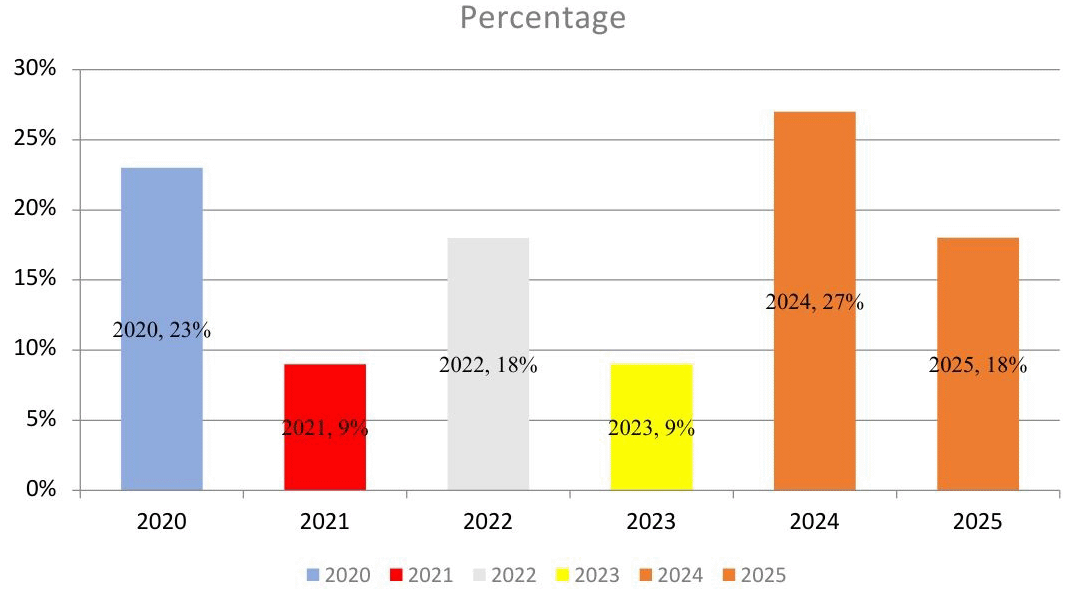
22 articles were selected from Scopus-indexed journals and conference proceedings from 2020 to 2025. Research on festival marketing in tourism marketing based on the local creative economy, by publication year from 2020 to 2025, is as follows: 2020 (23%), 2022 (9%), 2023 (18%), 2024 (9%), and 2025 (14%). he distribution of selected articles by publication year is illustrated in Figure 2.
The initial systematic search identified 133 articles published between 2020 and 2026 in various selected databases. After removing duplicates and applying the inclusion and exclusion criteria, 100 articles were selected.
Further screening based on relevance yielded 88 articles that were evaluated for suitability. Subsequently, 56 articles were evaluated for suitability through a full-text review. Finally, 22 articles were included in the analysis, ensuring that the selected studies were highly relevant and aligned with the research objectives. This study employed a qualitative narrative synthesis approach therefore, statistical meta-analysis, risk-of-bias assessment, and sensitivity analysis were not conducted.
The results of this study aim to answer the following research questions: 1. What are the characteristics and forms of marketing festival implementation in tourism marketing based on the local creative economy across various destination contexts? 2. How effective are marketing festivals in increasing tourist engagement, brand awareness, as well as tourism visits and economic impact? 3. What factors influence the success and failure of marketing festival implementation in tourism marketing? 4. How do marketing festivals, in conjunction with the local creative economy and digital marketing, support the development of sustainable tourism destinations? Each research question will be explained in detail. The distribution of selected studies by publication year is presented in Figure 2.
Festival marketing is widely used as a tourism marketing strategy based on local creative economies in various countries. Most literature identifies that the most dominant festivals are those based on culture, cuisine, and the arts, which serve not only as tourist attractions but also as a medium for destination marketing communication. Thus, festivals are typically designed to highlight local distinctiveness and strengthen the region’s cultural identity.
In terms of implementation, three main approaches are identified in the literature. First, the event-based marketing approach, where festivals serve as the primary promotional tool to attract tourist visits during a specific period. Second, the experiential marketing approach, which emphasizes creating emotional and participatory experiences for tourists. Third, the community-based tourism approach actively involves the local community in organizing the festival.
The implementation of festival marketing is contextual and influenced by geographical, cultural, and local policy factors, leading to variations in scale, quality, and objectives. This study explains that while the concept of festival marketing is universal, its implementation practices are highly dependent on a destination’s characteristics. Table 3 summarizes the role and implementation of festival marketing within local creative economy-based tourism across the reviewed literature.
| References | Analysis | Key Findings | Literature Review |
|---|---|---|---|
| 51,52,47 | The Role of Festival Marketing | Key tourism marketing strategies | Festivals are used as a tool to attract tourists while promoting destinations based on the local creative economy in various countries |
| 45,46,50 | Dominant Festival Types | Culture, cuisine, and the arts | The literature indicates that cultural festivals, food festivals, and art festivals are the most commonly used because they effectively highlight local identity |
| 56,55 | Functions of Festivals | Tourist attractions & marketing communication channels | Festivals serve not only as entertainment but also as a means of destination branding and communicating cultural values to tourists |
| 59,47 | Primary Focus of Festivals | Local distinctiveness & cultural identity | The festival is designed to strengthen the destination’s positioning through differentiation based on local wisdom |
| 52,51 | Approach 1 | Event-Based Marketing | The festival is used as a primary promotional tool to boost tourist visits over a specific period (short term impact) |
| 55,45 | Approach 2 | Experiential Marketing | Emphasizing emotional, interactive, and participatory experiences that enhance visitor engagement |
| 59,47 | Approach 3 | Community-Based Tourism | Local communities are actively involved in the planning and implementation of the festival to promote sustainability and economic empowerment |
| 50,45 | Implementation Characteristics | Contextual and diverse | The implementation of festival marketing varies depending on local conditions |
| 44,47 | Influencing Factors | Geographical, cultural, and policy factors | Location, cultural significance, and government policy support influence the scale, quality, and objectives of the festival |
The table above illustrates that festival marketing serves not only as a promotional tool but also as a destination differentiation strategy. However, its contextual nature underscores the need for a more integrated strategic model to ensure that its implementation is not sporadic.
This research question aims to evaluate the extent to which festival marketing, as an experiential marketing strategy, can have a tangible impact on tourist behavior and the performance of tourism destinations, particularly those based on the local creative economy. The effectiveness of festival marketing on tourism performance across four key dimensions is synthesized in Table 4.
A. Effectiveness on tourist engagement
Festival marketing enhances tourist engagement because festivals offer immersive experiences in which tourists are directly involved in the cuisine, culture, and arts. Festival marketing fosters emotional bonding, creating an emotional connection with the tourist destination; furthermore, it offers a participatory experience where tourists are not merely spectators but active participants in the activities.
Festival marketing engagement is reflected in social media interactions (likes, shares, UGC/user-generated content), longer time spent on social media, and direct participation in festival activities.
B. Effectiveness in Destination Brand Awareness
Festival marketing serves as a powerful destination branding tool because it creates a distinctive identity, facilitates differentiation from other destinations, and triggers viral marketing through social media. Several studies in the festival literature consistently show that organizing activities, such as annual events, strengthen top-of-mind awareness among tourists, while visuals and storytelling within festivals enhance destination recall. Brand awareness of a tourist destination can increase significantly when the festival is packaged with a strong local cultural narrative, creative digital content, including videos, influencers, TikTok, and hashtag campaigns, as well as social media amplification.
C. Effectiveness on Tourism Visits
| References | Dimensions of Effectiveness | Key Indicators | Literature Synthesis Findings | Implications |
|---|---|---|---|---|
| 53,52,45 | Tourist Engagement |
| Marketing festivals boost engagement through immersive experiences, emotional connections, and active participation by tourists in cultural, culinary, and artistic activities | Increasing tourist engagement and strengthening emotional connections with the destination |
| 53,58,61 | Destination Brand Awareness |
| The festival serves as a powerful destination branding tool through cultural storytelling, visually appealing content, the use of influencers, and digital campaigns (hashtags and TikTok) | Strengthening the destination’s positioning and differentiation in the tourism market |
| 63,55 | Tourist Visits |
| Festivals are the primary driver of increased visitor numbers, especially during the events themselves, leading to a surge in tourists and market expansion | Increasing short-term tourist traffic and fostering tourist loyalty |
| 43,49 | Economic Impact of Tourism |
| The festival generates both direct economic impacts (increased sales, higher occupancy rates) and indirect economic impacts (job creation, strengthening of the local economy) | Promoting local economic growth driven by the creative economy |
| 53,61,45 | Factors Contributing to Effectiveness |
| The effectiveness of a festival is influenced by promotional strategies, the ease of access to the venue, and collaboration between the government, the community, and businesses | Determining the success of a marketing festival implementation |
| 58,44 | Challenges & Limitations |
| Economic impacts are not always evenly distributed and are often seasonal in nature unless supported by long-term management and planning | A sustainability strategy is needed to ensure that the impact is not merely temporary |
Festival marketing has proven to be the primary driver of increased tourism visits, particularly in the short term (event-based tourism). Some impacts of festival marketing on tourist visits include a surge in tourist arrivals during the event, increased repeat visits, and the expansion of the tourist market, both domestic and international. The effectiveness of festival marketing on visits is also influenced by the scale of the festival and the promotions conducted leading up to and during the festival, the accessibility of the location, and collaboration with stakeholders such as the government, communities, and SMEs.
Festival marketing contributes both directly and indirectly to the local economy. The direct impact of festival marketing includes increased revenue for SMEs, particularly in the culinary, handicraft, and merchandise sectors. Additionally, direct impacts include higher hotel occupancy rates and increased transportation demand. Meanwhile, the indirect economic impacts of festival marketing include the creation of both temporary and permanent jobs and the strengthening of the local economic ecosystem.
Although festival marketing has both direct and indirect impacts on the economy, its economic effectiveness also depends on good event management, the equitable distribution of economic benefits not concentrated solely on specific parties and the sustainability of the program so that it is not merely seasonal or temporary.
This research question examines the factors that influence the success and failure of festival marketing implementation in tourism marketing. Table 5 presents the determinants of success and failure in festival marketing based on evidence from the systematic literature review.
| References | Factor Aspects | Success Factors | Explanation | Failure Factors | Explanation |
|---|---|---|---|---|---|
| 47,50 | Local Identity | Authenticity and strength of local culture | Highlighting culture (dance, music, traditions) and creative products (cuisine, crafts, fashion) to create differentiation and a unique value proposition | Lack of differentiation | The festival is generic, copying other concepts without local adaptation, thereby losing its appeal |
| 52,56 | Event Planning & Management | Thorough planning and professional management | Including concept, theme, duration, logistics, security, crowd control, and effective time management | Poor event management | Overcrowding or low attendance, unclear schedules, and poor coordination that reduce visitor satisfaction |
| 53,61 | Digital Marketing & Promotion | Effective digital promotion strategies | Utilizing social media, influencers, and creative content (videos, storytelling, live streaming) to boost awareness and engagement | Weak or misdirected promotions | Limited digital marketing efforts and an unclear target audience, resulting in low awareness and traffic |
| 64,44 | Stakeholder Collaboration | Multi-stakeholder collaboration | Collaboration between the government, SMEs, local communities, academics, and the media enhances the credibility and success of the event | Limited collaboration | A lack of engagement from relevant stakeholders results in low levels of support and sustainability |
| 58 | Accessibility & Infrastructure | Adequate infrastructure and easy access | Good transportation, facilities (restrooms, parking, accommodations), and easily accessible tourist information enhance the comfort of visitors | Limited access & infrastructure | Difficult access, limited facilities, and minimal information hinder visits and the tourist experience |
| 55,46 | Tourism Experience | Interactive and emotional experiences | The festival offers a participatory, Instagram-worthy experience that fosters emotional engagement among visitors | Less engaging experience | Limited interaction, not memorable, and therefore does not encourage engagement or repeat visits |
| 59,47 | Community Engagement | Active participation of the local community | The involvement of MSMEs and communities fosters a sense of ownership and boosts the local economy | Limited community involvement | The lack of community involvement undermines sustainability and the distribution of economic benefits |
| 50,53 | Program Sustainability | Sustainable events (annual/ongoing) | Regular, well-planned festivals strengthen a destination’s positioning and visitor loyalty | Not yet sustainable | These events are seasonal and lack long-term planning, so their impact is only temporary |
The success of festival marketing is influenced by the authenticity and strength of local identity, the quality of event planning and management, digital marketing and promotional strategies, collaboration among stakeholders, accessibility and infrastructure, and the tourism experience.
Authenticity and the strength of local identity are achieved by highlighting local culture—such as dance, music, and traditions—and promoting creative economy products like cuisine, crafts, and local fashion. Thus, with the authenticity of the destination’s local identity, it becomes easier to create a unique value proposition and differentiate the destination.
The quality of event planning and management includes program planning—such as concepts, themes, and content duration. Operational management involves logistics, security, crowd control, and time and schedule management. When all planning runs smoothly, it enhances the success factors of the festival marketing initiative itself.
Digital marketing and festival promotion strategies can be implemented through social media, influencer collaborations, and diverse creative content such as videos, storytelling, and live streaming. These strategies are expected to boost the success factors of the festival marketing campaign.
Collaboration among stakeholders also significantly impacts the success of this festival marketing, as collaboration among the government, SMEs, local communities, academics, and the media will boost tourists’ confidence in the event.
Accessibility and festival marketing infrastructure also enhance the success of festival marketing; easier transportation to the venue makes it more convenient for tourists, while facilities such as restrooms, parking, and accommodations provide greater comfort, and easily accessible tourism information will increase tourist visits.
The tourism experience at a marketing festival differs from other forms of tourism, as tourists will have unique, interactive experiences during the festival, Instagram-worthy moments to encourage them to post about the destination on their social media, and the development of emotional engagement as the marketing festival unfolds.
The factors leading to the failure of festival marketing are the opposite of the factors contributing to its success. These failure factors include a lack of differentiation and unique value in the tourist destination, weak or off-target promotion, poor event management, minimal involvement of the local community, infrastructure and access issues, and a lack of sustainability.
A lack of differentiation in festival marketing can occur when the festival is too generic, lacks a strong local identity, or copies a concept without adapting it to the local context, thereby reducing its appeal to tourists and making it difficult to compete with other destinations. Weak or off-target promotion can result from a lack of digital marketing, preventing the destination from effectively positioning itself with its audience on social media; additionally, an unclear target audience will lead to low awareness and visitor numbers. Poor event management can manifest as overcrowding or, conversely, sparse attendance, unclear event schedules, and poor coordination among organizers. Consequently, this will lower tourist satisfaction. Limited local community involvement—such as the exclusion of local SMEs—leads residents to feel disconnected from the event, thereby reducing the sustainability and local economic impact of festival marketing. Infrastructure limitations and poor access hinder tourists from visiting and returning. The results of this systematic literature review indicate that the factors contributing to the success and failure of festival marketing do not exist as two separate poles, but rather lie on a single spectrum of opposing forces (mirror factors). In other words, nearly all determinants of success can become sources of failure when not managed optimally. These findings indicate that the effectiveness of festival marketing is largely determined by the quality of execution, not merely by the presence of these elements. The points above are summarized in the table below.
The results of this systematic literature review indicate that the factors contributing to the success and failure of festival marketing do not exist as two separate poles, but rather lie on a single spectrum of opposing forces (mirror factors). In other words, nearly all determinants of success can become sources of failure when not managed optimally. These findings indicate that the effectiveness of festival marketing is largely determined by the quality of execution, not merely by the presence of these elements.
The primary focus of this question is to examine the synergistic role (integration effect) of these three elements in creating tourism destinations that are not only popular but also resilient and sustainable.
A. The Role of Festival Marketing as an Integrative Platform
Festival marketing functions as an experiential promotional medium that provides direct experiences for tourists, a space for interaction among tourists, MSME actors, and communities, and a showcase for the local creative economy. Festival marketing is not merely an event but an integrated marketing ecosystem that connects various actors in the tourism sector.
B. Integration with the Local Creative Economy
Festival marketing is an attractive medium for showcasing local creative products, fostering value creation rooted in local culture, and empowering MSMEs and communities. The impact of integrating festival marketing with the local creative economy includes increased local revenue, cultural preservation, and tourism differentiation. The local creative economy is the core of the festival, not merely an accessory. The stronger this integration, the greater the destination’s appeal and sustainability.
C. Integration with Digital Marketing
Integrating digital marketing with festival marketing will enhance social media amplification on Instagram, TikTok, and YouTube. Digital marketing integration also involves user-generated content, influencers, and content creators collaborating, as well as live streaming and digital storytelling. The impact of this integration will expand global reach, increase brand awareness, and create a viral effect. Digital marketing serves as an accelerator, transforming local festivals into global attractions.
D. Contribution to Sustainable Tourism
The integration of festivals, the creative economy, and digital marketing will support sustainability across three dimensions: economic, socio-cultural, and environmental.
Economic sustainability is achieved through increased revenue for SMEs, equitable distribution of local economic benefits, and the creation of new jobs. Social and cultural sustainability can be achieved through the preservation of local traditions and culture, the strengthening of community identity, and community participation. Meanwhile, environmental sustainability occurs when festivals are eco-friendly, waste is reduced, and local resources are utilized. Festivals integrated with the creative economy and digital marketing have great potential to create sustainable destination branding.
This research question posits that festivals serve as catalysts for the local economy, amplified by digital marketing, thereby fostering sustainable tourism. In this framework, festivals act as the platform, the creative economy as the content or value, digital marketing as the amplifier, and sustainability as the outcome. The integration of festival marketing, the creative economy, and digital marketing for sustainable tourism development is further summarized in Table 6.
| References | Integration Aspect | Main Role | Form Of Integration | Literature Synthesis Findings | Impact on Sustainable Tourism |
|---|---|---|---|---|---|
| 47,45 | Marketing Festival | Integrated marketing platform | Connecting tourists, SMEs, communities, and stakeholders | The festival serves as a platform for experiential marketing, a space for interaction, and a showcase for the local creative economy | Strengthening the tourism ecosystem and enhancing the destination’s appeal |
| 49,50 | Local Creative Economy | Core festival content | Showcasing local products (cuisine, crafts, fashion) and culture (dance, music, traditions) | The creative economy is a central element of the festival, not merely an afterthought | Enhancing destination differentiation and cultural preservation |
| 47,54 | Value Creation | Culture-based value creation | Integrating local culture into tourism products and experiences | Festivals drive value creation rooted in local identity | Enhancing the competitiveness and uniqueness of destinations |
| 59,64 | Local Empowerment | Empowering SMEs and communities | Active involvement of local stakeholders in the festival | Increased revenue, participation, and a sense of community ownership | Supporting economic and social sustainability |
| 53,61 | Digital Marketing | Promotion accelerator | Social media (Instagram, TikTok, YouTube), influencers, user-generated content (UGC), live streaming | Digital marketing expands global reach and creates a viral effect | Increases brand awareness and global positioning of the destination |
| 61,54 | Digital Amplification | Massive content distribution | Hashtag campaigns, creative content, digital storytelling | Local festivals can become global attractions through digital amplification | Accelerating the growth of tourist destinations |
| 43,49 | Economic Sustainability | Local economic impact | Increased income for SMEs, economic distribution, job creation | Integrating festivals with the creative economy strengthens the local economy | Promoting sustainable economic growth |
| 50,45 | Socio-Cultural Sustainability | Cultural preservation and identity | Strengthening traditions, community participation | Festivals serve as a means of preserving local culture and identity | Enhancing social cohesion and cultural sustainability |
| 53 | Environmental Sustainability | Eco-friendly practices | Waste reduction, use of local resources, eco-friendly events | Festivals are beginning to adopt the concept of green events | Supporting the environmental sustainability of destinations |
| 47,64,54 | Integrated Outcomes | Sustainable destination branding | The Synergy of Festivals, the Creative Economy, and Digital Marketing | The integration of these three elements creates resilient and competitive destinations | Achieving holistic sustainable tourism |
The implications of this research can be seen from both theoretical and practical perspectives. Regarding theoretical implications, based on the four research questions, it is evident that festival marketing has evolved into a multidimensional phenomenon. In RQ1, the implications of festival marketing vary depending on the type of destination (urban vs. rural), the scale of the festival, and the level of local creative economy involvement. Festival marketing, as a context-dependent marketing strategy rather than a universal model, aligns with the objectives of contextualized tourism marketing theory. Regarding RQ2, the effectiveness of festival marketing in enhancing tourist engagement, brand awareness, and economic impact is not linear; rather, it is mediated by the quality of experience, social interaction, and cultural authenticity. This reinforces the relevance of the experience economy and value co-creation theories, as the relationship between engagement and economic outcomes remains under-explored in the literature. In RQ3, the success of festival marketing is determined by a combination of internal factors (event quality, management, innovation) and external factors (policy support, infrastructure, community participation). However, the literature remains fragmented in its discussion of these factors, necessitating a more integrative theoretical framework based on a multi-stakeholder and systems-thinking approach. In RQ4, integrating festival marketing, the local creative economy, and digital marketing creates sustainable destinations. Theoretically, this points toward the concept of a digital-enabled creative tourism ecosystem; however, the literature is limited in discussing how this integration operates dynamically and sustainably.
In terms of practical implications, there is a gap between the potential and the implementation of festival marketing in the field. In RQ1, many festivals are still designed uniformly without considering local characteristics. Consequently, practitioners need to adopt a place-based strategy, tailoring festival design to local cultural identity, creative economy capacity, and tourism market preferences. Regarding RQ2, while festivals have proven to increase engagement and awareness, their economic impacts are often uneven. This highlights the need for more inclusive mechanisms for distributing economic benefits and strengthening linkages between festivals and local SMEs. Regarding RQ3, festival failures are often caused by a lack of coordination among stakeholders and weak management. Therefore, a collaborative governance model is required, along with enhanced human resource capacity in event management and digital marketing. Meanwhile, regarding RQ4, digital integration remains superficial (e.g., limited to social media promotion) and has not reached a strategic level. Consequently, this implies the need for an end-to-end digital ecosystem integration (pre-event, during-event, post-event) and the utilization of data for decision-making (data-driven tourism marketing).
Based on all the research questions, several limitations of this study are as follows: regarding RQ1, limitations in the literature mean that the representation of festival characteristics does not yet cover the full range of global contexts, particularly in developing destinations, which could potentially lead to bias in the generalization of the implementation model. Regarding RQ2, most studies employ a descriptive approach, so the relationship between festival marketing and economic impact remains correlational rather than causal, which makes the lack of quantitative data a major obstacle. Regarding RQ3, the identification of success and failure factors remains partial and has not been integrated into a comprehensive model, leading the literature to emphasize success factors over failure factors (success bias). Regarding RQ4, discussions on the integration of digital technology and the creative economy remain limited to the conceptual level, with little empirical evidence on the long-term effectiveness of this integration.
Future research will be recommended based on the results of all RQs. For RQ1, research needs to develop a typology or classification of festival marketing based on destination context, thereby generating a more adaptive implementation model. For RQ2, empirical studies using quantitative, longitudinal methods are needed to test the causal relationship between engagement and economic impact, as well as the effectiveness of festivals in building tourist loyalty. For RQ3, future research should develop an integrative model of festival marketing success factors encompassing managerial, social, technological, and policy dimensions. For RQ4, future research should explore the integration of advanced technologies (AI, big data, smart tourism), hybrid festival models (offline and online), and the role of social commerce in the local creative economy.
This systematic literature review indicates that festival marketing has evolved into a strategic mechanism for developing tourism based on the local creative economy. Regarding RQ1, the implementation of festivals is highly dependent on the destination context, including regional characteristics and the level of engagement of the community and creative economy stakeholders. Regarding RQ2, festival marketing has proven effective in increasing tourist engagement and destination awareness; however, its economic impact remains uneven and is heavily influenced by the level of integration with the local creative ecosystem. Regarding RQ3, festival success is determined by multidimensional factors such as governance quality, stakeholder collaboration, innovation, and infrastructure support, while failure is generally attributed to weak coordination and a short-term orientation. Meanwhile, RQ4 indicates that digital integration remains limited and has not yet been optimized to support destination sustainability.
This research needs to shift from an event-based approach toward an integrated ecosystem-based approach. Therefore, future research is recommended to adopt a longitudinal, data-driven approach to better understand causal relationships and their long-term impacts.
| Views | Downloads | |
|---|---|---|
| F1000Research | - | - |
|
PubMed Central
Data from PMC are received and updated monthly.
|
- | - |
Provide sufficient details of any financial or non-financial competing interests to enable users to assess whether your comments might lead a reasonable person to question your impartiality. Consider the following examples, but note that this is not an exhaustive list:
Sign up for content alerts and receive a weekly or monthly email with all newly published articles
Already registered? Sign in
The email address should be the one you originally registered with F1000.
You registered with F1000 via Google, so we cannot reset your password.
To sign in, please click here.
If you still need help with your Google account password, please click here.
You registered with F1000 via Facebook, so we cannot reset your password.
To sign in, please click here.
If you still need help with your Facebook account password, please click here.
If your email address is registered with us, we will email you instructions to reset your password.
If you think you should have received this email but it has not arrived, please check your spam filters and/or contact for further assistance.

Comments on this article Comments (0)