This section presents the results of bibliometric and thematic analysis.
3.1 Bibliometric findings
3.1.1 Bibliographic coupling of countries
Bibliographic coupling of countries provides an overview of the global glass ceiling literature (
Figure 2). Most economically advanced countries (USA, UK, India, China, Germany, Spain and Italy) are densely packed clusters with tightly connected collaboration networks. Peripheral countries show less contribution in crossing the glass ceiling of academia, whereas those belonging to Europe (green cluster) and Asia (red cluster) suggest that strong regional research coherence exists. A striking lack of papers from Africa and Latin America suggests that the literature dealing with gender-based barriers to careers is primarily shaped by developed and developing economies.
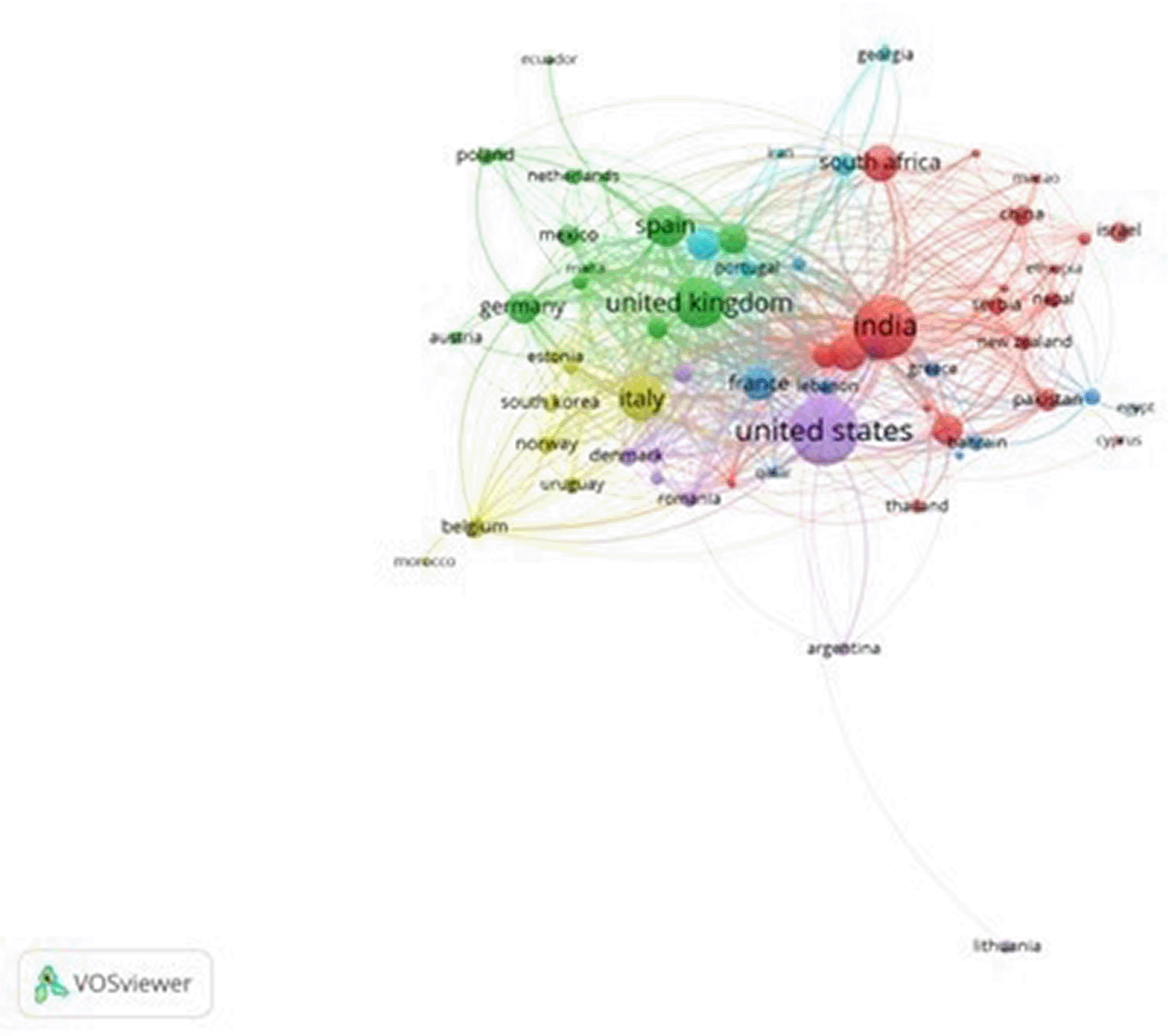
Figure 2. Bibliographic coupling of countries (Source: VOSviewer).
3.1.2 Bibliographic coupling of documents
The bibliographic coupling of documents analyzes the cognitive structure and temporal distribution of glass ceiling literature (
Figure 3). The segment shows that there’s a spreading of topics: yellow nodes are focused on the barriers in organisations, red on gender dynamics and green addresses new challenges such as intersectionality and digital transformation. The temporal analysis of 2015–2025 shows a fast pace research momentum and it is more vigorous post-2019, which indicates an augmented scholarly curiosity toward gender bias barriers to a career.
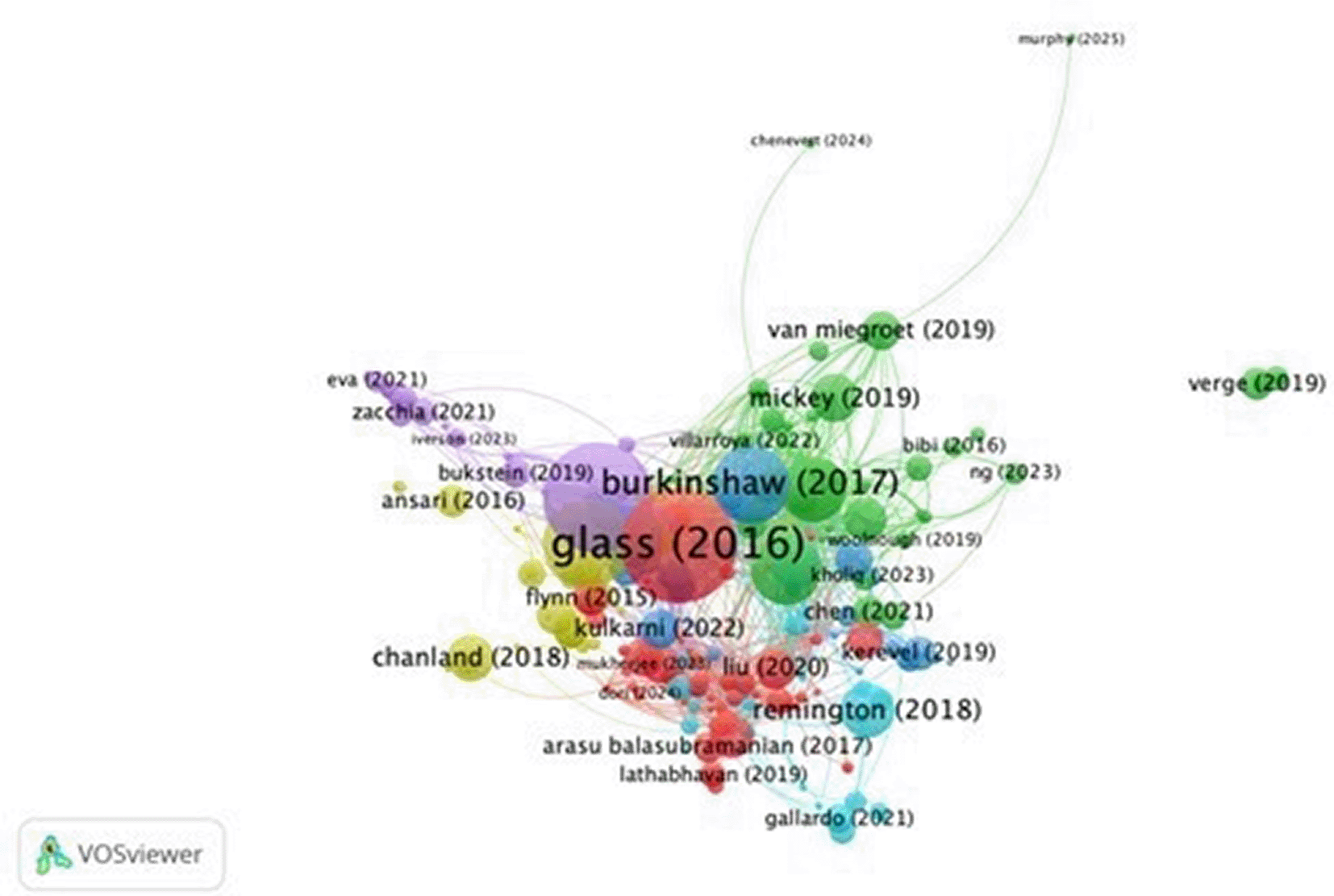
Figure 3. Bibliographic coupling of documents (Source: VOSviewer).
3.1.3 Bibliographic coupling of sources
Bibliographic Coupling of Sources (
Figure 4) maps the disciplinary landscape and journal networks, which have shaped glass ceiling research. It illustrates three interconnected publication ecosystems: Management and organisational studies (red cluster) includes the field’s core, gender-centred journals like ‘Gender in Management’ and ‘Business Ethics & Leadership’; higher education an institutional studies (green cluster), are anchored around the journal’Studies in Higher Education’ as well as’European Economic Review; social sciences/interdisciplinary outlets encompassing ‘Frontiers in Sociology’ or ‘International Journal of Organisational Psychology’. They also signal how glass ceiling work has been framed almost exclusively in organizational and management terms, possibly at the expense of a more sociological or psychological analysis with an intersectional element.
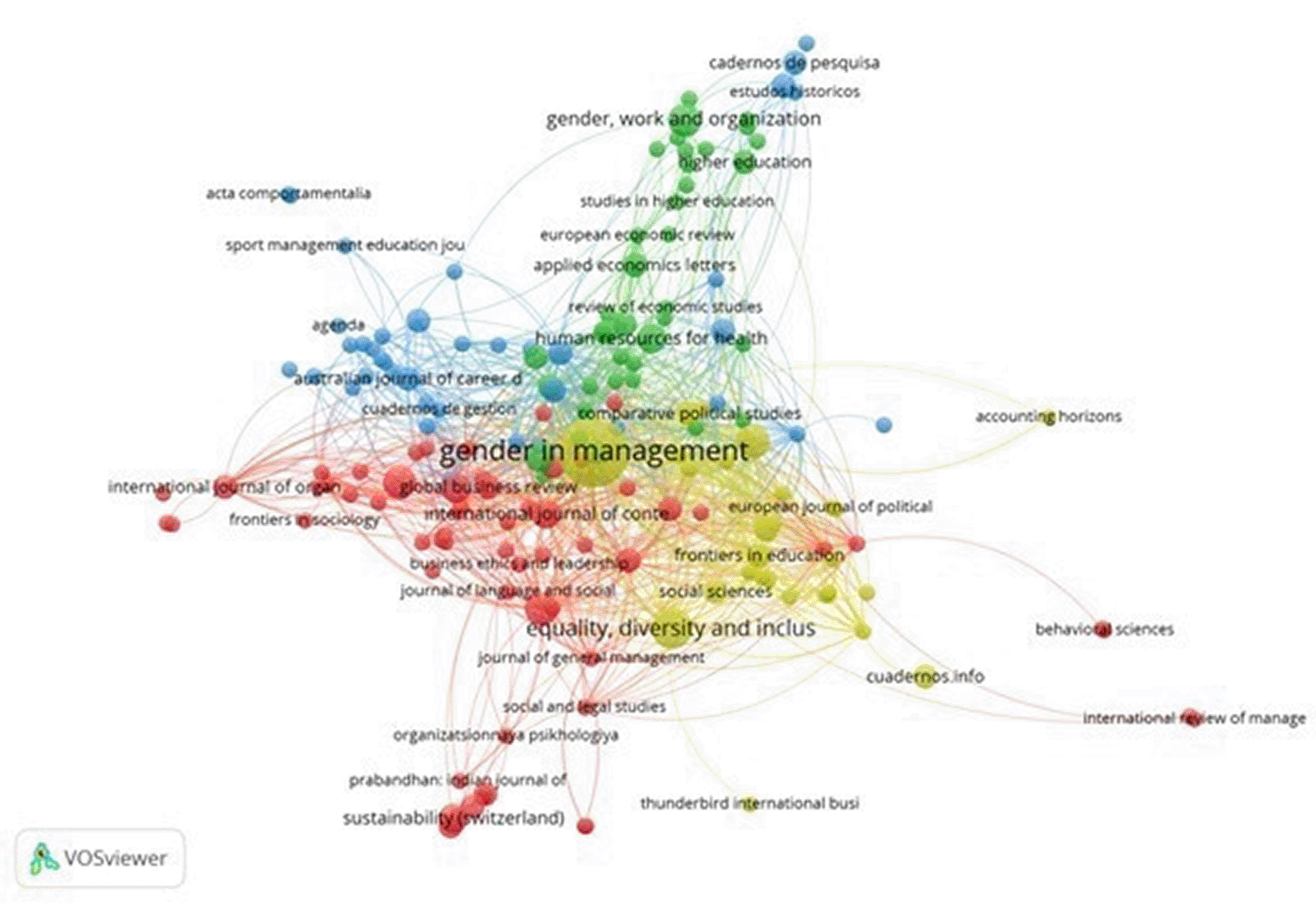
Figure 4. Bibliographic coupling of documents (Source: VOSviewer).
3.1.4 Co-citation analysis of authors
Author co-citation analysis portrays the intellectual architecture and roots of glass ceiling literature (
Figure 5). The tightly knitted red cluster highlights the authors in organizational behaviour and management who largely dominate citation behaviors; the blue cluster is made up of scholars whose works mainly focus on institutions and education, and further outside in green/purple are emerging or relatively specialized contributors. For example, there is high co-citation rates among authors Allen, Baxter, Albrecht, and Baumgartner, as reflected in the red cluster.
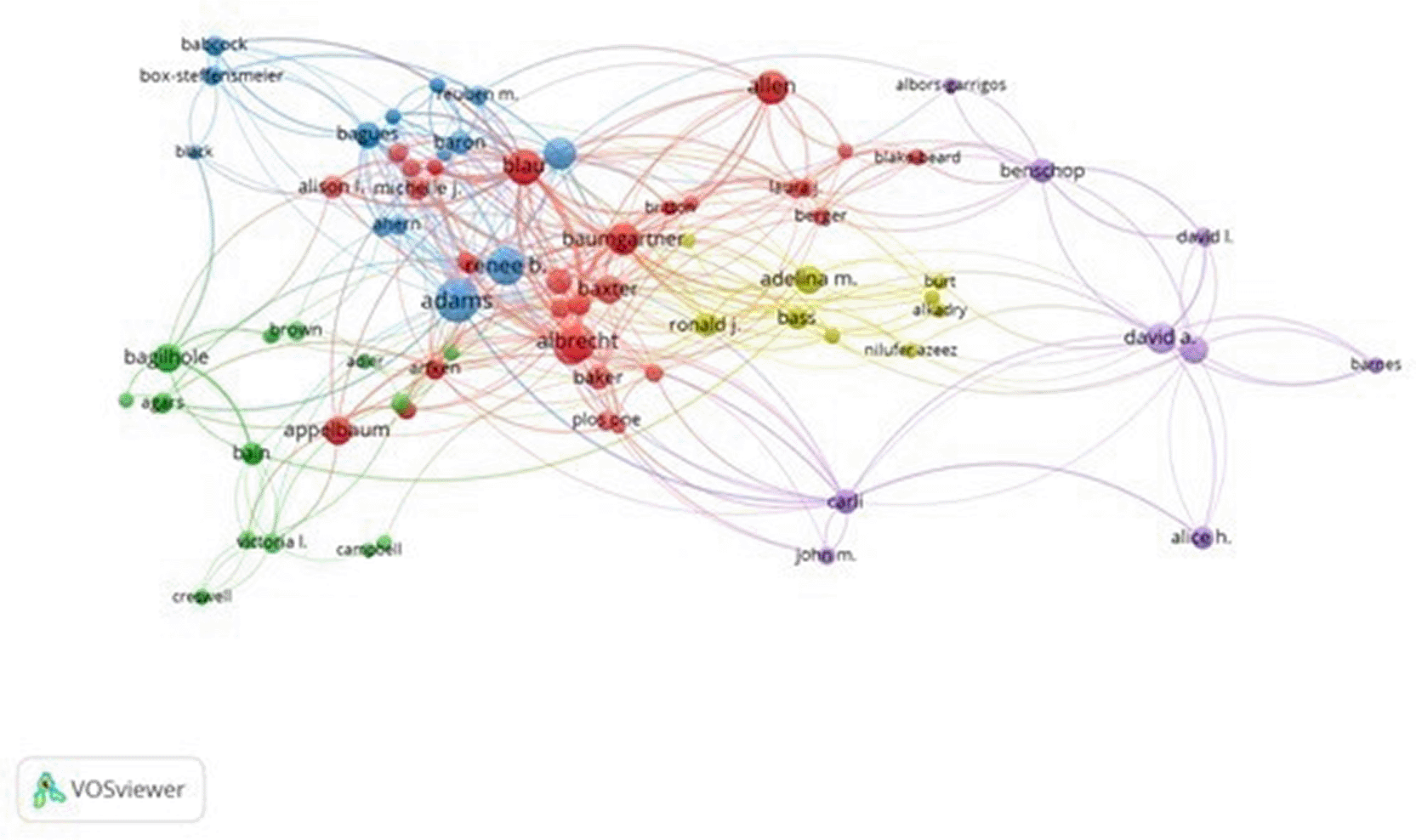
Figure 5. Co-citation analysis of authors (Source: VOSviewer).
3.1.5 Co-citation analysis of sources
Co-citation analysis of sources reveals an increasing disciplinary fragmentation and the thematic priorities that define glass ceiling discourse, with three different publication ecosystems: management and organizational studies (red cluster) revolving around “Gender in Management” and “Journal of Labor Economics” stressing structural barriers/workplace dynamics; social sciences/psychological theory (blue cluster) based on “Psychological Review” and “Journal of Social Issues” facilities personal, psychological dimensions: higher education/gender studies (yellow/green cluster) involving “Studies in Higher Education”, “Gender & Society” dealing with institutional/societal contexts (
Figure 6). The overwhelming presence of economic and management literature indicates that research on the glass ceiling is more concerned with labour market analysis and organizational fixes rather than more general sociological or intersectional hierarchization. Weak links between clusters suggest that management-themed literature exists fairly independently from gender and psychology texts and there is little theoretical cross-fertilization, failing to account for potential psychological, cultural, and system intersections.
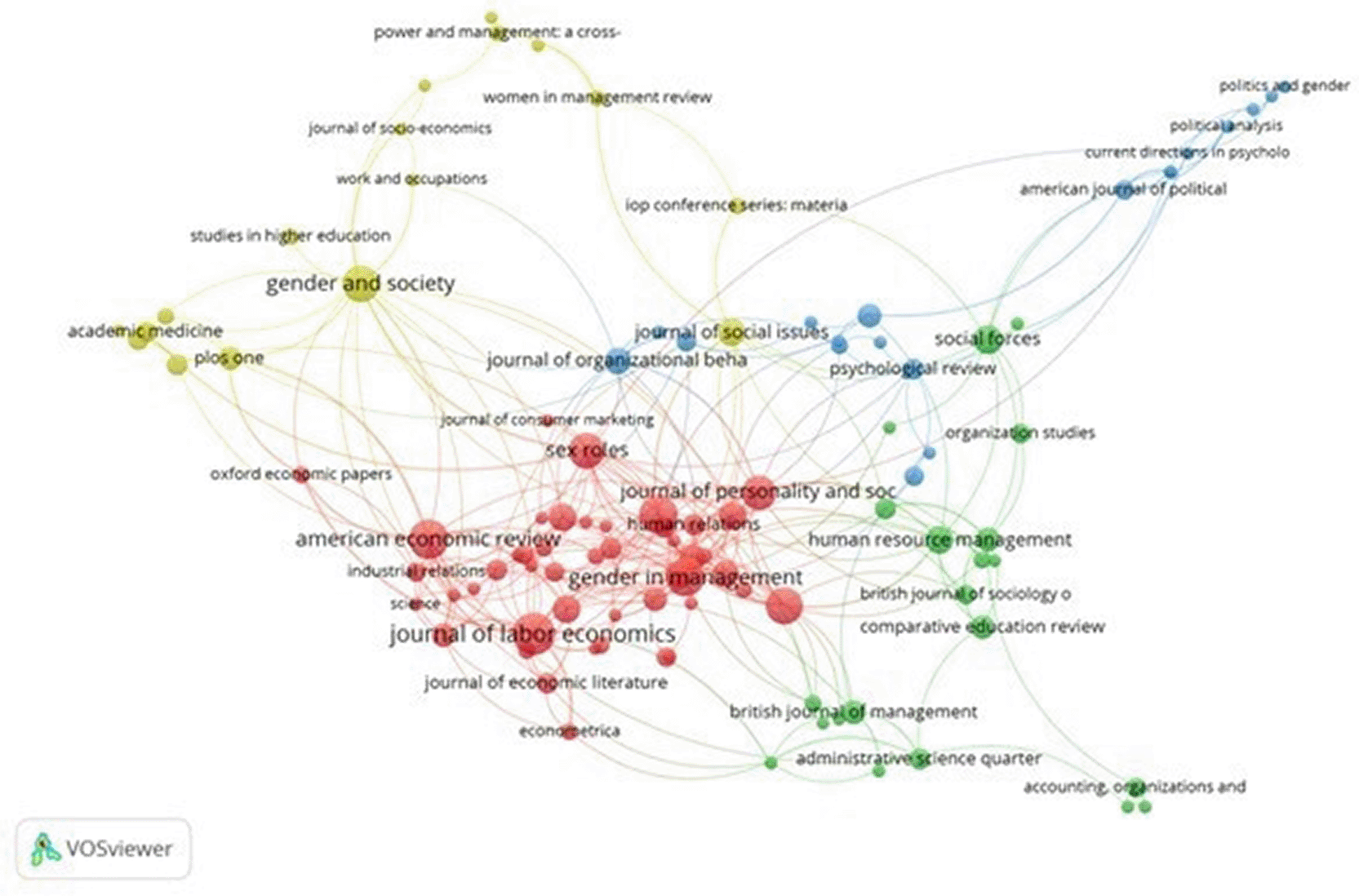
Figure 6. Co-citation analysis of sources (Source: VOSviewer).
3.2 Thematic analysis
In this section, the authors have done thematic analysis based on the themes identified using keywords co-occurrence analysis (
Figure 7). The following four emerging themes were identified: (1) Gender Inequality in Academic and Labor Markets— How Institutions Sustain the Divide; (2) Breaking Through: Organizational Mechanisms & Career Pathways; (3) The Human Factor: Leadership Development & Career Identity; (4) Unlocking Potential: Diversity Initiatives & Empowerment Strategies.
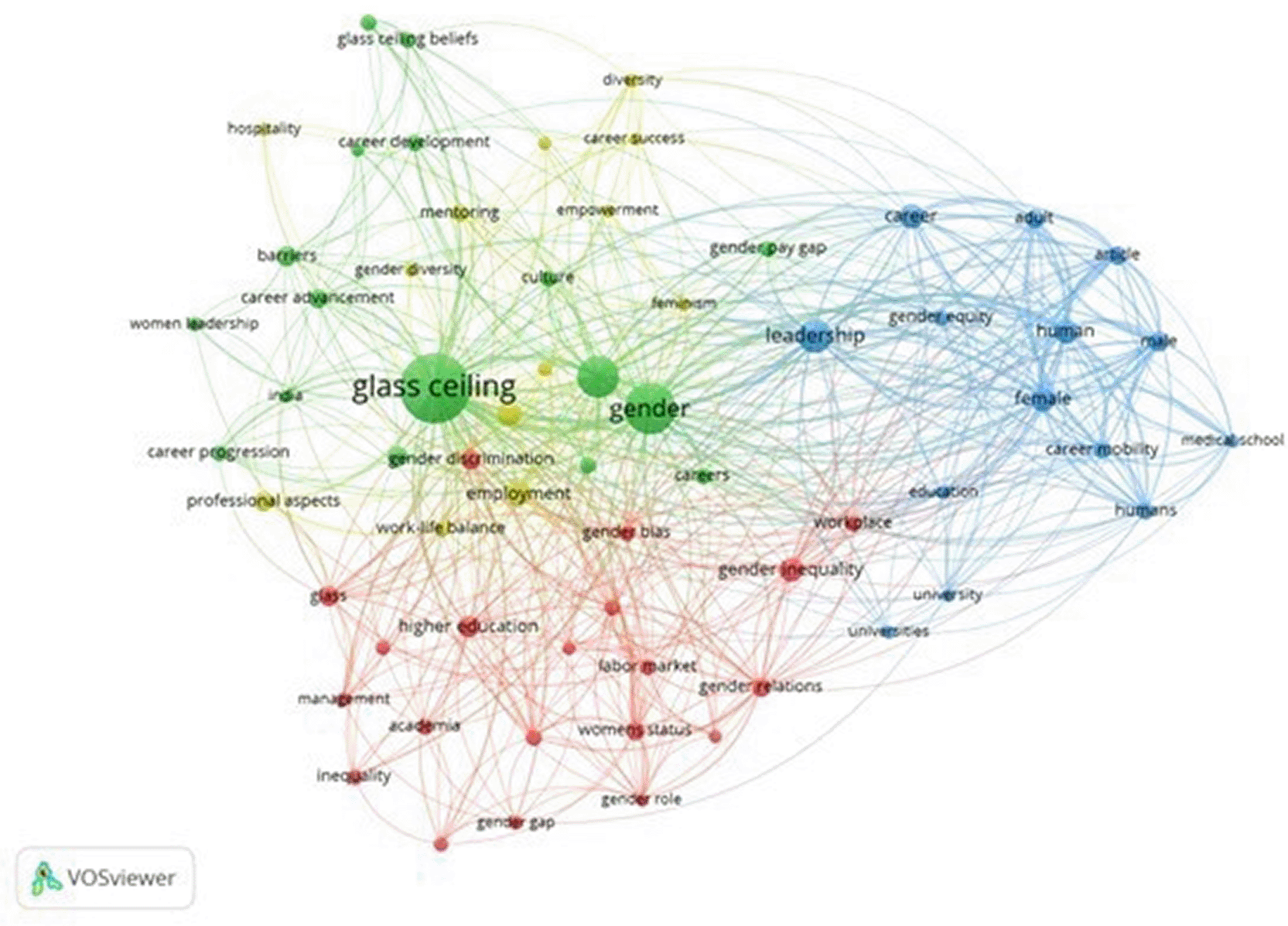
Figure 7. Keywords co-occurrence analysis (Source: VOSviewer).
3.2.1 Gender inequality in academic & labor markets: How institutions sustain the divide (Red Cluster)
Gender inequality in academia and labor markets is not merely a story of individual choices but rather the product of structural and cultural arrangements that funnel women into lower-status positions with weaker returns on education. Research across disciplines and countries indicates persistent gaps in representation, pay, security and authority, even as women’s educational attainment has surged. Women are still underrepresented in senior academic roles and top institutional leadership, even where they currently make up the majority of graduates (Rosa & Clavero, 2021; O’Connor, 2020; Winslow & Davis, 2016; Wieczorek-Szymańska, 2020; Alshdiefat et al., 2024; Yousaf & Schmiede, 2017). Research suggests that fewer women are in top ranks, worse pay and promotion prospects, more precarious contracts and heavier teaching or administration loads (Eslen-Ziya & Yildirim, 2021; Vohlídalová, 2021; Winslow & Davis, 2016; Nkosi & Maphalala, 2025; O’Keefe & Courtois, 2019; Yousaf & Schmiede, 2017). Furthermore, women concentrated in fields with weaker labor-market returns (humanities, care professions), underrepresented in high-pay STEM and tightly job-linked majors (Tan et al., 2025; Zheng & Weeden, 2023; Barone & Assirelli, 2019; Fontanella et al., 2019). These patterns translate into lower wages, slower advancement, and “maternity fees” in labor markets (Tan et al., 2025; Fontanella et al., 2019). Academic organizations are described as “gendered and gendering”: norms of merit and excellence are coded masculine, privileging uninterrupted linear careers, presenteeism, and male networks (Rosa & Clavero, 2021; Khan et al., 2024; O’Connor, 2020; Winslow & Davis, 2016; O’Keefe & Courtois, 2019; Yousaf & Schmiede, 2017). Strong hierarchies correlate with women’s perceptions that gender harms their prospects and limits future advancement (Eslen-Ziya & Yildirim, 2021; Khan et al., 2024; O’Keefe & Courtois, 2019). The informal exclusion from networks, mentorship and reputational opportunities reinforces formal inequalities (Eslen-Ziya & Yildirim, 2021; Winslow & Davis, 2016; O’Keefe & Courtois, 2019; Yousaf & Schmiede, 2017; (O’Keefe and Courtois 2019). Gender intersects with class, race/ethnicity, religion, and national context; disadvantages compound for marginalized women and in conservative or post-colonial settings (Rosa & Clavero, 2021; Khan et al., 2024; Fontanella et al., 2019; Crimmins et al., 2023; Alshdiefat et al., 2024). Academic capitalism and competitive funding can create new opportunities for a subset of women, while exacerbating inequalities among women by class and partnership status (Gaiaschi 2025). Everyday sexism and local power relations persist to impede genuine inclusion even in institutions rewarded for their plans for gender equality (Rosa & Clavero, 2021; O’Connor, 2020; Crimmins et al., 2023) have limited transformative effect if core structures and cultures are protected through certain forms of covering or adaptation (Rosa & Clavero, 2021; Khan et al., 2024; O’Connor, 2020; Crimmins et al., 2023; Wieczorek-Szymańska, 2020; Nkosi & Maphalala, 2025; Ceci et al., 2023; Winslow & Davis, 2016; Nkosi & Maphalala, 2025; O’Keefe & Courtois, 2019). Systems-wide solutions involve going beyond individual stigmas through improved policies for work-life and caring responsibilities, equity-sensitive funding mechanisms, transparent career advancement criteria with robust mentorship as institutional transformation not simply add-ons (Rosa & Clavero, 2021; Khan et al., 2024; O’Connor, 2020; Wieczorek-Szymańska, 2020; Nkosi & Maphalala, 2025; Alshdiefat et al., 2024). Educational advances have not brought about equivalent status, pay or security, especially at the top and in high-return fields. Reforms that merely “fix women” aren’t enough; the research converges with others, including my own, concluding that institutional structures, career logics and cultural norms must be remade if the academic and labor market achievements of women are ever to produce genuinely equal returns.
3.2.2 Breaking through: Organizational mechanisms & career pathways (Green Cluster)
In every sector and country, women’s career advancement is limited by organizational cultures, structures, and career systems that are premised on gendered expectations and bias. Unseen “glass ceiling” hurdles arise throughout banking, universities, health, ICT, policing, construction and more corporate environments, even when women are highly qualified (Lyan et al., 2025; Ganiyu et al., 2018; Shrestha et al., 2023; Hirayama & Fernando, 2018; Tešanović et al., 2024; Khan & Khan, 2022; Shrestha, 2025; Naz et al., 2025; Kumari & Kaur, 2025; Khan et al., 2024). Corporate cultures and practices in finance and banking exert a strong, adverse influence on women’s chances of promotion, accounting for over fifty per cent of the variation in career advancement (Shrestha et al., 2023; Shrestha, 2025). Senior positions and visibility are limited by biased promotion processes, gendered stereotypes like “think manager–think male”, and male-dominant cultures of leadership (Lyan et al., 2025; Thelma & Ngulube, 2024; James, 2025; Ganiyu et al., 2018; Naseviciute & Jucevičienė, 2023; Hirayama & Fernando, 2018; Saville et al., 2024; Thakurathi, 2025). One potential explanation of this glass ceiling phenomenon limiting career success encompasses the role that work–family conflict contributes; in other words, higher conflict predicts a decrease in accessing opportunities to achieve (Hirayama & Fernando, 2018; Khan & Khan, 2022; Todak et al., 2025). Motherhood attracts closer scrutiny, slower advancement and altered relationships at work, although the effects differ by context and support structures (Torres et al., 2024). Long hours, highly structured career ladders, and masculine cultures make work–life balance challenging and discourage leadership aspirations in surgery (Francis, 2017), policing, construction, ICT and health (Naseviciute & Jucevičienė, 2023; Hirayama & Fernando, 2018; Saville et al., 2024; Todak et al., 2025; Petelin et al., 2025). Access to mentors, sponsors and influential networks is a chronic bottleneck; where mentoring exists, it enhances career progression and retention, particularly in male-dominated sectors (Lyan et al., 2025; Francis, 2017; Thelma & Ngulube, 2024; Naseviciute & Jucevičienė, 2023; Saville et al., 2024; Thakurathi, 2025; Petelin et al., 2025). Some sectors (e.g., construction, ICT) reveal that individual agency, continuing to build skills—strategic networking and self-confidence—can help women navigate “contest” career systems but will not remove structural bias (Francis, 2017; Naseviciute & Jucevičienė, 2023; Petelin et al., 2025). Interventions with evidence include: flexible and diverse career paths, family-friendly policies, transparent criteria for promotion, gender-transformative leadership development and robust anti-harassment systems (Lyan et al., 2025; Shrestha et al., 2023; Hirayama & Fernando, 2018; Torres et al., 2024; Saville et al., 2024; Naz et al., 2025; Kumari & Kaur, 2025). Glass ceilings stubbornly remain due to interdependent individual, organizational and structural barriers, but clear evidence shows that we can advance women’s career progression via inclusive cultures, flexible career systems and access to mentoring—not the individual fixes that are often more visible (Lyan et al., 2025; Naseviciute & Jucevičienė, 2023; Torres et al., 2024; Saville et al., 2024; Kumari & Kaur, 2025; Khan et al., 2024).
3.2.3 The human factor: Leadership development & career identity (Blue Cluster)
Research studying the “human factor” in women’s careers highlights how capabilities, mindsets and identities developed early in life interplay with opportunities and constraints over time. Agency is important, but it is never exercised outside social, or organizational and cultural systems. College and early adulthood are key developmental periods as achievement orientations and leadership orientation in college predict attainment of senior leader roles and higher pay nearly 30 years later (Offermann et al., 2020). For young women and girls, leader identity is influenced by social connections, personal attributes, meaningful involvement and social identities e.g. gender or race (Dixon et al., 2023). Leadership-only programs for women show that identity work involves validation, new narratives of belonging, and learning there are multiple legitimate ways to lead, not just “leading like a man” (Brue & Brue, 2018). Authentic and women-only leadership programs increase self-efficacy, agency, and ownership of career moves through reflection, life-story work, and relational authenticity (Martínez-Martínez et al., 2021; Lee et al., 2024; Brue & Brue, 2018; Round et al., 2024).
Some women physicians and scientists develop their own paths to leadership, participating in early-career development programs that align with their values around the goals of leading, negotiating, articulation of vision and alignment between leadership with well-being and family roles (Lee et al., 2024). Leadership emergences with strong leadership identity increased greatly when self-efficacy is formed as part of psychological capital through programs that take it as direct target (Deroncele-Acosta et al., 2025; Round et al., 2024) As many young women embark on their work lives, they approach the pursuit of high-status jobs with optimism and ambition but soon find their ambition falls (Beaupre, 2022), hindered by a lack of satisfaction with cultures of leadership at some levels and by expected costs to their personal life. Higher psychological capital such as optimism, hope, resilience, self-efficacy, along with intrinsic motivation, acts as a protective factor for mental health and performance among women doctoral students (Deroncele-Acosta et al., 2025; Round et al., 2024). Across contexts (Nepal, Vietnam, Chile), education, continuous learning, performance, and family/mentor support underpin women’s career mobility and persistence in demanding fields (Gómez-Arízaga et al., 2025; Thaiduong, 2025; Adhikary & Shrestha, 2023; Damaske & Frech, 2016). Women’s leadership trajectories are strongly shaped by early leader identity, accumulated human capital, and psychological resources like self-efficacy and resilience, all reinforced by developmental relationships.
3.2.4 Unlocking potential: Diversity initiatives & empowerment strategies (Yellow Cluster)
Research on “unlocking potential” centers on how concrete policies, programs, and beliefs can either dismantle or quietly reinforce the glass ceiling. Reviews stress that unconscious bias,
glass ceiling beliefs, and masculine leadership norms continue to shape recruitment, promotion, and culture, so one-off diversity actions are insufficient (Kumari & Kaur, 2025; Thakur, 2025; Thelma & Ngulube, 2024; Galsanjigmed & Sekiguchi, 2023; Lyan et al., 2025). Effective strategies must go beyond token female board quotas toward deep cultural change, transparent promotion, and strict anti-discrimination enforcement (Kumari & Kaur, 2025; Thakur, 2025; Lyan et al., 2025). Formal, women-focused mentoring is repeatedly identified as a core empowerment tool, building self-advocacy, access to stretch roles, and a pipeline of female talent (Thelma & Ngulube, 2024; Groves, 2021; Rampersad, 2024; Dashper, 2020; Mathetha & Dhanpat, 2025). In hospitality and academia, long-term mentoring programs both support individual careers and begin to challenge gendered definitions of success and leadership (Rampersad, 2024; Dashper, 2020). Senior women are “empowerment multipliers”, and inclusive HR programs such as fair staffing, mentoring, pay equity, flexible work and leadership development positively impact on the career mobility of women when they are systematically implemented (Mathetha & Dhanpat, 2025; Kumari & Kaur, 2025; Aggarwal, 2025 James, 2025). In all sectors, successful empowerment combines changes of structures with human-capital initiatives, and strong impact derives from accountability and deep cultural change rather than symbolic exercises in diversity (Hamzaoui et al., 2025; Al-Naqbi & Aderibigbe, 2024; Mehmood, 2025; Maheshwari & Nayak, 2020).


Comments on this article Comments (0)