Keywords
Pediatric dentistry, dental anxiety, dentist attire, white coat effect, child behaviour

Pediatric dentistry, dental anxiety, dentist attire, white coat effect, child behaviour
In several developing nations today, the need for child dental care is increasing steadily, and any successful dental practice not only depends on the skillful performance of the practitioner but also on child behaviour and cooperation with the dental care plan. Building effective interactions between the child and the pediatric dentist is crucial to improving efficiency in dental care and child motivation to dental care.
Childhood dental anxiety is an extremely common problem that has a potential influence on oral health attitudes in relation to the acceptance of treatments.1 Dental anxiety experienced during childhood can sometimes develop into dental phobia later in adult life. Individuals with dental phobia often postpone or completely avoid dental visits until problems become severe, which can negatively affect their daily functioning and social interactions.2 Managing child behaviour and anxiety during dental treatment is therefore a cornerstone of pediatric dentistry. Several factors have been identified to influence a child’s anxiety level in the dental setting, such as previous dental experience, parental anxiety, clinical environment, and the dentist’s communication style.3
Among these, the attire of the pediatric dentist has emerged as a subtle yet potentially powerful determinant of a child’s emotional response. The white coat is considered as standard attire because it symbolizes medical authority, respect and establishes a patient-doctor relationship as a beneficial encounter.4 Traditional white coats may provoke fear or apprehension in young children, a phenomenon sometimes referred to as “white coat anxiety,” so pediatricians generally choose not to wear them.4–5 Children tend to respond more positively when their dentist wears bright, child-friendly or themed clothing -such attire can ease the clinical atmosphere and help lower anxiety, fostering better cooperation and behaviour during treatment. Studies have shown that such colourful, playful dental attire was associated with reduced anxiety and improved comfort among young patients.6
Over the last two decades, several clinical and observational studies have examined how dentist attire influences children’s perception, preference, and cooperation. Results remain mixed-some report that colourful or cartoon-themed clothing lowers anxiety and improves behaviour, while others find minimal or situational effects. Most available studies are small, single-centre, and methodologically varied. To date, evidence examining the influence of pediatric dentist attire on child dental anxiety remains fragmented, and no comprehensive systematic synthesis focusing specifically on this topic has been widely reported. This review is the first to specifically synthesize evidence on pediatric dentist attire as a behavioral management modifier, integrating child preference, anxiety scales, and parental perception across cultural settings.
This systematic review was conducted in accordance with the Preferred Reporting Items for Systematic Reviews and Meta-Analyses (PRISMA) 2020 guidelines. The protocol for the review was registered in the PROSPERO international prospective register of systematic reviews (CRD420251229652) prior to the initiation of the study.7
The eligibility criteria were defined using the PICOS framework.
Population (P)
Studies involving children aged 6–12 years receiving dental care or participating in surveys assessing perceptions of pediatric dentist attire.
Intervention (I)
Exposure to different types of pediatric dentist attire, including white coats, formal clinical attire, colourful scrubs, cartoon-themed clothing, casual attire, or other child-friendly clothing.
Comparison (C)
Comparison between different attire types, including traditional white coat versus alternative or child-friendly attire.
Outcome (O)
Primary outcomes included:
• Dental anxiety assessed using validated scales such as Children’s Fear Survey Schedule-Dental Subscale (CFSS-DS) or Facial Image Scale (FIS).
• Behavioural cooperation or emotional response during dental visits.
Secondary outcomes included child preference for dentist attire and parental perception.
Study design (S)
Observational studies, particularly cross-sectional studies, were included.
Exclusion Criteria
The following studies were excluded:
A comprehensive literature search was conducted across the following electronic databases:
The search covered studies published between January 2015 and March 2025. A combination of Medical Subject Headings (MeSH) terms and free-text keywords related to pediatric dentistry, dentist attire, and dental anxiety was used.
The search terms included combinations of:
• dentist, pediatric dentist, pedodontist
• attire, clothing, white coat, scrubs, appearance
• dental anxiety, fear, child anxiety
• child, pediatric, school children
Boolean operators (AND, OR) were used to combine search terms appropriately. Only studies published in the English language were included.
Reference lists of relevant articles were also manually screened to identify additional eligible studies.
All retrieved records were imported into a reference management system, and duplicate records were removed. Two independent reviewers screened the titles and abstracts of the identified studies to determine their eligibility based on the predefined inclusion criteria.
Articles that appeared potentially relevant were subjected to full-text evaluation. Disagreements between reviewers were resolved through discussion and consultation with additional reviewers until consensus was achieved.
Data extraction was performed independently by two reviewers using a standardized data extraction form. The following information was collected from each study:
• Author and year of publication
• Country of study
• Study design
• Age group of participants
• Sample size
• Type of dentist attire evaluated
• Anxiety assessment method (e.g., CFSS-DS, FIS)
• Key findings related to dental anxiety and attire preference
Any discrepancies in extracted data were resolved through discussion among the reviewers.
The search strategy is shown in Table 1.
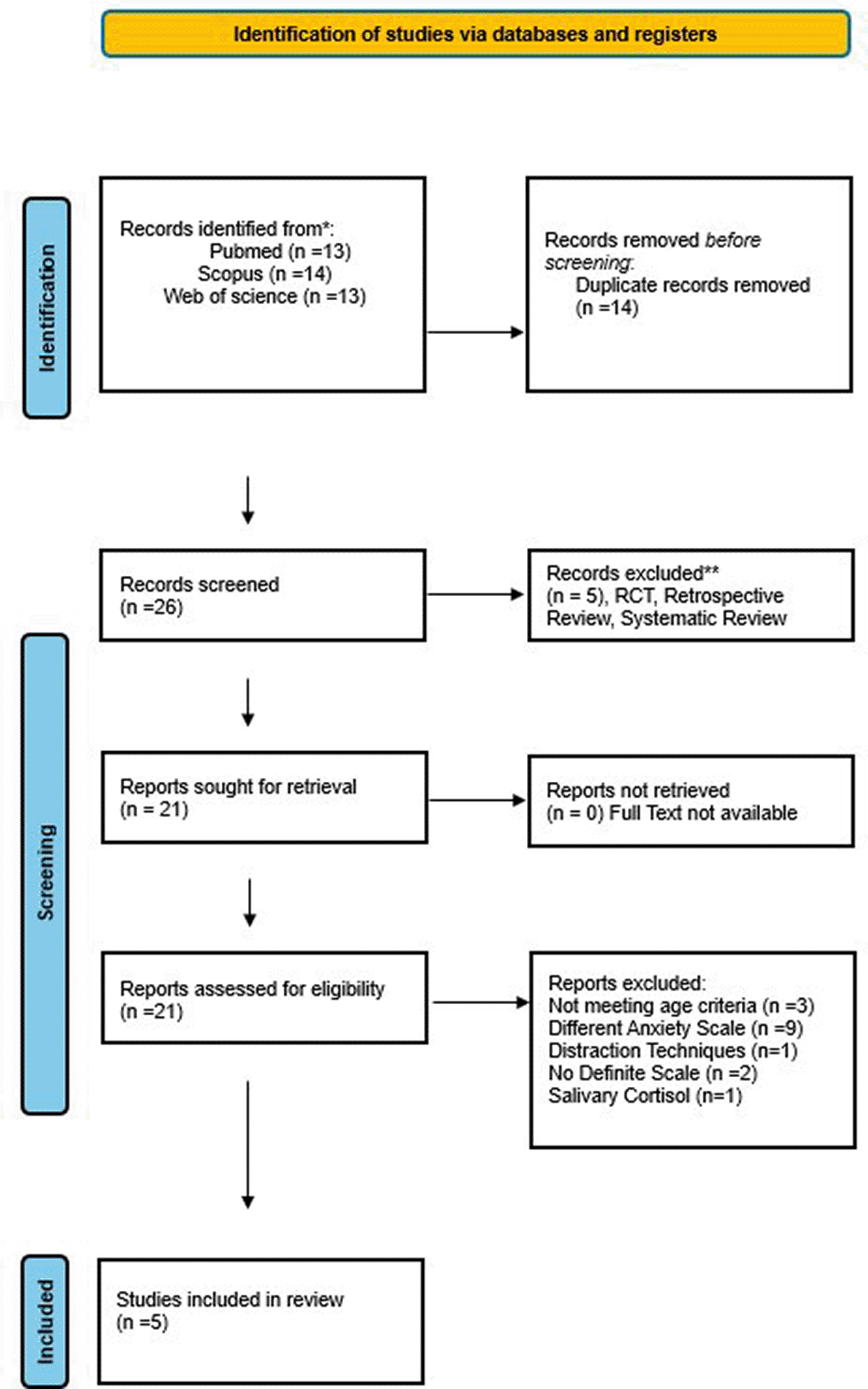
The electronic database search identified 40 records across PubMed (n = 13), Scopus (n = 14), and Web of Science (n = 13). After removal of 14 duplicate records, 26 articles remained for title and abstract screening. Following this screening stage, 5 studies were.
excluded due to study design or irrelevance to the research question. The full texts of 21 articles were then assessed for eligibility.
After applying the inclusion and exclusion criteria, 16 articles were excluded for the following reasons:
• Age group not within the predefined range (n = 3)
• Use of anxiety assessment methods not aligned with study criteria (n = 9)
• Focus on behavioural distraction techniques rather than attire (n = 1)
• Absence of validated anxiety scales (n = 2)
• Assessment of physiological markers such as salivary cortisol rather than behavioural measures (n = 1)
Ultimately, five studies were included in the final qualitative synthesis. The study selection process is shown in Figure 1.
All 5 articles’ full texts were reread to see if they satisfied the study’s objectives, and any discrepancies were tallied.
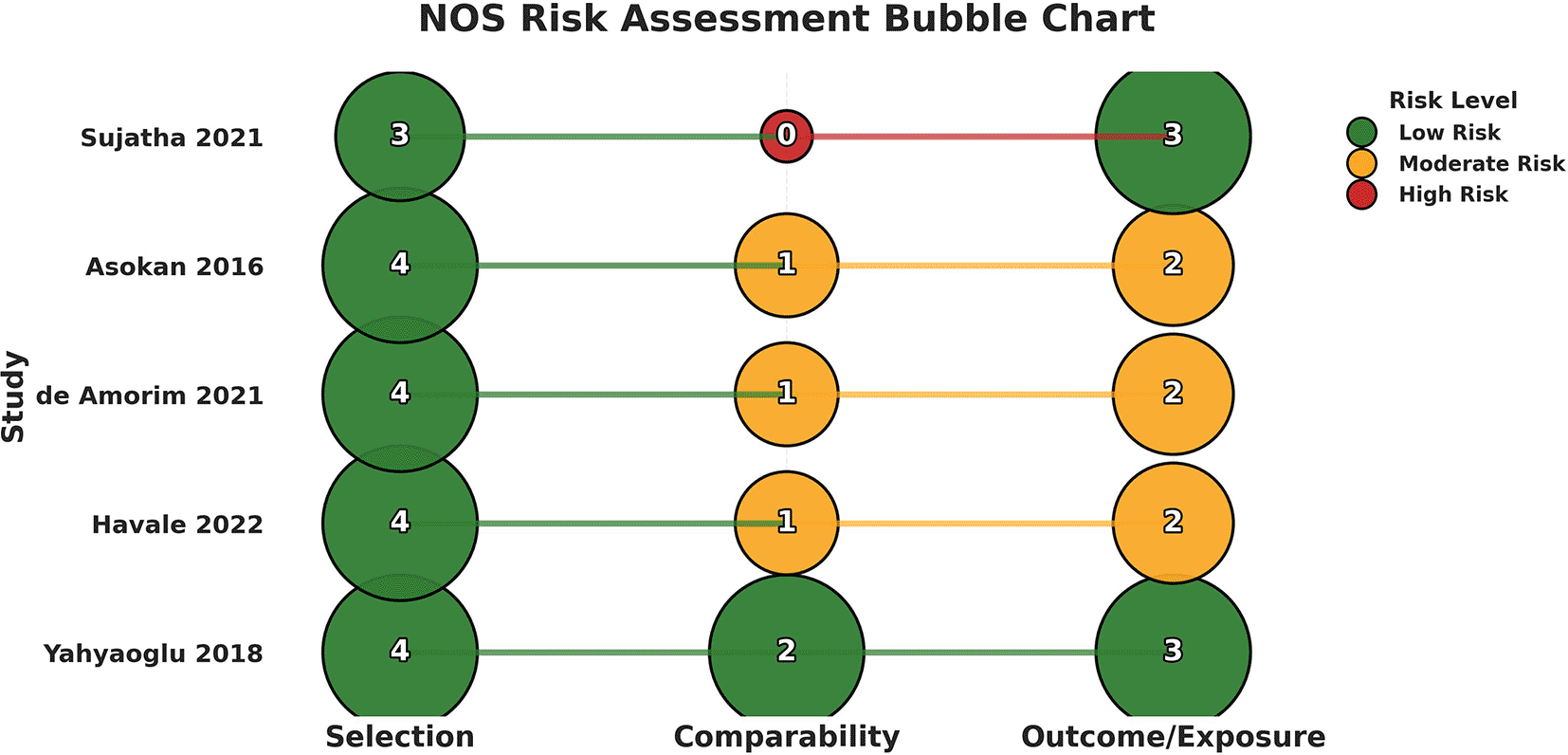
The methodological quality of the included studies was assessed using the Newcastle–Ottawa Scale (NOS) for observational studies.8,9 This tool evaluates studies across three domains:
Each study was independently assessed by two reviewers. Disagreements were resolved through discussion. The risk-of-bias results were visualized using NOS-TLPlot (v2.0.1), which generates graphical representations such as traffic-light plots to summarize methodological quality as displayed in Figure 2.10
Due to heterogeneity in study design, sample characteristics, and outcome measures across the included studies, quantitative meta-analysis was not feasible. Therefore, findings were synthesized qualitatively using a descriptive approach, focusing on patterns in children’s anxiety levels and preferences related to pediatric dentist attire.
The final analysis included five cross-sectional studies conducted between 2016 and 2022. The studies collectively involved 2,304 children aged between 6 and 12 years. Sample sizes ranged from 80 to 1,155 participants.
The included studies were conducted in different geographic regions, including India, Turkey, and Brazil, reflecting diverse cultural settings. All studies evaluated children’s reactions to different types of pediatric dentist attire.
The attire categories compared across studies included:
• Traditional white coats
• Formal clinical attire
• Colourful or child-friendly scrubs
• Cartoon-printed attire
• Casual clothing
Children’s dental anxiety was primarily assessed using validated scales such as the Children’s Fear Survey Schedule–Dental Subscale (CFSS-DS) and the Facial Image Scale (FIS).
Anxiety Outcomes
Across the included studies, the prevalence of dental anxiety ranged from 33% to 48% depending on the measurement scale used. Studies consistently reported that children with higher anxiety levels tended to prefer child-friendly or colourful dentist attire compared with traditional white coats.
For example, in the study by Asokan et al., approximately 72% of anxious children preferred colourful or playful attire, while only 38% preferred the traditional white coat.11
Similarly, Sujatha et al. observed that children with higher scores on the Facial Image Scale showed greater preference for cartoon-themed scrubs, suggesting that visually engaging attire may contribute to reduced anxiety during dental visits.12
Preference for Pediatric Dentist Attire
Three studies (Sujatha et al., 2021; Yahyaoğlu et al., 2018; Asokan et al., 2016) specifically evaluated children’s attire preferences.12,11,13 Across these studies, a majority of children expressed a preference for cartoon-printed or colourful attire, with preference rates ranging from 57% to 70%.
These preferences were particularly evident among children with moderate to high dental anxiety scores, indicating that non-traditional attire may act as a psychological reassurance cue in pediatric dental environments.
Parental Perception
Two studies (Havale et al., 2022; de Amorim et al., 2021) also assessed parental perceptions of pediatric dentist attire. While children generally preferred colourful attire, parents—especially those with higher educational levels—often preferred traditional clinical attire or personal protective equipment (PPE).14,15 This preference may reflect greater emphasis on professionalism and infection-control standards among parents.
Risk of Bias
Risk-of-bias assessment using the Newcastle–Ottawa Scale indicated moderate methodological quality across the included studies.8,9 Common limitations included:
• Convenience sampling
• Lack of blinding
• Limited control for confounding factors such as previous dental experience or parental anxiety
The risk-of-bias findings are presented using a traffic-light visualization generated through NOS-TLPlot as displayed in Figure 2.10
Tables 2, 3 depict the descriptions of the included studies.
| Author, Year | Age Group (yrs) | Sample Size | Type of Attire Compared |
|---|---|---|---|
| Asokan,11 2016 | 9–12 | 1155 | White coat vs. colourful attire |
| Yahyaoğlu,15 2018 | 6–12 | 810 | White coat vs. casual attire vs. coloured scrubs |
| de Amorim,13 2021 | 7–12 | 120 | White coat vs. colourful scrubs vs. character-themed attire |
| Sujatha,12 2021 | 5–12 | 80 | White coat vs. coloured coat vs. cartoon-themed attire |
| Havale,14 2022 | 6–12 | 139 | White coat vs. colourful/child-friendly attire |
| Author, Year | Assessment Method | Outcomes |
|---|---|---|
| Asokan,11 2016 | CFSS-DS, or Children’s Fear Survey Schedule–Dental Subscale | 48% of children (CFSS-DS ≥38) were classified as anxious. 72% of anxious children preferred coloured apron/playful attire compared with 38% preferring white coat. Girls showed slightly higher anxiety (52%) than boys (44%). |
| Yahyaoğlu,15 2018 | CFSS-DS, or Children’s Fear Survey Schedule–Dental Subscale | 41% of children were anxious (CFSS-DS ≥38). Children favouring decorated/colourful uniforms had significantly higher anxiety scores (mean CFSS-DS 39.6 ± 7.2) than those preferring standard attire (mean 32.1 ± 6.4). 57% preferred cartoon-printed attire. |
| de Amorim,13 2021 | CFSS-DS, or Children’s Fear Survey Schedule–Dental Subscale | 36% of participants showed moderate to high anxiety (CFSS-DS ≥38). Printed attire (Models C & D) was preferred by 62–68% of children. Anxiety level did not significantly alter attire preference (p > 0.05). |
| Sujatha,12 2021 | FIS or Facial Image Scale | 34% of children showed high anxiety (FIS 4–5). 65–70% of anxious children preferred colourful/child-friendly attire over white coats. Lower anxiety scores were associated with cartoon-printed scrubs. |
| Havale,14 2022 | FIS or Facial Image Scale | 33% of children showed higher anxiety (FIS 4–5). Anxious children preferred pediatric scrubs (58%) over PPE. non-anxious children (67%) and highly educated parents (72%) preferred PPE/surgical attire. |
Anxiety is the brain’s reaction to perceived threat—signals that prompt an organism to engage in active avoidance. It is an extremely primitive emotional state, which is traced right from infancy, through childhood, conditional on varied levels of intensity from mild to severe. In most circumstances, anxiety is not pathological but has an extremely useful function of acting as an effective guideline for avoidance of potential danger.16 This systematic review was conducted for analyzing observational data regarding the effect of pediatric dentists’ uniforms on children’s levels of anxiety, behavior, and general comfort during dental settings. In all five cross-sectional studies, it was found that while child-friendly, colorful, or cartoon-centric uniforms kept anxiety levels low and emotional expressions more positive, there was a definite linkage of caution or neutrality with the conventional white coat.
These findings suggest that attire represents a salient environmental cue in the dental setting and may influence a child’s cognitive and emotional interpretation of the clinical encounter.17 Anxious children clearly favoured non-traditional attire in studies that employed validated measures such as the CFSS-DS or Child’s Fear Survey Schedule-Dental Subscale and the FIS or Facial Image Scale.18,19 For example, Asokan et al. noted that 72% of anxious children preferred colored or playful aprons, while Yahyaoğlu et al. reported that children who favored colorful attire also had significantly higher CFSS-DS scores, suggesting that more anxious children may actively seek visual reassurance through softer, friendlier visual stimuli.11,13 Similarly, Sujatha et al. and Havale et al. noted that children who had higher FIS scores demonstrated a marked preference for cartoon-themed or child-friendly scrub attire, further supporting that attire can serve as an effective anxiety-modulating behavioural management tool.12,15
Despite this general pattern, the magnitude of the effect varied. De Amorim et al. found that while most children favoured printed or character-themed clothing, anxiety levels did not significantly influence attire preference, suggesting the relationship may be modulated by other psychosocial variables.14 Factors such as previous dental experience, intrinsic emotional traits, and parental expectations may interact with attire to influence observed anxiety levels. Havale et al. further highlighted this complexity in the context of the COVID-19 pandemic, noting that although anxious children preferred colourful scrubs, non-anxious children and parents with higher education levels preferred PPE or surgical attire, possibly due to enhanced awareness of infection-control protocols.15 These contextual variations underscore the multidimensional nature of dental anxiety.
Developmental evidence shows infants and younger children use faces, expressions and other visual social cues to regulate emotions and to socially reference caregivers; this forms the developmental rationale for expecting visual cues including attire to affect young children20 and given evidence that white coat functions as a cultural symbol of professionalism and trust for many patients and parents, and preferences for attire vary by context and culture,21 it is plausible that attire and particularly choice of child-friendly vs traditional uniform may serve as an environmental cue shaping both child and parent emotional interpretation of the dental encounter. However, to our knowledge, no peer-reviewed study has directly tested this dual effect.
The findings of this review have important implications for clinical pediatric dental practice. Pediatric dentist attire may serve as a simple, non-invasive behavioural management strategy to reduce anxiety and improve cooperation in children. Incorporating child-friendly or colourful attire, particularly during initial dental visits or when managing anxious patients, may help create a more welcoming and less intimidating clinical environment. Additionally, tailoring attire based on the child’s age, anxiety level, and sociocultural background may further enhance patient comfort. While maintaining infection-control protocols and professionalism, pediatric dentists may consider adapting their appearance as part of a holistic approach to behaviour guidance.
The findings of this review should be interpreted in the context of certain limitations. The limited number of eligible studies and their cross-sectional design reflect a broader gap in well-structured research in this area rather than a lack of clinical relevance. Variability in study design, cultural settings, and attire classification contributed to heterogeneity, precluding quantitative meta-analysis.
Additionally, most studies relied on self-reported or observational measures of anxiety, which may be influenced by subjective bias. Important confounding factors such as previous dental experience, parental anxiety, and temperament were not consistently controlled across studies.
These limitations highlight the need for standardized, high-quality, and longitudinal studies to better understand the role of dentist attire in pediatric dental anxiety and behaviour.
In conclusion, despite the current level of evidence indicating that colorful, child-friendly clothing could lead to a reduction in anxiety and an improvement in acceptance of dental treatments in children aged 6–12 years, variations and limitations in existing studies indicate that these results must be interpreted with care. Future studies would, therefore, require standardized forms of clothing classification, more objective behavioural assessment, and more extensive comparisons based on sociocultural factors.
This systematic review suggests that pediatric dentist attire affects children’s anxiety and behavior throughout dental visits. Throughout the studies, child-friendly clothing or colourful clothing has been associated with lower anxiety and more positive emotional responses than the traditional white coat, indicating that attire may serve as a simple, non-invasive behavioral management adjunct.
Nevertheless, cross-sectional approaches, cultural diversity, and small sample sizes still limit the data. Such results need further replication using objective behavioral measurements and pre-defined clothing categories.
In a nutshell, the inclusion of child-friendly clothing in pediatric dentistry could contribute to alleviated anxiety and improved cooperation, thus providing kids with much more positive dental experiences.
| Views | Downloads | |
|---|---|---|
| F1000Research | - | - |
|
PubMed Central
Data from PMC are received and updated monthly.
|
- | - |
Provide sufficient details of any financial or non-financial competing interests to enable users to assess whether your comments might lead a reasonable person to question your impartiality. Consider the following examples, but note that this is not an exhaustive list:
Sign up for content alerts and receive a weekly or monthly email with all newly published articles
Already registered? Sign in
The email address should be the one you originally registered with F1000.
You registered with F1000 via Google, so we cannot reset your password.
To sign in, please click here.
If you still need help with your Google account password, please click here.
You registered with F1000 via Facebook, so we cannot reset your password.
To sign in, please click here.
If you still need help with your Facebook account password, please click here.
If your email address is registered with us, we will email you instructions to reset your password.
If you think you should have received this email but it has not arrived, please check your spam filters and/or contact for further assistance.

Comments on this article Comments (0)