Keywords
Awareness, Hematological Malignancies, Knowledge, Multiple Myeloma, Risk Perception

This article is included in the Oncology gateway.
Awareness, Hematological Malignancies, Knowledge, Multiple Myeloma, Risk Perception
Multiple Myeloma (MM) develops from the accumulation and proliferation of abnormal plasma cells in the bone marrow.1 These cells can be benign or malignant, but ultimately damage the bone marrow, affecting blood vessel growth and leading to localized and systemic complications. Multiple Myeloma usually begins as a monoclonal gammopathy of uncertain significance, which is often asymptomatic.2 When symptoms do occur, typical clinical signs of MM include low hemoglobin, proteinuria, bone pain, and hypercalcemia.3 Global epidemiological data indicate that the age-standardized incidence rate (ASR) was 78 (95% UI 69–87) per 100,000 people, and the mortality rate was 14 (95% UI 07–21) per 100,000 people in 2020.4 Research also shows that MM is the second most common hematological malignancy, primarily affecting older males over 65, with significant impacts on quality of life.5,6
The cause of MM remains relatively unclear; however, it is suggested that genetic changes and a combination of lifestyle factors, such as alcohol use, obesity, and exposure to harmful radiation, insecticides, and other toxic chemicals, may be linked to MM.7,8 It has been reported that the survival rate among patients with MM has improved significantly over the years, due to advances in treatment, including new drug therapies, autologous stem cell transplants, and improved supportive care.9,10 Despite progress in treatment options for MM, accurate and timely diagnosis of the condition remains difficult, with poorer outcomes reported in cases of late diagnosis.11,12 Early detection of MM is essential for ensuring the best possible quality of life and higher patient survival rates. This, in turn, depends on healthcare workers and the public having accurate knowledge of the clinical signs of the condition and a higher index of suspicion. Educating both the public and healthcare professionals is therefore a key strategy for ensuring timely diagnosis and treatment.13
In low- to middle-income regions like Africa, the prevalence and incidence of MM are reportedly rising. Although the precise epidemiology of the condition remains unclear in the region, it is estimated that the prevalence is twice as high among Africans compared to Caucasians.14 In Nigeria, MM is estimated to constitute between 5.6% and 12.9% of hematological malignancies, ranking behind chronic myeloid leukemia, non-Hodgkin’s lymphoma, and chronic lymphocytic leukemia in frequency.15 In South Africa, a total of 3603 incident cases were reported between 2004 and 2013. Additionally, mature lymphoid malignancies accounted for approximately 60% (n = 2153), myeloma/plasma cell neoplasms 13% (n = 465), acute leukemia 17% (n = 596), chronic myeloid leukemia 4% (n = 155), and other myeloproliferative neoplasms 6% (n = 234) when categorized according to conventional groups.16 The lack of routine, reliable data sources that provide detailed epidemiology hinders the development of targeted interventions for effective management of the disease across prevention, promotion, treatment, and palliative care.
The African region also bears a disproportionately high burden of disease, including HIV/AIDS, mental health issues and substance abuse, violence and injury, malaria, tuberculosis, and other non-communicable diseases such as hypertension, diabetes, and other cardiovascular conditions.14,15 The increasing rates of cancers such as MM place significant pressure on the healthcare system in terms of financial resources, infrastructure, and human capacity to effectively meet the population’s health needs.16 The health resources of low- to middle-income countries are also reported to be severely strained due to inadequate infrastructure and limited financial resources, which are linked to poor socio-economic conditions in the region.17 As a result, the rising prevalence and incidence of MM in this region are expected to pose challenges that may affect the quality of health service delivery and health outcomes, given these existing obstacles.
In most regions of Africa, particularly South Africa, health services are delivered through a primary health care approach, with the district health system used as a vehicle to ensure equitable service delivery for all.18 In line with the principles of primary healthcare, services must encompass preventive, promotive, curative, palliative, and rehabilitative aspects, with primary healthcare and community-based centres as the entry points for health service delivery.19 In the context of a rapid increase in multimorbid conditions in the general population, health promotion through prevention remains instrumental for disease control.
Current research on MM in Africa remains limited to clinical studies, case reports, reviews and expert opinion articles.20–24 Moreover, studies on awareness, knowledge and perceptions of MM have predominantly been conducted in the global north, particularly in Europe, the USA and certain regions of China. These research studies provide empirical evidence of patient and caregiver understanding of diagnosis25 and knowledge, attitudes and practices of medical doctors towards MM.26 A prospective study conducted to promote a public health campaign on Awareness and Screening for MM in Nigeria, revealed low levels of knowledge about the condition among healthcare workers and the general public.27 Some scholars have argued that current challenges with diagnosis and treatment of MM may be attributed to lack of knowledge and skills about the condition and general infrastructure challenges in Africa.20 Rising incidence of MM in Africa and the related challenges with early diagnosis requires appropriate preventative strategies to respond sustainably to address its health implications and the subsequent cost of healthcare treatment that will be incurred. These strategies should encompass public education campaigns, screening and early detection to reduce the disease burden of MM.28
A baseline, holistic, and comprehensive understanding of awareness, risk perception, and MM knowledge at the population level is therefore necessary. This information may support the development of tailored messaging on causes, prevention, treatment options, and relevant care pathways for managing the condition. This scoping review thus seeks to map evidence on the awareness, knowledge and risk perceptions of MM in Africa, highlighting current challenges and research gaps to inform current clinical practice and further research.
This scoping review mapped evidence on the awareness, knowledge, and risk perception of MM in Africa. The authors used the framework by Arksey and O’Malley29 to guide the review process. The review thus comprised of the following steps: (1) identification of the review question, (2) identification of the relevant studies, (3) selection of relevant studies, (4) charting the data, (5) collating, summarizing and reporting the results.
The main review question was: “What is the range of literature on awareness, knowledge and risk perception of MM in Africa?”
The sub-review questions were:
1. What is the range of evidence on the awareness, knowledge and risk perception of MM in Africa?
2. What literature exists on recommendations to support awareness, knowledge and risk perception of MM in Africa?
3. What are the existing research gaps in research on the awareness, knowledge and risk perceptions of MM in Africa?
Relevant keywords were used in conjunction with Boolean operators to search for published research articles in electronic databases, namely PubMed, Scopus, CINHAL, Web of Science, and SA-ePublications. The comprehensive search strategy was developed by the authors in collaboration with a subject librarian to ensure the correct use of indexing terminology. The search strategy was subsequently piloted in PubMed to determine its relevance and applicability for the review. Details of search terms and the combination of Boolean operators used are detailed in Table 1.
Inclusion criteria
• Studies presenting evidence or results on knowledge awareness and risk perception of MM in Africa.
• Primary empirical studies, review articles, conference papers and grey literature published from 2000 to current.
• Studies published in English
Exclusion criteria
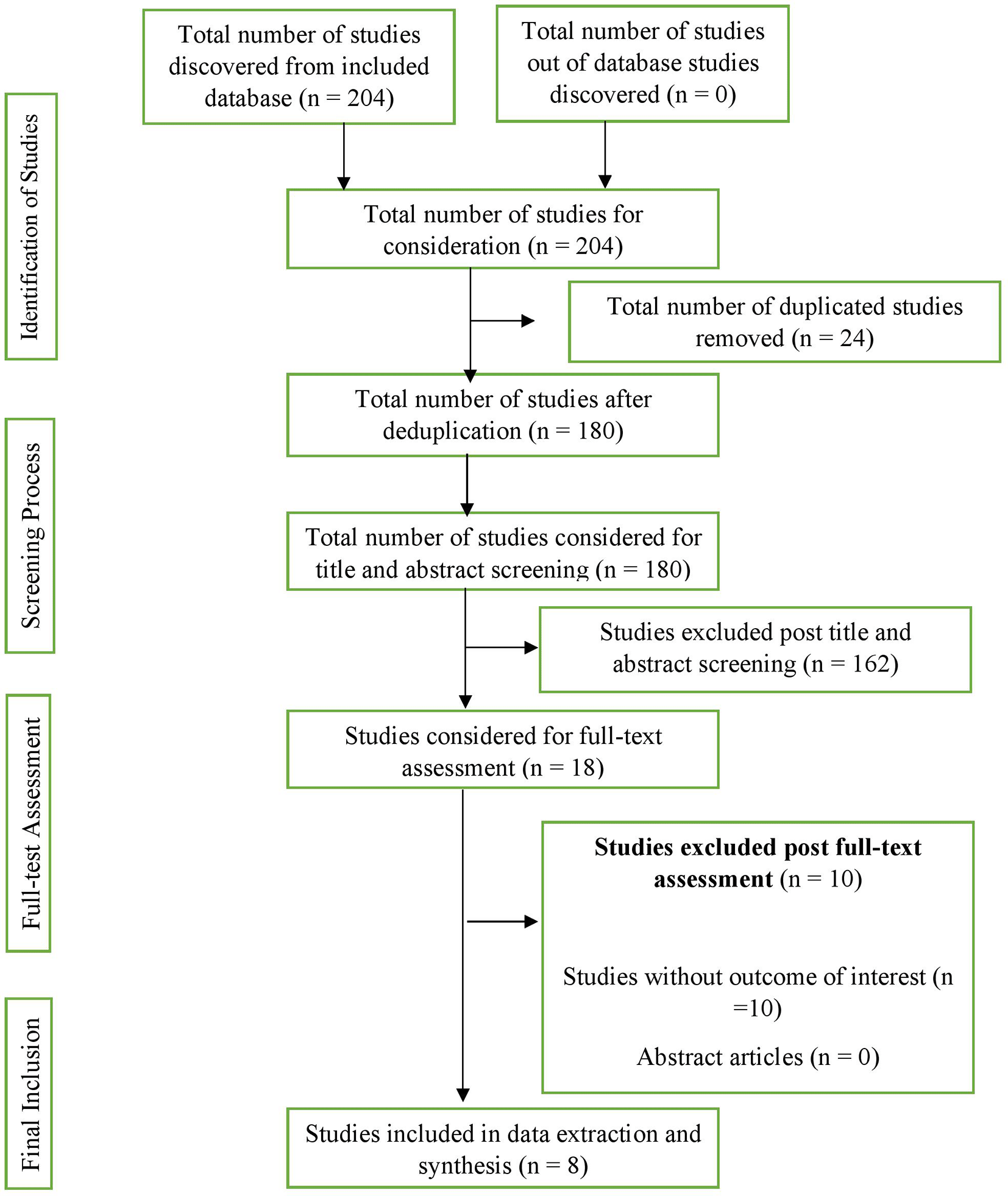
The literature search was performed by an independent reviewer who uploaded all emerging articles into EndNote X20 software. Four independent reviewers conducted a thorough title screening, and all studies that did not meet the inclusion criteria were excluded, while duplicates were removed. The final EndNote database was shared for abstract and full-text screening. The four reviewers examined abstracts and full texts from all records based on the review question and inclusion and exclusion criteria. Consensus was mediated through a fifth independent reviewer who is one of the authors in this paper. Efforts were made to obtain full-text articles by consulting experts in the field, conducting comprehensive web-based searches, and contacting relevant authors. The retrieved articles were then downloaded, stored on an electronic drive, and charted onto a relevant template. The study selection process is summarized using the PRISMA diagram shown in Figure 1.
A modified data charting template was used to collect relevant information from the articles included in the review. The elements of the data in this template were fields similar to those in previous reviews; its core components are shown in Table 3. The process of data charting ensured the synthesis and interpretation of all studies identified, in accordance with the review’s inclusion and exclusion criteria.
The review findings are presented narratively using the Population, Concept, and Context (PCC) framework, which aligns the study selection with the main review question (see Table 2). The review summarizes the literature on knowledge, awareness, and risk perception of MM in Africa. The emerging themes from the combined synthesis of findings are then discussed in relation to research findings available in the global context.
The search strategy initially yielded 204 hits; however, after removing duplicates, 180 records remained for title and abstract screening. This screening process resulted in a further exclusion of 162 articles as that did not meet the inclusion criteria. The remaining 18 articles were reviewed in full text, and assessing these full texts led to the exclusion of 10 articles as their contents were irrelevant to this review, leaving only 8 articles (n = 8) for the final analysis. The articles included in this review comprised original research (n = 6)30–35 and reviews (n = 2).20,36 The findings show a lack of primary empirical studies on the knowledge, awareness and risk perception of MM in Africa. While these studies report on knowledge and awareness of MM, this was not their primary objective. Rather, it appears that these findings are presented based on inferences made using observational data about suspicion index, patient presentation time for treatment and other clinical outcomes that were being examined in these studies.
Out of the eight articles included, two were from South Africa and Kenya, respectively (n = 2),31–34 one was from Morocco and Nigeria, respectively (n = 1),30,35 while the remaining studies were reviews that consolidated literature from the African region (n = 2).20,36 Overall, most studies report low levels of awareness of MM among healthcare workers (n = 5),20,30–32,36 while only two studies report acceptable levels of knowledge and awareness of MM among other healthcare workers (n = 2).33,34 The remaining article reports acceptable levels of knowledge and awareness among patients with hematological conditions (n = 1),35 without specifically alluding to MM. This study was included because of limitations in the number of relevant studies found and the fact that MM fall under the umbrella of hematological malignancies. Table 3 provides a summary of the studies included in this review and provides an overview of research findings in accordance to the PCC framework adopted for the article selection of this review.58
This scoping review mapped evidence on awareness, knowledge, and risk perception of MM in Africa. After applying the relevant inclusion criteria, the review found few relevant articles that explicitly addressed the review question. Only one empirical study directly addressed the review question and was conducted in South Africa among medical doctors, using a quantitative descriptive cross-sectional design. The findings of this study showed a high level of knowledge and awareness of MM among medical practitioners surveyed. However, there was a significant gap between the high level of awareness of MM and patient referral, highlighting the need for further research and education among other healthcare professionals, such as nurses.33 While this study provides information that may inform the design of preventive strategies in the selected South African context, its limitations in terms of sample size, research design and study population limit the generalizability of the findings. This thus necessitate further research to be conducted using different methodologies and in diverse settings so that contextually relevant baseline data may be obtained.
Additionally, most studies in this review cited low levels of MM awareness among clinicians despite not explicitly exploring knowledge, awareness and risk perception as a primary objective. This underscores the importance of conducting more research that will adopt diverse methodologies among different contexts and categories of healthcare professionals, so that appropriate preventive strategies may be designed for educating them on MM. Research suggests that health professionals across different disciplines are increasingly recognized as integral to clinical prevention and population health activities.37–39 Additionally, evidence from studies on other health conditions suggests that inadequate knowledge and incorrect attitudes among healthcare workers can directly influence patient behaviors and professional practices, leading to delayed diagnosis of diseases and poor clinical outcomes.40–43 In the context of MM, scholars have argued that research on knowledge, attitudes and perception among healthcare workers provide valuable insights that can guide targeted interventions and educational initiatives that ultimately promote the holistic well-being of patients.26,44 These findings imply that such research in Africa must be conducted among all categories of health workers, with urgent attention to medical doctors, specialist physicians, nurses and community healthcare workers.
The review also reveals a paucity of research among patients and the general population, similar to healthcare workers. This finding is consistent with literature reporting challenges with a low diagnostic suspicion index for MM in African healthcare settings.20,45,46 Research suggests that this may be attributed to low levels of awareness and knowledge of MM among healthcare practitioners and may be associated with the general paucity of research in Africa.20 Delayed diagnosis can lead to presentation at advanced disease stages and is associated with life-threatening complications and shorter progression-free survival.47 In Africa, this is concerning as an increased disease burden may place a greater strain on healthcare resources, as the region is faced with prevailing health challenges such as high rates of HIV/AIDS, Tuberculosis and non-communicable diseases such as hypertension, diabetes, violence and injury. This is further compounded by financial and infrastructure challenges that affect the quality of health service delivery. The disparities in diagnostic capabilities and treatment of MM in resource-limited settings such as Africa, thus require multi-faceted interventions to bridge the gap between evidence-based care, access to treatment and prevention through education.48
Empirical evidence on knowledge, awareness, and perspectives regarding health-related conditions is thus crucial for public health efforts focused on prevention and health promotion. For MM, understanding and awareness of the condition is vital for ensuring timely diagnosis, referral, and effective management. This highlights the important role of healthcare workers in recognizing the clinical signs of MM.49 Similarly, other studies have reported on the significance of patients’ awareness of their health conditions and the subsequent impact on engagement with treatment and care.50 Ailawadhi et al. have also stressed that collecting patient-level data to identify knowledge gaps and developing targeted interventions to address them is essential.51 Research data on knowledge and awareness of other types of cancers, such as cervical and breast cancer, also demonstrates the importance of such evidence for interventions like health education, screening, and early detection.52,53 The World Health Organization also advocates adopting health promotion strategies to manage and control the rising burden of non-communicable diseases. Health education is considered a cornerstone of health promotion interventions that empowers individuals to take control of their lives.54
A review of the global epidemiology of MM suggests an increasing incidence among men aged 50 years and older, with higher mortality among men.55 Furthermore, recent data reveal that while the incidence rates were highest in North America and Australia, the highest mortality rates (1.8/100 000) were found in Australia, Northern Europe, and Southern Africa.56 Recent literature reports higher incidence and prevalence rates among black populations.57 Since Africa is home to the largest black population globally, urgent comprehensive research is required to understand the precise magnitude of the condition. Moreover, studies to providing baseline evidence on current knowledge, awareness and perceptions of MM are required for developing appropriate health promotion interventions to curb the potential burden of disease in Africa.
Based on study findings and research gaps identified, the following recommendations are proposed to support further research, education and clinical practice related to MM in Africa:
• More research should be conducted in Africa on MM, particularly behavioral studies to elicit knowledge, attitudes, perceptions and awareness of MM among healthcare workers (nurses, medical doctors, community health workers, pharmacists) and the general public. Studies should adopt various research designs, such as quantitative, qualitative, mixed methods and action research approaches to inform and evaluate appropriate interventions for the prevention and treatment of MM based on the contextual realities of the African context.
• Training of healthcare workers on clinical signs and symptoms of the condition and the appropriate management and referral pathways aligned with contextual health service delivery models. Contents of training and clinical management on the signs and symptoms of MM should also be integrated into current routine primary health care systems and health service packages for screening, diagnosis and referral pertaining to acute and chronic ailments.
• Strengthen current routine health surveillance systems to include data indicators for monitoring of incidence, prevalence, suspicion index, referral and treatment of MM at all spheres of the public health system in Africa. Actively track the suspicion index for MM at primary care levels and provide support to clinical staff to enhance diagnostic practices through evidenced based participatory approaches.
• Initiate contextually appropriate community-based education programs founded on human-centred designs adopting implementation science research approaches to test and scale up appropriate interventions.
• Facilitate training of pre-service health professionals on MM by ensuring inclusion of learning content in undergraduate health science curricula focusing on prevention and health promotion aspects.
While this review provides foundational information on the current research gaps about knowledge, attitudes and risk perception of MM in Africa, it is not without limitations. These relate to the database selection, which only included five databases with language and time restrictions that might have contributed to the scarcity of studies found, as the publication period was limited to articles published from the year 2000 onwards. The review findings nonetheless provide important, comprehensive information on the current state of research in the African context, highlighting the need for urgent research in this area.
This scoping review aimed to map evidence on awareness, knowledge, and risk perception of MM in Africa. To the researchers’ knowledge, this was the first scoping review conducted in the African context. The review findings indicate several research gaps in Africa. The review revealed a conspicuous dearth of contextual empirical research utilizing various research designs to understand this subject matter. The paucity of research thus poses challenges for the design of effective preventive strategies that may be tailored to various population groups and settings. In Africa, health services are predominantly rendered through a primary healthcare approach, thus requiring evidence-based approaches to health promotion and prevention. Further research on MM, knowledge, awareness and risk perception of MM should thus be conducted among various population groups, including different categories of healthcare workers, policy makers, patients and the general public. This will contribute to comprehensive baseline data that may inform the design of evidence-based interventions to prevent MM and related hematological malignancies in Africa.
| Views | Downloads | |
|---|---|---|
| F1000Research | - | - |
|
PubMed Central
Data from PMC are received and updated monthly.
|
- | - |
Provide sufficient details of any financial or non-financial competing interests to enable users to assess whether your comments might lead a reasonable person to question your impartiality. Consider the following examples, but note that this is not an exhaustive list:
Sign up for content alerts and receive a weekly or monthly email with all newly published articles
Already registered? Sign in
The email address should be the one you originally registered with F1000.
You registered with F1000 via Google, so we cannot reset your password.
To sign in, please click here.
If you still need help with your Google account password, please click here.
You registered with F1000 via Facebook, so we cannot reset your password.
To sign in, please click here.
If you still need help with your Facebook account password, please click here.
If your email address is registered with us, we will email you instructions to reset your password.
If you think you should have received this email but it has not arrived, please check your spam filters and/or contact for further assistance.

Comments on this article Comments (0)