Keywords
Small-scale fisheries, Artisanal fisheries, Technological innovation, Digital transformation, Sustainability, Food security, Climate resilience, Adoption barriers.

This article is included in the Agriculture, Food and Nutrition gateway.
Small-scale fisheries, Artisanal fisheries, Technological innovation, Digital transformation, Sustainability, Food security, Climate resilience, Adoption barriers.
Small-scale artisanal fisheries (SSF) are a cornerstone of global food security, supporting the livelihoods and nutrition of millions of people, particularly in the coastal and rural communities of developing nations. These fisheries are characterized by the use of small vessels, typically under 12 meters, and traditional, labor-intensive fishing methods adapted to local environments. Despite their “small-scale” designation, their global impact is immense: they represent 90% of the world’s fishers and provide approximately 40–50% of the global catch intended for human consumption.
The sector’s significance is underscored by major international organizations such as the Food and Agriculture Organization (FAO) and the World Bank, which recognize SSF as the largest employer in the marine sector. In many regions across Africa, Asia, and South America, up to 90% of the population may depend on these fisheries for their primary subsistence. Beyond nutrition, these fisheries are essential for maintaining cultural identity and social relationships within coastal communities. However, the sector faces an array of complex and escalating challenges. Small-scale communities are increasingly vulnerable to the impacts of climate change, including rising sea levels and extreme weather events, which threaten their limited adaptive capacity. Furthermore, the sector suffers from high post-harvest losses due to a chronic lack of cold storage and modernized infrastructure. These issues are exacerbated by overfishing, habitat degradation, and a persistent marginalization in global policy and financial systems, leaving many fishers with restricted access to markets and modern tools. Technological innovation offers a critical pathway to addressing these vulnerabilities. Modern tools—ranging from Internet of Things (IoT) sensors and Information and Communication Technology (ICT) applications to sustainable fishing gear and solar-powered cold storage—have the potential to improve operational efficiency, reduce waste, and enhance the income of artisanal fishers. For instance, digital platforms and blockchain-based traceability can directly connect producers to consumers, bypassing traditional barriers to market access. Despite this potential, the adoption of such innovations is not a “silver bullet” and remains hindered by significant economic and technical gaps. The aim of this paper is to provide a structured systematic review of feasible technological interventions for small-scale fisheries. By evaluating current innovations alongside their adoption barriers and socio-economic impacts, this review seeks to identify practical opportunities and future research directions necessary to move the sector from vulnerability to long-term sustainability.
This study employed a systematic literature review approach guided by the Preferred Reporting Items for Systematic Reviews and Meta-Analyses (PRISMA) 2020 framework to ensure methodological transparency, reproducibility, and rigor in synthesizing existing scholarly evidence on technological innovations in small-scale artisanal fisheries. The PRISMA framework was selected because it provides a standardized process for identifying, screening, evaluating, and synthesizing academic literature in a transparent and structured manner. The methodology aimed to critically examine technological advancements, adoption barriers, socio-economic implications, and sustainability opportunities within small-scale fisheries globally.
To establish a focused and systematic review structure, the SPIDER framework (Sample, Phenomenon of Interest, Design, Evaluation, Research Type) was applied. The SPIDER approach was considered appropriate because the study integrates qualitative, policy-oriented, and mixed-methods research relating to fisheries innovation and community sustainability.
The framework was defined as follows:
• Sample: Small-scale artisanal fishers, coastal fishing communities, and small-scale fisheries stakeholders.
• Phenomenon of Interest: Technological innovations and digital transformation in fisheries, including Information and Communication Technologies (ICT), Internet of Things (IoT) systems, blockchain traceability, post-harvest technologies, and sustainable fishing tools.
• Design: Systematic literature review.
• Evaluation: Adoption feasibility, socio-economic impacts, sustainability outcomes, governance implications, and barriers to implementation.
• Research Type: Qualitative, mixed-methods, policy-based, and interdisciplinary fisheries studies.
The primary research question guiding this review was:
“How can technological innovations improve the sustainability, resilience, and socio-economic viability of small-scale artisanal fisheries, and what barriers limit their adoption?”
Secondary questions focused on:
1. The categories and applications of emerging fisheries technologies.
2. The economic, technical, and social constraints affecting implementation.
3. The role of governance, policy, and community participation in successful technology adoption.
4. Future research directions required to support sustainable small-scale fisheries.
A comprehensive literature search was conducted across multiple internationally recognized academic databases to capture peer-reviewed research relevant to technological innovation in small-scale fisheries. The primary databases searched included Scopus, Web of Science, ScienceDirect, and Google Scholar. To incorporate policy documents, technical reports, and grey literature, additional searches were conducted within repositories from the Food and Agriculture Organization and the World Bank.
The review focused on publications produced between 2010 and 2024 to capture contemporary technological developments and modern fisheries governance discussions.
Boolean search operators (AND, OR) and keyword combinations were employed to improve search precision and comprehensiveness. The primary search string used was:
(“small-scale fisheries” OR “artisanal fisheries”)
AND
(“technological innovation” OR “ICT” OR “IoT” OR “blockchain” OR “digital fisheries”)
AND
(“adoption barriers” OR “sustainability” OR “food security” OR “climate resilience”)
Additional keyword variations were applied depending on database indexing structures and search capabilities.
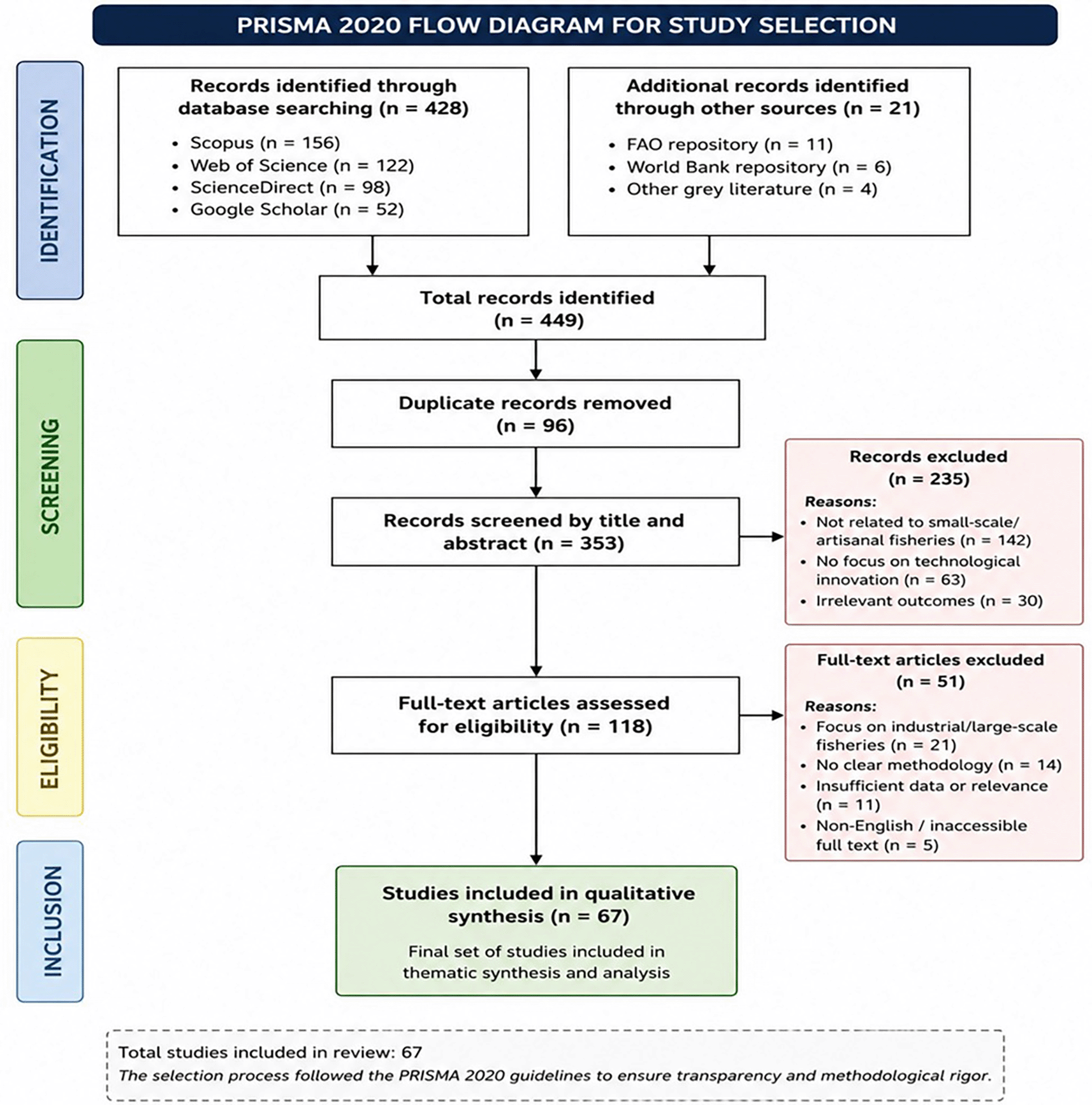
The initial database search identified 428 academic records, while an additional 21 documents were retrieved from institutional reports and grey literature sources. After duplicate removal, 353 studies remained for title and abstract screening.
Studies were evaluated using predefined inclusion and exclusion criteria to ensure relevance, quality, and consistency throughout the review process.
Inclusion criteria
Studies were included if they:
1. Were peer-reviewed journal articles, conference papers, or high-impact institutional reports;
2. Were published between 2010 and 2024;
3. Focused specifically on small-scale or artisanal fisheries;
4. Examined technological innovation, sustainability, governance, or fisheries modernization;
5. Were written in English;
6. Included qualitative, quantitative, or mixed-methods research designs.
Exclusion criteria
Studies were excluded if they:
1. Focused exclusively on industrial or large-scale commercial fisheries;
2. Lacked clear methodological approaches;
3. Consisted only of editorials, opinion pieces, or short abstracts;
4. Did not address technological, socio-economic, or sustainability dimensions relevant to artisanal fisheries;
5. Were duplicate publications or inaccessible full texts.
The study selection process followed the four-stage PRISMA 2020 framework: identification, screening, eligibility assessment, and inclusion.
Identification Phase
A total of 449 records were identified through database searching and grey literature sources.
Screening Phase
After removing 96 duplicate records, 353 studies underwent title and abstract screening. During this stage, 235 articles were excluded due to irrelevance, lack of technological focus, or mismatch with the study objectives.
Eligibility Phase
A total of 118 full-text articles were assessed for eligibility against the predefined inclusion criteria. Of these, 51 studies were excluded because they focused primarily on industrial fisheries, lacked methodological clarity, or did not sufficiently address technological innovation in small-scale fisheries.
Inclusion Phase
Ultimately, 67 studies were included in the final qualitative synthesis and thematic analysis.
The PRISMA framework enhanced transparency in the study selection process and minimized selection bias throughout the review.
Data Extraction
A standardized data extraction framework was developed to systematically organize information from the selected studies. The extracted information included:
• Author(s) and year of publication;
• Geographic focus and study region;
• Type of technological innovation discussed;
• Research objectives and methodologies;
• Reported socio-economic and environmental impacts;
• Adoption barriers and implementation challenges;
• Governance and policy implications;
• Recommendations and future research directions.
The study selection process is summarized in Figure 1 following the PRISMA 2020 reporting structure.
To ensure the reliability and academic quality of the included studies, the Critical Appraisal Skills Programme (CASP) checklist for qualitative research was employed as the primary quality assessment tool. The CASP framework enabled the evaluation of methodological rigor, research validity, transparency, and relevance of the selected literature.
The collected data were synthesized using a narrative thematic synthesis approach. Findings were grouped into major thematic categories to identify recurring patterns, similarities, and emerging research gaps across the literature. The principal synthesis themes included:
1. Technological innovation categories in small-scale fisheries;
2. Socio-economic roles and livelihood implications;
3. Adoption barriers and implementation challenges;
4. Governance, policy, and institutional support mechanisms;
5. Future directions for sustainable fisheries innovation.
The narrative synthesis approach allowed for the integration of interdisciplinary evidence from fisheries science, environmental governance, digital transformation, and sustainability research, thereby providing a holistic understanding of technological innovation within small-scale artisanal fisheries.
Small-scale artisanal fisheries are characterized by the use of small vessels (typically less than 12 meters in length, often with low-powered engines or unpowered), which operate close to shore, usually on continental shelves within a few hours’ travel from departure ports (Silvestrini et al., 2025), (Malcolm, Olivas & Dagostino, 2021). The fishing gear is predominantly manual, static, and passive, including trammel nets, gillnets, longlines, handlines, and traps, with gear selection adapted to seasonal species availability and local traditions (Silvestrini et al., 2025), (Malcolm, Olivas & Dagostino, 2021), (Gamarra et al., 2023). Vessel types can range from small rafts and wooden canoes to open boats with outboard motors, and crews are generally small, often comprising only a few individuals (Malcolm, Olivas & Dagostino, 2021), (Gamarra et al., 2023). The sector is highly diverse, with a wide variety of gears and techniques, and fishing activities are often labor-intensive with relatively low productivity (Malcolm, Olivas & Dagostino, 2021), (Tzanatos et al., 2006).
Small-scale artisanal fisheries are crucial for food security, livelihoods, and poverty reduction, especially in coastal and rural communities of developing countries, where up to 90% of people may depend on fishing for their subsistence (Gamarra et al., 2023), (Tzanatos et al., 2006), (Chambon et al., 2024), (Purcell et al., 2016), (Zhang et al., 2025), (Hauzer, Dearden & Murray, 2013). These fisheries provide direct access to high-quality animal protein and are a key source of income, supporting local economies and employment (Gamarra et al., 2023), (Chambon et al., 2024), (Purcell et al., 2016), (Zhang et al., 2025), (Hauzer, Dearden & Murray, 2013). They also play a significant role in maintaining cultural identity, social relationships, and the transmission of traditional knowledge across generations (Gamarra et al., 2023), (Tzanatos et al., 2006). Women are heavily involved, particularly in post-capture activities such as processing and selling, and their catches can account for a substantial portion of household seafood consumption (Malcolm, Olivas & Dagostino, 2021), (Chambon et al., 2024), (Zhang et al., 2025), (Reis-Filho et al., 2025). The sector is the largest employer in the marine sector, representing 90% of the world’s fishers and providing 40–50% of the global catch for human consumption (Silvestrini et al., 2025), (Chambon et al., 2024), (Zhang et al., 2025).
Artisanal fisheries face complex challenges, including overfishing, habitat degradation, and the impacts of climate change such as sea level rise, ocean acidification, and extreme weather events (de Carvalho, Amaral & Alves, 2023). These communities are often highly vulnerable due to their dependence on natural resources and limited adaptive capacity (Zhang et al., 2025), (de Carvalho, Amaral & Alves, 2023). The sector is typically poorly mechanized, relying on low-capital, traditional methods, and is frequently marginalized in policy and management, resulting in inadequate representation and limited access to financial resources (Chambon et al., 2024), (Zhang et al., 2025), (Reis-Filho et al., 2025). Data availability and quality are persistent issues, with many small-scale fisheries escaping official statistics due to their informal and diverse nature (Chambon et al., 2024), (de Carvalho, Amaral & Alves, 2023), (Bara Dème & Failler, 2024). Additionally, the lack of systematic monitoring and weak governance further exacerbate their vulnerability to environmental and economic shocks (Reis-Filho et al., 2025).
While small-scale fisheries are often considered more sustainable than industrial fisheries due to their selective gear and lower ecological footprint, they are not immune to sustainability challenges (Silvestrini et al., 2025), (Snape et al., 2024), (Ríos et al., 2017), (Outeiro et al., 2021), (Mills, Gengnagel & Wollburg, 2014), (José Alava et al., 2019). Overfishing and resource overexploitation are significant concerns, particularly in regions where management is weak or non-compliance is high, leading to stock collapses and the dismantling of local value chains (Mills, Gengnagel & Wollburg, 2014). Bycatch, including vulnerable species such as elasmobranchs, seabirds, marine mammals, and sea turtles, can be substantial and may even exceed that of industrial fleets in some cases (Snape et al., 2024), (José Alava et al., 2019). Habitat degradation, especially in sensitive areas like seagrass beds and coralligenous reefs, is also documented, with bycatch and gear impacts triggering cascading ecological effects (Silvestrini et al., 2025). Waste generation and the need for better utilization of bycatch and processing by-products are additional sustainability issues.
Given these challenges, technological interventions are crucial for the future of small-scale artisanal fisheries. Innovations such as improved gear (e.g., net illumination to reduce bycatch), alternative lighting systems, and better data collection tools can help address ecological impacts, reduce operational costs, and enhance sustainability (Snape et al., 2024), (Mills, Gengnagel & Wollburg, 2014). Technology can also support the integration of circular economy principles, enabling the recycling and upcycling of fishing gear and by-products, which yields both ecological and economic benefits (Mills, Gengnagel & Wollburg, 2014). However, the adoption of technology must be context-sensitive, ensuring that it does not inadvertently increase overfishing or undermine traditional practices and community well-being (Mills, Gengnagel & Wollburg, 2014). Effective policy frameworks, infrastructure, and collaborative partnerships are necessary to support the scaling of beneficial technologies and to ensure that artisanal fisheries can continue to provide livelihoods, food security, and cultural value for future generations (Mills, Gengnagel & Wollburg, 2014).
Current Examples:
Mobile smartphone applications and digital survey forms have been developed to collect fisheries data on a small scale, such as the open-source PeskAAS system piloted in Timor-Leste. PeskAAS integrates vessel tracking data with catch records and provides spatial and temporal filtering of fishing productivity by method and habitat. It is controlled through a dashboard co-designed with fisheries scientists and managers, enabling easy-to-read data summaries and interpretation. The system is adaptable and has been used as a framework for systematic, standardized data collection in other contexts with limited training and code adaptation (Tilley, Dos Reis Lopes & Wilkinson, 2020), (Tilley et al., 2024).
Costs and Feasibility:
PeskAAS is fully open-source and free to use, making it highly feasible for small-scale fisheries with limited financial resources. However, successful implementation requires some contextual development and adaptation, which may limit scalability across different geographies (Tilley, Dos Reis Lopes & Wilkinson, 2020).
Impact:
Automated analytics from ICT tools like PeskAAS provide insights into fishing efforts, fisheries status, catch rates, economic efficiency, and geographic preferences, potentially guiding management and livelihood investments. These tools can lower transaction costs, connect sellers and buyers, and enable more precise and timely decision-making, supporting sustainable fisheries management and food security goals (Tilley, Dos Reis Lopes & Wilkinson, 2020), (Tilley et al., 2024).
Current Examples:
Low-cost GPS tracking and participatory logging methods have enabled small-scale fisheries to adopt spatial effort tracking systems using cellular, LoRaWAN, and IoT-based solutions. National initiatives in the UK, Italy, and other EU member states have demonstrated the feasibility of integrating passive-gear vessels under 12 m into these systems(Novaes Mathias et al., 2026). In aquaculture, IoT-based monitoring systems using multisensor boards measure key parameters such as pH and dissolved oxygen, allowing farmers to assess the health status of their systems and reduce waste (Anani et al., 2022). The Smart Nodding Duck (SND) system uses wave energy to power sensors and provides real-time feedback on sea conditions, enhancing safety and production efficiency (Wang et al., 2024).
Costs and Feasibility:
IoT solutions can be cost-effective if materials are chosen for low maintenance over long periods. The SND system demonstrated an average output power of 96.26 mW and high monitoring accuracy, with feasibility verified in tank experiments (Anani et al., 2022), (Wang et al., 2024). However, widespread adoption may be limited by technical capacity and the need for institutional support (Anani et al., 2022), (Kritzer, 2020).
Impact:
IoT devices facilitate real-time monitoring, improve traceability, and support predictive analytics for resource management. They help reduce pollutant emissions, environmental stressors, and energy consumption, contributing to loss reduction and improved growth in fish farming (Novaes Mathias et al., 2026), (Anani et al., 2022), (Wang et al., 2024).
Current Examples:
Technological advances in post-harvest practices include the use of cold storage, ice plants, insulated and refrigerated systems to prevent spoilage and quality deterioration during handling, transportation, processing, and preservation (Islam & Shamsuddoha, 2018). Solar-powered ice and cold storage solutions are recommended to upscale post-harvest technology and infrastructure (Islam & Shamsuddoha, 2018).
Costs and Feasibility:
Small-scale fisheries often have low financial capabilities, making access to sustainable post-harvest solutions challenging. However, modernized artisanal fisheries with improved post-harvest practices can be profitable and produce high-grade products for export markets (Islam & Shamsuddoha, 2018), (Akintola et al., 2022).
Impact:
Upgrading post-harvest technology is critical to eliminating hunger and improving food and nutritional security. It helps prevent spoilage and quality deterioration, reducing losses and increasing the value of fish products (Islam & Shamsuddoha, 2018), (Akintola et al., 2022).
Current Examples:
Fishing gears are increasingly produced from synthetic materials and designed to minimize the catching of non-target species, supporting sustainability. Smaller crews aided by hydraulic and navigational systems are now common, and there is advocacy for the revival and blending of locale-specific, small-scale technologies with modern innovations to create energy-efficient and ecologically sustainable hybrids (Lorenzi & Chuenpagdee, 2020), (Morgera & Ntona, 2018).
Costs and Feasibility:
Technology blending should be tailored and adapted to local socio-economic and ecological circumstances to ensure compatibility and appropriability by users. The transferred technology should not deskill operators and must be feasible for small-scale fishers (Morgera & Ntona, 2018).
Impact:
Eco-friendly gear and propulsion systems help minimize discards and waste, maintain marine ecosystem biodiversity, and support sustainable fisheries management (Lorenzi & Chuenpagdee, 2020), (Morgera & Ntona, 2018).
Current Examples:
Digital platforms such as blockchain-based traceability systems and e-commerce sites (e.g., “La Pescadería Artesanal”) directly connect producers with consumers, improving profitability margins. Interoperable digital traceability systems support GDST standards and SDG 14, ensuring accurate tracking of seafood products across supply chains (Cromwell et al., 2025), (Sarmiento-Carbajal et al., 2025). These platforms can also monitor and ensure decent working conditions for fishers, addressing labor rights issues (Cromwell et al., 2025).
Costs and Feasibility:
Digital platforms can lower transaction costs and remove barriers to market access, but their adoption in small-scale fisheries is hindered by political, social, and economic disparities (Tilley et al., 2024), (Sarmiento-Carbajal et al., 2025).
Impact:
Blockchain and IoT technologies enhance traceability, transparency, and regulatory compliance, reduce food fraud and waste, and improve cold-chain efficiency. E-commerce platforms increase income by connecting fishers directly to consumers (Cromwell et al., 2025), (Sarmiento-Carbajal et al., 2025).
The major technological innovations, feasibility considerations, and sustainability impacts identified across the reviewed studies are summarized in Table 1.
| Area | Current examples | Costs & Feasibility | Impact on loss reduction/Income | Citations |
|---|---|---|---|---|
| ICT | PeskAAS, mobile apps | Open-source, adaptable; context-specific development needed | Improved management, lower transaction costs, better decision-making | Tilley, Dos Reis Lopes & Wilkinson, 2020, Open reference preview (Tilley, Dos Reis Lopes & Wilkinson, 2020), Tilley et al., 2024, Open reference preview (Tilley et al., 2024) |
| IoT | GPS tracking, SND, water sensors | Cost-effective with low-maintenance materials; technical capacity needed | Real-time monitoring, reduced waste, improved growth | Novaes Mathias et al., 2026, Open reference preview (Novaes Mathias et al., 2026), Anani et al., 2022, Open reference preview (Anani et al., 2022), Wang et al., 2024, Open reference preview (Wang et al., 2024) |
| Post-Harvest | Cold storage, solar ice | Infrastructure investment required; financial barriers for small-scale fishers | Reduced spoilage, higher product quality, increased profitability | Islam & Shamsuddoha, 2018, Open reference preview (Islam & Shamsuddoha, 2018), Akintola et al., 2022, Open reference preview (Akintola et al., 2022) |
| Sustainable Gear | Eco-nets, hybrid propulsion | Requires local adaptation; must be appropriable by users | Minimized discards, biodiversity conservation | Lorenzi & Chuenpagdee, 2020, Open reference preview (Lorenzi & Chuenpagdee, 2020), Morgera & Ntona, 2018, Open reference preview (Morgera & Ntona, 2018) |
| Digital Platforms | Blockchain traceability, e-commerce | Lowers transaction costs; adoption barriers exist | Enhanced traceability, increased income, improved labor conditions | Cromwell et al., 2025, Open reference preview (Cromwell et al., 2025), Sarmiento-Carbajal et al., 2025, Open reference preview (Sarmiento-Carbajal et al., 2025) |
Across all five areas, digital and technological innovations are increasingly accessible and adaptable for small-scale fisheries, though challenges remain in scalability, financial capacity, and institutional support. ICT and IoT tools are most effective when tailored to local contexts, while post-harvest and sustainable gear technologies require infrastructure investment and community participation. Digital platforms offer significant potential for traceability and market access, but disparities in adoption persist. Collectively, these innovations contribute to loss reduction, improved income, and sustainability in small-scale fisheries (Tilley, Dos Reis Lopes & Wilkinson, 2020), (Novaes Mathias et al., 2026), (Anani et al., 2022), (Akintola et al., 2022), (Cromwell et al., 2025).
Small-scale fisheries face significant economic barriers to adopting new technologies. High initial investment costs for equipment such as IoT devices, AI systems, and blockchain infrastructure are a major obstacle, especially for small-scale operators who often lack the financial resources to make such investments (Mawrides, Mishra & Jæger, 2025). The cost of equipping fishing vessels with advanced technology can reach thousands of dollars, which is prohibitive for artisanal fishers (Mawrides, Mishra & Jæger, 2025). Additionally, the lack of access to credit and market incentives further increases the investment risk for small-scale aquaculture operations, making it difficult for them to compete with wild-caught products (Pomeroy, Parks & Balboa, 2006). Prohibitively high prices for quality feed and the absence of subsidies or financial support exacerbate these challenges (Pomeroy, Parks & Balboa, 2006), (Dey et al., 2013), (Schuhbauer et al., 2017). Small farm size and the non-scale neutrality of certain technologies also limit economic feasibility, as some innovations are not easily adaptable to smaller operations (Dey et al., 2013).
Technical gaps present another major barrier to technology adoption in small-scale fisheries. The limited availability of trained personnel with the technical expertise required for system setup and management hinders the implementation of smart technologies. There is also a need for research to refine current aquaculture technology and to transfer knowledge to local operators (Pomeroy, Parks & Balboa, 2006). The complexity of new systems, such as blockchain, requires additional training for fishermen, which is often unavailable or inaccessible (Mawrides, Mishra & Jæger, 2025). Furthermore, the lack of resources directed towards data collection and the technical capacity needed to maintain and operate monitoring systems are persistent challenges (Cardiec et al., 2020), (Kritzer, 2020).
Social constraints, including cultural resistance and entrenched gender roles, impact the adoption of new technologies. Community-based fisheries are deeply embedded in local social contexts, and changes to traditional practices may face resistance (Musiello-Fernandes, Zappes & Hostim-Silva, 2018). Issues such as conflicts over land ownership and use, elite influence, and difficulties in managing collective action around community-based fish culturing can impede adoption (Dey et al., 2013). Gender roles also play a significant part; while fisheries are often male-dominated, the participation of women in activities such as intertidal gleaning enhances household adaptive capacity and can support broader adoption if recognized and supported (Quiros et al., 2018). Cultural resistance to externally imposed management strategies, such as marine protected areas, is common, and locally implementable controls are often preferred (Cohen, Cinner & Foale, 2013).
Infrastructure deficits, such as inadequate post-harvest processing, storage, and transport facilities, as well as poor connectivity, limit the feasibility of adopting advanced technologies (Dey et al., 2013), (Kimani et al., 2020). Weak governance, ineffective management, and under-representation of local stakeholders in decision-making processes contribute to the political and economic marginalization of small-scale fisheries (Schuhbauer et al., 2017), (Kimani et al., 2020). There is a major imbalance in subsidy distribution, with small-scale fisheries receiving only a small fraction of global fisheries subsidies, further impairing their economic viability (Schuhbauer et al., 2017). Complex licensing systems, hierarchical disparities, and coordination issues within governance structures also reduce efficiency and inclusivity, creating additional obstacles for small-scale fishers (Suherman et al., 2025).
Community-Based Adoption
Community-based approaches can help overcome many barriers by leveraging local knowledge, social cohesion, and collective action. Successful examples include community-led management efforts that use area and seasonal rotation of harvest to maximize value and minimize overfishing, as well as initiatives that engage fishers in governance and empower them to participate actively (Ouréns et al., 2022). Collaborative management partnerships between local communities, civil society, and governments (co-management) are increasingly recognized as effective strategies for balancing conservation and livelihood needs (Cohen, Cinner & Foale, 2013).
NGO Partnerships
NGO involvement can facilitate access to training, technology transfer, and financial support, helping to bridge technical and economic gaps. NGOs can also play a role in advocating for more equitable subsidy distribution and in supporting community-based monitoring and data collection efforts (Pomeroy, Parks & Balboa, 2006), (Dey et al., 2013), (Schuhbauer et al., 2017).
Open-Source Solutions
Open-source technological solutions and decentralized approaches can reduce costs and increase accessibility for small-scale operators. As technological tools for monitoring become smaller, more cost-effective, and able to integrate with smartphones and handheld devices, their applicability in small-scale fisheries increases, provided that technical capacity and institutional support are also developed (Kritzer, 2020).
• Flexible and Adaptive Approaches: Adopting flexible management and governance strategies that can respond to local needs and changing conditions is critical (Ouréns et al., 2022).
• Capacity Building: Training community leaders and fishers, fostering dialogue, and empowering local actors to participate in governance are essential steps (Pomeroy, Parks & Balboa, 2006), (Ouréns et al., 2022).
• Infrastructure Investment: Improving post-harvest infrastructure, connectivity, and access to credit can reduce investment risks and operational costs (Pomeroy, Parks & Balboa, 2006), (Dey et al., 2013), (Kimani et al., 2020).
• Policy Reform: Developing supportive government policies, effective regulations, and equitable subsidy distribution can enhance the economic viability of small-scale fisheries (Dey et al., 2013), (Schuhbauer et al., 2017).
• Stakeholder Engagement: Ensuring the inclusion of local stakeholders in decision-making processes and data collection can improve management outcomes and reduce conflict (Cardiec et al., 2020), (Ouréns et al., 2022).
By integrating these strategies and leveraging community-based, NGO, and open-source approaches, small-scale fisheries can better bridge the gap between technological innovation and practical, sustainable use (Pomeroy, Parks & Balboa, 2006), (Dey et al., 2013), (Kritzer, 2020), (Cohen, Cinner & Foale, 2013), (Ouréns et al., 2022).
Lack of Integrated, Low-Cost Sensors and Digital Tools
• There is a notable absence of integrated, low-cost sensor solutions tailored for small-scale fisheries, particularly those that enable real-time offshore connectivity and digital access for fishing vessels. This gap restricts the full potential of digital technologies for these communities, as existing long-distance communication solutions are limited and often unaffordable or impractical for small-scale operators (Anand et al., 2024), (Kritzer, 2020).
• The implementation of standardized digital logging systems is hindered by the lack of technological infrastructure and institutional support in small-scale fisheries. Participatory models using mobile platforms and low-cost GPS systems have shown promise, but widespread adoption remains limited due to these infrastructural and support deficits (Novaes Mathias et al., 2026).
• The literature highlights the need for innovative mechanisms and platforms, such as open, interactive, and flexible information systems, to address fisheries data gaps and support the integration of local and crowdsourced knowledge (Chuenpagdee et al., 2019).
Limited Adoption Studies in Developing Regions
• There is a critical gap in understanding the specific challenges faced by small-scale fishers in developing regions regarding digital capacity building and technology adoption. Most research on digital inequality does not sufficiently address the unique barriers within fisher communities, such as lack of digital access, limited communication opportunities in deep ocean settings, and insufficient digital skills (Anand et al., 2024).
• Adoption studies are further limited by the absence of sustained, long-term partnerships with local stakeholders. Many research projects are short-term and do not deeply engage with the communities most affected, leading to an incomplete understanding of the social, cultural, and political factors influencing technology uptake (Xu, Krafft & Martens, 2024).
• The lack of integrated and up-to-date data systems further marginalizes small-scale fisheries in policymaking and governance, especially in countries with limited governance, funds, and technical expertise (Chuenpagdee et al., 2019), (Selgrath, Gergel & Vincent, 2018).
Gender and Social Inclusion
• Gender issues remain a significant gap in small-scale fisheries research and policy. While there is increasing attention to gender inclusion, many governance interventions still fail to adequately address the roles and needs of women in fisheries, both in harvesting and post-harvest activities (Pomeroy, 2016).
• The situational analysis of small-scale fisheries across multiple countries emphasizes the need for gender inclusion initiatives as a key policy and governance strategy to transition from vulnerability to viability .
Community Engagement and Traditional Knowledge
• Effective management and governance of small-scale fisheries require direct involvement of fishers in the design and implementation of management strategies. Traditional top-down approaches are insufficient; instead, participatory and community-centered approaches are needed to ensure that management aligns with local practices, realities, and needs (Quimby, 2015), (Jaureguizar et al., 2024).
• The integration of local environmental knowledge (LEK) and traditional practices is essential, especially in data-poor systems where long-term scientific data is lacking. LEK can provide valuable historical and contextual information to inform management and technology adoption (Selgrath, Gergel & Vincent, 2018).
Policy Frameworks
• Policy frameworks must balance the need for standardization with contextual adaptability to avoid exclusion of small-scale operators. There is a need for inclusive international cooperation and policy instruments that recognize the diversity and complexity of small-scale fisheries, including their multi-species, multi-gear operations and dynamic social-ecological interactions (Novaes Mathias et al., 2026), (Isaacs, 2012), (Béné et al., 2011).
• Current governance structures often lack the capacity to integrate basic science, monitoring, and community input into effective fisheries policies, resulting in limited practical management interventions (Sekadende et al., 2020).
Pilot Projects for Robust, Low-Cost IoT Solutions.
• The development and piloting of IoT-enabled digital ecosystems, including low-cost deep ocean communication solutions and supportive software applications, are proposed as a means to transform small-scale fishing communities into smart digital communities. Such ecosystems can enhance resilience to natural disasters, improve income through e-commerce platforms, and reduce vulnerability by providing relevant information and livelihood support (Anand et al., 2024).
• Pilot projects should focus on participatory models that leverage mobile platforms and low-cost GPS systems, ensuring that solutions are adaptable to the specific contexts and capacities of small-scale fisheries (Anand et al., 2024), (Novaes Mathias et al., 2026).
Hybrid Approaches: Merging Traditional Knowledge with Digital Tools
• Hybrid approaches that combine traditional knowledge with digital tools are recommended to address data gaps and support sustainable management. For example, integrating local environmental knowledge with digital catch recording and genomic tools can provide a more comprehensive understanding of fisheries dynamics and threats to vulnerable species (Selgrath, Gergel & Vincent, 2018).
• Action research and transdisciplinary research methodologies, where researchers, policy implementers, and small-scale communities collaborate, are suggested to implement change and reduce vulnerabilities (Isaacs, 2012).
Evidence-Based Next Steps for Researchers and Policymakers
• Researchers and policymakers should prioritize:
➢ Conducting in-depth, context-specific adoption studies to identify barriers and enablers of technology uptake in small-scale fisheries (Anand et al., 2024), (Xu, Krafft & Martens, 2024).
➢ Developing open, flexible information systems that enable local description, regional comparisons, and large-scale syntheses to de-marginalize small-scale fisheries and improve governance (Chuenpagdee et al., 2019).
➢ Implementing community-centered and gender-inclusive governance strategies, and ensuring sustained partnerships with local stakeholders for long-term impact (Xu, Krafft & Martens, 2024), (Jaureguizar et al., 2024).
➢ Investing in research on fisheries resources, monitoring, and education to inform adaptive management and policy decisions (Jaureguizar et al., 2024).
By addressing these research and social gaps through targeted pilot projects and hybrid approaches, the small-scale fishery sector can move towards more inclusive, resilient, and sustainable technological and governance solutions (Anand et al., 2024), (Novaes Mathias et al., 2026), (Chuenpagdee et al., 2019), (Jaureguizar et al., 2024).
Small-scale artisanal fisheries are a global cornerstone for food security and livelihoods, employing 90% of the world’s fishers. Despite their importance, these communities face significant threats from climate change, overfishing, and economic marginalization.
While innovative technologies like low-cost IoT sensors, PeskAAS digital tracking, and solar-powered cold storage offer powerful solutions to reduce waste and increase income, their adoption is currently blocked by high costs, technical gaps, and inadequate infrastructure.
To secure a sustainable future, the transition must move beyond just providing hardware. It requires community-led governance, equitable subsidies, and the blending of traditional knowledge with digital tools. By addressing these social and economic barriers, technological innovation can truly empower small-scale fishers to become resilient, viable, and sustainable.
| Views | Downloads | |
|---|---|---|
| F1000Research | - | - |
|
PubMed Central
Data from PMC are received and updated monthly.
|
- | - |
Provide sufficient details of any financial or non-financial competing interests to enable users to assess whether your comments might lead a reasonable person to question your impartiality. Consider the following examples, but note that this is not an exhaustive list:
Sign up for content alerts and receive a weekly or monthly email with all newly published articles
Already registered? Sign in
The email address should be the one you originally registered with F1000.
You registered with F1000 via Google, so we cannot reset your password.
To sign in, please click here.
If you still need help with your Google account password, please click here.
You registered with F1000 via Facebook, so we cannot reset your password.
To sign in, please click here.
If you still need help with your Facebook account password, please click here.
If your email address is registered with us, we will email you instructions to reset your password.
If you think you should have received this email but it has not arrived, please check your spam filters and/or contact for further assistance.

Comments on this article Comments (0)