Keywords
Quality of life; HIV, viral suppression, physical health, psychological health; self-rated health.

This article is included in the Global Public Health gateway.
Quality of life; HIV, viral suppression, physical health, psychological health; self-rated health.
Successful Human Immunodeficiency Virus (HIV) treatment through antiretroviral therapy (ART) is known to significantly contribute to viral suppression and consequently quality of life (QoL) improvements in people living with HIV. Existing research evidence has linked HIV treatment success and viral load suppression (VLS) to several benefits, including increased life expectancy, increased productivity and improved QoL domains - physical health, psychological, social relationships and environment domains.1,2
According to UNAIDS, VLS is a significant indicator of ART treatment success, characterised by a reduction of viral load to undetectable levels (<1000 copies/mL) in HIV infected individuals.3,4 The VLS results in reduced viral transmission, improved immunity, and increased life expectancy among HIV-infected individuals, thereby implying better productivity and better QoL across all domains.1,2,5
According to the World Health Organization (WHO), QoL is a multidimensional measurement of an individual’s perceived well-being on several dimensions, including their physical and psychological health, environment, and social relationships.2,6 The World Health Organisation Quality of Life Brief Version (WHOQOL-BREF) is a cross-culturally applicable and validated measurement tool that assesses QoL using 26 standardised questions on the four QoL domains, namely physical health, psychological, social relationships and environment, with 5-point Likert scale responses per question.1,6,7
An estimated 30.7 million people out of 39.9 million PLH were accessing ART globally, and 72% of them were virally suppressed.8,9 Sub-Saharan Africa is the region with the highest numbers of PLHIV (20.8 million out of 39.9 million), PLH on ART (84%) and viral suppression rate (76%), relative to other regions.8,9 South Africa has been ranked among the top 5 countries with the highest HIV prevalence in the world, with 18.8% of the population living with HIV and 81.2% of those virally suppressed.8,9 The Eastern Cape Province (ECP), where this study was conducted, is among the top 4 provinces with the highest HIV prevalence rate (18.8%) and highest HIV viral suppression rate (80.2%).10
During the 2014 International AIDS Conference held in Melbourne, the Joint United Nations Programme on HIV/AIDS introduced the 90–90-90 targets aimed at speeding up initiatives to eliminate the AIDS epidemic by the year 2030. These targets were reviewed in 2018 by the United Nations.11 The 90–90-90 and 95–95-95 initiatives establish targeted health goals to be realized by the years 2020 and 2030, respectively. The aim is to ensure that by this time, at least 90% of individuals living with HIV (PLWH) will be diagnosed, a minimum of 90% of those diagnosed will be on antiretroviral therapy (ART), and at least 90% of those undergoing treatment will attain viral suppression. The WHO (2016), however, admits that this technique falls short of establishing a clear aim for quality of life. Therefore, it fails to address the needs of PLH who have achieved viral suppression yet continue to confront substantial non-communicable diseases, psychological distress, feelings of hopelessness, economic difficulties, and experiences or fears associated with HIV-related discrimination12 Despite the high rates of viral suppression, research evidence on QoL of PLHIV following viral suppression is generally limited in South Africa and none in the Eastern Cape province. The study sought to evaluate Quality of Life (QoL) domains namely, physical health, psychological, social relationships and environment, using the World Health Organization Quality of Life Brief Version (WHOQOL-BREF) among PLH who achieved VL in South Africa.
The study was conducted at eleven selected health facilities within four adjacent health districts of the predominantly rural coastal province called the Eastern Cape. The mid-2024 estimates indicated that the province mainly consists of a Black population (85% of an approximate total population of 7million) that is mired in unemployment and inequalities.13
The study was conducted among a random sample of 244 participants aged 18 years or older who were HIV virally suppressed and participating in the South African Medical Research Council Research Capacity Development Initiative (SAMRC-RCDI) project at Walter Sisulu University. Viral suppression (below 200 copies/mL) was verified from patient registers prior to enrolment into the study.
Sampling and data collection occurred over a 6-month period: January – June 2023. A team of researchers conducted a simple random selection from a database of people living with HIV (PLHIV) who are receiving antiretroviral therapy (ART) and have achieved viral load suppression (defined as having a laboratory test result of less than 200 copies/ML). To be eligible for participation in this study, individuals have given consent to take part in future HIV-related research. The authors of the current study also contributed as co-investigators in the SAMRC-RCDI study. Those with cognitive impairments or who were unable to provide consent were excluded from the study.
Data was collected from the selected participants using the 26-item WHOQOL-BREF,14 which is a cross-culturally applicable and validated tool for evaluating quality of life across four major domains: physical health, psychological, social relationships, and environment. Mean scores for each of the four domains were calculated, and each of the mean scores was transformed to a 0–100 scale. A higher score indicated better quality of life for that domain. The WHOQOL-BREF was implemented by a team of three qualified Public Health Practitioners who were trained on questionnaire administration. Following written informed consent by the participant, data collection was conducted at healthcare facilities, where each questionnaire survey lasted 20–30 minutes.
Data entry and analysis was done using SPSS version 13® for windows. The Cronbach’s alpha was used to determine the reliability and internal consistency of the WHOQOL-BREF tool. Descriptive data were analysed and presented as frequencies, means, standard deviations and proportions in tables and figures, as appropriate. A repeated measures ANOVA was performed to assess whether there were significant differences in the mean scores across the four domains of the WHOQOL-BREF questionnaire and p-values were obtained. A p-value of less than 0.05 was considered statistically significant. A Bonferroni post-hoc test was performed to identify the specific sources of a significant overall difference in QoL domain scores. Wilk’s Lambda analysis was used to look at the overall error rate while testing different areas of quality of life (QoL).
The Cronbach’s alpha was used to determine the reliability and internal consistency of the WHOQOL-BRF questionnaire, where it showed a value of 0.808, indicating a good consistency for the WHOQOL-BEF questionnaire. The WHOQOL-REF questionnaire measures four domains of QoL.14 The physical domain assesses QoL in relation to the ability to perform daily activities, the capacity to work, energy levels, mobility, pain, and sleep quality. Whereas the psychological domain of QoL evaluates positive feelings, self-esteem, body image, sense of meaning in life, and negative emotions. The social domain of QoL measures satisfaction with personal relationships, special support from family and friends, and sexual life. The Environmental domain assesses the quality of life in relation to the physical environment, including aspects such as physical safety, home conditions, financial resources, access to health services and information, and leisure opportunities. Each domain was scored on a scale from 0 to 100, with higher scores indicating better quality of life.
The study sample of 244 participants was predominantly female (57.0%), with the largest age group being 45–53 years (28.3%). Secondary education was most common (36.1%), and the majority were employed (61.5%). Nearly half resided in rural areas (46.3%), and most reported low income (66.8%). Christianity was the most prevalent religion (50.8%), followed by Muslim (30.3%) and African religion (15.6%). The socio-demographic information is summarised in Table 1.
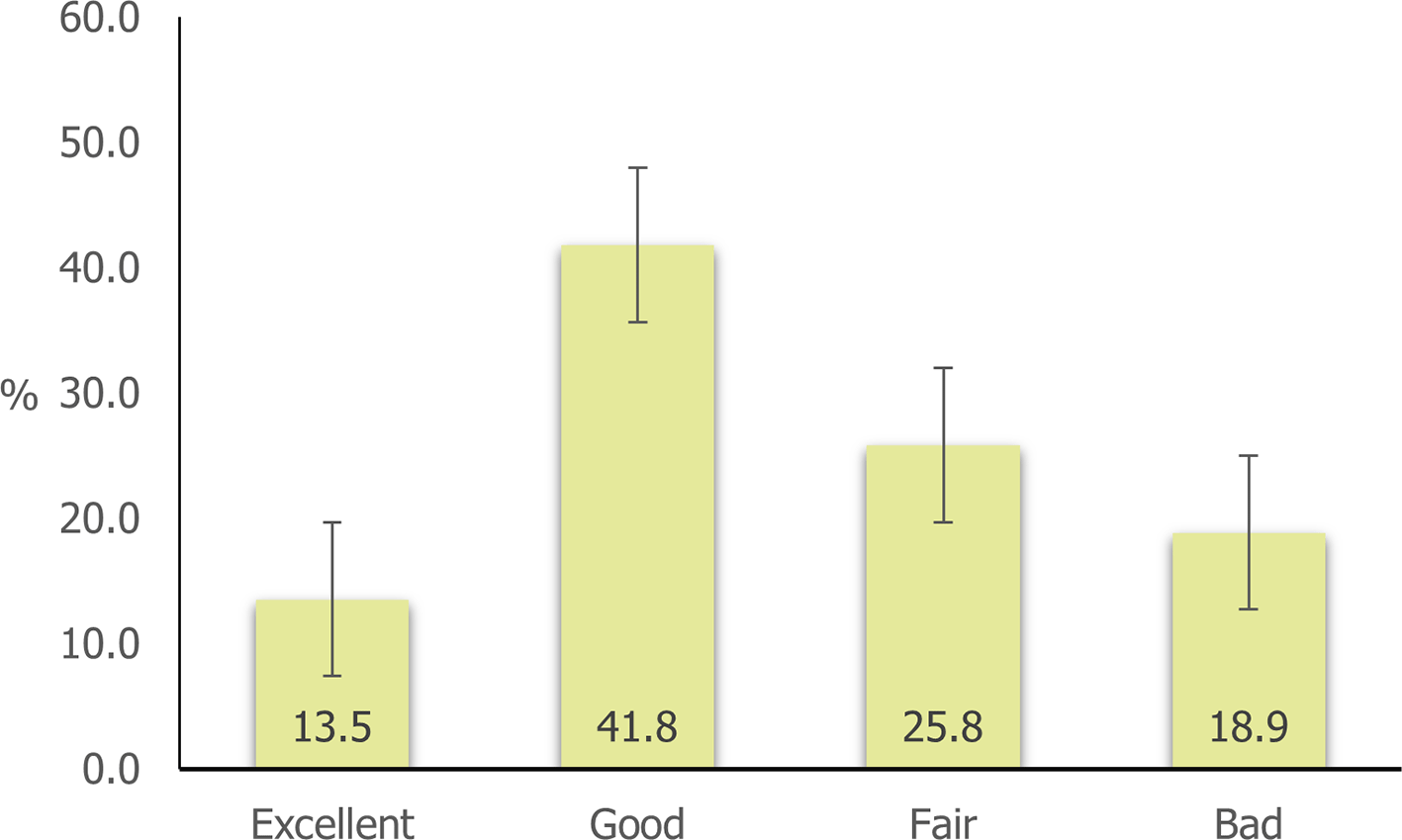
Over half (55.3%) of the participants perceived their overall health status as either excellent or good, with the remainder self-rating as fair or bad, as shown in Figure 1 below.
Following listwise deletion, where any case with missing data for any item was excluded, a total of 186 cases were included in the final analysis from the initial sample size of 244. The physical domain scored the highest mean score (55.9), suggesting that participants rated their physical health relatively higher than the other domains. The general score represents an overall assessment of quality of life. The general mean score was just above 50, indicating an overall moderate level of perceived quality of life among the participants. Table 2 Summarises the QoL scores according to each of the four QOL domains that were assessed in this study.
A repeated measures ANOVA was performed to assess whether there were significant differences in the mean scores across the four domains of QoL assessed by the WHOQOL-BREF questionnaire. There were statistically significant differences in how participants perceived their QoL with respect to their physical health, psychological, social relationships, and environment. The Wilk’s Lambda multivariate analysis showed statistically significant differences between the mean scores of the domains (F-value = 35.54; p < 0.001). Table 3 shows Bonferroni post-hoc test results of pairwise comparison of mean score differences between the four QoL domains, where the mean score difference between the physical health and psychological domain was the highest among the domain mean score differences (mean difference = 4.61; p = 0.001). In general, participants perceived their physical health better than their environmental conditions.
Mean scores for the four QoL domains were analysed based on the socio-demographic variables of the study participants, as presented in Table 4.
There were no statistically significant differences in physical health, psychological and social domain scores across age and gender groups implying that age and gender were not significant factors influencing participants’ perceptions of their QoL on all the four domains. Higher levels of education (secondary or tertiary) were significantly linked to more positive perceptions of physical health (p < 0.001), psychological well-being (p = 0.007), and social domains (p = 0.001) compared to individuals with lower educational attainment (none or primary level) Participants with tertiary education scored significantly higher with regards to their perception on the environmental domain compared to those with none, primary and secondary education. There were no statistically significant differences in QoL domain scores across various marital status groups except for the psychosocial domain, where single participants reported a better perception and scored higher compared to those who were separated (p = 0.028). With regards to employment status, employed participants scored higher on physical health and environment domains compared with the unemployed (p = 0.008 and 0.001. respectively), whereas there was no significant difference in the scores for psychological and social domains based on employment status.
As shown in Table 5, participants’ income was strongly associated with their perception of their QoL, with higher income associated with better perceptions of their physical health, psychological, social, and environmental domains (p = 0.000, respectively). There was no significant variation in mean QoL domain scores based on participants’ geographic location. However, regarding religion, only the psychological domain scores showed a significant difference, with African Traditional religion participants scoring higher than Muslims or those of other religions ( Table 5).
| Religion | |||
| Christian | 124 | 50.8 | 44.5–57.1 |
| Muslim | 74 | 30.3 | 24.6–36.0 |
| African Religion | 38 | 15.6 | 11.1–20.1 |
| Other | 8 | 3.3 | 1.1–5.5 |
The study revealed a moderate overall quality of life, with an average score of 50.2% across the four domains, which was consistent with participants’ moderate self-rated health. This overall picture, however, was strongly influenced by socioeconomic factors. Specifically, individuals with higher levels of education, those who were employed, and those with higher incomes reported significantly better outcomes in each of the four QoL domains: physical health, psychological well-being, social relationships, and environmental functioning.
Accompanied by a moderate self-rated health status, participants reported a moderate quality of life across all domains, as measured by their perceptions. Although significant variations were noted between domains, the domain scores for physical health, psychological, social, and environmental domains remained moderate. It was also found that level of education, employment status, and income were significant factors influencing the perception of quality of life for most of the QoL domains. The observed study findings are similar to the results of other studies that have shown that education, employment and income are key determinants of quality of life, as well as principal enabling factors for affording lifestyle choices such as health seeking, use of tobacco products, alcohol intake, physical activity and diet.7,15–17
Higher level of education is known to improve personal health risk perception and knowledge about disease causation and healthier treatment options, hence greater control over health.18,19 Better education can also increase competitive advantage in securing higher income employment opportunities, consequently, higher disposable income for funding lifestyle choices.17–20 This may, in part, explain the findings from this study where higher levels of education, employed status and higher income were linked to higher self-rated quality of life domains together with reduced alcohol-and tobacco-use behaviours. With more disposable outcome, people with high income can afford lifestyle behaviours such as a better diet and harmful use of alcohol and tobacco as observed in this study.5,17
Participants’ dual engagement in both healthier behaviours (such as better diet and physical activity) and counterproductive health behaviours could have a neutralising effect, possibly explaining the observed moderate QoL and SRH scores. In other similar studies where good and very good QoL and SRH scores were observed, higher levels of healthy behaviours and none or very low levels of counterproductive health behaviours were also reported among the participants, in contrast to the present study findings.5,7,15,16,18 This study further highlights that socioeconomic status significantly influences all domains of QoL. The socioeconomic hardships not only lead to physical illnesses but also negatively impact mental health and put a strain on social connections.21 This gives a broader perspective on how inequality harms human well-being. This study was conducted over a brief period; thus, longitudinal studies could aid in monitoring the disconnect between behaviour, socioeconomic status, and quality of life.
In this study, the participant pool consisted of individuals from a uniform cultural and socioeconomic background, which streamlined the data collection process. However, this lack of diversity, combined with the specific concentration on individuals living with HIV who are virally suppressed, restricts the ability to apply the results to a wider audience. Additionally, it makes it challenging to directly compare these findings with research that includes a more diverse range of HIV-positive individuals. In this study, the participant pool consisted of individuals from a uniform cultural and socioeconomic background, which streamlined the data collection process. However, this lack of diversity, combined with the specific concentration on PLWH who are virally suppressed, restricts the ability to apply the results to a wider audience. Additionally, it makes it challenging to directly compare these findings with research that includes a more diverse range of HIV-positive individuals.
This study addresses a critical issue in HIV care, emphasizing that while antiretroviral therapy (ART) effectively reduces viral levels, it does not guarantee a good quality of life for people living with HIV in the Eastern Cape Province. Despite improved physical health scores, mental health, social relationships, and environmental conditions remain significant challenges, particularly due to psychological and structural issues. The lowest scores were linked to environmental factors like financial resources and access to services. Additionally, socioeconomic factors such as education, employment, and income are strongly associated with quality of life, indicating that financial stability is vital for the well-being of individuals even after achieving viral suppression.
To optimise viral suppression benefits, public health policies must address the social determinants of health impacting quality of life and lifestyle behaviours. This requires a shift from a biomedical to a socio-ecological model. Key strategies include implementing economic empowerment programs to combat poverty and food insecurity, ensuring housing security for stable care engagement, and integrating mental health into HIV care. By supporting these social factors, policies can help people living with HIV not only survive but thrive, enhancing both individual and public health outcomes.
| Views | Downloads | |
|---|---|---|
| F1000Research | - | - |
|
PubMed Central
Data from PMC are received and updated monthly.
|
- | - |
Provide sufficient details of any financial or non-financial competing interests to enable users to assess whether your comments might lead a reasonable person to question your impartiality. Consider the following examples, but note that this is not an exhaustive list:
Sign up for content alerts and receive a weekly or monthly email with all newly published articles
Already registered? Sign in
The email address should be the one you originally registered with F1000.
You registered with F1000 via Google, so we cannot reset your password.
To sign in, please click here.
If you still need help with your Google account password, please click here.
You registered with F1000 via Facebook, so we cannot reset your password.
To sign in, please click here.
If you still need help with your Facebook account password, please click here.
If your email address is registered with us, we will email you instructions to reset your password.
If you think you should have received this email but it has not arrived, please check your spam filters and/or contact for further assistance.

Comments on this article Comments (0)