Keywords
Economic Policy; Public Sector Reform; Bibliometric Analysis; Bibliographic Coupling; Digital Governance.

Economic Policy; Public Sector Reform; Bibliometric Analysis; Bibliographic Coupling; Digital Governance.
In Version 2 of this article, several structural and methodological enhancements have been made to address the peer review feedback and ensure compliance with empirical transparency standards. We have fully disclosed the precise data extraction protocols from the Dimensions database, including the exact Boolean search string and operational filters. The article selection framework has been strengthened by integrating an explicit eligibility protocol outlining detailed inclusion and exclusion criteria. Furthermore, the complete technical configurations and algorithmic parameters for the VOSviewer software execution have been thoroughly reported to guarantee study reproducibility. To enhance the substantive quality of our findings, the Discussion and Thematic Analysis sections have been significantly enriched with deep qualitative content analysis, explicitly connecting the statistical co-word and bibliographic coupling clusters to established public administration paradigms and contemporary digital governance frameworks.
See the authors' detailed response to the review by Dede Rusmana
Global developments in economic policy and public sector reform indicate a shift toward adaptive, transparent, and performance-based governance amid increasingly complex challenges such as economic inequality, fiscal crises, and digital transformation.1 Economic policy is no longer merely technocratic in nature, but rather the product of interactions among actors, institutions, and global structures. The literature emphasizes the importance of data integration, accountability, and efficiency. From an academic perspective, research in this field continues to evolve in an interdisciplinary manner, as reflected in the growth of publications and the diversification of themes. The transition from New Public Management to New Public Governance further underscores a stronger focus on collaboration and public value, thereby highlighting the importance of comprehensive scientific mapping.2
Empirically, the growth of global literature in the fields of economic policy and the public sector has shown a significant upward trend over the past decade, reflecting increasing academic attention to issues of governance and institutional reform. Bibliometric data employed in this study indicate that publications related to economic policy and the public sector during the 2016–2025 period reached hundreds of documents indexed in international databases such as Dimensions, with high citation distributions among key documents and strong inter-publication reference linkages.3 Furthermore, the dominance of countries such as the United States and the United Kingdom in publication output with more than 10,000 citations demonstrates the concentration of academic influence in specific regions. Other studies likewise suggest that the rise in global publications on public policy reflects the continuing intensification of academic discourse in response to global challenges. These findings indicate that, despite substantial growth, the geographical distribution of knowledge remains uneven.4
Despite the rapid growth of the literature, the intellectual structure of the fields of economic policy and public sector reform has not yet been comprehensively mapped, causing conceptual relationships among studies to remain insufficiently visible. The fragmentation of themes and methodological diversity have complicated the identification of developmental trajectories, dominant actors, and thematic clusters within the literature.5 Recent studies emphasize the importance of bibliometric approaches in uncovering intellectual configurations and scientific dynamics in an objective and structured manner. In addition, bibliographic coupling techniques enable the identification of linkages among documents through shared references, thereby providing a more up-to-date picture of the knowledge structure within a particular field. This condition underscores the urgency of scientific mapping in comprehensively understanding the research landscape of public policy.6
Bibliometric analysis has become an increasingly relevant tool for examining the development of literature comprehensively, particularly in rapidly evolving and multidisciplinary fields such as economic policy and the public sector.7 This approach enables the quantitative analysis of scientific publications through indicators such as citations, collaboration patterns, and reference linkages, thereby facilitating the systematic identification of research trends and intellectual networks. Recent literature shows that bibliometric analysis functions not only as a mapping tool, but also as an analytical approach capable of revealing the epistemic structure of a field of study.8
Despite the growing volume of literature on economic policy and public sector reform, existing studies remain fragmented across governance, sustainability, fiscal policy, and administrative reform domains. Previous reviews have primarily focused on specific policy sectors or governance themes, while limited attention has been given to the intellectual structure and global knowledge networks connecting these areas. Therefore, this study employs a bibliometric review approach using bibliographic coupling analysis to map publication trends, thematic evolution, intellectual structures, and collaboration patterns in economic policy and public sector reform research during 2016–2025.
Economic policy and public sector reform are closely interconnected, as policy implementation often depends on the effectiveness, adaptability, and institutional capacity of public organizations. In this context, New Public Management (NPM) and Public Choice Theory provide important perspectives for understanding governance transformation and policy decision-making. NPM emerged as a response to the limitations of traditional bureaucracy by emphasizing efficiency, performance orientation, decentralization, and the adoption of managerial practices from the private sector.9 In its contemporary development, the perspective has evolved toward post-NPM and New Public Governance approaches, which place greater emphasis on collaboration, public value, and cross-sector coordination in addressing increasingly complex governance challenges and digital transformation.10 Meanwhile, Public Choice Theory explains how policy decisions are shaped by rational actors, institutional incentives, and collective decision-making processes within the public sector.11
Recent studies further indicate that governance and public sector reform research has shifted toward more adaptive and collaborative approaches. Bibliometric-based studies published in recent years highlight dominant themes such as transparency, good governance, public service quality, digital governance, and policy networks in contemporary public administration discourse.12,13 Other studies reveal the growing importance of inter-agency coordination and multi-stakeholder collaboration in addressing environmental, economic, health, and social policy issues.14 In addition, research on street-level bureaucracy demonstrates a transition from traditional concerns regarding administrative efficiency toward broader discussions on governance methods, policy implementation, and citizen-oriented public services.15 These developments suggest that public sector reform has evolved toward more dynamic governance systems characterized by institutional collaboration, digitalization, and evidence-based policymaking.
In the field of economic policy, recent literature also demonstrates increasing integration between fiscal reform, sustainability, and technological innovation. Studies on artificial intelligence in public finance emphasize emerging themes such as taxation, budgeting, fiscal forecasting, and government accountability.16 Similarly, research on carbon taxation and green finance highlights the growing role of public policy in balancing economic growth with environmental sustainability through sustainable fiscal instruments and investment strategies.17,18 Other studies continue to identify taxation, financial constraints, and revenue governance as central issues influencing state fiscal effectiveness and public welfare outcomes.19,20 Collectively, these findings indicate that the literature on economic policy and public sector reform has become increasingly interdisciplinary, thereby reinforcing the importance of bibliometric approaches in mapping intellectual structures, thematic evolution, and emerging research trends within the field.
This study employs a bibliometric review approach to examine the development of literature on economic policy and the public sector during the 2016–2025 period. Data were retrieved from the Dimensions database due to its broad multidisciplinary coverage and comprehensive citation metadata suitable for bibliometric analysis. The search process used the keywords “economic policy” AND “public sector” within titles, abstracts, and indexed terms to identify relevant publications related to governance, public administration, and economic policy studies. Data collection was conducted in January 2026, and the retrieved records were subsequently exported and processed using Microsoft Excel for preliminary refinement and metadata organization. The cleaned dataset was then analyzed using VOSviewer version 1.6.20 to visualize publication trends, keyword co-occurrence, collaboration networks, thematic clusters, and bibliographic coupling relationships among publications. Through this approach, the study systematically maps intellectual structures, emerging research themes, and collaboration patterns within the field of economic policy and public sector reform.
This study employs a quantitative bibliometric review approach paired with science mapping techniques to examine the systematic development of literature on economic policy and the public sector during the 2016–2025 period. Data were retrieved from the Dimensions database due to its broad multidisciplinary coverage and comprehensive citation metadata suitable for rigorous bibliometric analysis. To ensure full methodological transparency and counter fragmentation, the operational workflow follows a strict three-phase sequence consisting of transparent metadata retrieval via the target database, manual evaluation using explicit eligibility criteria, and advanced network visualization through algorithmic software. Through this structured framework, the study systematically maps intellectual structures, emerging research themes, and collaboration patterns within the field of economic policy and public sector reform, ensuring that the entire study remains sufficient for full reproducibility by independent researchers.
The Dimensions database was selected as the primary source of bibliographic data because it provides extensive multidisciplinary academic coverage, comprehensive cross-referencing metadata, and minimized indexing bias compared to traditional alternative repositories. The retrieval process was executed in January 2026 to extract specific publications concerning governance, public administration, and state financial strategies. The exact advanced Boolean search query applied during the live database session was “economic policy” AND “public sector”. The structural parameters and filters applied in the database focused the search field strictly on title, abstract, and indexed terms to ensure precise contextual alignment. Furthermore, the publication timespan was restricted to the years 2016–2025 to capture a modern ten-year evolutionary timeline, the language was restricted exclusively to English-language publications to guarantee international cross-referencing stability, and the document types were limited strictly to journal articles and conference papers to preserve scholarly peer-reviewed validity while deliberately excluding editorials, book reviews, and grey literature.
To explain clearly and transparently how the final analytical sample of exactly 500 publications was selected, an explicit formal eligibility protocol was implemented based on predefined boundaries. The inclusion criteria required that documents be peer-reviewed original research papers or conference articles published between January 1, 2016, and December 31, 2025, focus substantively on institutional transformations, administrative reforms, state fiscal frameworks, or collaborative economic policy architectures, and contain complete, uncorrupted citation strings and shared reference metadata required for network coupling analysis. Conversely, the exclusion criteria systematically omitted errata, book series, working papers, technical reports, and non-peer-reviewed notes. Additionally, articles containing corrupted or missing reference fields that would destabilize mathematical network generation were excluded, as well as documents that merely mentioned the target keywords in passing without anchoring their primary research objectives within the domains of public administration or economic governance.
The retrieved bibliographic records were from the database to Microsoft Excel for preliminary preprocessing and metadata refinement to minimize calculation distortions. The transparent data cleaning protocol involved several meticulous manual adjustments to ensure dataset integrity. First, duplicate elimination was conducted through the direct identification and absolute removal of duplicate records based on identical Digital Object Identifiers and publication titles. Second, author name standardisation was performed to achieve harmonization of synonym records arising from spelling variations, typos, or missing middle initials by matching and merging variant strings for identical authors into a singular entry. Third, source and journal harmonization was applied to standardise journal title records to prevent VOSviewer from splitting publication counts due to capitalization differences or punctuation inconsistencies. After applying this strict eligibility and data cleaning protocol, the finalized, fully optimized corpus comprised exactly 500 documents, which was saved as a standardized comma-separated values file for matrix processing.
Bibliometric mapping was conducted using VOSviewer version 1.6.20 as the primary analytical tool for network visualization, mathematical science mapping, and thematic exploration. Rather than relying on simple co-citation, this study deployed bibliographic coupling analysis at multiple units of analysis including documents, sources, authors, organizations, and countries to identify conceptual relationships among publications based on shared references. This technique captures contemporary thematic fronts without temporal lag, enabling the identification of intellectual proximity among documents even when direct citation relationships are absent. To ensure full reproducibility, all internal algorithmic parameters, clustering controls, and specific thresholds utilized inside VOSviewer are reported transparently. The full counting method was applied across all units of analysis, attributing an equal weight of one to every contributing author or entity within a publication. The association strength normalization method mathematically standardized the strength of interaction links between specific network nodes. Network clustering segmentation was governed via a default LinLog modularity optimization layout, where the resolution variable was set uniformly at 1.00 and the minimum cluster size threshold was designated at 10 to filter out peripheral fractional noise. Specific threshold parameters for the network extraction required a minimum citation threshold of 34 citations for document-level coupling resulting in the top 10 core documents, a minimum threshold of 10 documents per journal for source-level coupling leaving 10 sources, a minimum publication threshold of 3 documents for author-level coupling yielding 10 authors, a minimum threshold of 10 documents per institution for organization-level coupling isolating the top 10 academic hubs, and a minimum publication threshold configured at 50 documents for country-level coupling extracting the top 10 global nations.
The resulting bibliometric indicators, thresholds, and network visualizations were interpreted to identify publication trends, dominant themes, emerging research areas, and collaboration dynamics within the field. In order to avoid overclaiming results beyond what the bibliometric evidence can support, the assessment focuses strictly on tracking scholarly discourse shifts and research patterns rather than drawing definitive, direct macroeconomic policy outcomes in real-world governance. The structured bibliometric review workflow applied to map these publication trends, intellectual structures, thematic evolution, and collaboration networks is systematically illustrated in Figure 1.
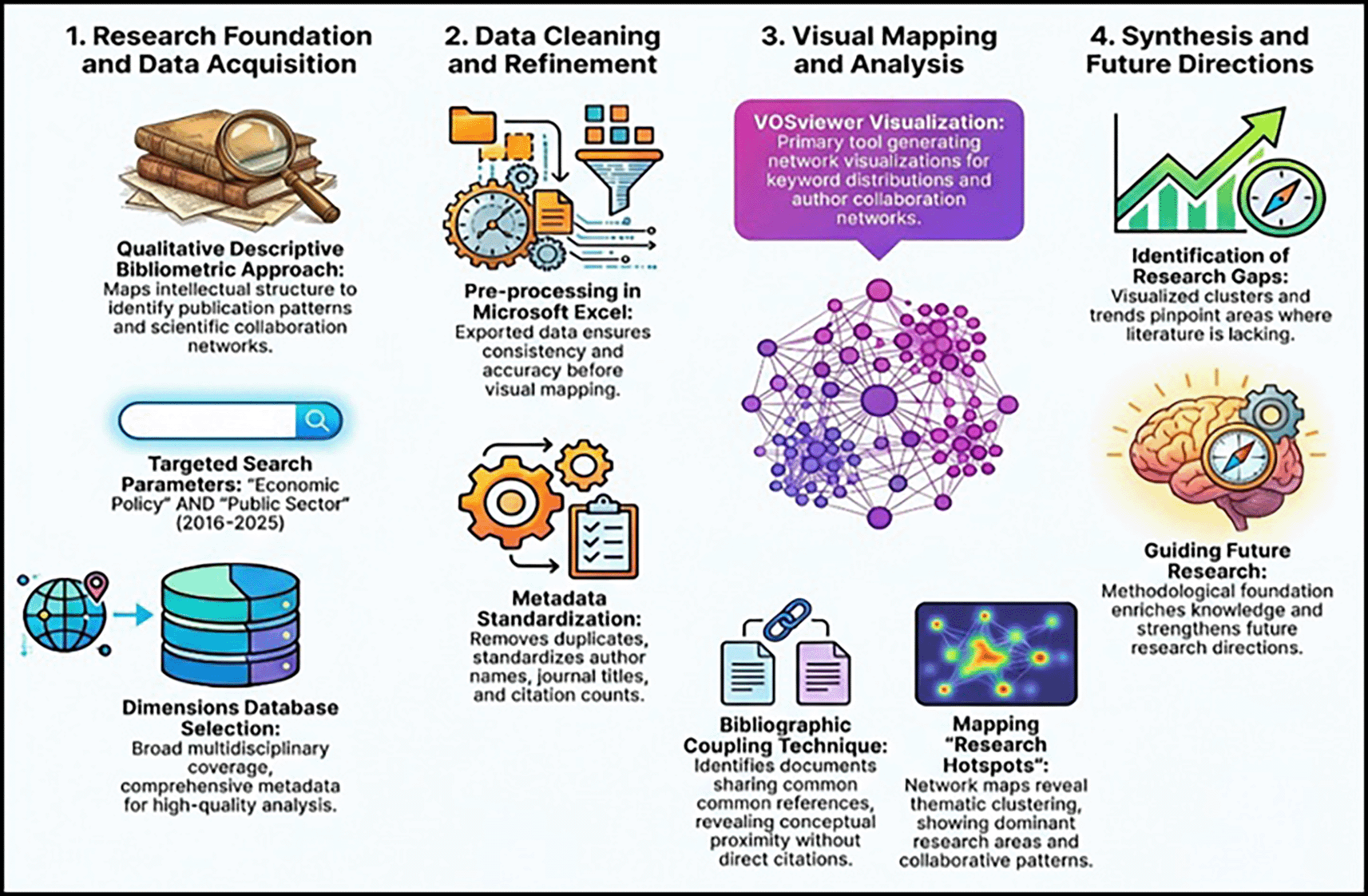
Table 1 presents the general characteristics of the bibliometric dataset related to Economic Policy and Public Sector Reform during the 2016–2025 period. A total of 500 documents produced by 1,294 authors indicates the growing scholarly interest in governance transformation, economic policy, and institutional reform. The accumulation of 4,940 citations reflects the increasing academic relevance of the field, while the average citation rate of 9.88 citations per document suggests moderate to strong scholarly visibility among the retrieved publications. Bibliometric indicators such as citation counts, h-index, and g-index are commonly used to evaluate scientific influence and intellectual development within a research field.21
The collaborative nature of the field is reflected in the average of 2.63 authors per document, indicating that research on economic policy and public sector reform increasingly involves interdisciplinary and multi-author collaboration. Furthermore, the h-index of 35 and g-index of 58 demonstrate the existence of several highly influential publications that substantially shape the intellectual development of the field.22 Although the average number of documents per author remains relatively low (0.39), this pattern is commonly observed in multidisciplinary and rapidly expanding research domains.23
The annual publication trend demonstrates a progressively increasing trajectory throughout the 2016–2025 period, as illustrated in Figure 2. During the initial phase (2016–2018), publication output remained relatively stable, ranging between 27 and 32 publications annually, indicating that the field was still developing conceptually and institutionally. A gradual increase became visible between 2019 and 2022, reflecting the growing academic concern regarding fiscal resilience, governance reform, institutional efficiency, and digital public administration.7
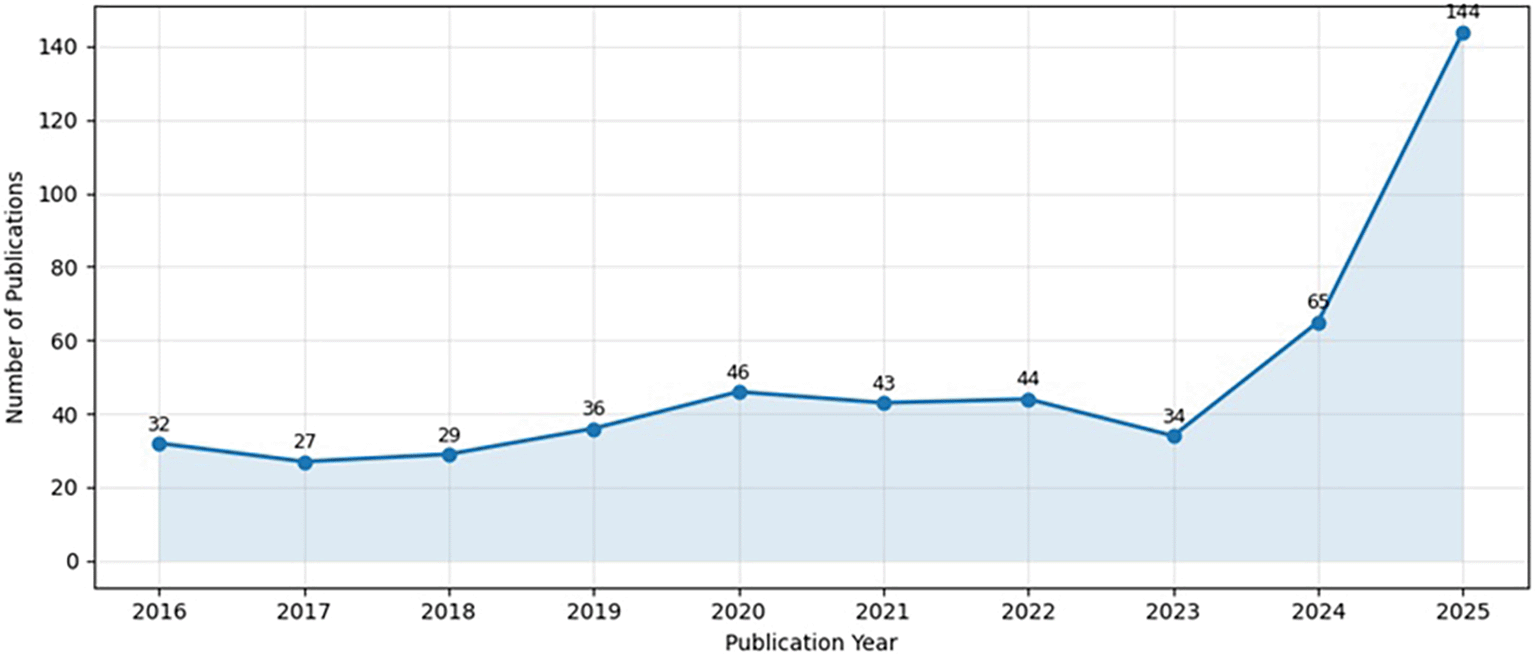
A temporary decline occurred in 2023, potentially associated with shifts in publication cycles or changing research priorities. However, publication output increased substantially in 2024 and experienced a significant surge in 2025, reaching 144 publications. This sharp increase indicates the expanding importance of topics such as sustainability governance, digital transformation, evidence-based policymaking, and post-crisis institutional adaptation within contemporary public sector research.8 Similar publication growth patterns have also been identified in governance and public administration studies following global economic and institutional disruptions.2
The thematic mapping analysis reveals the intellectual configuration of research themes within the field, as visualized in the strategic diagram in Figure 3. Public Sector Reform emerged as the most central and dominant theme, indicating its strategic position within the literature network. This finding confirms that institutional transformation and governance modernization remain the primary focus of contemporary public administration studies.12
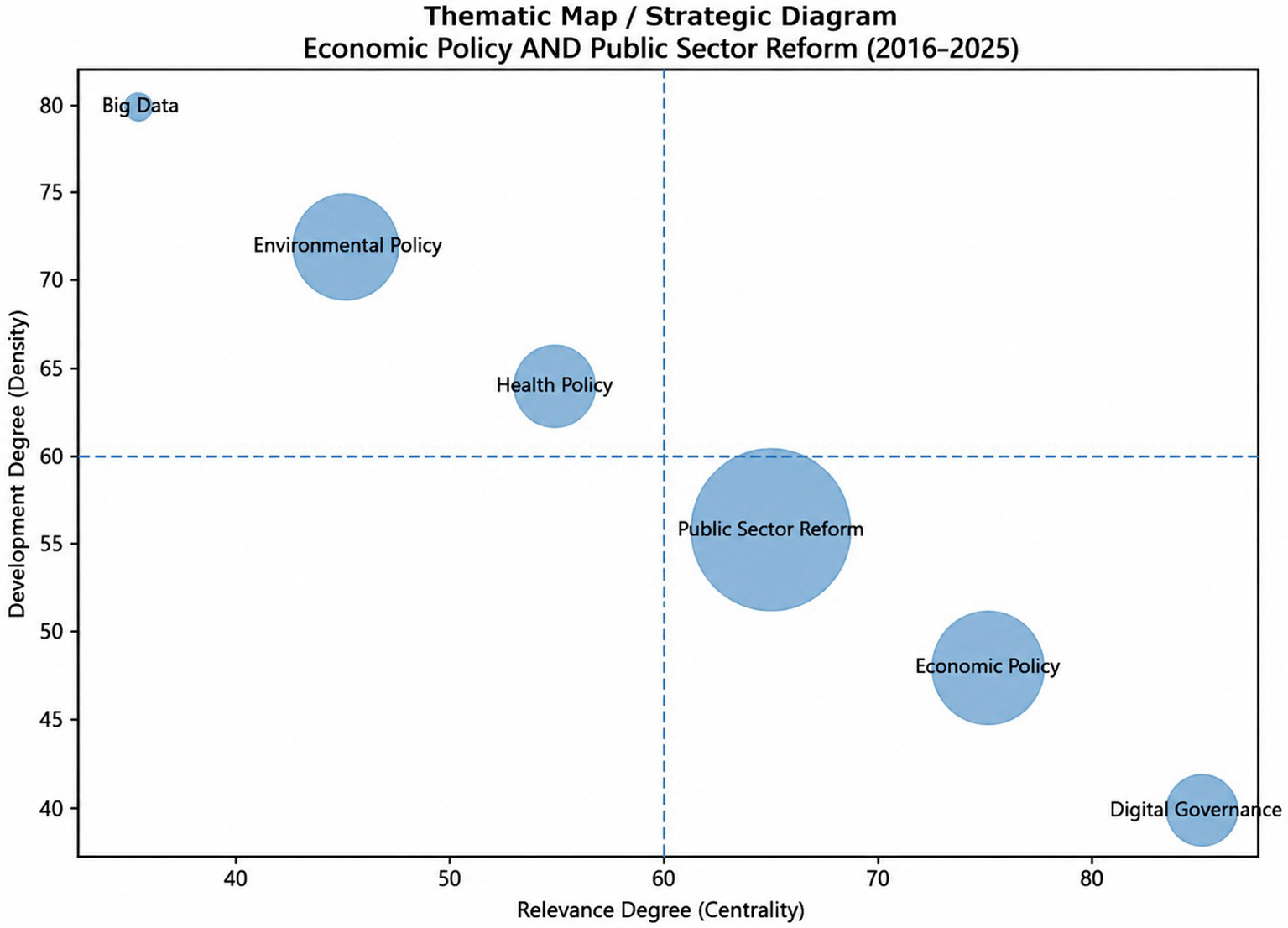
Themes such as Economic Policy and Digital Governance occupy positions characterized by high centrality but moderate density, suggesting that these topics are increasingly relevant and possess substantial future research potential. In contrast, Environmental Policy and Health Policy appear as more specialized and mature themes with lower interdisciplinary connectivity. Meanwhile, Big Data demonstrates relatively high density despite a smaller thematic size, indicating the emergence of a conceptually advanced niche area associated with digital governance and data-driven policymaking.24
The thematic evolution also suggests a transition from traditional administrative efficiency concerns toward more adaptive, collaborative, and technology-oriented governance models. This transformation aligns with the shift from New Public Management toward network governance and digital governance paradigms within contemporary public administration research.10
The document-level bibliographic coupling analysis identifies the core publications shaping the intellectual structure of the field. The detailed analysis results of the top 10 documents are summarized in Table 2, while the overall network structure is visualized in Figure 4. Publications by “Kirikkaleli (2021)” and “Kirikkaleli (2022)” occupy the most central positions due to their high total link strength (TLS), indicating strong conceptual proximity with other studies in the network. Similarly, publications by “Kilinc-Ata (2022)”, “Htike (2021)”, and “Mallick (2018)” contribute significantly to maintaining thematic coherence across the literature. Bibliographic coupling analysis is particularly effective for identifying intellectual relationships among recently published studies because it relies on shared references rather than direct citations.25
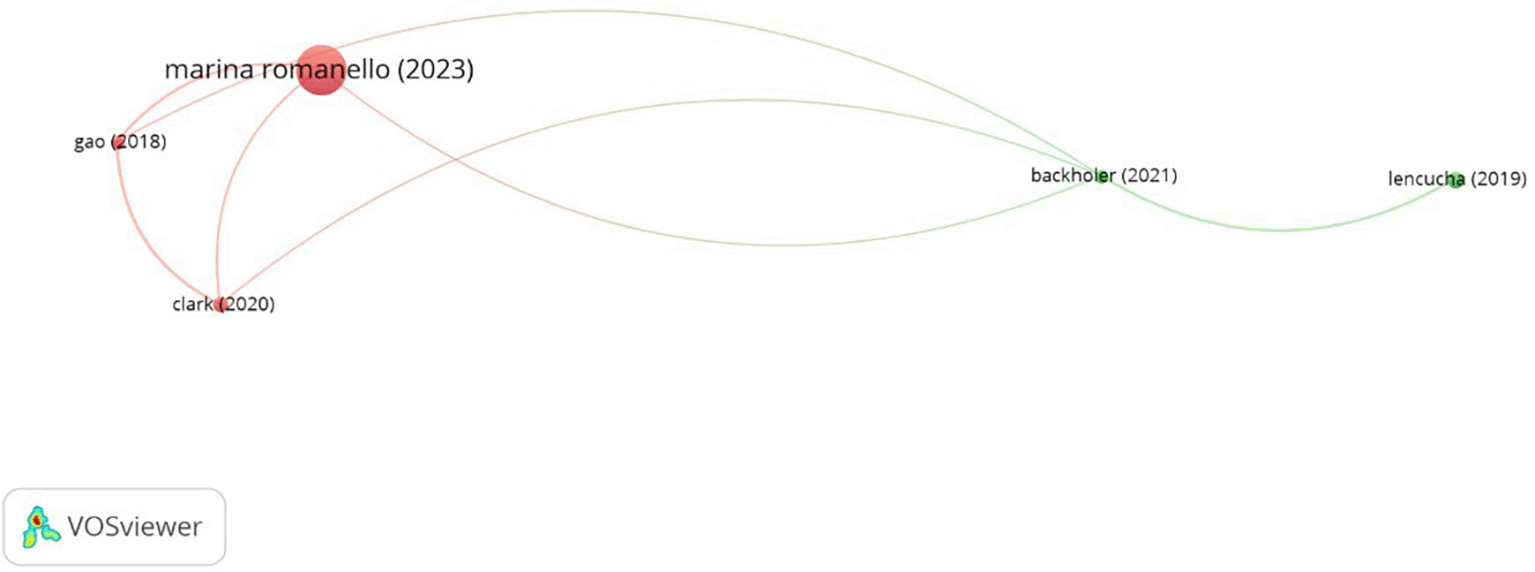
Interestingly, “Marina Romanello (2023)” records the highest citation count but a relatively lower TLS value, suggesting broad scholarly influence despite weaker conceptual interconnectedness within the coupling structure. This finding indicates that highly cited publications do not always function as the conceptual core of a bibliometric network.26
Overall, the document network demonstrates that the literature on economic policy and public sector reform is characterized by relatively strong intellectual interconnectedness supported by several dominant conceptual clusters. Similar patterns of conceptual clustering have been observed in contemporary bibliometric studies focusing on governance and sustainability research.27
At the source level, journals function as the main channels for knowledge dissemination and thematic concentration within a scientific field. The bibliometric details of the top 10 publication venues are summarized in Table 3, while the institutional mapping network of these sources is visualized in Figure 5. Journals such as Globalization and Health, Environmental Science and Pollution Research, and International Journal of Health Policy and Management demonstrate the highest total link strength values, indicating strong thematic proximity among publications within these outlets. Source-level bibliometric analysis enables the identification of publication outlets that function as the main channels for knowledge dissemination and thematic concentration within a scientific field.28
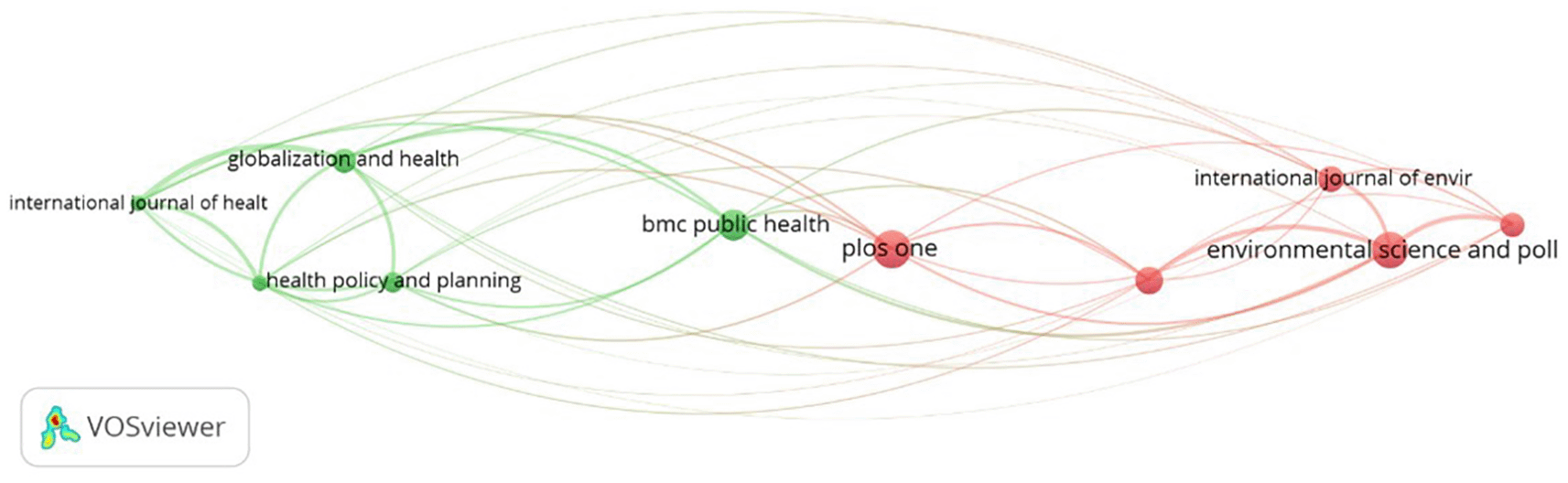
The dominance of health and governance-oriented journals suggests that discussions surrounding economic policy and public sector reform are increasingly connected with sustainability, public health governance, and social policy issues. In addition, journals with high TLS values function as major dissemination channels shaping the intellectual concentration of the field.29
The author-level analysis highlights several researchers occupying central positions within the intellectual network. The comprehensive coupling metrics of the top 10 authors are presented in Table 4, while the corresponding network mapping is visualized in Figure 6. Saeed Shahabi, Ahad Bakhtiari, and Samad Azari demonstrate exceptionally high TLS values, indicating strong reference similarity and close conceptual relationships among their publications. Bibliographic coupling at the author level is useful for identifying intellectual communities and thematic proximity among researchers.30
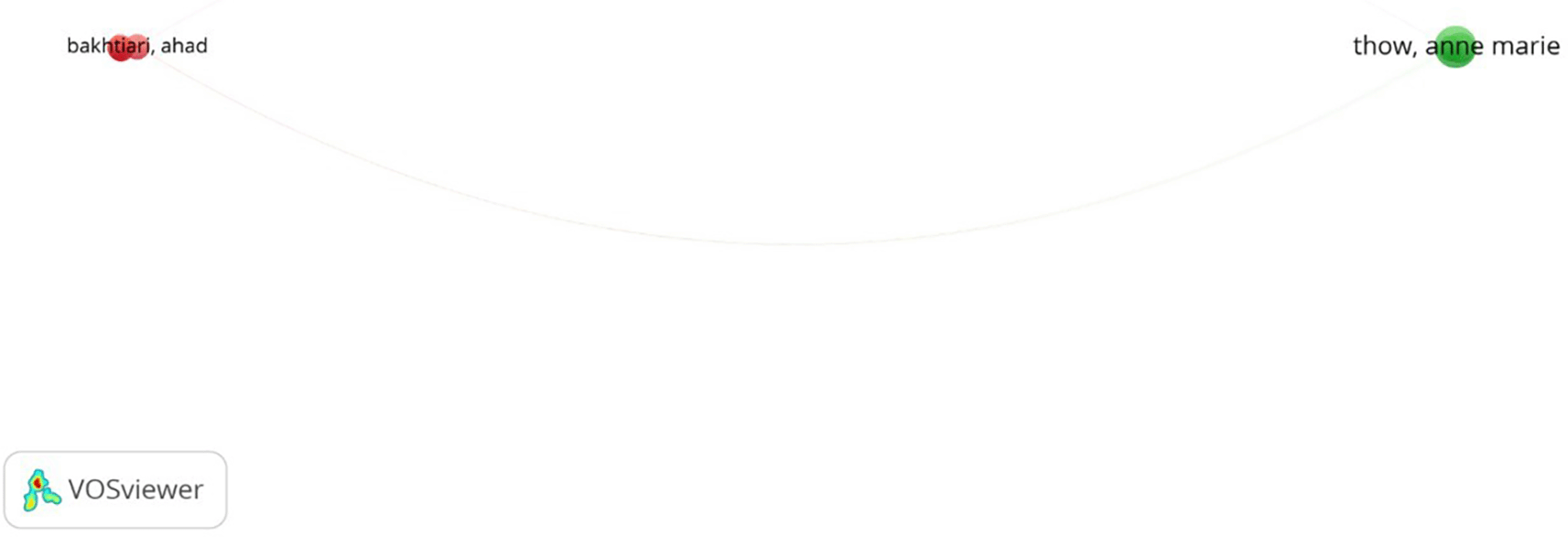
In contrast, Anne Marie Thow records the highest citation impact while possessing a comparatively lower TLS value. This pattern suggests that citation influence and conceptual centrality do not necessarily overlap within bibliometric structures.31
The collaboration pattern further reflects the interdisciplinary nature of economic policy and public sector research involving governance, public health, sustainability, and institutional reform perspectives.
The organizational network analysis demonstrates that institutions such as London School of Hygiene & Tropical Medicine, The University of Sydney, and University College London function as the primary institutional hubs within the global research network. The complete bibliometric profiles of the top 10 organizations are outlined in Table 5, while the overall structure of institutional interconnections is visualized in Figure 7. Institutional bibliometric analysis is important for understanding the concentration of scientific productivity and the development of collaborative knowledge networks.32
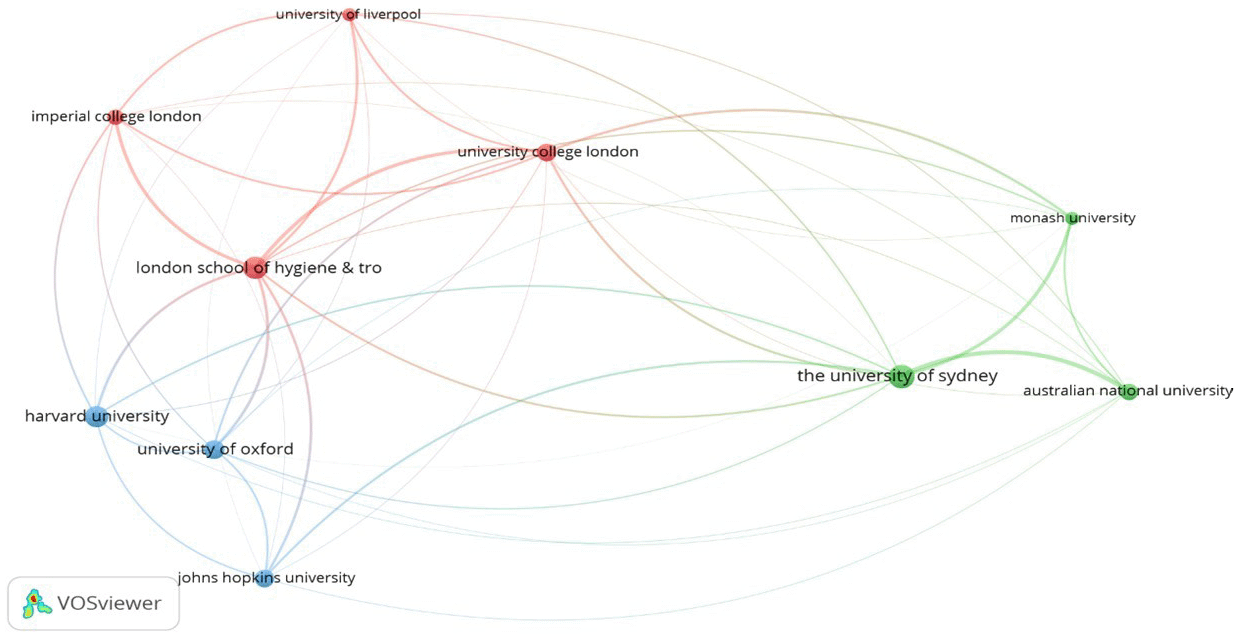
These institutions demonstrate high thematic interconnectedness and strong scholarly influence through extensive publication productivity and shared reference patterns. Meanwhile, Harvard University records the highest citation count but a comparatively lower TLS value, suggesting broader academic influence with more diverse conceptual orientations.33
The findings indicate that the intellectual development of economic policy and public sector reform research is strongly shaped by internationally connected institutional networks.
At the country level, the United States and the United Kingdom dominate the bibliometric network with exceptionally high publication output, citation impact, and total link strength values. The bibliographic coupling configurations of the top 10 countries are structured in Table 6, and the geographic distribution network is mapped in Figure 8. These findings indicate their central positions within the global knowledge structure related to governance and public sector reform research.34
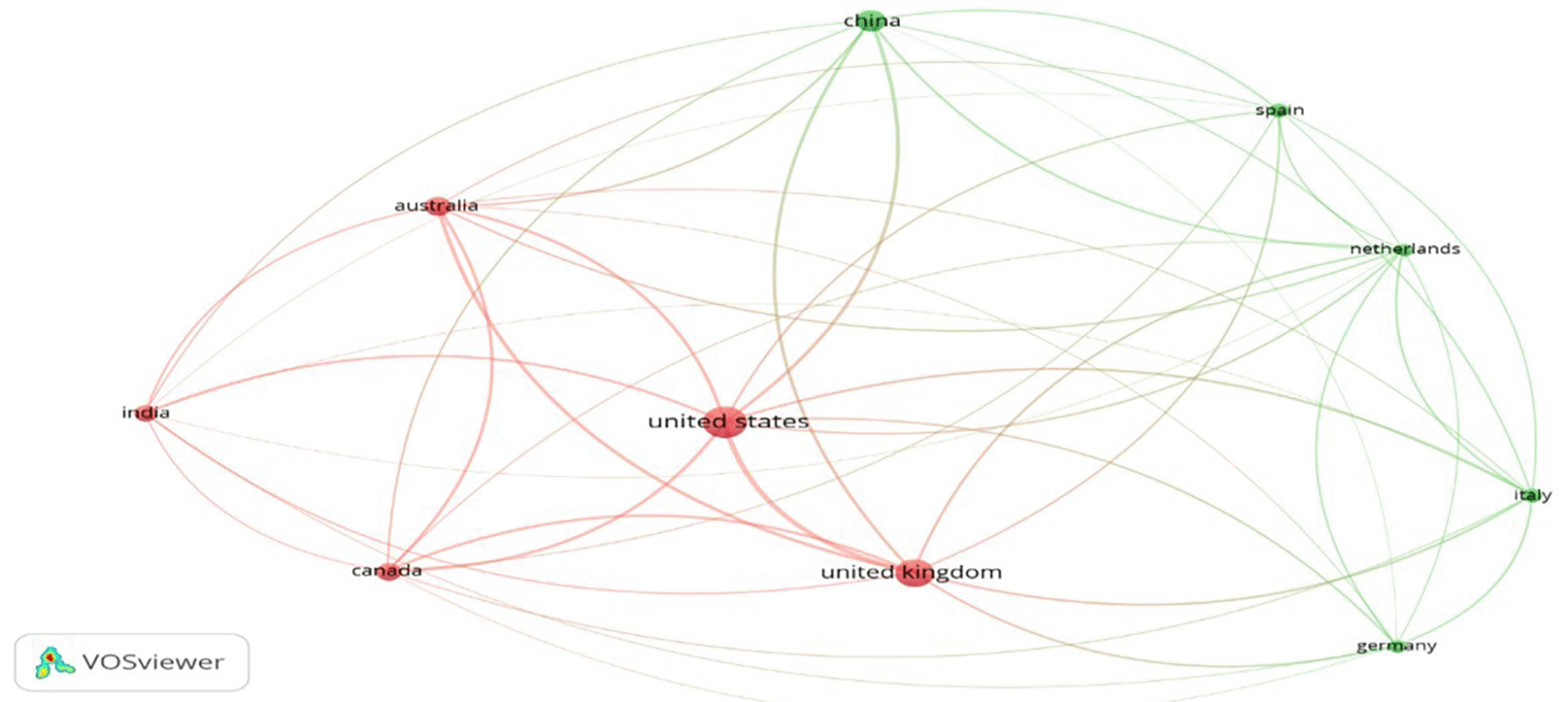
Australia, China, and Canada also demonstrate substantial scholarly contributions, while countries such as the Netherlands, Italy, Germany, and Spain strengthen the broader international research network through thematic and conceptual interconnectedness. Bibliographic coupling at the country level reflects the intensity of international intellectual relationships formed through shared scientific references.35
The dominance of developed countries within the network suggests the continuing concentration of scientific influence and research infrastructure in specific regions, while also highlighting the need for broader representation from developing economies within global governance research.4
The intellectual structure based on the document unit of analysis in bibliographic coupling represents the configuration of conceptual relationships among scientific publications formed through the similarity of references they employ, thereby positioning each document as a node within an interconnected knowledge network. In this approach, publications that share common references are considered to possess similar thematic orientations and theoretical foundations, allowing researchers to identify the conceptual core and developmental trajectory of a particular field of study. Bibliographic coupling is therefore important not only for identifying influential publications, but also for revealing how knowledge structures evolve through interconnected scholarly discourse.26
The findings demonstrate that the literature on economic policy and public sector reform is characterized by a relatively strong and interconnected intellectual structure dominated by several highly influential publications. Studies by “Kirikkaleli (2021)” and “Kirikkaleli (2022)” occupy central positions within the coupling network due to their high total link strength (TLS), indicating strong conceptual proximity with numerous other studies. These publications function as major intellectual anchors connecting themes related to economic governance, sustainability, institutional reform, and policy adaptation. Similarly, works by “Kilinc-Ata (2022)”, “Htike (2021)”, and “Mallick (2018)” contribute significantly to maintaining the coherence of the research network by reinforcing thematic relationships among clusters of publications.
The dominance of these studies suggests that contemporary discussions on economic policy and public sector reform are increasingly oriented toward interdisciplinary governance challenges involving sustainability transitions, economic resilience, and institutional modernization. This trend reflects the broader transformation of public administration research from traditional bureaucratic perspectives toward more adaptive and collaborative governance approaches, particularly in response to global crises, fiscal pressures, and digital transformation.2 The coupling structure further indicates that the literature no longer focuses solely on administrative efficiency, but increasingly incorporates dimensions of environmental governance, public accountability, and evidence-based policymaking.
Interestingly, “Marina Romanello (2023)” demonstrates exceptionally high citation counts but comparatively lower TLS values. This finding indicates that highly cited publications do not always occupy the most central conceptual position within the bibliographic network. In other words, broad scientific influence may coexist with weaker interconnectedness in terms of shared references. This pattern confirms the distinction between scientific visibility and conceptual centrality identified in recent bibliometric studies.27 Highly cited studies often function as globally recognized references, yet they may not necessarily form the conceptual core of a specific research cluster.
In addition, supporting publications such as “Gao (2018)”, “Clark (2020)”, “Backholer (2021)”, and Lencucha (2019) contribute to expanding the thematic diversity of the field. Their presence demonstrates that the literature on economic policy and public sector reform is increasingly multidisciplinary, integrating perspectives from environmental policy, health governance, sustainability studies, and economic development. The clustering patterns generated through VOSviewer visualization further confirm the emergence of specialized research fronts connected through shared conceptual foundations and common reference structures.
Overall, the document-based bibliographic coupling analysis confirms that research on economic policy and public sector reform has evolved into a mature and interconnected field characterized by strong conceptual integration, interdisciplinary expansion, and increasing thematic complexity. The intellectual structure of the literature reflects the growing importance of governance transformation, sustainability-oriented policymaking, and collaborative institutional frameworks within contemporary public administration discourse.
Figure 9 illustrates the bibliographic coupling relationships among documents within the field of economic policy and public sector reform. The visualization demonstrates several interconnected clusters representing publications with similar reference patterns and thematic orientations. Larger nodes indicate publications with stronger influence and higher levels of interconnectedness within the network, while thicker connecting lines reflect stronger bibliographic relationships among documents.
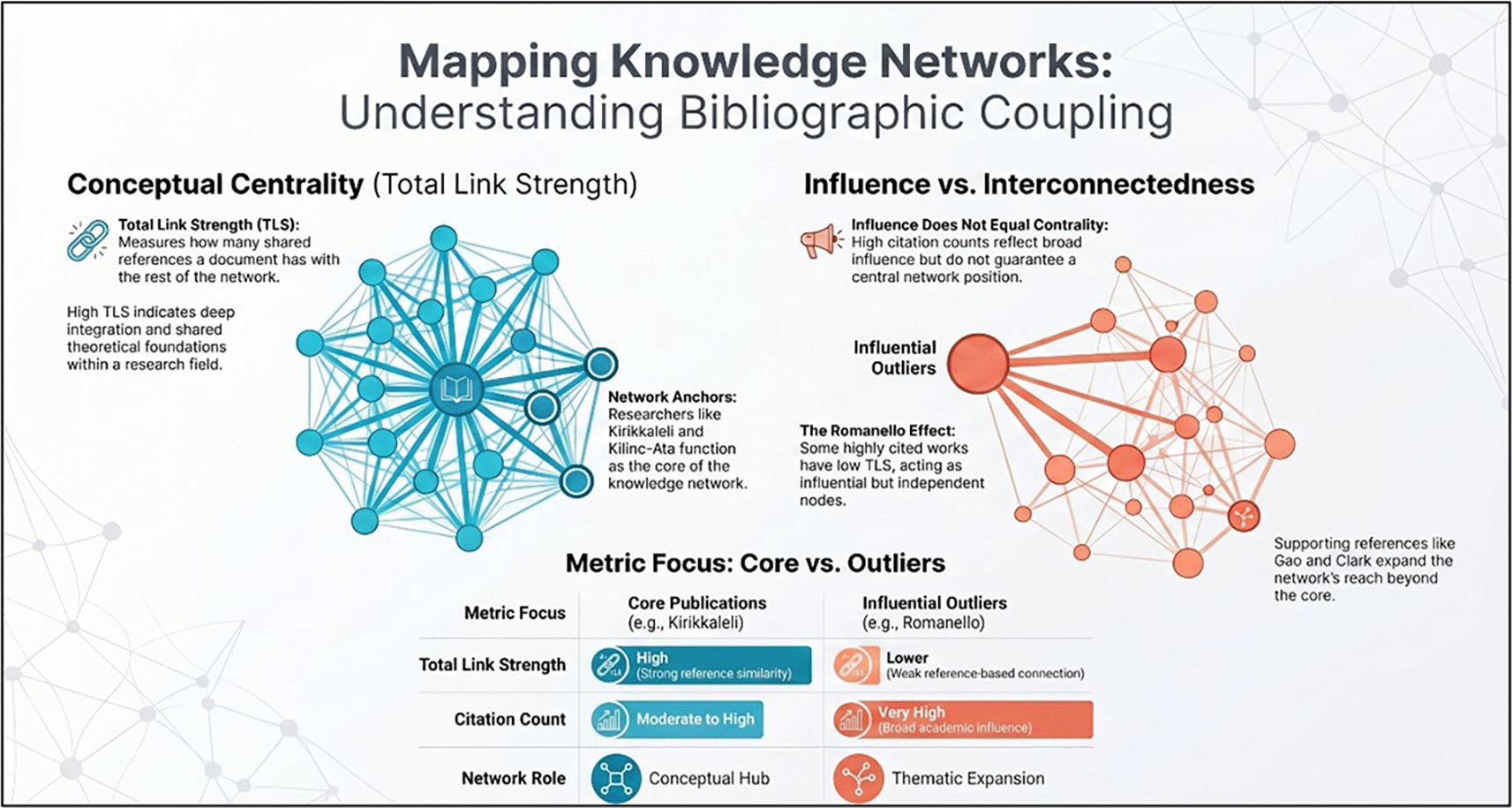
The network structure confirms that the literature is concentrated around several dominant publications functioning as the conceptual foundation of the field. Core studies occupy central positions within the visualization, indicating their important role in shaping research directions and intellectual coherence. In addition, the clustering patterns reveal the emergence of interdisciplinary themes integrating governance reform, sustainability policy, public health, and economic transformation within contemporary public sector research.
The mapping of scientific sources and authors in bibliographic coupling analysis reflects the broader structure of knowledge production and dissemination within the field of economic policy and public sector reform. At the source level, journals function not merely as publication outlets, but also as intellectual platforms that shape thematic concentration, disciplinary orientation, and the diffusion of scientific discourse.28 Journals with high total link strength (TLS) values indicate strong interconnectedness among published articles through shared references, thereby reflecting their central role in constructing the conceptual structure of the field.
The findings reveal that journals such as Globalization and Health, Environmental Science and Pollution Research, International Journal of Health Policy and Management, and BMC Public Health occupy central positions within the bibliometric network. Their dominance demonstrates that discussions on economic policy and public sector reform are increasingly connected with issues of public health governance, environmental sustainability, and social welfare. This pattern reflects the growing interdisciplinary nature of public administration research, where governance reform is no longer analyzed solely through administrative or economic perspectives, but also through broader dimensions of societal resilience, sustainability transitions, and public wellbeing.
The strong presence of health-related journals within the network further indicates that recent global crises, including public health emergencies and environmental challenges, have significantly influenced the direction of economic policy research. Economic governance is increasingly associated with health system resilience, social protection, and institutional adaptability, thereby expanding the scope of public sector reform studies beyond conventional bureaucratic concerns. Meanwhile, journals such as BMJ Global Health, Health Policy and Planning, and Frontiers in Public Health contribute as supporting sources that strengthen thematic diversity and facilitate interdisciplinary integration within the literature network.
At the author level, bibliographic coupling analysis highlights the intellectual interconnectedness among researchers based on the similarity of references used in their scientific works. Authors with high TLS values are considered to possess strong conceptual proximity and to play important roles in shaping the intellectual core of the field. The results indicate that Saeed Shahabi, Ahad Bakhtiari, Samad Azari, and Masoud Behzadifar/Meysam Behzadifar occupy highly interconnected positions within the network, reflecting substantial thematic similarity and shared scientific orientation.
Conversely, Anne Marie Thow demonstrates exceptionally high citation counts but comparatively lower TLS values, indicating broad academic influence without necessarily being positioned at the conceptual center of the coupling network. This distinction between citation influence and conceptual interconnectedness confirms that scientific visibility does not always correspond with intellectual centrality. Similar patterns are frequently identified in bibliometric studies where globally influential scholars contribute broad interdisciplinary impact while remaining less integrated within specific conceptual clusters.
The presence of authors such as Raphael Lencucha, Agnes Erzse, and Karen Hofman further strengthens the diversity of the network by contributing perspectives from public health policy, governance reform, and sustainability-oriented policymaking. Collectively, these findings demonstrate that the development of literature on economic policy and the public sector is shaped not only by highly influential publications, but also by interconnected scholarly communities operating across multiple disciplinary boundaries.
Overall, the mapping of scientific sources and authors confirms the increasingly interdisciplinary and collaborative nature of contemporary public sector reform research. The field is characterized by strong interactions among governance studies, sustainability research, health policy, and economic transformation, reflecting the growing complexity of global public policy challenges.
Figure 10 presents the intellectual structure of scientific sources and authors based on bibliographic coupling analysis. The visualization reveals the interconnectedness among journals and researchers through shared reference patterns across publications. Journals and authors located at the center of the network demonstrate stronger thematic proximity and greater contributions to the development of the field.
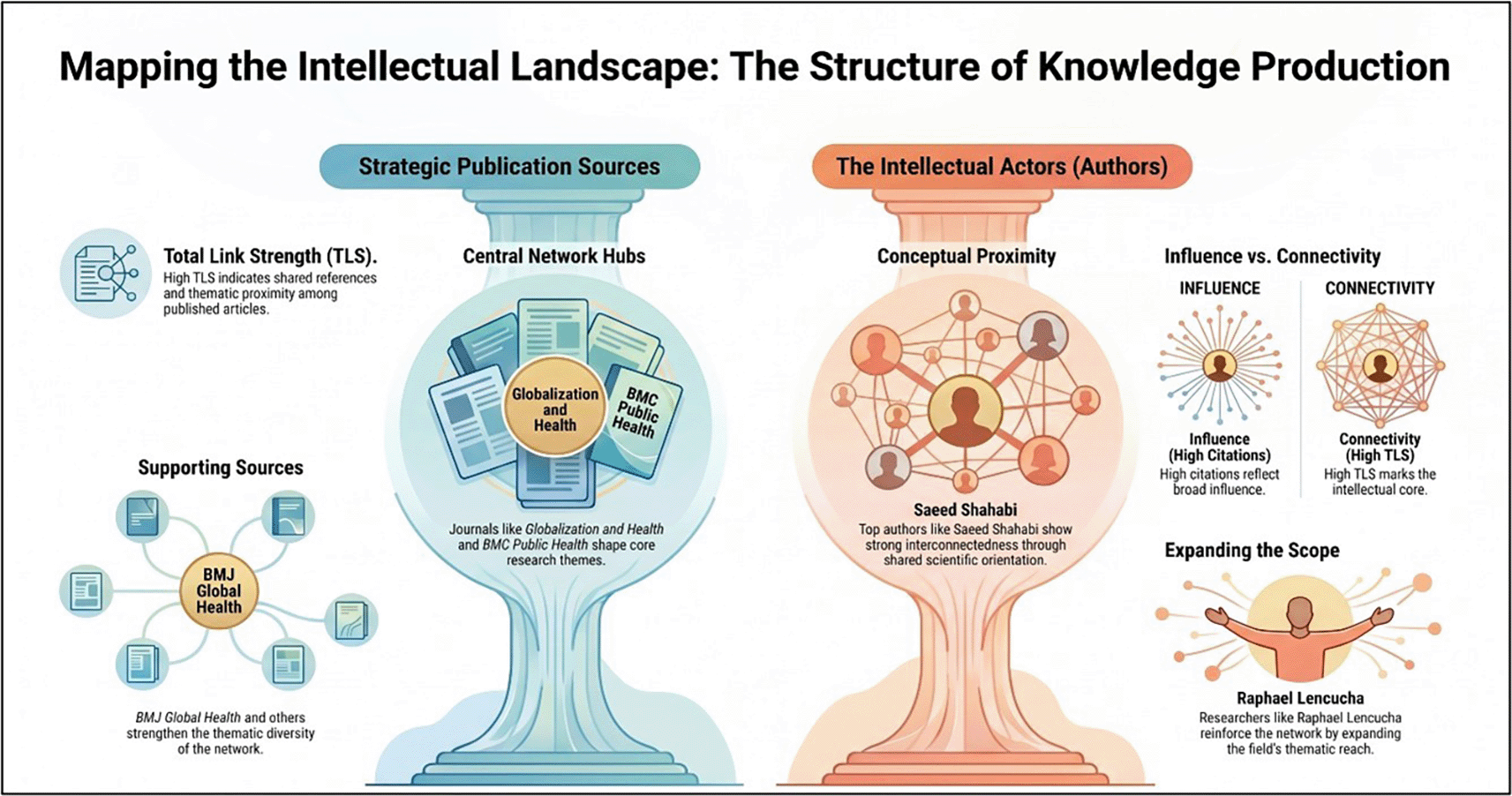
The figure further indicates that research on economic policy and public sector reform is increasingly shaped by interdisciplinary collaboration involving governance studies, public health, sustainability, and economic policy perspectives. Several dominant journals function as major dissemination channels within the literature network, while highly interconnected authors contribute significantly to the formation of the intellectual core of the discipline. The visualization also demonstrates that citation influence and conceptual centrality are not always equivalent, as some highly cited authors remain relatively peripheral within the coupling structure.
Patterns of global interconnectedness through organizations and countries in bibliographic coupling analysis illustrate the macro structure of knowledge networks formed through the aggregation of institutional and geographical contributions to scientific production. At this level, organizations and countries are positioned as collective actors within the global research ecosystem, where interconnectedness is measured based on shared reference structures among publications originating from different institutions and nations.
The findings demonstrate that institutions such as London School of Hygiene & Tropical Medicine, The University of Sydney, and University College London occupy central positions within the institutional network due to their high total link strength (TLS) values and extensive interconnectedness. These institutions play strategic roles in shaping dominant research themes and strengthening the consistency of scientific discourse related to economic policy, governance reform, public health, and sustainability. Their strong positions within the network also reflect the concentration of research infrastructure, funding capacity, and international collaboration within globally recognized academic institutions.
Other organizations, including Australian National University, Monash University, and Imperial College London, contribute significantly to reinforcing and expanding the institutional research network. The prominence of these institutions indicates that research on economic policy and public sector reform is increasingly concentrated within internationally collaborative academic environments that integrate interdisciplinary approaches and cross-sectoral perspectives.
Interestingly, Harvard University records the highest citation count despite having a comparatively lower TLS value than several other institutions. This finding again confirms the distinction between scientific influence and conceptual interconnectedness. Institutions with broad global visibility may produce highly influential publications while simultaneously operating across more diverse and less concentrated thematic areas. Such patterns reflect the increasingly multidimensional character of contemporary governance and policy research.
At the country level, bibliographic coupling demonstrates the extent of intellectual interconnectedness among nations through shared reference patterns across publications. Countries with high TLS values indicate strong thematic proximity and substantial participation in the global knowledge structure. The analysis reveals that the United States, United Kingdom, and Australia dominate the global research network, reflecting their high publication productivity, strong scientific influence, and central positions in the international literature landscape.
The dominance of these countries may be explained by several structural factors, including advanced research infrastructure, extensive international collaboration networks, strong academic funding systems, and the concentration of globally influential universities and research centers. Moreover, English-language publication dominance within international databases further strengthens the visibility and interconnectedness of publications originating from these regions.
Other countries such as China, Canada, Netherlands, Italy, India, Germany, and Spain also contribute significantly to strengthening the international knowledge network. The growing participation of these countries indicates an increasing globalization of research on economic policy and public sector reform, where emerging and developed economies collectively contribute to expanding thematic diversity and interdisciplinary integration within the field.
Overall, the mapping of organizations and countries demonstrates that the development of literature on economic policy and the public sector is shaped by globally interconnected institutional and national networks. The findings confirm that contemporary governance research has become increasingly international, collaborative, and multidisciplinary, reflecting the global nature of economic transformation, sustainability challenges, and public sector reform dynamics.
Figure 11 illustrates the global interconnectedness of organizations and countries within the bibliographic coupling network. The visualization demonstrates that institutions and countries with high publication productivity and strong reference similarity occupy central positions in the global knowledge structure. Larger nodes represent institutions and countries with stronger scholarly influence, while dense linkages indicate high levels of thematic and conceptual interconnectedness.
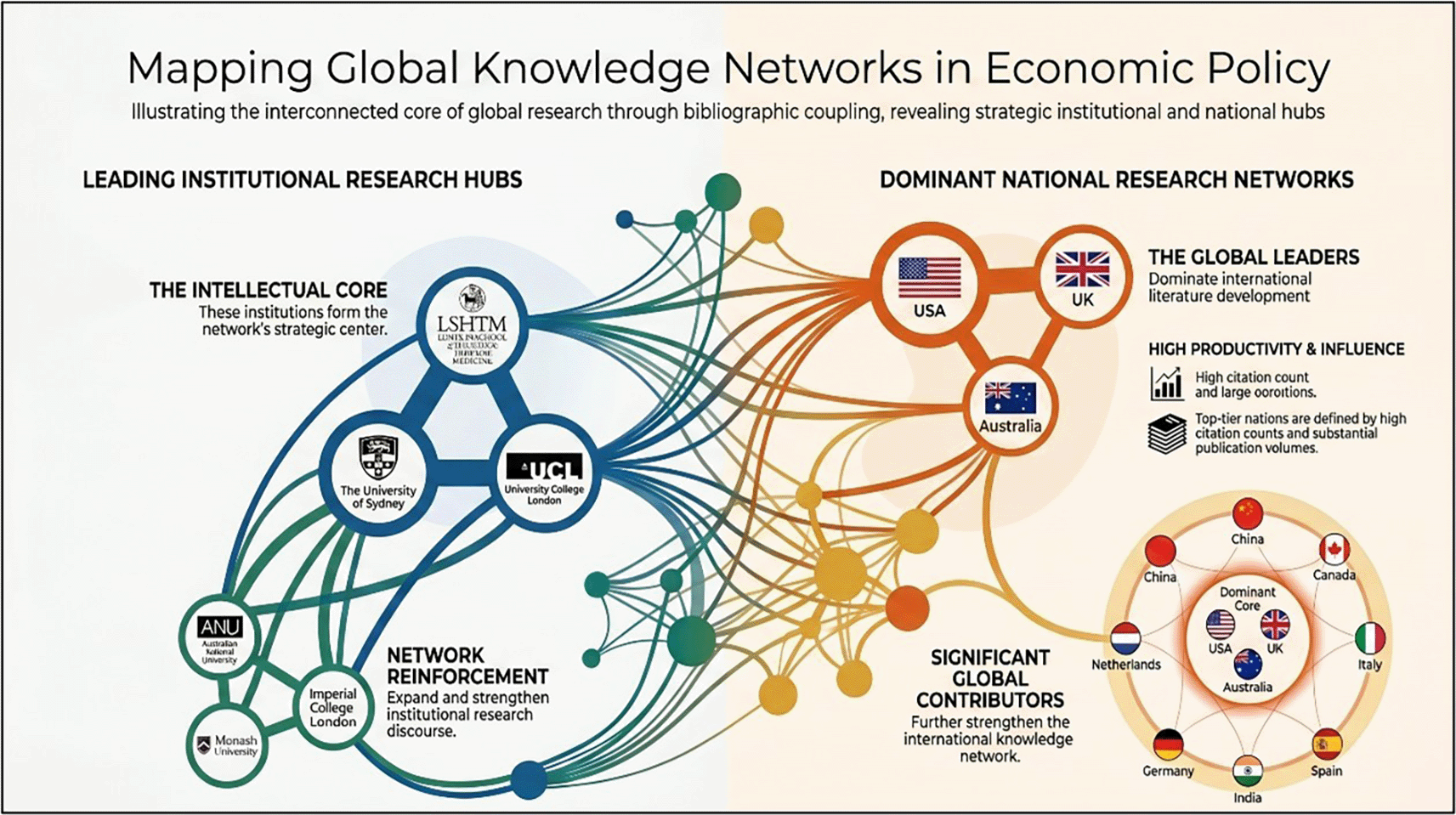
The network highlights the dominance of institutions from developed countries, particularly the United States, the United Kingdom, and Australia, within global research production related to economic policy and public sector reform. This pattern reflects the concentration of scientific infrastructure, international collaboration, and academic influence within specific regions. At the same time, the visualization also demonstrates the growing participation of emerging countries in strengthening the international knowledge network through collaborative and interdisciplinary research activities.
This review demonstrates that research on economic policy and public sector reform has evolved into an increasingly interdisciplinary and globally interconnected field. Bibliographic coupling analysis reveals that the intellectual structure of the literature is shaped by closely connected publications, journals, authors, institutions, and countries that collectively influence the direction of scientific development in the field. Rather than drawing definitive real-world macroeconomic policy declarations or assuming direct structural administrative transformations, the findings track an evolutionary shift in academic research attention toward digital governance, sustainability, public health policy, and collaborative governance, reflecting the changing priorities within contemporary public administration discourse. Despite the significant growth of the literature, global scientific production remains concentrated in several developed countries, particularly the United States and the United Kingdom. Overall, this review contributes to understanding the evolution of research trends, intellectual networks, and emerging directions in studies of economic policy and public sector reform.
Future studies should expand bibliometric coverage by integrating multiple international databases such as Scopus and Web of Science in order to obtain broader representations of global scientific production. Further research is also encouraged to combine bibliometric techniques with qualitative content analysis to deepen the interpretation of thematic evolution and policy implications. In addition, greater international collaboration involving institutions from developing countries is important to reduce geographical disparities in knowledge production. Emerging themes such as digital governance, artificial intelligence in public administration, sustainable fiscal policy, and collaborative governance should receive greater scholarly attention due to their growing relevance in contemporary public sector transformation.
| Views | Downloads | |
|---|---|---|
| F1000Research | - | - |
|
PubMed Central
Data from PMC are received and updated monthly.
|
- | - |
Provide sufficient details of any financial or non-financial competing interests to enable users to assess whether your comments might lead a reasonable person to question your impartiality. Consider the following examples, but note that this is not an exhaustive list:
Sign up for content alerts and receive a weekly or monthly email with all newly published articles
Already registered? Sign in
The email address should be the one you originally registered with F1000.
You registered with F1000 via Google, so we cannot reset your password.
To sign in, please click here.
If you still need help with your Google account password, please click here.
You registered with F1000 via Facebook, so we cannot reset your password.
To sign in, please click here.
If you still need help with your Facebook account password, please click here.
If your email address is registered with us, we will email you instructions to reset your password.
If you think you should have received this email but it has not arrived, please check your spam filters and/or contact for further assistance.

Comments on this article Comments (0)