Keywords
Adoption; Adoption-Specific Therapy; Behavioral Problems; Attachment; Parental Stress, mediation analysis, mechanisms of change

Adoption; Adoption-Specific Therapy; Behavioral Problems; Attachment; Parental Stress, mediation analysis, mechanisms of change
Adoption represents a profound life event, offering a permanent family to children who cannot remain with their biological parents. However, children placed for adoption, particularly those with histories of early adversity, trauma, or institutional care, are at a significantly elevated risk for developing behavioral problems and disruptions in attachment security compared to their non-adopted peers (van den Dries et al., 2009). These challenges are not merely transient; research indicates that behavioral issues and insecure attachment patterns can persist over time, undermining the child’s developmental trajectory and family well-being (Brodzinsky, Gunnar, & Palacios, 2022). Concurrently, adoptive parents often report heightened levels of parenting stress, stemming from managing complex child behaviors, navigating attachment-related difficulties, and confronting unique post-adoption challenges without adequate specialized support (Canzi et al., 2019; Palacios & Sánchez-Sandoval, 2006). This triad of child behavioral problems, insecure attachment, and elevated parental stress forms an interconnected system that can threaten the stability and happiness of adoptive families (Sameroff, 2009).
Recognizing the insufficiency of generic mental health interventions for this population, Adoption-Specific Therapy (ADAPT) was developed as a modular, trauma-informed, and attachment-focused intervention designed explicitly to address the unique needs of adoptive families (Waterman et al., 2018). ADAPT integrates evidence-based strategies from positive parenting, cognitive-behavioral therapy, and narrative work to tackle core adoption themes such as loss, identity, belonging, and the development of a secure parent-child bond. Preliminary evidence from our recent randomized controlled trial (RCT) provided initial support for ADAPT’s efficacy in the Iranian context. In that study, we found that ADAPT, compared to a waitlist control, led to significant short-term improvements in adopted children’s behavioral problems and attachment security, as well as a reduction in adoptive parents’ stress immediately post-intervention.
While establishing initial efficacy is a crucial first step, two fundamental questions remain unanswered, limiting the clinical and theoretical implications of the findings. First, the sustainability of treatment effects is unknown. It is imperative to determine whether the post-intervention gains are maintained over time or if they diminish after the structured support ends, a common concern in therapeutic interventions with complex populations (van der Vegt et al., 2009). Second, and perhaps more critically, the mechanisms through which ADAPT creates change are not understood. How does the intervention work? Does it first reduce child behavioral problems, thereby lowering parental stress and freeing emotional resources for more sensitive caregiving, which then improves attachment (a behavior-focused pathway)? Or does it primarily enhance parental reflective functioning and reduce stress, creating a more secure emotional climate that subsequently improves child attachment and, in turn, reduces behavioral problems (a parent-focused pathway)? Understanding these mechanisms of action is essential for refining the intervention, identifying active ingredients, and tailoring it effectively for different family profiles (Malcorps et al., 2024; Ni Chobhthaigh & Duffy, 2019).
To address these pivotal gaps, the present study reports on the three-month follow-up data from our original RCT and employs advanced statistical mediation analysis to investigate the processes of change. Specifically, this study has two primary and novel aims:
1. To evaluate the sustainability of ADAPT’s effects on adopted children’s behavioral problems and attachment security, and on adoptive parents’ stress, three months after the intervention’s conclusion.
2. To examine the mechanisms of sustained change by testing theoretical mediation models. We will investigate whether the intervention’s long-term impact on parental stress is mediated by prior improvements in child behavior and attachment, or conversely, whether sustained change in child outcomes is mediated by reductions in parental stress and improvements in the caregiving environment.
By combining a follow-up assessment with a formal analysis of causal pathways, this study moves beyond the question of “Does it work?” to address “Do the effects last?” and “How does it work?”. The findings have the potential to significantly advance the field of post-adoption support by providing evidence for the durability of a culturally adapted intervention and by illuminating the theoretical processes that underlie successful outcomes in adoptive families.
This study presents the secondary analysis of three-month follow-up data from a parent randomized controlled trial (RCT) that evaluated the efficacy of Adoption-Specific Therapy (ADAPT). The original study was a randomized controlled trial registered in the Iranian Registry of Clinical Trials (IRCT20250107064305N1), and the present manuscript reports secondary and follow-up analyses of that trial. The full methodology, including recruitment, randomization procedure, intervention details, and immediate post-test results, have been published previously. The present analysis focuses exclusively on the follow-up data collected three months after the completion of the post-test assessments and introduces advanced statistical modeling not reported in the initial efficacy paper.
The original sample consisted of 30 adoptive families from Tehran and Alborz provinces in Iran, randomly assigned to either the ADAPT intervention group (n = 15) or a waitlist control group (n = 15). The final sample for the current follow-up and mediation analysis comprised 25 families who provided complete data at all three time points: pre-test (T1), post-test (T2), and three-month follow-up (T3). This included 12 families in the ADAPT group and 13 families in the control group. All analyses reported in this paper (both RM-MANCOVA and mediation models) were conducted on this complete-case sample of 25 families. Attrition from the original sample was due to logistical reasons (relocation, scheduling conflicts) and not to adverse effects of the intervention, with no significant demographic differences between completers and non-completers. All participating children were adopted after the age of three and were between 7 and 12 years old at the time of the study.
The study protocol was reviewed and approved by the Ethics Committee of Iran University of Medical Sciences (IR.IUMS.REC.1403.113) and was registered in the Iranian Registry of Clinical Trials (ID Number: IRCT20250107064305N1). Written informed consent was obtained from all adoptive parents prior to participation after providing a full explanation of the study aims, procedures, and confidentiality of the data. As the study involved children aged 7–12 years, age-appropriate verbal assent was obtained from all child participants. During the first session, children were asked whether they understood the reason for attending therapy, and the study procedures and therapeutic activities were explained to them in simple, developmentally appropriate language in accordance with the treatment protocol. Participation was voluntary, and families were informed that they could withdraw from the study at any time without any consequences.
As detailed in the primary outcome paper, ADAPT is a manualized, multi-modular intervention comprising 34 sessions delivered over 20 weeks: 14 individual child sessions, 14 individual parent sessions, and 6 conjoint parent-child sessions. The therapy addresses core adoption-related themes, including managing behavior, developing a coherent adoption narrative, processing grief and loss, building attachment, exploring identity, and managing public discourse about adoption. The intervention was delivered by a licensed clinical psychologist (the first author) under regular supervision to ensure treatment fidelity. The control group was placed on a waitlist and received no structured intervention during the active study period but was offered a compensatory educational program after all study assessments were complete.
The same standardized, parent-report measures used at T1 and T2 were administered at the three-month follow-up (T3).
• Child Behavior Problems: The Child Behavior Checklist for ages 6-18 (CBCL; (Achenbach & Rescorla, 2001)) was used to obtain a Total Problems score. The Persian version has demonstrated good reliability and validity (Minaee, 2006).
• Child-Parent Attachment: The Kinship Center Attachment Questionnaire (KCAQ) for latency-aged children (Kappenberg & Halpern, 2006) was used to assess attachment-related behaviors. Higher scores indicate more secure attachment behaviors. The Persian version has shown adequate psychometric properties (Soleymani, Bashash, & Latifian, 2014).
• Parental Stress: The Parenting Stress Index (PSI; (Abidin, 1997)) was used to measure stress related to the parent-child system. The Total Stress score was used in analyses. The Persian version has established validity and reliability (Dadsetan, Ahmadi Azghandi, & Hassanabadi, 2006).
The analysis proceeded in two sequential phases to address the two main aims of sustainability and mechanisms of change.
• Phase 1: Assessing Sustainability of Effects. To examine whether treatment gains were maintained at follow-up, we conducted a Repeated-Measures Multivariate Analysis of Covariance (RM-MANCOVA). This analysis assessed the Group (ADAPT vs. Control) × Time (T1, T2, T3) interaction effect on the combined dependent variables (CBCL, KCAQ, PSI), controlling for key demographic covariates identified in the literature as influential (child’s age at adoption, length of institutional stay). Significant interactions were followed by univariate tests and pairwise comparisons with Bonferroni correction to identify at which time points the groups differed. This analysis directly tests the first aim regarding the durability of changes.
• Phase 2: Testing Mechanisms of Sustained Change. To address the second aim and unpack how changes were sustained, we performed comprehensive mediation analyses using Hayes’ PROCESS macro for SPSS (Hayes, 2017). We tested nine distinct theoretical models to explore both parallel and sequential mechanisms. This included three parallel mediation models (PROCESS Model 4) and six serial mediation models (PROCESS Model 6), allowing us to evaluate all plausible pathways (e.g., behavior-focused, attachment-focused, parent-stress-focused). Crucially, these models used follow-up (T3) scores as the mediating and ultimate outcome variables. In all mediation models, we controlled for the baseline (T1) scores of all three core constructs (CBCL, KCAQ, PSI) to ensure that the estimated effects reflect change attributable to the intervention rather than pre-existing differences. For example, to test a specific serial pathway, we specified:
○ Independent Variable (X): Group membership (ADAPT vs. Control).
○ Mediator 1 (M1): Child Behavior Problems (CBCL) at T3.
○ Mediator 2 (M2): Child Attachment (KCAQ) at T3.
○ Dependent Variable (Y): Parental Stress (PSI) at T3.
In this and all models, the direct effect (path c’) represents the effect of group membership on the outcome after accounting for the mediators. A significant indirect effect (axb path), tested via bootstrapping, indicates mediation. We employed bootstrapping with 5,000 resamples to generate bias-corrected confidence intervals for all indirect effects.
All analyses were performed using IBM SPSS Statistics version 27, with an alpha level of.05. We acknowledge that the sample size, while sufficient for detecting main effects, may limit the statistical power to detect smaller or more complex indirect effects in the mediation models.
The final analytical sample consisted of 25 families who provided complete data at all three assessment points: pre-test (T1), post-test (T2), and the three-month follow-up (T3). This included 12 families in the ADAPT group and 13 in the waitlist control group. Independent samples *t*-tests and chi-square analyses confirmed no significant baseline differences between the two groups on key demographic variables, including child’s age, sex, age at adoption, and length of prior institutional stay, or on pre-test scores of the primary outcome measures (all *p* > .05), supporting successful randomization.
Descriptive statistics (means and standard deviations) for the Child Behavior Checklist (CBCL), Kinship Center Attachment Questionnaire (KCAQ), and Parenting Stress Index (PSI) across the three time points for both groups are presented in Table 1. Visual inspection reveals a clear pattern of improvement from T1 to T3 in the ADAPT group across all measures, while scores in the control group remained stable (see Figures 1, 2 and 3).
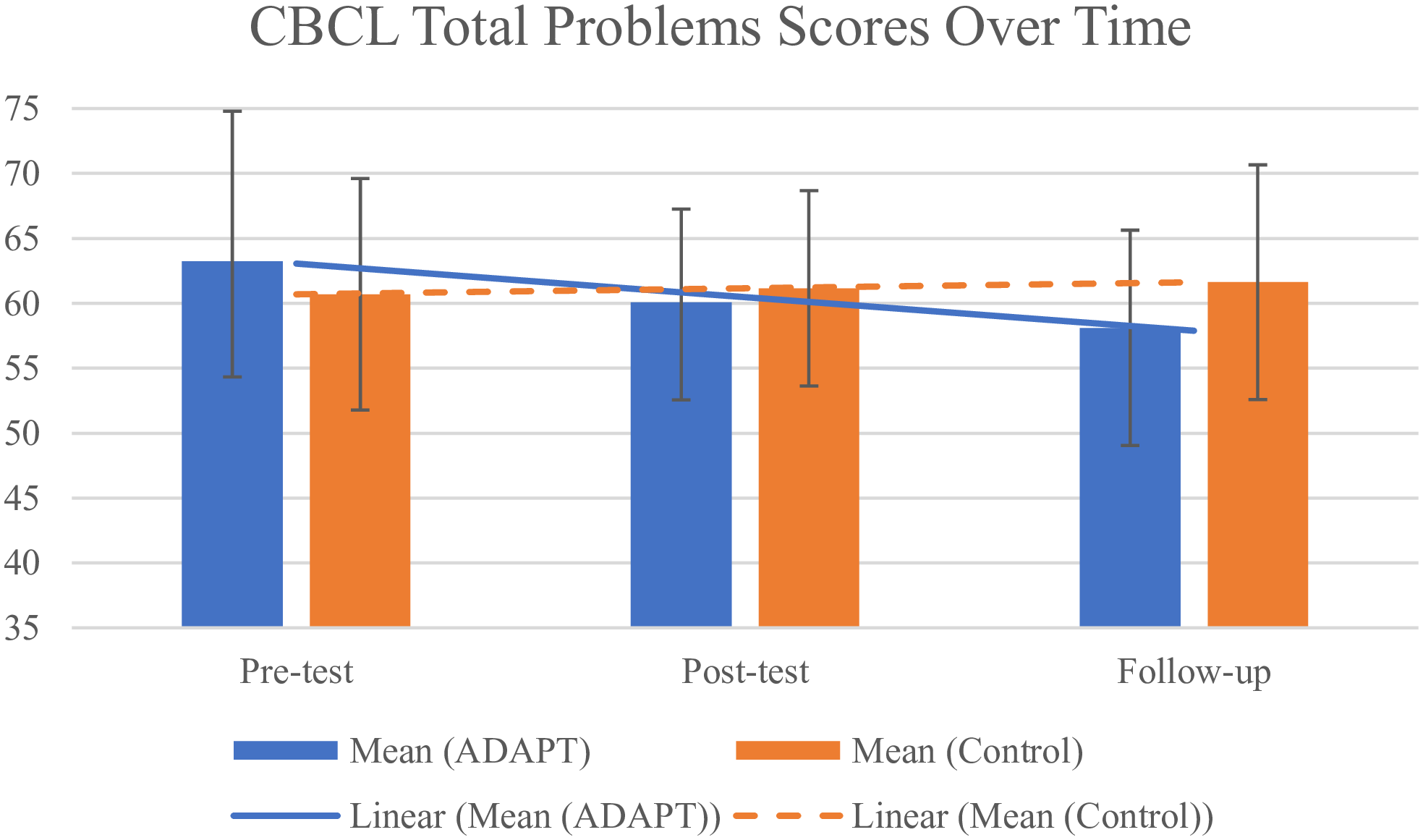
Legend: Mean Child Behavior Checklist (CBCL) Total Problems scores for the ADAPT intervention group and the waitlist control group across pre-test (T1), post-test (T2), and three-month follow-up (T3) assessments. Lower scores indicate fewer behavioral problems.
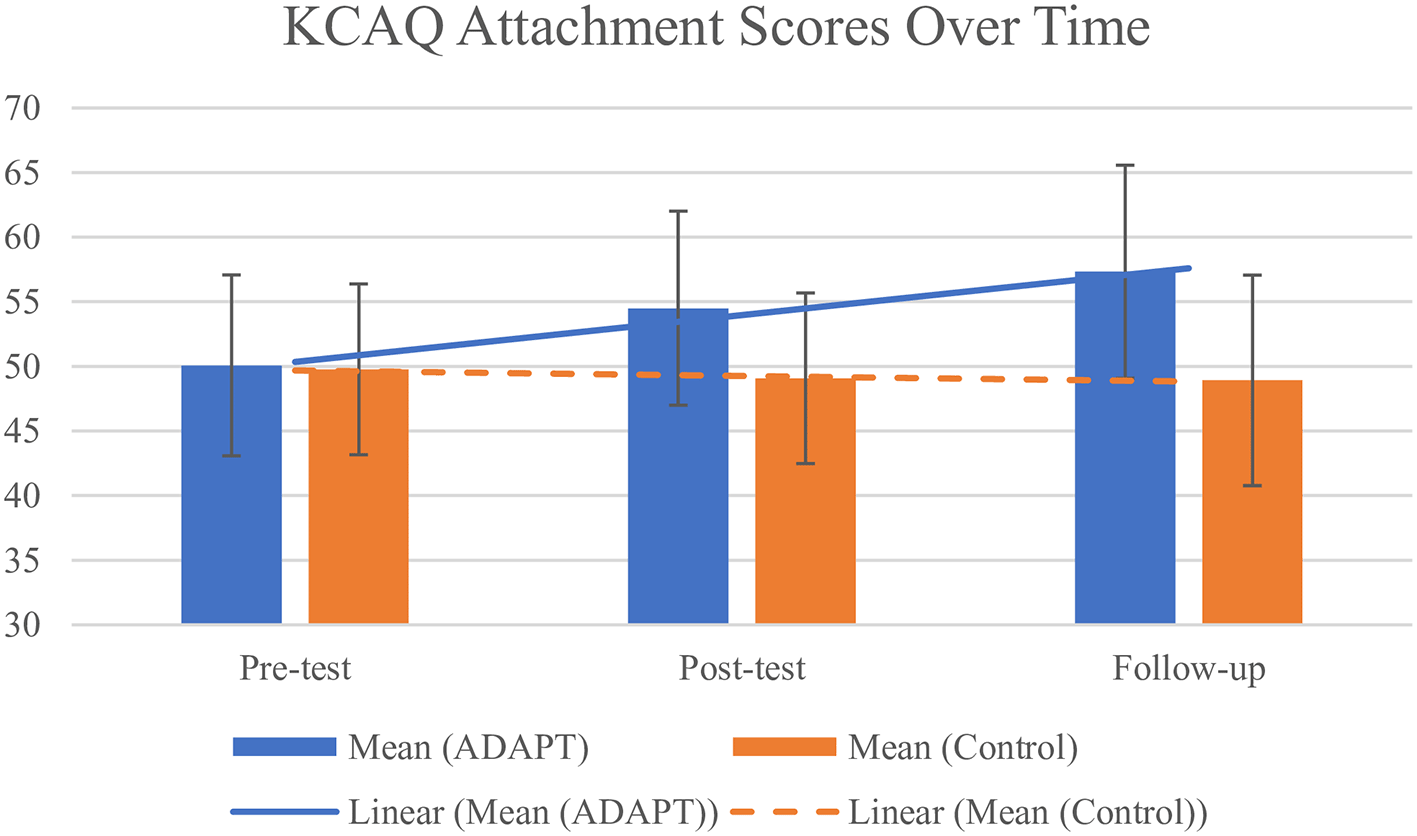
Legend: Mean Kinship Center Attachment Questionnaire (KCAQ) scores for the ADAPT intervention group and the waitlist control group across pre-test (T1), post-test (T2), and three-month follow-up (T3) assessments. Higher scores indicate more secure attachment behaviors.
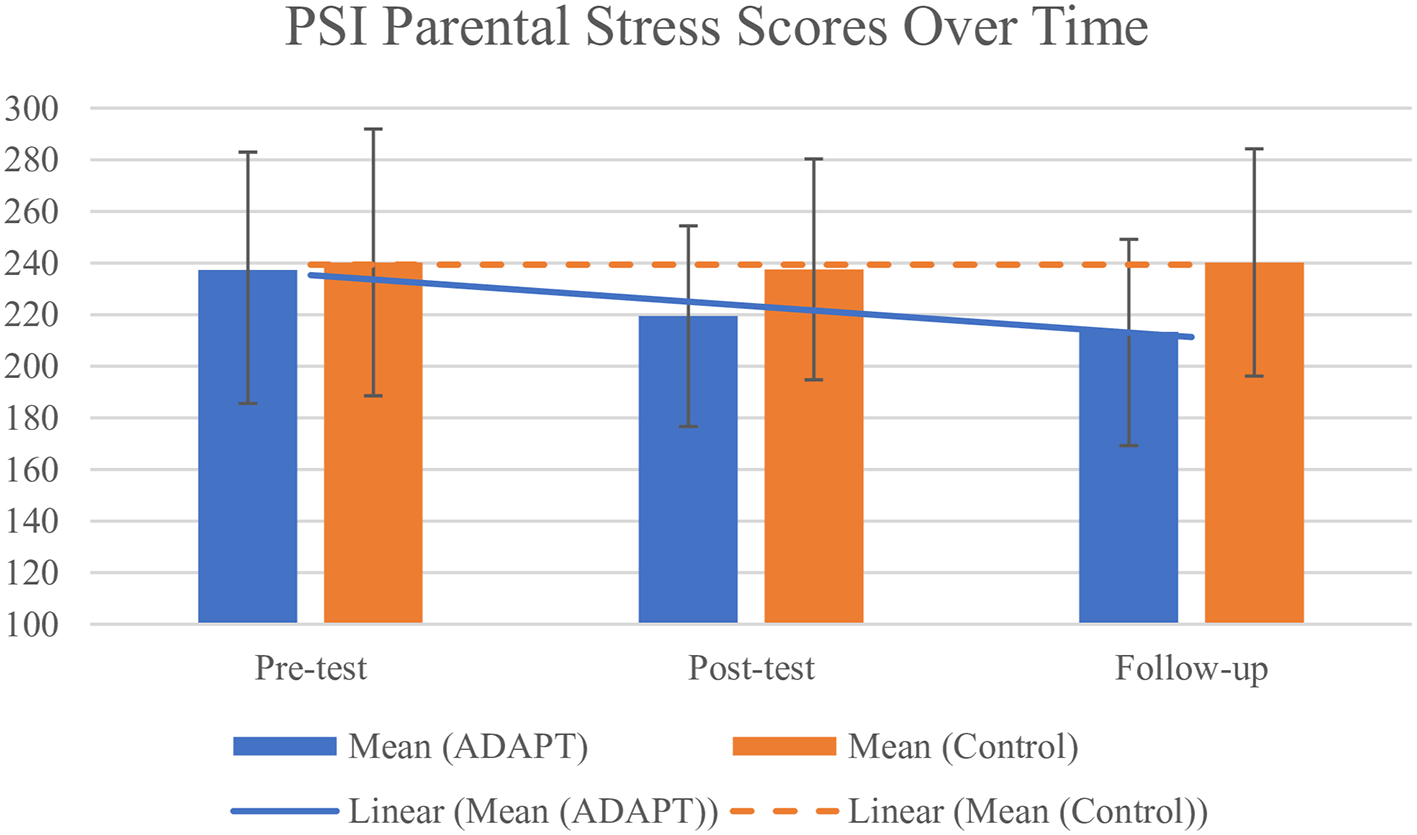
Legend: Mean Parenting Stress Index (PSI) Total Stress scores for the ADAPT intervention group and the waitlist control group across pre-test (T1), post-test (T2), and three-month follow-up (T3) assessments. Lower scores indicate lower parenting stress.
To examine whether treatment gains were sustained at follow-up, a 2 (Group: ADAPT, Control) × 3 (Time: T1, T2, T3) mixed-design Repeated-Measures Multivariate Analysis of Covariance (RM-MANCOVA) was performed, controlling for the child’s age at adoption. Preliminary checks were conducted. Box’s M test (M = 88.325) was non-significant (*p* = .291), supporting the homogeneity of covariance matrices. Mauchly’s test indicated a violation of the sphericity assumption for all univariate tests: CBCL (W = .401, χ2(2) = 16.436, *p* < .001), KCAQ (W = .460, χ2(2) = 13.977, *p* = .001), and PSI (W = .152, χ2(2) = 33.959, *p* < .001). Therefore, all reported univariate within-subjects effects use the conservative Greenhouse-Geisser (G-G) correction.
The RM-MANCOVA revealed a significant and large multivariate Group × Time interaction effect, Pillai’s Trace = .777, F(6, 14) = 8.12, *p* = .001, partial η2 = .777, observed power = .995. This indicates distinct trajectories of change over time between the groups across the combined outcome variables.
Follow-up univariate RM-ANCOVAs, using G-G correction, confirmed significant Group × Time interactions for each outcome. Detailed results, including corrected degrees of freedom, effect sizes, and observed power, are presented in Table 2.
| Outcome | F (df ) | G-G ε | *p* | Partial η2 | Observed Power |
|---|---|---|---|---|---|
| CBCL | 5.09 (1.28, 24.36) | 0.625 | 0.024 | 0.211 | 0.79 |
| KCAQ | 5.30 (1.34, 25.40) | 0.649 | 0.02 | 0.218 | 0.801 |
| PSI | 5.10 (1.10, 20.86) | 0.541 | 0.029 | 0.212 | 0.79 |
To decompose these interactions and directly test sustainability, simple effects analyses were conducted. First, the effect of Time was examined separately within each group. In the ADAPT group, there was a significant multivariate effect of Time (Pillai’s Trace = .512, F(6, 22) = 11.55, *p* < .001), with significant linear improvements from T1 to T3 on all measures: CBCL (*p* = .027), KCAQ (*p* = .006), and PSI (*p* < .001). Critically, paired comparisons between T2 and T3 within the ADAPT group were non-significant for all outcomes (all *p* > .05), indicating maintenance of post-intervention gains without decay. In the control group, the effect of Time was non-significant (Pillai’s Trace = .145, F (6, 22) = 1.86, *p* = .179), with no significant changes on any measure across time points.
Second, between-group comparisons at each time point were conducted. While groups were equivalent at T1 (all *p* > .05), the ADAPT group showed a strong trend towards better attachment at T2 (*p* = .067) and significantly higher attachment scores at T3 (*p* = .017). Differences in CBCL and PSI scores at T3 favored the ADAPT group but did not reach statistical significance in these pairwise comparisons (*p* = .302 and *p* = .108, respectively).
To identify the mechanisms underlying sustained changes at follow-up and to determine which key domain improvement (child behavioral problems, attachment quality, or parenting stress) acted as a mediator for change in the other domains, a multiple mediation analysis was performed using the PROCESS macro in SPSS (Models 4 and 6). In all models, the group variable (intervention = 1, control = 0) was the independent variable (X). Follow-up (T3) scores on the CBCL (behavioral problems), KCAQ (attachment), and PSI (parenting stress) served as potential mediating (M) and outcome (Y) variables. To isolate the net intervention effect from the baseline levels, pre-test (T1) scores for each of these variables were entered as covariates. To examine a wide range of plausible theoretical mechanisms, two mediation structures were tested: (1) Parallel mediation models (PROCESS Model 4), where the intervention effect is transmitted independently and simultaneously through two mediators to the third outcome, and (2) Serial mediation models (PROCESS Model 6), where the intervention effect flows through a two-stage sequence of mediators (X → M1 → M2 → Y) to the final outcome. In total, nine theoretical models (three parallel and six serial) were examined. Bootstrap resampling with 5,000 samples and a 95% bias-corrected percentile confidence interval (CI) was used to test the significance of indirect effects. A summary of the results for all models is presented in Table 3.
| Model | Type | Structure (X → M1 → M2 → Y) | Direct effect X→M1 | Direct effect X→M2 | Direct effect X→Y (c’) | Total indirect effect (Boot 95% CI) |
|---|---|---|---|---|---|---|
| 1 | Parallel | X → [CBCL3, KCAQ3] → PSI3 | -4.86* (p = .032) | 8.64* (p = .008) | -31.29* (p = .021) | 6.93 [-4.79, 30.49; -25.05, 14.69] |
| 2 | Parallel | X → [CBCL3, PSI3] → KCAQ3 | -4.86* (p = .032) | -24.12* (p = .005) | 4.58 (p = .420) | 3.74 [-6.49, 9.87; -5.24, 12.25] |
| 3 | Parallel | X → [PSI3, KCAQ3] → CBCL3 | -24.12* (p = .005) | 8.64* (p = .008) | -8.76* (p = .015) | 3.64 [-0.36, 9.87; -8.79, 3.10] |
| 4 | Serial | X → CBCL3 → KCAQ3 → PSI3 | -4.86* (p = .032) | 9.71* (p = .009) | -27.72* (p = .016) | 3.60 [-11.86, 21.95] |
| 5 | Serial | X → CBCL3 → PSI3 → KCAQ3 | -4.86* (p = .032) | -28.89* (p = .003) | 9.16† (p = .050) | -0.52 [-8.21, 7.05] |
| 6 | Serial | X → KCAQ3 → CBCL3 → PSI3 | 8.64* (p = .008) | -5.83* (p = .034) | -27.72* (p = .016) | 3.60 [-12.19, 22.05] |
| 7 | Serial | X → KCAQ3 → PSI3 → CBCL3 | 8.64* (p = .008) | -22.14* (p = .028) | -7.42* (p = .019) | 2.57 [-2.49, 7.33] |
| 8 | Serial | X → PSI3 → CBCL3 → KCAQ3 | -24.12* (p = .005) | -6.67* (p = .017) | 9.16† (p = .050) | -0.52 [-8.57, 6.75] |
| 9 | Serial | X → PSI3 → KCAQ3 → CBCL3 | -24.12* (p = .005) | 7.82* (p = .047) | -7.42* (p = .019) | 2.57 [-2.49, 7.33] |
† p = .050 (marginal significance). The total indirect effect for serial models is the sum of all specific indirect paths in that model, with its 95% bootstrap confidence interval (Boot 95% CI). For parallel models, two separate bootstrap confidence intervals are reported for the two specific indirect effects; both included zero, indicating non-significance.
Findings from Parallel Mediation Models (Models 1 to 3): The results from the three parallel models indicated that while the ADAPT intervention had significantly and independently led to reduced child behavioral problems (B = -4.86, p = .032; Models 1 & 2), improved attachment (B = 8.64, p = .008; Models 1 & 3), and reduced parenting stress (B = -24.12, p = .005; Models 2 & 3) at follow-up, none of these changes served as independent and parallel mediators for influencing the third domain. In none of these models did the bootstrap confidence intervals for the specific indirect effects cross zero (all included zero). However, in Model 3 (where reduced parenting stress and improved attachment were tested as parallel mediators for reduced behavioral problems), the direct effect of the intervention on reducing behavioral problems remained significant and strong even after controlling for these two mediators (B = -8.76, p = .015). This suggests that a substantial portion of the intervention’s effect on reducing behavioral problems was transmitted through pathways other than stress reduction and attachment improvement within this parallel framework, likely stemming from direct behavioral management skill training.
Findings from Serial Mediation Models (Models 4 to 9): Given the lack of support for parallel models, six serial models were tested to examine potential causal sequences. Crucially, in none of the six serial models was the full three-path indirect effect (X → M1 → M2 → Y) statistically significant (all confidence intervals included zero). This finding indicates that the data do not strongly support a single, fixed, and exclusive linear sequence of change (e.g., “only stress reduces first, then only attachment improves, and only then do behavioral problems decrease”).
Despite this, the pattern of significant direct effects within the serial models and the notable (though non-significant) magnitudes of indirect effects provided important insights into the dynamics of change (see Table 3):
• In models where reduced parenting stress (PSI3) was the first mediator (M1) (Models 7, 8, and particularly Model 9), the direct effect of the intervention on reducing stress was strong and significant. Specifically, in Model 9 (the classic stress-mediated model: X → PSI3 → KCAQ3 → CBCL3), the indirect effect size for the first path (X → reduced stress → reduced problems) was notable (Effect = 1.73, BootCI [-1.01, 5.01]).
• In models where reduced behavioral problems (CBCL3) was the first mediator (Models 4 and 5), the direct effect of the intervention on reducing problems was significant. In Model 4 (X → CBCL3 → KCAQ3 → PSI3), the indirect effect size for the first path (X → reduced problems → reduced stress) was notable (Effect = 4.64, BootCI [-2.24, 18.68]).
• In models where improved attachment (KCAQ3) was the first mediator (Models 6 and 7), the direct effect of the intervention on improving attachment was significant. In Model 6 (X → KCAQ3 → CBCL3 → PSI3), the indirect effect size for the second path (X → improved attachment → reduced problems → reduced stress) was among the largest (Effect = 5.58, BootCI [-2.79, 21.81]).
Summary and Synthesis of Findings: Overall, the mediation analyses revealed that the ADAPT intervention exerted simultaneous and direct significant effects on all three core domains within adoptive families at follow-up. However, the data do not support a single, linear, fixed mechanism (whether parallel or serial). Instead, the pattern of results is more consistent with a reciprocal and multi-pathway model of change. In this model, a strong initial reduction in parenting stress (likely resulting from the supportive and psychoeducational components of the intervention) appears to be a key lever, contributing both directly and indirectly (by fostering a more positive emotional climate for relationship improvement) to the reduction of behavioral problems. Concurrently, reduced behavioral problems (likely stemming from behavioral management components) also directly alleviate parental stress burden. Improved attachment likely benefits both from the improved emotional climate following reduced parental stress and from more positive interactions resulting from decreased behavioral conflicts. These findings suggest that the sustained effects of the ADAPT intervention are maintained not through a simple linear chain of causation, but through an interwoven and mutually reinforcing network of reciprocal influences among parental functioning, parent-child relationship, and child behavior. The lack of statistical significance for the indirect effects in these analyses can be largely attributed to the limited sample size and the consequent low statistical power for detecting such complex effects.
This study extended the findings of our initial randomized controlled trial by addressing two critical and interrelated questions regarding Adoption-Specific Therapy (ADAPT): the sustainability of its effects and the mechanisms through which these changes are sustained (Namvar Arefi et al. 2025b). By integrating a three-month follow-up assessment with comprehensive mediation analysis, we moved beyond establishing initial efficacy to exploring the durability and the dynamic processes of change within adoptive families. The results provide compelling evidence for the sustained impact of ADAPT and, more importantly, offer a nuanced, systemic understanding of how this intervention facilitates enduring improvements.
Our first key finding is that the significant post-intervention improvements in child behavioral problems, attachment security, and parental stress were not only maintained but continued to show a positive, non-decaying trajectory three months after treatment cessation. The significant and large Group × Time interaction, coupled with the non-significant change between post-test and follow-up within the ADAPT group, robustly confirms the durability of therapeutic gains. This stability is clinically vital, as it suggests that ADAPT equips families not merely with temporary coping strategies but with fundamental shifts in relational patterns, emotional regulation, and interpretive frameworks that persist beyond the therapeutic scaffold.
The maintenance of reduced behavioral problems aligns with the trauma-informed and skill-based components of ADAPT (Waterman et al., 2018). By reframing challenging behaviors as survival strategies rooted in past adversity and by teaching concrete emotion-regulation and problem-solving skills (Modules 1 & 2), children likely internalized more adaptive ways of managing distress. The ongoing reduction in CBCL scores at follow-up indicates that these new competencies became integrated into the child’s behavioral repertoire. Similarly, the continued improvement in attachment security (KCAQ) speaks to the intervention’s success in fostering a gradual reorganization of internal working models. Activities like constructing the “invisible thread” of connection (Module 4) and processing grief through the “loss box” (Module 3) appear to have initiated a reparative relational process that continued to unfold post-treatment, facilitated by a now more sensitive and attuned caregiving environment (Hillman et al., 2020).
Perhaps most notable is the sustained reduction in parental stress (PSI). Parenting stress in adoptive contexts is often chronic, fueled by complex child needs, feelings of inadequacy, and a lack of specialized support (Canzi et al., 2019; Palacios & Sánchez-Sandoval, 2006). ADAPT’s direct, multi-pronged approach to reducing this burden—through psychoeducation, normalization of challenges, enhancement of parental self-efficacy, and the provision of a supportive therapeutic alliance—seems to have created a lasting buffer. Parents in the intervention group reported lower stress not just at the peak of therapeutic support, but months later, suggesting a fundamental change in their appraisal of and capacity to manage parenting challenges.
The second, and more theoretically significant, aim was to elucidate the mechanisms of these sustained changes. Our mediation analyses yielded a clear and important conclusion: the data did not support a single, dominant, linear causal pathway (e.g., a strict behavior-focused or parent-focused sequence). None of the nine tested parallel or serial mediation models produced a statistically significant full indirect effect. This null finding, however, is not indicative of a lack of process but rather illuminates the complex, reciprocal nature of change within family systems (Cicchetti & Toth, 2009).
The pattern of significant direct effects of the intervention on all three follow-up outcomes, even after controlling for their interrelationships and baseline levels, is highly informative. It demonstrates that ADAPT exerted a simultaneous and independent influence on the child’s behavior, the quality of the parent-child bond, and the parent’s emotional state. This is consistent with the intervention’s modular, multi-target design, which concurrently addresses behavioral management, attachment narratives, and parental coping.
Rather than a simple chain of causation, the most parsimonious interpretation of our results is a reciprocal, systemic model of change. In this model, improvement in one domain catalyses and reinforces improvement in the others, creating a virtuous cycle that sustains gains over time. For instance:
Reduced Parental Stress as a Key Lever: The strong direct effect of ADAPT on reducing PSI suggests that alleviating the parental burden may be a primary entry point. As parental stress decreases, resources for sensitive, reflective caregiving are freed (Malcorps et al., 2024). A less-stressed parent is more emotionally available, patient, and capable of providing the consistent, responsive care that is the bedrock of secure attachment (Bakermans-Kranenburg, van, & Juffer, 2003). This improved caregiving climate, in turn, reduces child anxiety and the need for attention-seeking or dysregulated behaviors.
Improved Attachment as a Relational Foundation: Concurrently, ADAPT’s direct work on attachment (Module 4) helps build a stronger relational foundation. As the child feels safer and more understood, their trust in the caregiver increases, making them more receptive to parental guidance and limits. This receptivity reduces power struggles and non-compliance, thereby decreasing a major source of parental stress (Schoemaker et al., 2020).
Reduced Behavioral Problems as a Relational Relief: Directly reducing behavioral problems through skill-building (Module 1) provides immediate relief to the parent-child dyad. Fewer daily conflicts lower the overall tension in the home, making positive interactions more likely. This more harmonious environment is conducive to the growth of attachment and further reduces parental feelings of being overwhelmed or ineffective.
Thus, ADAPT appears to work by strategically intervening at multiple points within this interconnected system—child behavior, parental psychology, and the dyadic relationship—simultaneously. The sustained effects are maintained not because change follows a predetermined sequence, but because improvements in each domain continuously support and stabilize one another, creating a new, more functional family homeostasis.
These findings have profound implications for both practice and theory. Clinically, they argue against a rigid, stepwise approach to treating adoptive families. Therapists need not wait for a reduction in parental stress before addressing attachment, or for perfect behavioral control before exploring narrative work. Instead, an integrated, systemic approach like ADAPT, which targets multiple levels of the family system concurrently, appears most effective in creating robust and lasting change. The sustained reduction in stress also highlights the critical need to directly support the adoptive parent, not just as a change agent for the child, but as a client in their own right who is navigating a uniquely challenging parenting journey.
Theoretically, our results underscore the utility of a family systems perspective in understanding post-adoption adjustment. They challenge unidirectional models of influence (e.g., child problems → parent stress) and support dynamic, transactional models where child characteristics, parental functioning, and relationship quality are in constant, reciprocal interaction (Sameroff, 2009). This aligns with contemporary developmental psychopathology frameworks that emphasize the multidetermined and systemic nature of adaptive and maladaptive outcomes (Cicchetti & Toth, 2009).
This study’s conclusions must be considered in light of its limitations. The modest sample size, while sufficient to detect the main sustained effects, undoubtedly limited the statistical power to detect smaller or more complex mediation effects, a common challenge in mechanism-focused research (Cicchetti & Toth, 2009). The exclusive reliance on parent-report measures, though standard, introduces the potential for shared method variance and reporter bias. The absence of a long-term follow-up (e.g., one or two years) precludes conclusions about the very long-term stability of changes. Furthermore, the lack of an active control group leaves open the possibility that non-specific factors like therapist attention contributed to outcomes, though the specific, theory-consistent pattern of change makes this less likely.
Future research should prioritize larger-scale replications to confirm the systemic model of change with greater statistical confidence. Employing multi-method, multi-informant assessments (e.g., observational measures of attachment, teacher reports on behavior) would strengthen validity. Longitudinal designs with extended follow-ups are essential to determine if the virtuous cycles we hypothesize protect against later developmental challenges. Finally, component analysis studies could help identify which specific modules of ADAPT are most potent in activating different levers within the systemic model.
This follow-up and mediation analysis confirms that Adoption-Specific Therapy (ADAPT) produces meaningful and sustained improvements in the core challenges faced by adoptive families. More importantly, it advances our theoretical understanding by suggesting that its efficacy is rooted not in a simple linear mechanism, but in its capacity to initiate and stabilize a positive, reciprocal cycle of change within the family system. By simultaneously reducing parental stress, enhancing attachment security, and improving child behavior, ADAPT helps families co-create a new, more resilient equilibrium. These findings solidify ADAPT’s position as a valuable, culturally adaptable intervention and underscore the necessity of systemic, family-centered approaches in supporting the complex journey of adoption.
| Views | Downloads | |
|---|---|---|
| F1000Research | - | - |
|
PubMed Central
Data from PMC are received and updated monthly.
|
- | - |
Provide sufficient details of any financial or non-financial competing interests to enable users to assess whether your comments might lead a reasonable person to question your impartiality. Consider the following examples, but note that this is not an exhaustive list:
Sign up for content alerts and receive a weekly or monthly email with all newly published articles
Already registered? Sign in
The email address should be the one you originally registered with F1000.
You registered with F1000 via Google, so we cannot reset your password.
To sign in, please click here.
If you still need help with your Google account password, please click here.
You registered with F1000 via Facebook, so we cannot reset your password.
To sign in, please click here.
If you still need help with your Facebook account password, please click here.
If your email address is registered with us, we will email you instructions to reset your password.
If you think you should have received this email but it has not arrived, please check your spam filters and/or contact for further assistance.

Comments on this article Comments (0)