Keywords
Digital finance; Governance formalization; Green upgrading; SDG 12 and SDG 13; Saudi Arabia

Digital finance; Governance formalization; Green upgrading; SDG 12 and SDG 13; Saudi Arabia
The shift to sustainable production is becoming more and more an organizational challenge at the firm level, and no longer only a macro-level policy goal. Climate-related regulation, resource-efficiency pressures, and stakeholder pressure are all on the rise, and companies increasingly have to show that they are also environmentally responsible—and more generally integrate environmentally relevant behaviors into their operating routine (Burbano, Delmas, & Cobo, 2022). The issue today is no longer whether digital transformation is important for businesses as a whole but rather whether there are specific forms of digital capability that can be translated to tangible sustainability-oriented upgrading related to Sustainable Development Goals (SDGs) 12 and 13, which respectively correspond to Responsible Consumption and Production, and Climate Action (Dedrix Stephenson Bindeeba, Eddy K. Tukamushaba, & Rennie Bakashaba, 2025b).
Digital finance is one area that should be highlighted in the context of digital transformation. Digital finance isn’t just about how and what sort of retail or households use fintech; it’s about how and what type of business or institution leverages digital, traceable means to receive, store, and send payments and how day-to-day business is conducted at the firm level (Angeles, 2022). These features can lead to environmental upgrading by lowering transaction frictions, enhancing visibility of information, building up documentation, and better disciplined allocation of resources (Xie, Hongyu, & Zhao, 2024). Such connections are particularly relevant in Saudi Arabia, where companies are situated in an economy that is experiencing a wide margin of transitions in the digital and institutional landscape as part of Vision 2030, and the relationship between formal financialization and sustainability capability becomes an important empirical question.
While there has been significant literature written on digitalization, corporate governance, and environmental strategies and politics, these have remained disconnected. One of the streams addresses the enhancement of efficiency, innovation and environmental performance that digital technologies make possible. (Hammerschmidt, Burtscher, Gast, Kraus, & Puumalainen, 2025; Quttainah & Ayadi, 2024). Another one explores the impact that good governance can have on transparency, accountability and strategic discipline (Xie et al., 2024). A third looks into the determinants of firm-level environmental practice (D. Chen & Wang, 2024; Marie, Qi, Gerged, & Nobanee, 2024). However, these streams often go on parallel tracks and fail to capture this: digitalisation is not usually discussed as a governance-enabled pathway towards environmental upgrading.
This disintegration yields two close issues. First, digital transformation is often tackled too much on a general level, by using overarching and high-level measures of ICT intensity or innovation orientation which miss the organisational binding glue that converts digitisation into sustainability effects (Huang & Hao, 2024; Lu, Li, & Yuen, 2023). Digital finance is particularly under-theorized as the current studies position digital finance as a financial-inclusion or fintech phenomenon instead of a firm-level capability linked to the traceability of transactions, formal accounts, and operational documents (J. Liu, Song, & Fu, 2025b; G. Wang & Zhang, 2025). Second, governance is often a background control and not a direct conditioning factor, and hence it is hard to imagine a mechanism by which digital information proves to be influential, unless governance is sufficiently robust to translate informational gains into real green action (C. Wang, Guo, Xu, & Qin, 2024). Another research gap is related to the level of analysis, since many studies use macro-panel data without distinguishing the digital-finance environment from the firm-level digital-finance capability, which results in not observing the within-firm pathway from financial digitalization to environmental practice (Oliveira & Jabbour, 2015).
The paper is guided by three research questions in the context of this background. First, to what extent does digital finance raise the likelihood of green upgrading activities by Saudi companies that are related to SDG 12 and SDG 13? Second, does Governance formalization reinforce the link between Digital finance and Green upgrading? Third, is the digital-finance effect bigger among exporters and larger firms that tend to be under more intense external pressure and have more organizational capabilities?
These questions translate into three related objectives. The first is to measure the direct linkages between digital finance and firm green upgrading based on a rare-event-aware binary-response framework. The second is to see if governance formalization serves as a positive moderator of the relationship by adding an interaction term between the Digital Finance Index and the Governance Formalization Index. The third is to test whether the effects of digital finance depends on exporter status and firm size, thus revealing the boundary conditions for which digital financial capability is most likely to lead to observable sustainability upgrading. These three objectives shape the paper’s conceptual framework, hypothesis construction and empirical design.
This paper contributes in three dimensions. Theoretically, it integrates the Natural-Resource-Based View, Agency Theory, Complementarity Theory, and Institutional Theory into a single firm-level argument in which governance formalization is the organizational structure that renders digital finance strategically usable for green upgrading, rather than a parallel predictor. Empirically and methodologically, it develops a rare-event-aware research design using Saudi firm-level survey data that directly measure digital finance, governance formalization, green upgrading, exporter status, and firm size, and combines weighted Firth penalized logistic regression with complementary log-log, ordered-logit, and Balanced Random Forest models for robustness and predictive corroboration. From a policy standpoint, the paper translates the moderation evidence into actionable guidance for SDG 12 and SDG 13 implementation in emerging-market settings undergoing rapid digital and governance reform, with direct relevance to the Vision 2030 and Saudi Green Initiative agenda.
This study builds on a capability perspective of sustainability upgrading that sees digital finance not just as a payment technology, but as part of an organization’s capabilities. Evidence indicates that digitally-enabled financial systems can positively influence firms’ ESG and environmental outcomes through the reduction of information frictions, financing constraints, and the augmentation of decision-support capacity (Y. Liu, Kumar, Liu, Li, & Zhou, 2025a; Mu, Liu, Tao, & Ye, 2023; W. Wang, Cao, Li, & Zhu, 2025). This logic is in line with the Natural-Resource-Based View since environmental upgrading requires capabilities that enable firms to monitor, allocate and coordinate in ways that minimize waste and increase environmental responsiveness. Within this view, DFI operationalizes the firm’s transactional and informational substrate. In the current analysis, these qualities are represented by e-payment intensity, formal banking access and digital business visibility, which are all covered by the Digital Finance Index. The theoretical implication is that digital finance should expand the feasibility of green upgrading by making firm operations more transparent, more codified, and more capable of supporting documented environmental action.
However, with information alone no environmental strategies can be achieved. From an Agency Theory perspective, digitalization does not eliminate the need for monitoring, verification, and managerial discipline; it only changes the quality and quantity of information available for those purposes. All the informational substrate that becomes accountable action is operationalized in the corresponding control architecture of GFI. Nevertheless, recent empirical evidence demonstrates that certain governance-related interventions (e.g., sustainability committees, external assurance, structured reporting) are positively related to environmental performance in Saudi companies, and high-quality external audit has been found to influence the extent of green innovation and environmental information credibility in other firm-level contexts (Alwadani, Al-Shaer, & Albitar, 2023; Yang et al., 2025). These findings contribute to the conceptualization of firm governance formalization in the present study as a structured control environment, consisting of audit, ownership–management separation, certification, foreign ownership and managerial experience. In this reasoning formalization matters because it defines if a digital financial information is a useable governance input or a passive governance transactional residue.
Complementarity Theory and Institutional Theory help to make sense of the interplay between digital finance and governance formalisation. Complementarity suggests that gains to one organizational practice increase when combined with another reinforcing practice. Institutional logic continues that the more pressure for legitimacy that a company feels, the more likely it is to make its formalized systems obvious through a sustainability action. The DFI × GFI interaction is used as a mechanism, while exporter status and firm size are added to capture the legitimacy and capacity boundary conditions as highlighted by Institutional Theory and the capability literature. Recent research indicates that digital transformation is more effective for green innovation and ESG outcomes in the context of firms with strong internal control and disclosure discipline, as well as capable of its implementation (Y. Liu et al., 2025a; Yang et al., 2025). This study, therefore, does not see green upgrading as a default product of digitalization, but as an organizational outcome, which is achieved when digital finance is organized within a more formal governance structure and steered towards externally visible environmental practices.
2.2.1 Digital finance as a firm-level organizational capability
In recent years, the study of digital finance has shifted away from its customer-facing fintech perspective and started to be understood as a capability of firms, rooted in systems of transactions, data access and organizational coordination. The research on enterprise digitalization indicates that digital transformation has the potential of enhancing environmental performance via technological development, governance enhancement, a reduction in funding friction; the meta-analytical evidence suggests that digital transformation is associated with enhanced sustainability-related outcomes when it is associated with operating routines and not symbolically integrated (Dedrix Stephenson Bindeeba, Eddy Kurobuza Tukamushaba, & Rennie Bakashaba, 2025a; Zhou, Jiang, & Zhang, 2023). Concurrently, firm-level evidence indicates that digital transformation can have a positive impact on environmental performance by increasing the quality of disclosure, achieving greater process visibility and internal standardization, notably with a non-linear effect at lower levels of digital transformation when it is still nascent and/or limited (Zhang & Zhao, 2023). It is relevant to the current research as it is an example of how digital finance can be understood as a part of the internal transactional design of the firm, and not as a fuzzy primer for modernization.
The more narrow definition is particularly applicable when considering digital finance through e-payment receipts, e-payment disbursements, bank-account access and website presence. These attributes have the effect of enhancing convenience but also of providing transaction trails and mitigating the opacity of cash while increasing the likelihood of recording business activity. Recent evidence suggests that digital finance can stimulate green technological innovation by improving factor mobility, expanding financing channels, and strengthening regulatory transmission, even though poorly governed digital expansion may also generate low-quality innovation or symbolic responses (Luo & Wang, 2024). Accordingly, the literature increasingly implies that digital finance can contribute to sustainability not because it is inherently “green,” but because it improves the informational and transactional conditions under which firms can undertake formal environmental practices.
2.2.2 Governance formalization and environmental upgrading
This recent governance literature confirms the notion that environmental upgrading is not just a technical decision, but rather an output of an organization, which is affected by the quality of the monitoring system, by internal control systems and by external audits. Evidence from Saudi firms shows that sustainability committees, separate sustainability reporting, and external assurance are positively associated with environmental performance, suggesting that more formalized internal governance structures can help firms convert sustainability intent into verifiable practice (Alwadani et al., 2023). It aligns with other studies that found governance mechanisms including: disclosure discipline, audit-related oversight, board-level structuring, affect the capacity of the firm to deal with environmental expectations and provide credible long-term environmental responses. The relevance of this literature is direct as it sees the concept of formalisation of governance not as a generic institutional context, but as the internal organizational system through which the visibility of transactions can become disciplined action with respect to the environment.
This argument is corroborated by more recent evidence, which indicates governance channels are more important in determining green outcomes. High-quality external audit has been shown to be a facilitator of green innovation and environmental information disclosure has been verified to play a mediating role and moderating role in the relationship, that is, high-quality external audit can enhance the control, and at the same time, can improve the environmental disclosure information to make it more easily used (Yang et al., 2025). As well, in French industry, a study of governance mechanisms involved in ecological investment decision-making indicates a positive correlation between mechanisms aiming towards ecological competencies, wider participation and sustainability criteria and ecological investment behaviour (Nadel & Savès, 2025). Drawing together these studies would seem to indicate that formalization of governance is most effective when it helps to increase verifiability, allocative discipline and credibility. That insight fits the present paper closely, because its governance index combines audit, ownership–management separation, certification, foreign ownership, and managerial experience as signals of a more structured decision environment.
2.2.3 Digital finance–Governance complementarity
A more recent strand of research suggests that digitalization and governance should not be modeled as isolated drivers of sustainability outcomes. Meta-analytic evidence indicates that the sustainability payoff from digital transformation depends heavily on organizational conditions, with stronger effects emerging where firms possess better internal systems, stronger controls, and greater implementation capacity (Bindeeba et al., 2025a). The firm-level empirical findings also indicate that the positive consequences of the environmental effects of digitalization are not merely a result of the implementation of technology, but also of governance improvement (Zhou et al., 2023). What does this mean? It suggests that only when companies are able to implement governance mechanisms that enable them to move towards longer-term, monitored objectives, do these digital capabilities take on strategic significance. The complementarities can be seen in the green-innovation literature: Audit quality reinforces environmental information disclosure and digital finance necessitates a combination of regulatory and market interventions and is not just about technology (Luo & Wang, 2024; Yang et al., 2025). The implication of the present study is that it is not a question of which of the two levers of change, i.e., digital finance versus governance formalization, works better on its own, but rather whether digital finance is more environmentally productive under greater governance formalisation.
2.2.4 Boundary conditions: exporter status and firm size
Recent studies also suggest that the benefits of green capability and formalization are context dependent. Export-oriented firms are more likely to be facing legitimacy pressures than firms with a domestic-only orientation; recent evidence also indicates that green innovation can enhance export performance in emerging-market firms by securing regulatory and social legitimacy in host markets (Shu, Zhao, Yao, & Zhou, 2024). The relevance of this insight lies in the fact that exporters are likely to be subjected to a greater degree of scrutiny and enforcement of buyer standards, as well as a greater degree of exposure in terms of reputational risk, which all increase the strategic significance of visible environmental practices. Introducing a different boundary condition is the firm size. Moreover, the recent SME literature indicates that the willingness to adopt sustainability is highly dependent on administrative capacity, stakeholder responsiveness and resources’ depth, and the evidence on circular economy adoption reveals that firm size moderates the relationship between external pressure and sustainability practice adoption (Ahmadov, Durst, Gerstlberger, & Nguyen, 2025; Zaman, Tanewski, & Ekanayake, 2025). Taken together, this literature suggests that digital finance could potentially be more effective on green upgrading for exporters and/or larger companies, due to their higher likelihood of being subjected to external discipline and their greater capability to implement formal environmental action.
2.2.5 Literature synthesis and study positioning
There is some fairly strong evidence in the literature to support three propositions. To start, digital finance can be seen as an organizational capability of firms, built on transactional transparency, a formal financial system, and coordination via digital intermediation. Second, the formalization of governance is significant because, in addition to information, an improving environment needs systems of monitoring, verification and managerial discipline to drive information into credible organizational action. Third, it appears that the impact of digital-finance capability is not likely to be homogeneous across firms as external scrutiny and internal capability have an impact on whether digital-visibility makes a difference.
What is not yet well-developed is a micro-level model that integrates these insights within a single framework which can be tested empirically. Some of the previous literature still views digitalisation, governance and environmental upgrading independently as parallel processes, while some still adopts macro and proxy-based indicators which are unable to determine whether companies actually practice green action or not. The present paper is an attempt to fill this gap. It designs a firm level corporate-governance model of green upgrading, with the explanatory focus on the digital finance capability, the conditioning factor being the formalization of corporate governance, and the boundary conditions exporter status and firm size. Its contribution is therefore not to ask whether digitalization matters in the abstract, but to ask under what governance conditions digital finance becomes environmentally consequential.
Figure 1 illustrates the conceptual picture where the Digital Finance Index (DFI) serves as the main explanatory construct and Green Upgrading (GreenSDG) as the SDG 12–13 outcome. The core path is defined as DFI to GreenSDG, representing the belief that companies with more sophisticated use of e-payments and formal banking relations, as well as a higher number of digital interfaces have greater transactional and informational capacity to harness carbon monitoring, energy management and solar-related practices. Through this framework, the study then proposes the Governance Formalization Index (GFI) as its main moderator. Instead of being considered as a parallel predictor, GFI is conceived as a conditioning mechanism that reinforces the DFI-GreenSDG relationship. The lower block of the framework indicates which variables are not treated as controls but as H3 boundary conditions, such as exporting status and firm size; other effects like the impact of firm age, sector effects, competition, financial constraints and internet constraints are encompassed for net-effect estimation. Figure 1 excludes the robustness outcome (GreenCount) as it forms part of the estimation design, not the conceptual logic.
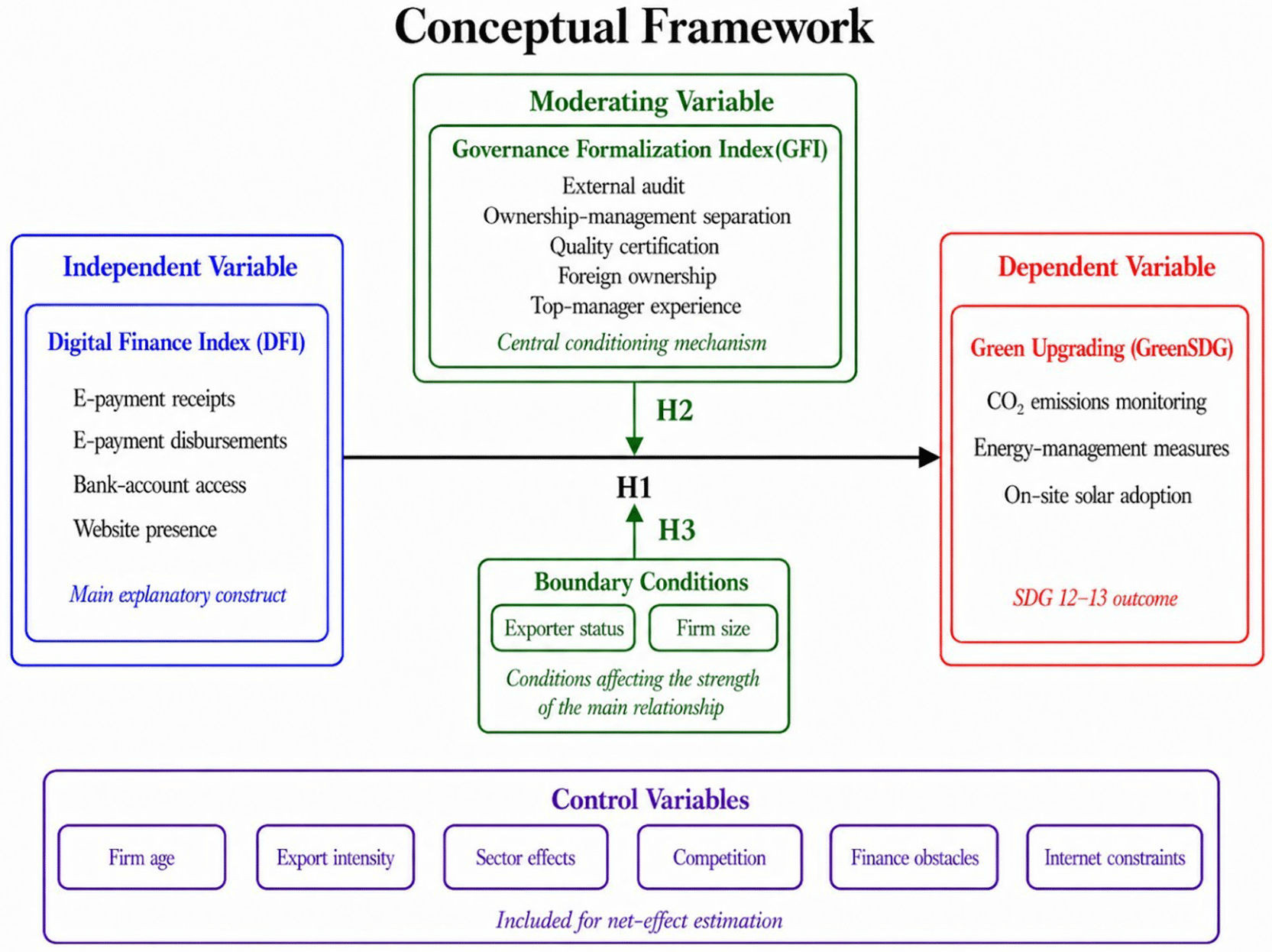
Digital finance is positively associated with firm-level green upgrading.
The first hypothesis is directly related to the argument that digital finance leads to greater visibility within the firm, lower transaction frictions and more disciplined resource coordinating. As companies shift towards increased reliance on digital receipts, digital payments, formal bank-account structures, and interfaces, they are in a better position to record activity, have insight into how things are operating, and enable environmental practices that demand information consistency and procedural controls. This expectation is a logical and straightforward consequence of the Natural-Resource-Based View where environmental capability is dependent on prior coordinative and informational resources.
Governance formalization positively moderates the relationship between digital finance and green upgrading, such that the positive effect of digital finance is stronger in firms with more formalized governance structures.
The second hypothesis is the main moderation hypothesis in the paper. The improvement in informational capacity through digital finance does not automatically lead to action for sustainability if the companies in question do not have the governance structures for monitoring, verifying, and directing decision-making. Digital records should be helpful for longer horizon environmental investments, compliance, budgeting, and auditing under more formalized governance. The expectation is based on Agency Theory, combined with a Complementarity Theory viewpoint when monitoring structures translate informational inputs into disciplined decisions, and the marginal return to a practice is positively related to the level of the complementary practice.
The positive association between digital finance and green upgrading is stronger among firms facing greater external scrutiny and possessing greater organizational capacity, proxied by exporter status and firm size.
The third hypothesis marks the conditions under which the digital-finance effect should have a particularly strong impact. Export-oriented companies are exposed to more stringent scrutiny by buyers, standards regimes and reputational audiences and larger companies usually have more administrative depth, organizational slack and capability to implement. The expectation is based on Institutional Theory (legitimacy pressure) and on capability-based reasoning on organizational slack and absorptive capacity.
The data for this study are taken from the World Bank (2025) Saudi Arabia firm-level survey data set, encompassing 1,002 establishments and 336 variables. The unit of analysis is the establishment. It contains firm identifiers, sector and size categories, survey weights (wmedian) and the variables needed to operationalize the following constructs included in the paper: digital finance, governance formalization, green upgrading, exporter status, firm size and the set of baseline controls (World Bank, 2025). WBES median sampling weight wmedian is the sampling weight which adjusts for the survey stratified design: sector and size strata.
The main dependent variable is Green Upgrading (GreenSDG), coded as a binary indicator equal to one if a firm reports at least one of the following: CO2 emissions monitoring (ge7), energy-management measures (ge8d), or on-site solar adoption (c43); otherwise it is zero. A robustness outcome, GreenCount, sums the same three practices and ranges from 0 to 3. Formally,
The main explanatory construct is the Digital Finance Index (DFI), which is formed by the share of receipts using e-payments (k33), the share of payments using e-payments (k38), bank-account access (k6) and website presence (c22b). These inputs are both continuous percentages and binaries so each is standardized prior to aggregation. The moderating construct is the Governance Formalization Index (GFI) that is constructed with external audit (k21), ownership–management separation (b3a, reversed coded), quality certification (b8), foreign ownership share (b2b), and top-manager experience (b7). The index formulas are
Table 1 shows the core analytic variables, their empirical proxies, the WBES source modules and the relevant survey item codes. The measurement strategy is intentionally parsimonious: each construct is anchored in directly observed World Bank Enterprise Survey items, while the two composite indices—Digital Finance Index and Governance Formalization Index—aggregate conceptually related indicators through z-standardization to preserve comparability across mixed measurement scales. This allows for less conceptual slippage between the theoretical constructs of the paper and their empirical proxy products, especially when moderation and heterogeneity are central constructs in the inferences of the paper. It also ensures the measurement design to be consistent with the conceptual framework and model specification that were approved, with DFI as the focal explanatory construct and GFI as the moderator and GreenSDG as the outcome linked to SDG alongside exporter status and size of the firm representing key boundary conditions. The variable survey-weight is shown separately as it affects the estimation but is not a substantive regressor.
Table 2 is a mapping of the study’s theoretical structure to its empirical variables. This table is not intended to restate the coding rules previously reported in the subsection on variable construction but rather to give an explanation and reason for the inclusion of each variable in the model. This is important as the paper does not see measurement as mechanically driven by data. Rather, variable selection follows the integrated logic of the theoretical foundation: GreenSDG is modeled as a strategic environmental capability; DFI captures the transactional and informational infrastructure that may enable such capability; GFI captures the formal governance environment that conditions whether digital information is translated into disciplined sustainability action; and Exporter and SizeCat represent boundary conditions under which the focal relationship should intensify (Qamruzzaman, 2026b). The rest of the controls are kept to isolate the net relationship without changing the theory-based core of the model.
The estimation strategy focuses on the empirical key aspect of the paper, namely that green upgrading is a sparse binary outcome. Hence, the analysis is carried out in four interrelated phases. Distributions, missingness and collinearity are the first things evaluated by weighted descriptive screening before estimating the models. Second, weighted Firth-penalized logistic regression is used for the analysis of H1, since binary data with rare events are more susceptible to small sample bias and separation than ordinary maximum-likelihood logistic regression. H2 and H3 are then estimated as structured extensions of the same framework through mean-centered interaction terms, namely DFI × GFI for governance moderation and DFI × Exporter plus firm-size interaction or subgroup specifications for boundary-condition testing.
Thirdly, robustness is tested using complementary log-log regression for the rare event binary outcome and ordered logistic regression for GreenCount that views the green upgrading as an ordinal intensity measure, instead of a simple event indicator. Lastly, a Balanced Random Forest algorithm is estimated to provide predictive corroboration under class imbalance and performance is assessed using stratified cross-validation and a precision–recall–oriented metric. This sequence maintains compatibilities of inferences and binds causal interpretation to the penalized regression models instead of in the machine learning stage (Puhr, Heinze, Nold, Lusa, & Geroldinger, 2021; Richardson et al., 2024; Suhas et al., 2023; Sun, Quinn, & Bhar, 2025; Tutz, 2022).
Weighted descriptive statistics are reported first as a prelude to empirical analysis, for which the main survey weight used is wmedian (World Bank, 2025). Means, standard deviations, medians and proportions are presented by the type of variable and the sample is profiled by sector, size, exporter status and key explanatory construct. This stage is not merely descriptive; it is used to assess whether the empirical design is consistent with the paper’s rare-event logic and whether the covariate structure is sufficiently stable for interaction modelling.
Review of the survey spreadsheet reveals that the key explanatory variables are largely complete, with some remaining missingness being limited in some control variables, especially the competition variable. The reporting of missingness is very low on all of the core constructs and the principal models are calculated on a complete case basis subsequent to index construction. Collinearity is evaluated on pairwise correlation and variance inflation factors with special consideration of the DFI and GFI components and the interaction effects (O'Brien, 2007). In order to minimize mechanical collinearity in the moderation models, DFI and GFI are mean-centered prior to creating interaction terms. The same pre-processing logic is also kept for the machine-learning classifier, in order to keep the same alignment of the explanatory architecture at the inferential and the predictive stages.
It uses a weighted Firth penalized logistic regression as the main inferential estimator, reflecting the fact that the binary outcome is sparse; standard maximum-likelihood logit is known to be biased and separatist in rare-event contexts (Firth, 1993; Heinze & Schemper, 2002; King & Zeng, 2001), and recently there was applied evidence for such an estimation approach for firm-level survey outcomes (Puhr et al., 2021; Suhas et al., 2023). Under rare-event conditions, standard maximum-likelihood logit may exhibit a small-sample bias and instability in its estimation - particularly when fixed effects and interaction terms appear (Heinze & Schemper, 2002; Puhr et al., 2021). Firth penalization tackles this by augmenting the log-likelihood with a Jeffreys-prior penalty to diminish finite-sample bias and to counteract separation (Firth, 1993; Heinze & Schemper, 2002). This decision is entirely in line with the approved outline that stipulates that the key estimator for H1 and H2 is the weighted Firth logit.
where contains the control variables, denotes sector fixed effects, and denotes size fixed effects. The weighted Firth criterion is written as
Where is the survey weight and is the observed information matrix. H1 is tested through the sign and statistical significance of Substantive interpretation is based on odds ratios, and, as reported, average marginal effects from the fitted model (Norton, Dowd, & Maciejewski, 2019).
The H2 and H3 are estimated as structured extensions of the rare-event binary-response model, instead of a separate auxiliary test. The moderation model adds GFI and GFI × DFI (the mean-centered interaction term), and the heterogeneity model adds interaction structures composed of exporter and firm size. The preferred specification is
The H2 is supported when the interaction coefficient > 0, meaning that the effect of digital-finance on green upgrading is reinforced if governance is formalized. H3 is evaluated in two ways. Exporter heterogeneity is tested first by introducing the interaction term. Second, firm-size heterogeneity is explored by either interacting DFI with size-class dummies, or by estimating the model separately for small, medium and large-sized firms. This hybrid approach is helpful as size can be used both as a source of model nonlinearity and as a discrete organizational boundary condition. The interaction terms are interpreted through conditional marginal effects rather than through raw coefficients alone, since the substantive quantity of interest is whether the DFI effect becomes stronger under more formalized governance and stronger external or organizational capacity conditions (Ai & Norton, 2003).
There are two measures of robustness. First, the complementary log-log model is used as an alternative binary-response formulation of the rare event:
Secondly, the binary outcome is replaced by GreenCount and an ordered logistic model is estimated:
The paper includes one machine-learning model, a Balanced Random Forest classifier, as a predictive complement to the econometric analysis (C. Chen, Liaw, & Breiman, 2004). This choice is appropriate because GreenSDG is a highly imbalanced binary target. A conventional random forest would tend to over-predict the majority class, whereas the balanced version re-samples the minority and majority classes within each bootstrap draw, producing more informative classification behavior under rare-event conditions (Richardson et al., 2024).
Let denote the class prediction from tree . The ensemble prediction is
A weighted sample profile and diagnostics for missing data are given in Table 3. The full sample size is 1,002, and the complete-case estimation sample size is 977, meaning that the number of observations affected by the variables in the model is 25. This justifies the methodological choice of complete-case estimation made after the construction of the index. The dependent variable is extremely sparse, with only 27 firms reporting at least one green-upgrading practice, and the weighted prevalence of GreenSDG is only 1.180%. The mean GreenCount is also very low at 0.014, confirming that green upgrading is not a common practice among Saudi firms in the sample. This empirical pattern is an adequate basis for the rare-event design of the paper, in which the weighted Firth penalized logistic regression is used as the primary method of estimation instead of the usual maximum-likelihood logit. Moreover, the sample is highly concentrated in small firms and services: 76.103% of firms in the weighted sample are small firms, with Other Services and Retail being the two largest sector groups. Exporters account for only 2.184% of the weighted sample, meaning that exporter heterogeneity needs to be treated with caution as the size of the exporter subsample is small. The difference between raw event share (27/1,002 = 2.69%) and weighted prevalence (1.18%) can be attributed to the fact that the WBES sampling design is stratified, where large firms and some sector strata were over-sampled compared to the population and re-weighted during inference.
The construction and diagnostic screening of variables are summarized in Table 4. The focal variables are chosen to be aligned with the theoretical and methodological design of the paper: GreenSDG and GreenCount capture environmental upgrading via CO2 monitoring, energy-management practice, and solar adoption; DFI is generated based on e-payment receipts, e-payment payments, bank-account access, and website presence; and GFI is generated from audit, ownership–management separation, certification, foreign ownership, and managerial experience. This is in line with the paper’s definition of DFI as the primary explanatory variable and GFI as the moderator with a governance dimension. The reported VIF values do not indicate serious multicollinearity. DFI has a VIF of 1.308, GFI has a VIF of 1.497, and the DFI × GFI interaction has a VIF of 1.120. Exporter status is also found to have a VIF of 4.750, but this is not close to conventional concern thresholds and is theoretically required for testing H3. Overall, there is diagnostic evidence supporting stability of the main regression specification.
Table 5 presents the weighted Firth penalized logistic regression results for GreenSDG. Model 1 measures the direct impact of digital finance. The coefficient for DFI is positive and statistically significant (β = 1.443, SE = 0.666), with an odds ratio of 4.232. This suggests that companies with higher digital-finance capability are significantly more likely to adopt at least one green-upgrading practice. The result remains stable after adding GFI in Model 2, where the DFI coefficient remains positive and significant (β = 1.459, SE = 0.676; OR = 4.300). As a result, the hypothesis H1 is supported, that is digital finance is positively associated with the green upgrading of firms.
Model 2 further indicates that formalised governance is independently positively linked to green upgrading. Formal governance structures are not simply background controls, they are actually directly related to the likelihood of a firm engaging in environmental practices given that the GFI is positive and statistically significant (β = 1.577, SE = 0.801; OR = 4.840). This is in line with the paper’s theoretical assertion that formalization of governance leads to better monitoring and verification as well as better strategic discipline.
Model 3 is testing the central moderation hypothesis where the DFI × GFI interaction is added. The interaction term is positive and statistically significant (β = 1.936, SE = 0.821; OR = 6.930). Because both DFI and GFI are mean-centered, the DFI coefficient in Model 3 (β = 1.001) represents the conditional DFI slope at sample-mean GFI, rather than a marginal effect. Thus, the interaction coefficient (β = 1.936, OR = 6.930) is the substantively informative quantity for testing H2. The higher the level of governance formalization, the stronger the impact of digital finance on green upgrading. The findings thus further confirm the complementarity argument of the paper; that digital financial visibility can grow into greater environmental impact if companies have formal governance that can turn information into monitorable and credible environmental action. Therefore, H2 is supported.
Finance obstacle is consistently negative and statistically significant in all three models among the controls, suggesting that firms with greater financing constraints have a lower probability of pursuing green upgrading. Firm age is positive in Models 1 and 3, indicating that older firms may have more organizational capabilities in relation to environmental action. Other controls are not consistently significant.
Table 6 reports robustness tests using complementary log-log regression and ordered logistic regression. The complementary log-log model is consistent with the basic direct-effect outcomes—DFI is still positive and significant (β = 1.837, OR = 6.278) and so is GFI (β = 1.725, OR = 5.615). This makes it more contrastive to believe that the principal findings are not the result of the use of the Firth-logit link function. But the DFI × GFI interaction is not significant in the complementary log-log model, so the moderation effect is most pronounced in the main Firth specification.
There are mixed findings in the ordered logistic model in which GreenCount is treated as an intensity-based outcome. GFI remains positive and significant (β = 1.300, OR = 3.668), but DFI is not significant. The interaction term turns out to be negative and significant. This suggests that the binary GreenSDG result is stronger than the count-intensity result. Given that the paper’s core theoretical finding is whether a firm implements any SDG-related green upgrading or not, and not the number of green practices they implement, the Firth-logit result should be the foremost result to test the hypotheses in this paper. Nevertheless, the robustness of the results should be discussed transparently: The direct DFI effect as well as the GFI effect are reasonably robust, but the moderation effect is sensitive to the alternative coding of the outcome variables.
The exporter subgroup counts in Table 7 are for the complete-case estimation sample - the full survey includes 112 exporter firms prior to the complete-case filtering. Table 7 tests H3. The interaction with the exporter was not supported by the hypothesis. The DFI effect among non-exporters is positive and significant (β = 1.391, OR = 4.019), but the DFI × Exporter interaction is negative and statistically insignificant (β = −1.909, OR = 0.148). The exporter subgroup check also shows a positive but insignificant DFI slope among exporters. However, it is important to remember that the exporter subgroup consists of 11 green-upgrading events in 91 firms, and therefore has restricted statistical power in detecting interaction effects. Therefore, the exporter component of H3 is not supported.
The evidence with respect to firm size is stronger. The DFI effect among small firms is not significant, while the DFI × Medium interaction is positive and significant (β = 4.628, OR = 102.351). The large-firm interaction is positive but insignificant; however, the subgroup slope for large firms is positive and significant (β = 3.171, OR = 23.836). This means that the association between digital finance and green upgrading is stronger for firms with more organizational capacity, with some variation in the pattern, however, across the size specifications. Therefore, H3 is partially supported: the firm-size boundary condition is supported, but the exporter boundary condition is not.
Some estimates for sub-groups are derived from limited positive events and the values of corresponding odds ratios and confidence intervals should be understood as evidence of direction of heterogeneity, not of a precise size of the effect.
Table 8 reports the Balanced Random Forest results. The classifier is not employed for causal inference, but instead offers predictive corroboration in class imbalance, as per the Methodology. The model has high recall (0.920), meaning that the model classifies most green-upgrading firms, albeit with low precision (0.042) due to the sparsity of the positive class. PR-AUC is 0.185, which is substantively informative, given the very low baseline prevalence of events. The top predictors are GFI, Other Manufacturing, DFI, e-payment receipts, and FirmAge. This ranking is consistent with regression results – governance formalization and digital finance are top predictors of green upgrading. The high importance of Sector_Other Manufacturing reflects the concentration of carbon-intensive activity in that stratum and does not displace GFI and DFI from the top three; an unreported sensitivity check excluding sector dummies preserves the same ordinal ranking among the focal variables.
This empirical evidence provides three substantive patterns that are found to be meaningful. First, digital finance is a solid and statistically sound correlate of green upgrading at the firm level in the Saudi context. According to the weighted Firth penalized logistic regression, with a one-unit increase in the standardized Digital Finance Index, the odds for adopting at least one SDG-linked green practice increase by approximately four times (β = 1.443, OR = 4.232 in Model 1; β = 1.459, OR = 4.300 in Model 2). The size of the magnitude is large but believable because the dependent variable is only a binary variable, which shows whether the firm crosses any green-upgrading threshold, not how deep it becomes in upgrading. This trend mirrors recent cross-firm research revealing how the digitally transformed financial system improves environmental outcomes due to a decrease in information friction, fewer financing constraints and greater decision support capacity (J. Liu et al., 2025b; Mu et al., 2023; W. Wang et al., 2025), as well as broader research that finds that digital transformation helps with environmental disclosure and green innovation (Luo & Wang, 2024; Zhang & Zhao, 2023; Zhou et al., 2023). On the basis of conventional statistical and substantive reasons, H1 can thus be confirmed.
The second pattern is the moderation result in the center. Once the DFI × GFI interaction is added to Model 3, a positive and significant coefficient (β = 1.936, OR = 6.930) suggests a more powerful impact of digital finance on green upgrading in firms with more formalized governance. The Governance Formalization Index is also found to have a positive direct linkage with the outcome (β = 1.577, OR = 4.840), which is also consistent with recent evidence from Saudi Arabia, which suggests that internal governance mechanisms have an independent impact on environmental outcomes (Alwadani et al., 2023). In the main specification, H2 is supported, but the moderation effect is sensitive to alternative coding of outcomes, which is dealt with in Section 6.3. As in the parametric picture, the Balanced Random Forest classifier reinforces the order of importance for the predictors: GFI appears first, DFI is third, and e-payment receipts are fourth, which means the same constructs that appear in the parametric inference also appear in the nonparametric predictor model.
Findings may be interpreted based on an integrative chain emphasizing the Natural-Resource-Based View (NRBV), Agency Theory, Complementarity Theory, and Institutional Theory. Digital finance is a strategic capability, not simply a tool for modernization: The combination of e-payment intensity, formal banking access, and digital interfaces facilitates transactional visibility and codified records, which are key for environmental practices like carbon monitoring, energy management and on-site solar adoption from an NRBV perspective. This is in line with the estimated DFI effect but also with recent evidence on co-movement of ESG performance, digital transformation, and green innovation at the firm level (J. Liu et al., 2025b). However, the significant GFI direct effect is an indication that capacity information alone is not enough. Agency Theory fits in nicely: Digitalization affects the quality of the available information that can be used for monitoring, verifying and managerial discipline, but does not remove their necessity. Structured control environment acts as the process that transforms transactional records and becomes accountable environmental decisions, including audit, ownership – management separation, certification, foreign ownership and managerial experience based upon audit evidence of green innovation (Yang et al., 2025) and governance-based evidence of ecological investments (Nadel & Savès, 2025).
The DFI × GFI interaction, which is the paper’s main theoretical contribution, can be better understood by applying Complementarity Theory and Institutional Theory. Complementarity implies that the marginal return to one organizational practice rises with the level of a reinforcing practice; the interaction’s odds ratio of 6.930 shows that digital-financial visibility becomes substantially more environmentally consequential when paired with formal governance. This pattern aligns with the meta-analytic finding that digital transformation’s sustainability payoff depends on internal organizational conditions (Bindeeba et al., 2025a) and with evidence that the environmental benefits of digitalization operate partly through governance improvement rather than technology adoption itself (Zhou et al., 2023). Institutional Theory adds that legitimacy pressure conditions whether internal complementarities translate into externally visible action; in the Saudi context, Vision 2030 and the Saudi Green Initiative create a supra-firm legitimacy environment by linking industrial transformation with emissions reduction, land and sea protection, and energy-transition objectives (Saudi Green; Saudi, 2024). This interpretation is also congruent with governance-based evidence that ecological investment requires governance arrangements that include gaining ecological competence, expanding participation in decision-making, and incorporating sustainability in management practices (Nadel & Savès, 2025).
Caution should be used to interpret the difference between the main Firth and ordered-logit robustness models. Whereas the binary GreenSDG outcome shows a positive DFI × GFI interaction (β = 1.936), the ordered-logit model on GreenCount produces a negative and significant interaction (β = −1.000). This doesn’t contradict if you differentiate the extensive and intensive margins. Governance complementarity matters most at the margin where firms initiate any environmental practice; at the intensity margin, where firms stack multiple practices, organizational slack is increasingly absorbed by formalization itself, and the incremental return to combining additional digital finance with additional governance can flatten or reverse. This interpretation is broadly consistent with existing evidence that digitalization can have nonlinear impacts on green innovation; however, the extensive–intensive margin distinction measured in this study can be seen as an interpretation of the outcome structure emerging in this study but not as an automatically confirmed mechanism in previous literature (Dou & Gao, 2022). The theoretical statement of the paper relates to firms reaching a ‘green-upgrading threshold’ and not to the number of practices they accredit, so a binary specification is substantively the preferred primary estimator, and the complementary log-log specification results, which preserve direct Effects of DFI and GFI (β = 1.837 and β = 1.725 respectively), support that choice.
Similarly nuanced reading of the heterogeneity tests is needed for H3. The exporter component is rejected because the DFI × Exporter interaction is negative and statistically insignificant (β = −1.909), and the exporter-subgroup slope is positive but imprecise. There are two reasons for this divergence from the legitimacy-based argument made for Chinese exporters (Shu et al., 2024). First, exported cases only represent 2.184% of the weighted Saudi sample, thus reducing the statistical power of interaction tests in a rare event setting. Second, the data on exporter status may not adequately reflect differences in the level of buyer pressure, destination-market regulation, and scrutiny in the supply chains. The firm-size component is partially supported: medium-sized firms have a strongly positive DFI × Size interaction (β = 4.628) and the large-firm subgroup slope is positive and significant (β = 3.171), the dimensions for small firms not being identifiable. Medium-firm dominance is in line with capacity-based evidence that absorptive capacity and sustainable organizational capacities drive SME green innovation adoption (Aboelmaged & Hashem, 2019), and with size-moderation evidence in circular-economy adoption (Ahmadov et al., 2025).
In this paper, it was investigated whether the use of digital finance results in green upgrading in firms in Saudi Arabia, and if green upgrading is conditioned by governance formalization. On the basis of 977 establishments included in the 2022 World Bank Enterprise Survey and a weighted Firth penalized logistic regression for sparse binary outcomes, three important findings emerge. First, digital finance is somewhat positively and strongly related to the chances that a firm implements at least one SDG 12–13 aligned green upgrading practice, with odds ratios of around 4.2–4.3 in basic specifications. Second, the key conditioning variable is governance formalization, as the effect of the DFI × GFI interaction in the main specification is both positive and significant (OR = 6.930), and governance formalization also has a large direct association with the outcome (OR = 4.840). Third, a complementary log-log estimator was used, and it retains the direct DFI and GFI effects. The Balanced Random Forest classifier reveals that GFI is the first and DFI is the third predictor, which gives confirmation of the regression-based inference.
The results of the boundary-condition tests are more complex. The exporter component of H3 is rejected because exporters account for only 2.184% of the weighted sample and because the DFI × Exporter interaction is negative and is not statistically significant. The firm-size component receives partial support from a positive DFI × Medium interaction (β = 4.628) and a significant DFI slope for large firms (β = 3.171) – although there is no discernible digital-finance effect for small firms. These findings align with the integrated theoretical framework built in Section 2.1 and deepened in Section 6.2 that digital finance provides the informational capacity, and formalization of governance disciplines it into action that can be readily discerned by others. Divergence between binary GreenSDG specification and GreenCount ordered-logit robustness is indicative of an extensive–intensive margin distinction where governance complementarity is greatest at the threshold where firms adopt any green practice, as opposed to adding more practices.
These findings offer clear guidance for Saudi Arabia’s firm-level SDG 12 and SDG 13 agenda. The evidence shows that digital finance is positively associated with green upgrading, with firms that report stronger digital-finance capability showing higher odds of adopting at least one green practice, including CO2 monitoring, energy-management measures, or on-site solar use. Current policy efforts under Vision 2030 and the Saudi Green Initiative already stress digital transformation, efficiency, accountability, and emissions reduction. The gap is that digital-payment expansion is often treated as a financial-modernization tool rather than as a route to verifiable environmental practice. Therefore, the Saudi Central Bank, the Ministry of Communications and Information Technology, and the Ministry of Economy and Planning should link digital-payment programs with firm-level green reporting requirements, especially for SMEs and service-sector firms. This can be done by embedding basic environmental-reporting fields into digital business platforms, bank portals, and enterprise-support programs.
The second implication concerns governance formalization. The study shows that governance formalization has a direct association with green upgrading and also strengthens the digital finance effect through the DFI × GFI interaction. Current firm-support policies often focus on access to finance, digital adoption, or compliance as separate tracks. However, the evidence suggests that digital finance produces stronger environmental value when firms have audit, certification, ownership-management separation, foreign ownership exposure, and experienced management. Therefore, the Ministry of Commerce, the Capital Market Authority, Saudi Chambers, and sector regulators should encourage governance-linked green upgrading packages. These may include audit support, certification vouchers, management training, and simple carbon-monitoring templates for firms that already use e-payments and formal bank accounts.
From a resource allocation perspective, these results suggest that public support should shift from broad digital adoption incentives toward bundled digital-governance-green programs. While this approach requires initial spending on training, audit capacity, and platform design, it can reduce long-term costs by lowering fragmented compliance efforts, improving data quality, and helping firms meet Saudi Green Initiative targets. The Saudi Green Initiative aims to reduce emissions by more than 278 mtpa by 2030 and reach net zero by 2060; firm-level reporting systems can support this national pathway by turning corporate transactions into traceable environmental information. ([Saudi Green Initiatives][2])
Implementation should proceed in phases. In the first phase, policymakers should target medium and large firms because the study finds stronger size-based effects for these groups. In the second phase, SME programs should add low-cost governance tools, such as simplified audit checklists, digital record templates, and sector-based advisory support. Exporter-focused policy should be treated with caution because the exporter effect was not supported in the sample. Rather than giving exporters a separate policy priority, agencies should first improve data on buyer standards, destination-market pressure, and supply-chain requirements. This would allow future policy to target firms that face real market scrutiny, not only firms with export status.
The evidence suggests that governance-led digitalization can be a realistic path towards firm transformation towards SDG in emerging markets where both green upgrading is limited and a fast-changing institutional context is occurring. The Saudi context, influenced by Vision 2030 and the Saudi Green Initiative, provides a relevant yet specific perspective on this point, and determining the extent to which digital–finance–governance complementarity extends beyond Saudi Arabia and across the entire GCC and MENA region is an empirical question that the present cross-sectional design cannot resolve. There are three directions which warrant priority in subsequent work. First, replication on the panel, with firm-specific enterprise-survey waves, would allow the dynamic adjustment between the adoption of digital finance, formalisation of governance and environmental upgrading to be isolated from selection effects. Secondly, the use of more comprehensive environmental-disclosure indexes such as absolute carbon intensity and audited sustainability reports would help to expand the construct from procedural toward physical environmental upgrading. Third, the cross-country enterprise survey comparisons would test for external validity of this complementarity mechanism documented here.
| Views | Downloads | |
|---|---|---|
| F1000Research | - | - |
|
PubMed Central
Data from PMC are received and updated monthly.
|
- | - |
Provide sufficient details of any financial or non-financial competing interests to enable users to assess whether your comments might lead a reasonable person to question your impartiality. Consider the following examples, but note that this is not an exhaustive list:
Sign up for content alerts and receive a weekly or monthly email with all newly published articles
Already registered? Sign in
The email address should be the one you originally registered with F1000.
You registered with F1000 via Google, so we cannot reset your password.
To sign in, please click here.
If you still need help with your Google account password, please click here.
You registered with F1000 via Facebook, so we cannot reset your password.
To sign in, please click here.
If you still need help with your Facebook account password, please click here.
If your email address is registered with us, we will email you instructions to reset your password.
If you think you should have received this email but it has not arrived, please check your spam filters and/or contact for further assistance.

Comments on this article Comments (0)