Keywords
n-butyl-2-cyanoacrylate (NBCA), long-term outcomes, saphenous vein, systematic review, varicose veins.

n-butyl-2-cyanoacrylate (NBCA), long-term outcomes, saphenous vein, systematic review, varicose veins.
Varicose veins can be either primary or secondary. They are common surgical problems. The reported prevalence of varicose veins ranges widely from 2% to 56% in men and from 1% to 60% in women.1,2 Open surgery, vein stripping, and ligation are associated with significant morbidity, side effects, and recurrence.3 Therefore, in the last 15 years, less invasive endovascular techniques, such as endovenous laser ablation (EVLA) and radiofrequency ablation (RFA), have emerged as standard procedures. However, thermal ablation procedures also carry a significant risk of thermal injury to the surrounding tissues, venous walls, and nerves. They may be associated with pain, skin burns, pigmentation, and nerve damage.4,5 In these procedures, tumescent anesthesia is also required to prevent thermal injury to the surrounding tissue, making the procedure more complex.6,7
Thus, to overcome these side effects, nonthermal and non-tumescent ablation techniques have been developed. Cyanoacrylate glue ablation is one such technique. These liquid embolic agents are injected into the affected veins. Upon contact with blood, they polymerize and occlude the targeted venous lumen. They have been widely used for many years to occlude cerebral venous and arterial malformations, cerebral aneurysms, and the ovarian and spermatic veins.8 Among them, n-butyl-2-cyanoacrylate (NBCA) is the most commonly used. Endovenous cyanoacrylate treatment for lower-limb varicose veins was recently introduced. This method does not require tumescent anesthesia and carries no risk of heat-related nerve injury; hence, it is the preferred choice because of its less invasive nature, procedural simplicity, and fewer associated complications.
Cyanoacrylate glue ablation has been proposed as a safe and effective method for the treatment of varicose veins, with the added advantage of not requiring tumescent anesthesia and postoperative compression stockings. However, its long-term efficacy has not yet been established. Therefore, this systematic review was conducted.
Research Design: The Preferred Reporting Items for Systematic Reviews and Meta-Analyses (PRISMA 2020) reporting guidelines, in accordance with the EQUATOR Network recommendations, were followed during the study. This systematic review was registered with PROSPERO (CRD420261369582) on 19 April 2026. The review protocol can be accessed through the PROSPERO database.
As this systematic review did not include human participants directly, approval from the Institutional Ethics Committee was not required.
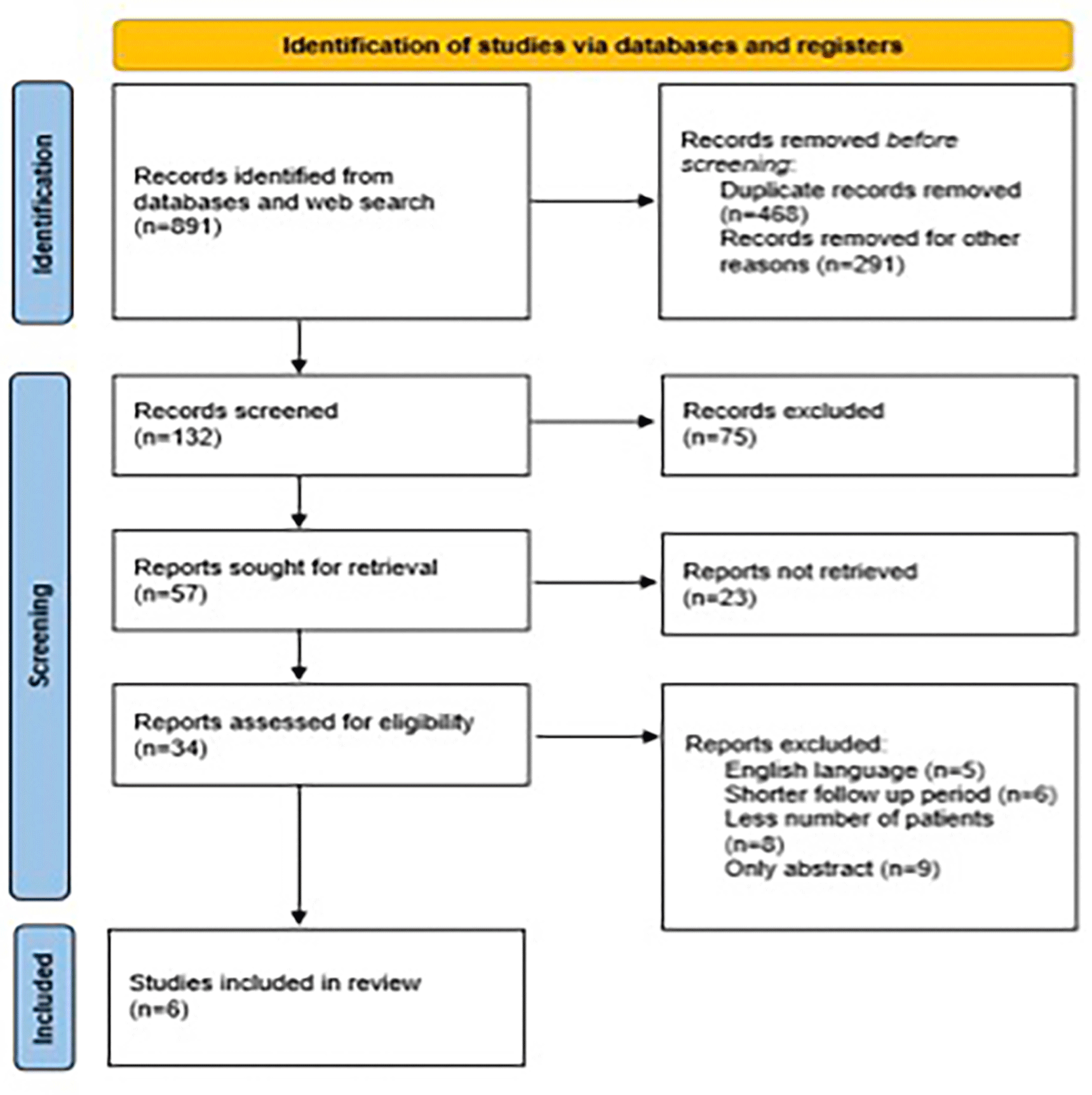
Search Strategy- Thorough search was performed in all relevant electronic databases: PubMed, Embase, Scopus, Cochrane Library, and Web of Science. Supplementary searches were performed using ScienceDirect and Google Scholar. A predefined search strategy using MeSH terms and free-text keywords combining cyanoacrylate, varicose veins, and long-term outcomes was applied using Boolean operators (AND/OR). The detailed search strategy for each database, including Boolean operators, MeSH terms, filters, and applied limits, is provided in the protocol. The filters were used for publication years from 2020 to 2026. The final literature search across all databases was conducted on April 30, 2026. The PRSMA 2020 flow diagram is presented in Figure 1. Heterogeneity was assessed qualitatively, and statistical pooling was not performed due to clinical and methodological heterogeneity. Study selection, duplicate removal, and data extraction were independently performed by two reviewers.
• Studies involving patients aged >18 years.
• Studies involving patients of both sexes.
• Studies involving patients with venous insufficiency (CEAP C2-C5).
• Studies with a follow-up duration of 3 years or more.
• Prospective or retrospective cohort studies.
• Studies involving more than 50 patients.
• Studies published between January 2020 and April 2026.
• Studies with full-text publications.
• Studies with full-text articles in English.
The data were organized in a structured table including the author, year, study design, sample size, patient demographics, CEAP classification, vein treated, type of cyanoacrylate device, follow-up duration, and outcome measures. Data were extracted and entered into Microsoft Excel by two authors. In case of any disagreement, it was resolved by consensus or by the third senior author if a consensus could not be achieved.
The primary outcome assessed was the long-term anatomical vein closure/recanalization rate at follow-up durations of 3 years or longer. Secondary outcomes included the Venous Clinical Severity Score (VCSS), patient satisfaction, freedom from reintervention, adverse events, complication rates, and quality-of-life measures, wherever available.
Effect measures were reported descriptively as proportions, percentages, median values, means with standard deviations, confidence intervals, and p-values, as provided in the included studies.
The risk of bias for cohort and registry-based studies was assessed using the Newcastle-Ottawa scale (NOS) with grading for the selection of cohorts (maximum 4 stars), comparability (2 stars), and outcome (3 stars). The final grading was as follows.
For randomized controlled trials, Cochrane Risk of Bias 2.0 (RoB 2) was used to assess five domains, including the process of randomization, deviations from intended interventions, missing data of outcomes, measurement of outcomes, and selection of the reported results. The grading was done as either low risk, some concern, or high risk.
Owing to substantial clinical and methodological heterogeneity among the included studies with respect to study design, follow-up duration, outcome reporting, and comparator groups, a quantitative meta-analysis was not performed. Therefore, the findings were synthesized qualitatively using structured tabulation and narrative synthesis.
A formal assessment of publication bias was not performed because of the limited number and heterogeneity of the included studies.
The overall quality of evidence for the primary outcome, that is, anatomical closure at 3 years or more, was assessed using the Grading of Recommendations, Assessment, Development, and Evaluations (GRADE) framework. The final rating of the evidence was documented as high, moderate, low, or very low.
Study selection: A total of 891 records were retrieved after an extensive database search. A total of 132 records were screened for eligibility. Finally, 34 records were assessed for eligibility. After reviewing the inclusion and exclusion criteria, six studies were included in the systematic review. All studies were published from 2020 onwards. Screening was performed independently by two reviewers.
Characteristics of the included studies: There were two retrospective studies, three prospective studies, and one randomized controlled trial. A total of 1067 patients were included in the study. The studies assessed long-term outcomes after treatment of varicose veins with cyanoacrylate glue.
Quality of the studies: The quality of the non-randomized studies was assessed using the NOS, as shown in Table 1, and the Cochrane RoB 2.0 assessment for randomized controlled trial, as shown in Table 2.
| Study | Selection (max 4) | Comparability (max 2) | Outcome (max 3) | Total (max 9) | Quality |
|---|---|---|---|---|---|
| Gibson K et al., 20269 | 4 | 2 | 3 | 9/9 | Good |
| Toz H et al., 202610 | 4 | 2 | 3 | 9/9 | Good |
| Yasim A et al., 202511 | 3 | 1 | 2 | 6/9 | Fair |
| Tang TY et al., 202412 | 4 | 2 | 3 | 9/9 | Good |
| Proebstle T et al., 202113 | 4 | 2 | 3 | 9/9 | Good |
Yasim et al. is of fair quality because of loss to follow-up (86% retention rate; acceptable) and lacks any adjusted analysis.
GRADE assessment: The overall GRADE assessment of the evidence was moderate, as shown in Table 3.
Findings of the different studies: The findings of the studies are presented in Table 4.
| Author name | Year | Study design | Follow up period | Study population | Findings |
|---|---|---|---|---|---|
| Gibson K. et al.9 | 2026 | Retrospective | 3 years 3.7 years (median) | 89 | They observed a female preponderance (76.4%) with a median age of 53 years. They reported a complete anatomic closure rate at the limb level for the primary target vein of 97.3% (95% CI: 91.9% to 99.1%). During the follow-up period, they reported a prevalence of patency in any treated vein of 10.9% limbs and 7.7% veins. The Venous Clinical Severity Score (VCSS) decreased from 6 (IQR: 4–8) at baseline to 1 (0–2) at follow-up (p < 0.001). The Aberdeen Varicose Vein Questionnaire (AVVQ) score decreased from 15 (IQR: 12–20) at baseline to 6 (IQR: 3–11) at follow-up (p < 0.001). There was a 19.1% incidence of new clinically significant varicose veins (95% CI: 12.7% to 27.8%), with the anterior saphenous vein being the most affected. They reported that the patient satisfaction rate per limb was 97% for completely or somewhat satisfied, which decreased to 47.1% when any treated vein remained patent (p < 0.001). The prevalence of adverse events was 20% (95% CI: 12.9%–29.7%). The most commonly reported adverse event was localized tenderness or phlebitis. They concluded high rates of complete anatomic closure of all treated veins at a median of 3.7 years post-treatment. |
| Toz H et al.10 | 2026 | Retrospective | 5 years | 600 | They reported that the procedure time was the lowest with NBCA, followed by RFA and EVLA (p < 0.001). They reported that the occlusion rate at the end of the 5-year period was 70.6% with NBCA, 75% with EVLA, and 88.4% with RFA (p < 0.001). There was also an improvement in the VCSS score, with 5-year scores of 6.3 in the NBCA and RFA groups and 6.6 in the EVLA group (p = 0.036). They also reported complication-free rates of 89.5% in the RFA group, 86% in the NBCA group, and 69% in the EVLA group (p < 0.001). |
| Yasim A et al.11 | 2025 | Prospective | 8 years | 155 | They reported that the mean age of patients was 47.4 ± 11.8 years, with a female preponderance (56.13%). They reported a decrease in the VCSS score from 10.2 before the procedure to 2.7 at 30 months and 2.6 ± 0.7 at 8 years. They reported good occlusion rates at 30 months (94.1%) and 8 years (91.7%). |
| Tang TY et al.12 | 2024 | Prospective | 3 years | 70 | They reported a baseline rVCSS score of 5. At the 3-year follow-up, the score was 0, showing significant improvement (p < 0.001). They further reported that 72.9% of patients had improved CEAP with an improvement of two or more points. They calculated freedom from reintervention to be 90%. The patient satisfaction score in their study was 85.7%. There were no reported instances of hypersensitivity reactions after 1-year post-procedure. |
| Proebstle T et al.13 | 2021 | Prospective | 3 years | 64 | They included 70 patients, with a 3-year follow-up performed in 64 patients (91%). They reported a female preponderance, with a mean age of 48.4 years at baseline. They calculated anatomic closure rates using Kaplan-Meier life table methods and observed that the anatomic closure rates were 90% at 12 months and 88.5% at 24 and 36 months. They also reported a significant decrease in the VCSS score from 4.3 at baseline to 0.9 at 36 months follow-up (p < 0.001). |
| Morrison N et al.14 | 2020 | Prospective, RCT | 5 years | 89 | There were 47 patients in the cyanoacrylate closure (CAC) group, 33 in the RFA group, and 9 in the CAC roll-in group. They reported no recanalization in any group at the 60-month follow-up. Kaplan-Meier analysis showed freedom from recanalization as 91.4% in the CAC group compared to 85.2% in the RFA group. They reported consistent and sustained improvement in both groups, as measured by the EuroQol-Five Dimension score. They reported no long-term adverse events in any of the groups. |
Gibson et al : AVVQ, Aberdeen Varicose Vein Questionnaire; BMI, body mass index; CI, confidence interval; EQ-5D, EuroQol 5-dimension survey; SD, standard deviation; VAS, Visual Analogue Scale; VCSS, Venous Clinical Severity Score.
When assessed for the primary outcome in terms of anatomical closure rate at the end of the follow-up period, the reported rates at 3-year follow-up were above 80% in the studies by Gibson K et al., Toz H et al., Proebstle T et al., and Morrison N et al.9,10,13,14 Tang TY et al.12 reported freedom from reintervention as 90% at the end of 3-year follow-up. Toz et al. followed up till 5-years and reported anatomic closure rates of 70.6%. Yasim et al.11 followed up patients for up to 8 years post-procedure and reported an anatomic closure rate of 91.7%.
Improvement in VCSS score: Significant improvement in the VCSS score at the end of follow up period were reported in the studies by Gibson et al., Toz H et al., Yasim A et al., Tang TY et al. and Proebstle T et al.9–13 Other studies either did not report the VCSS score at follow up or did not compare the improvement.9,14
Other parameters: Proebstle et al.13 performed a Kaplan-Meier analysis and showed that the anatomic closure rate at 36 months was 88.5% with glue. Morrison et al.14 performed a Kaplan-Meier analysis to estimate freedom from recanalization and reported a rate of 91.4% with glue compared to 85.2% with RFA at 5 years.
Safety profile: Yasim A et al. and Tang TY et al.11,12 did not report any side effects. Among the other studies, phlebitis was the most commonly reported adverse effect. Toz H et al.10 additionally reported side effects of paraesthesia (4%), Deep venous thrombosis (DVT) (3%) pigmentation (2.5%) and ecchymosis (0.5%).
The present systematic review demonstrates high long-term rates of successful treatment using cyanoacrylate glue with a favorable safety profile.
Thermal ablation, including EVLA and RFA, works on the principle of heat-mediated denaturation of collagen, leading to thrombosis and fibrotic obliteration. Tumescent anesthesia is required to dissipate heat and is associated with thermal injury to the surrounding tissues and nerves.
Cyanoacrylate glue is a monomer that polymerizes instantly upon contact with plasma or blood, especially its anionic components. Lumen occlusion following cyanoacrylate glue injection occurs due to fibrosis.15,16
There is no requirement for tumescent anesthesia with cyanoacrylate glue as there is no thermal injury and no generation of heat. The time required for complete occlusion by cyanoacrylate glue is shorter than that required for other thermal modalities of treatment because glue induces immediate mechanical occlusion followed by fibrosis, whereas thermal ablation leads to destruction of the wall of the vein, and occlusion depends on the ensuing fibrosis. Thus, endothermal procedures require a longer time for lumen occlusion.
Due to the absence of thermal injury to the surrounding tissues and nerves, there are lower rates of ecchymosis and paresthesia.10 Thus, none of the studies reported any serious side effects. Furthermore, glue has the added advantage of discharge on the same day and a shorter recovery period, as there is no waiting period for the resolution of the effects of local anesthesia. Due to mechanical adhesion, compression stockings are not required in the postoperative period.
Although several studies have assessed short-term outcomes, to the best of our knowledge, this systematic review specifically addresses the limited existing evidence on the long-term outcomes (≥3 years) of cyanoacrylate glue ablation, providing a more comprehensive synthesis than prior reviews focusing on shorter follow-up periods.
Almeida et al.17 reported an occlusion rate of 92% at 2-year follow-up through Kaplan-Meier analysis, along with a significant improvement in the VCSS score. They concluded that glue is safe, feasible, and effective for the treatment of varicose veins, with sustained efficacy at the 24-month follow-up.
Dimech et al.18 conducted a systematic review of 2910 patients. They included 17 studies and compared NBCA with RFA and EVLA. The median follow-up period was 12.3 months. They noted that the two-year occlusion rate was 93.7% for glue. They also reported 90.9% and 91.5% occlusion rates for RFA and EVLA respectively. They further noted that the glue group had the least complications. They concluded that NBCA is safe, simple, and effective without the need for compression stockings.
Garcia-Carpintero E et al.19 conducted a meta-analysis with 1057 patients. They observed that glue was similar to RFA or EVLA in terms of anatomic closure rates but better in terms of safety. They also noted that the absence of the requirement for tumescent anesthesia and postoperative compression stockings made glue ablation more comfortable for the patients. They noted that their systematic review had a short follow-up period with small sample sizes (due to the inclusion of case series). Therefore, there was no high-quality evidence.
This systematic review is a PROSPERO (CRD420261369582) registered review with predefined eligibility criteria. This involved a comprehensive search of multiple databases. A detailed assessment of the risk of bias was included.
This study has certain limitations. Only one randomized controlled trial was available, which had significant attrition. Heterogeneity precluded the meta-analysis. Considering the countries of origin of the studies, the results may not be generalizable to low-resource settings.
The present systematic review shows moderate quality of evidence demonstrating high occlusion rates at 3 years and longer follow-ups with the use of cyanoacrylate glue. Cyanoacrylate glue demonstrated a favorable safety profile across the included studies, with no reported serious or long-term side effects. Glue carries a lower risk of paresthesia, ecchymosis, and thermal injury. The review also emphasizes the need to counsel patients regarding the risk of long-term failure rates due to recanalization.
Most available studies are retrospective and prospective cohort studies, indicating the need for randomized controlled trials with long-term follow-up periods to compare the efficacy and safety profiles of glue, RFA, and EVLA. Further multicenter studies in low-resource settings are required to establish its overall efficacy.
| Views | Downloads | |
|---|---|---|
| F1000Research | - | - |
|
PubMed Central
Data from PMC are received and updated monthly.
|
- | - |
Provide sufficient details of any financial or non-financial competing interests to enable users to assess whether your comments might lead a reasonable person to question your impartiality. Consider the following examples, but note that this is not an exhaustive list:
Sign up for content alerts and receive a weekly or monthly email with all newly published articles
Already registered? Sign in
The email address should be the one you originally registered with F1000.
You registered with F1000 via Google, so we cannot reset your password.
To sign in, please click here.
If you still need help with your Google account password, please click here.
You registered with F1000 via Facebook, so we cannot reset your password.
To sign in, please click here.
If you still need help with your Facebook account password, please click here.
If your email address is registered with us, we will email you instructions to reset your password.
If you think you should have received this email but it has not arrived, please check your spam filters and/or contact for further assistance.

Comments on this article Comments (0)