Keywords
Processed foods, overweight, obesity, COVID-19, university students

This article is included in the Global Public Health gateway.
Processed foods, overweight, obesity, COVID-19, university students
The World Health Organization (WHO) declared COVID-19 a pandemic and a global public health emergency on 30 January 2020, due to the rapid spread of the virus and the severe consequences that can occur following infection, ranging from respiratory difficulty to death. Since December 2019, approximately 760 million confirmed cases and 6.9 million deaths have been reported worldwide, although the numbers could be higher.1,2
In Peru, the first case of COVID-19 was confirmed on March 6, 2020, and it was projected that in the worst-case scenario, there would be approximately 1.4 million infections by 2022.3 In response to this situation, a State of Emergency was declared, implementing a series of containment measures to prevent the spread of the virus.4 One of these measures was the suspension of classes to prevent educational institutions from becoming hotspots for transmission among students. As a result, the Ministry of Education (MINEDU) opted for distance learning, which significantly affected the student community,5 especially university students.6 This population experienced changes in their lifestyle due to social isolation and economic uncertainty, with one of the most notable changes being alterations in their usual eating patterns.7,8 According to a report by nutritionists from the Ministry of Health of Peru (MINSA), 55.4% of Peruvians over the age of 17 experienced an increase in appetite during confinement. Some mentioned that this variation was influenced by stress, anxiety, lack of physical activity, and insufficient sleep.9
In the Americas region, obesity and overweight have tripled over the past 50 years, affecting 62.5% of the adult population.10 In Peru in 2020, the prevalence of obesity and overweight among individuals aged 15 and older was 37.9% and 24.6%, respectively.11 This is concerning as both conditions represent risk factors for developing noncommunicable diseases such as hypertension, heart failure, coronary artery disease, type 2 diabetes, osteoarthritis, respiratory problems, and certain types of cancer (endometrial, prostate).12
Additionally, it is crucial to consider that the increasing globalization of food systems has driven a nutritional transition that has promoted the consumption of processed foods.13 These foods have undergone modifications to enhance their taste, durability, or appearance,14 resulting in increased refined sugar, salt, saturated fats, and trans fats content.13 It is important to note that numerous studies have shown that the consumption of processed foods is associated with a higher risk of overweight/obesity, accumulation of abdominal fat, low levels of HDL cholesterol, metabolic syndrome, and other health issues, ultimately increasing mortality.15
This context becomes relevant during the COVID-19 pandemic, as an increase in the consumption of processed foods16 and a decrease in physical activity have been observed.17 Physical activity plays a crucial role in maintaining energy balance and controlling body weight in the face of food consumption. Therefore, controlling diet and engaging in regular physical activity are essential for preserving overall health and well-being, as well as preventing the development of long-term noncommunicable chronic diseases.18 This phenomenon of confinement and lifestyle changes reflects the challenges faced by the university population, who were affected not only in the educational sphere but also in important aspects of their well-being during the health crisis.
Thus, the objective of this study is to determine the relationship between processed foods and the perception of changes in body image among Peruvian university students during the COVID-19 lockdown. Additionally, the most frequent processed foods, the perception of perceived body image on consumption frequency, and the influence of gender on these variables were described.
This observational study was conducted following the recommendations of the STROBE guidelines19 and included 84 undergraduate students from the Universidad Tecnológica del Perú (UTP) in Lima, Peru, between May 1 and May 31, 2022. UTP is the largest university in the country with over 150,000 students,20 12 campuses nationwide, and 34 professional programs, offering classes in face-to-face, semi-face-to-face (remote), and 100% virtual modalities.21 All this is done through the use of Information and Communication Technologies (ICTs) such as video conferencing for class delivery and virtual platforms (Canva and Office) to place the corresponding information for each course. Digital whiteboards like Jamboard were also used as a tool for students to express their ideas in a didactic manner by writing, drawing, placing images or notes, and interacting with their teachers in real time from any mobile device or web.22
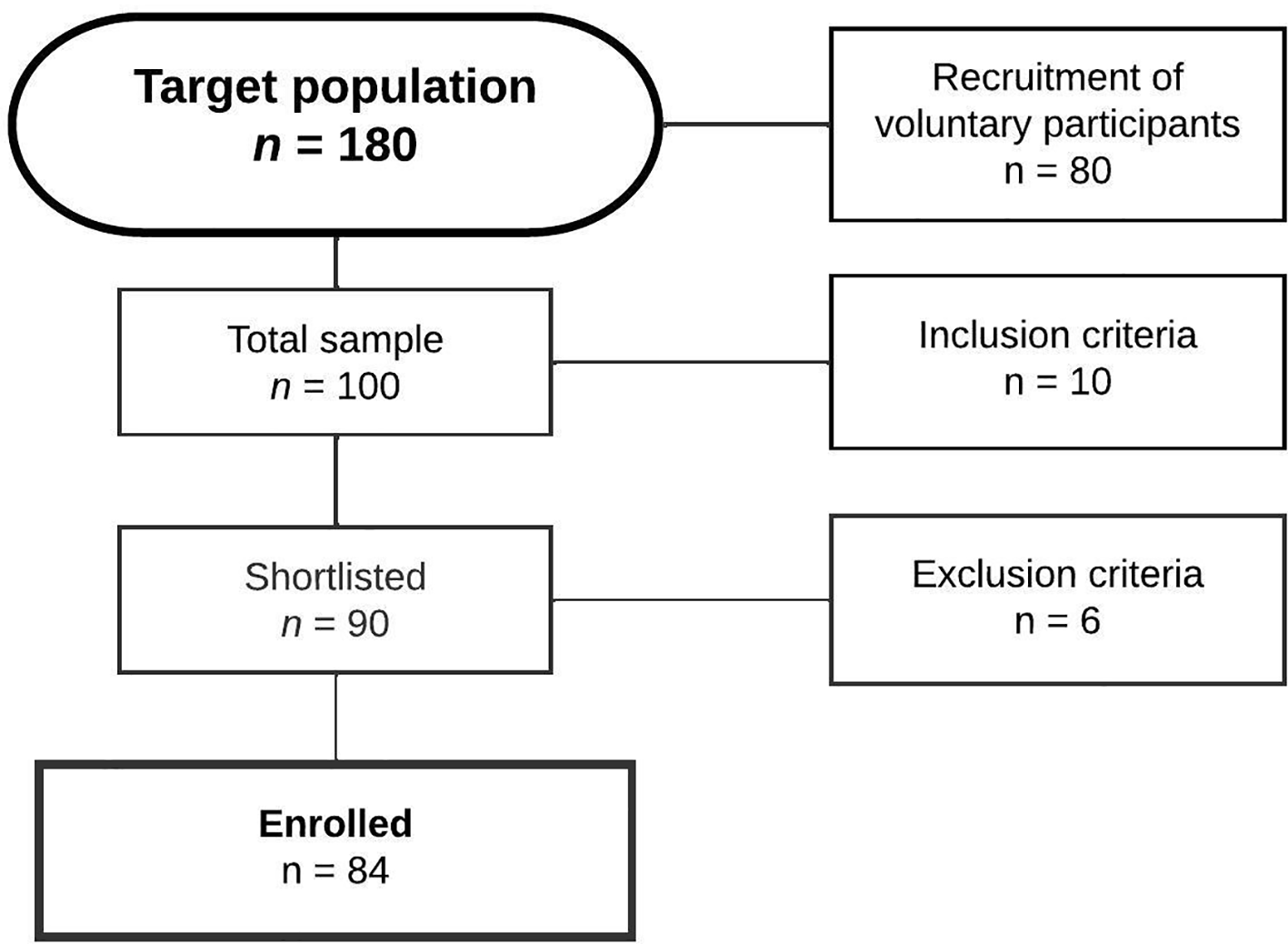
A snowball sampling was used for simple random sampling. The study population consisted of 100 university students who voluntarily enrolled to participate in the study via social networks and the university’s website. Inclusion criteria were students enrolled at the Lima campus aged between 17 and 28 years of both genders, from all study cycles and semesters, and who had both face-to-face and remote classes. After selection, the study sample comprised 84 students ( Figure 1).
In this research, two instruments were used (Suppl. 1.). To determine the consumption of processed foods, the Brief Screening Questionnaire of Highly Processed Food Consumption (sQ-HPF) developed by Martínez-Pérez23 in 2022 was employed as a model (A). Thirteen foods and beverages were included (fatty dairy, sugary dairy, processed meats, alcohol, sugary beverages, snacks, sweets, fats, fast food, refined cereals, sauces, additives, and fried foods), recording the frequency of their consumption by assigning 0 points if never consumed and 1 point if consumed occasionally, frequently, or very frequently. Thus, a higher score indicates greater consumption of these foods. We used the Spanish version of the questionnaire (Suppl. 2.)
To measure body image perception, the Thompson and Gray C Scale (1995)24 was used, which presents nine anatomical silhouettes of the body contouring of men and women. Body image is a mental representation of body shape, form, and size, which can be influenced by various sociocultural factors. Therefore, being an abstract representation, they are created with reference to measurable and quantifiable physical characteristics (height, weight, BMI, etc.) of the group being evaluated.25,26 Each of the silhouettes by Thompson and Gray has a score ranging from 1 to 9 (from left to right); they are grouped and classified as thin (silhouette 1), normal (silhouettes 2–4), overweight (silhouettes 5–7), and obesity (silhouettes 8–9).27 It is noteworthy that due to its easy administration, this instrument has been used to assess body image perception in university populations worldwide.25,26
The study variables were the frequency of processed food consumption and body image perception (thin, overweight, and morbid obesity). Participants signed a printed informed consent form after reading a study information booklet. Surveys were conducted in person, following MINSA recommendations to prevent COVID-19 transmission.28
Data were tabulated in a data matrix created in MS-Excel 2019 and exported to the statistical analyzer IBM SPSS v25.0 (Armonk, USA) for Windows. Initially, descriptive analysis of the data was performed using absolute frequencies and percentages for categorical variables, and means and standard deviations for quantitative variables. Regarding inferential analysis, Pearson correlation test was used to deter-mine the relationship between study variables, and paired T-test was used to deter-mine differences between study variables according to participants’ gender. One-way ANOVA with Bonferroni post-hoc was used to determine differences between perceived body image categories. A significance level of p < 0.05 and a confidence interval of 95% were considered for all analyses.
This study was approved by the Ethics Committee of Universidad Tecnológica del Perú (Registration 115–2021-1, March 17th, 2021) and has complied with the bioethical principles and guidelines of the Helsinki Declaration.29 For students under 18, printed informed assent and written consent forms were provided for parents. Students aged 18 and over used printed informed consent forms. The first author was responsible for the management and safeguarding of the data obtained in accordance with Peruvian Law 29733 on data protection.
Of the total participants, 52 (63.4%) were women, and the average age was 21 ± 2.8 years (95% CI 20.4 to 21.6). The most frequent age group was 17 to 20 years with 40 (48.8%) students, followed by those aged 21 to 25 years with 36 students (43.9%). A significant difference was found between the average age of women and men (20.8 ± 2.7 years and 21.3 ± 3.1 years; p = 0.304). Regarding body image perception, 56 (68.3%) participants perceived themselves as being overweight, and 12 (14.6%) as obese. Only 14 (17.1%) perceived themselves as “normal,” and none perceived themselves as thin in their anatomical model ( Table 1).
| Variables | Category | N | % |
|---|---|---|---|
| Gender | |||
| Female | 52 | 63.4 | |
| Male | 30 | 36.6 | |
| Age group (years) | |||
| 17–20 | 40 | 48.8 | |
| 21–25 | 36 | 43.9 | |
| 26–30 | 6 | 7.3 | |
| Professional program | |||
| Engineering | 11 | 1.2 | |
| Business | 14 | 17.1 | |
| Communication | 8 | 9.8 | |
| Law | 4 | 4.9 | |
| Psychology | 4 | 4.9 | |
| Health* | 41 | 50 | |
| Perceived body image** | |||
| Thin | 0 | 0 | |
| Normal | 14 | 17.1 | |
| Overweight | 56 | 68.3 | |
| Obesity | 12 | 14.6 | |
Overall, it was observed that most participants frequently consumed processed foods, with sweets (41.5%) and refined cereals (40.2%) being the most consumed, even very frequently by 32.9% of students. To a lesser extent, 37.8% frequently consumed additives, while 35.4% did so very frequently. A correlation was found between body image perception and the consumption of processed meats and fats (both with p = 0.001), fast food (p = 0.018), and sauces (p = 0.017) (Table 2).
The most frequently consumed processed food by overweight students was sweets (50%), followed by additives (41.1%) and refined cereals (39.3%). There is a significant difference in the consumption of sweets in students perceiving themselves as overweight versus those perceiving themselves as normal (p < 0.032). Differences were also reported between these groups in the consumption of fats (p < 0.001), fast food (p = 0.037), and processed meats (p < 0.001); being consumed by overweight students in 55.4%, 55.4%, and 51.8%, respectively. Differences were also found between participants perceiving themselves as normal versus those with obesity in the consumption of processed meats (p = 0.004), fats (p = 0.002), and fast food (p = 0.066). Also, the majority frequently consumed fast food, refined cereals, and fried foods (50%), followed by sugary beverages, snacks, sweets, and sauces (41.7%). Additionally, they showed very frequent consumption of sugary dairy and additives (33.3%) (Table 2).
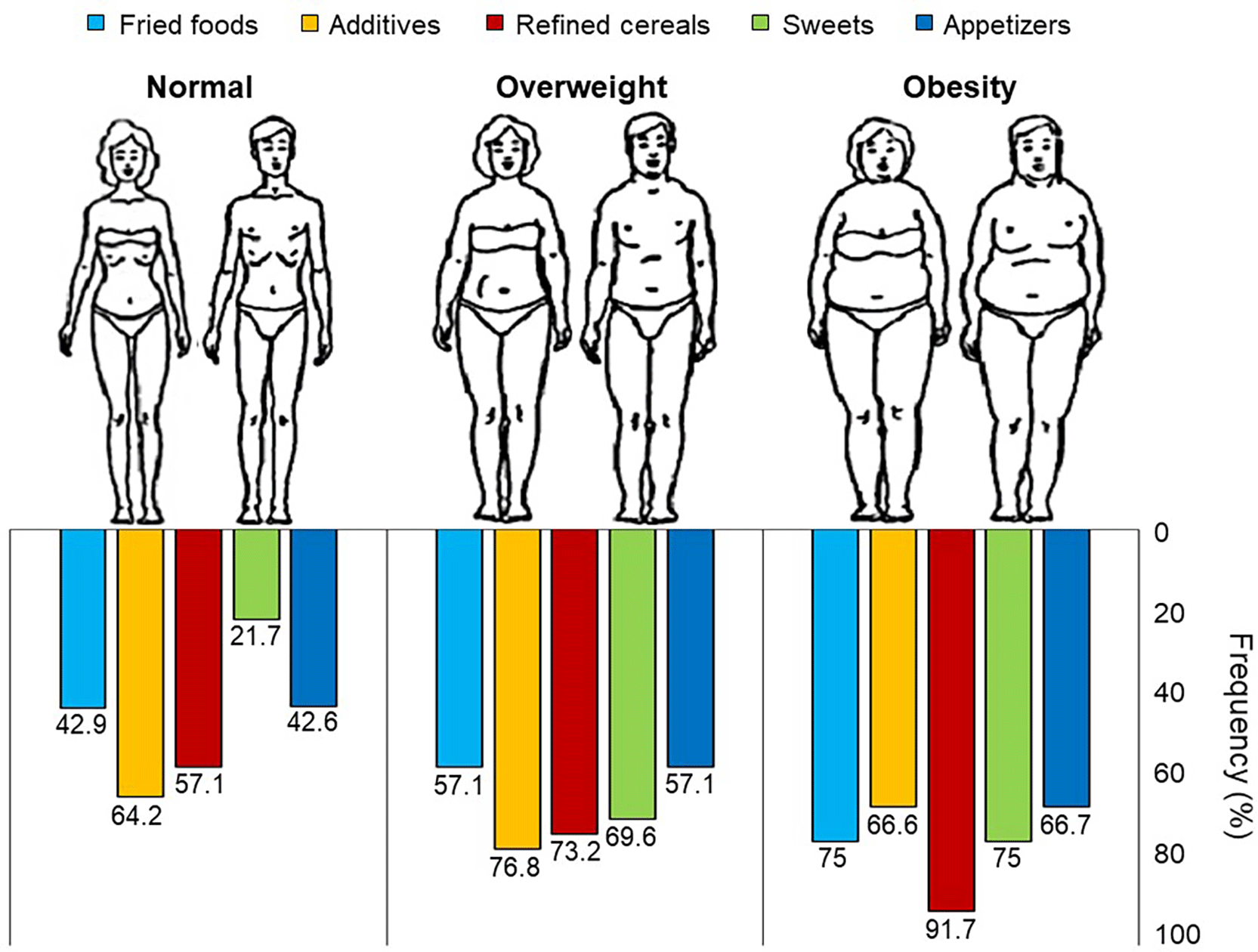
In addition, 82.9% participants reported a body image with overweight or obesity, and the five most frequently and very frequently consumed foods were refined cereals (76.4%), additives (75%), sweets (69.1%), fried foods (60.3%), and snacks (58.8%). Likewise, there were no differences between both groups regarding the consumption of processed meats (p > 0.05), sweets (p = 0.465), fats (p > 0.05), and fast food (p > 0.987). In those with overweight, 54.3% and 51.4% of women frequently consumed refined cereals and sweets, respectively, while 42.9% very frequently consumed additives ( Figure 2). Additionally, worrying patterns of processed food consumption were observed in individuals with overweight and obesity. In overweight men, 42.9% frequently consumed additives, while 28.1% had a high intake of sweets and refined cereals. On the other hand, 57.1% of obese women preferred snacks and fried foods frequently, and 42.9% very frequently consumed refined cereals. Furthermore, 40% of obese men showed a high consumption of these processed foods, but only differences in the consumption of snacks between men and women were found (p = 0.020).
On the other hand, we found no differences in the perception of weight variation according to perceived body image (p = 0.440). However, significant differences were found between the perception of weight variation and the consumption frequency of processed foods. Participants perceiving weight variation consumed fatty dairy (50% vs. 43.8%, p = 0.048), processed meats (42.4% vs. 25%, p < 0.001), sweets (65.2% vs. 50%, p = 0.024), fats (37.9% vs. 31.5%, p < 0.001), fast food (42.4% vs. 37.5%, p = 0.027), and sauces (43.9% vs. 6.3%, p = 0.046) more frequently or very frequently compared to those who did not perceive weight variation. No differences were found between physical exercise and body image perception (p = 0.267), but there were with dairy consumption (p = 0.018) during the pandemic. A higher percentage of participants who exercised consumed dairy very frequently compared to those who did not (fatty: 22% vs. 18.2%; sugary: 20.4% vs. 15.2%).
In overweight men, 42.9% frequently consumed additives, and 28.1% frequently consumed sweets and refined cereals. Among women with obesity, 57.1% frequently preferred snacks and fried foods, while 42.9% consumed refined cereals very often. Additionally, 40% of obese men consumed these processed foods very frequently. Significant differences were observed in the consumption of snacks between men and women (p = 0.020), but no differences were found in the perception of weight variation according to perceived body image (p = 0.440). However, significant differences were found between the perception of weight variation and the frequency of consumption of certain processed foods such as dairy (p = 0.048), processed meats (p < 0.001), sweets (p = 0.024), fats (p < 0.001), fast food (p = 0.027), and sauces (p = 0.046). Regarding physical exercise, no differences were found between its performance during the pandemic and body image perception (p = 0.267), but there were with dairy consumption (p = 0.018). A higher percentage of participants who exercised consumed dairy very frequently compared to those who did not.
This study has evaluated a cohort of young university students finding a correlation between the consumption of processed foods (processed meats, sweets, fats, fast food) and overweight/obesity during the pandemic. The five most consumed foods by those perceiving themselves as overweight or obese were sweets, additives, refined cereals, fried foods, and snacks. It was observed that females were most affected by overweight and obesity, and it was also the group that consumed the most processed foods.
This study is the first to explore the link between processed food consumption and overweight among Peruvian university students during the COVID-19 pandemic. Most previous studies have not assessed the consumption of these foods, which in excess are harmful to health,15 but generally evaluate changes in students’ eating habits30 comparing before and during the pandemic31 and their relationship with other variables such as physical activity.32 Another strength is that this study is one of the few conducted in the Latin American university population,33,34 which contributes to understanding eating habits and lifestyles during the lockdown.
During the COVID-19 pandemic, there was not only an increase in the consumption of processed foods,16 but also in body weight due to many people resorting to emotional eating to cope with negative emotions (depression, anxiety, and stress) caused by this worldwide public health issue.35 One of the groups that dramatically suffered this impact on their lifestyle were university students, as the quality of their diet was compromised, increasing the frequency of unhealthy eating, resulting in 20 to 30% of them gaining weight during the pandemic.36 This is supported by our results, which demonstrated that the perception of being overweight or obese exceeded 80%. The perceived overweight among university students showed a clear association with the consumption of processed foods. Similar findings were observed in other contexts, such as a study in Brazil where 53.7% of students reported weight gain, with 17.43% of them being consumers of processed and ultra-processed foods.33 In Mexico, an increase in overweight was recorded in Chiapas (from 21.9% to 24.8%) and in obesity in Tamaulipas (from 7.5% to 8.5%), where the consumption of carbohydrate-rich foods (i.e., rice, sweets, cookies) and ultra-processed foods predominated.34
Our findings indicated that participants with overweight or obesity showed a high consumption of refined cereals (76.4%), additives (75%), sweets (69.1%), fried foods (60.3%), and snacks (58.8%). These results are supported by European studies, such as the one conducted in Lithuanian university students who presented overweight rates ranging from 22.4% to 32.3%, related to an increase in the consumption of snacks, fast food, homemade pastries, and sweets.37 In Spain, although the prevalence of overweight was lower (11.2%), the consumption of processed foods was high, with 71% admitting to consuming soft drinks and 83% snacks and Nuggets.38 This is associated with the lack of physical activity, as those who engaged in physical activity two or more times per week perceived their diet as healthier compared to those who never or less frequently engaged in physical activity.38 Therefore, without constant energy expenditure, they do not need to adhere to a healthy and nutritionally adequate dietary pattern.34
On the other hand, although our results indicate an association between overweight and the consumption of processed foods, this differs from what was observed in university students in Indonesia.39 There, the majority attributed changes in weight to increased consumption of basic foods prepared at home, such as fruits, vegetables, and animal and vegetable garnishes. In this case, we also highlight the importance of controlling food portions and adopting a physical activity routine to maintain a healthy weight, as it can have an additional effect on the type of processed food. This was also seen in Peruvian psychology students, who showed a reduction in the consumption of high-fat dairy (35%), desserts/sweets (35%), sodas (30%), and sugars (29%).30 Although, unfortunately, a similar trend was not observed in our population, despite more than half of the participants majoring health or psychology-related programs.
Various studies have attempted to identify the factors influencing the nutritional changes that tend to lead to unhealthy eating during the pandemic in university students.30,31,37,40 While some find no differences by gender,29 others reveal that men tend to increase unhealthy eating habits compared to women.31 This phenomenon can be attributed to the ideal weight stigma, which leads women, especially younger ones, to be more concerned about their appearance and, therefore, to maintain stricter and more challenging control of their diet.40 Therefore, it was observed that during the pandemic, female university students increased their healthy habits by 10.3%, being cautious about the foods they consumed.31 However, in our Peruvian population, women tended to consume more processed foods than men. This increase in the consumption of processed foods can be partly attributed to the limited culinary skills of university students, as these foods are usually precooked and quick to prepare.41 Additionally, they are inexpensive,41 so in the face of income loss and the need to avoid frequent trips to stores during the pandemic, they seemed like a better option than homemade food.42 It is worth noting that although there has been up to a 50% reduction in the purchase of prepared meals during the pandemic,41 studies indicate that university students had a greater amount of food ordered for delivery or takeout,37 which tend to be ultra-processed and nutritionally poor.41 Additionally, they can increase the risk of mental disorders such as anxiety and depression,43 as well as reduce physical activity.33 These factors, combined with the risk of developing overweight, obesity, and non-communicable chronic diseases, can increase mortality in the university population.15
Broader and longitudinal research is needed to better understand the relationship between processed food consumption, body image perception, and other factors such as the level of physical activity and psychological well-being. Additionally, it would be valuable to explore educational and health promotion interventions aimed at improving eating habits and body image perception in the university population, especially during periods of stress and change such as those caused by the pandemic or crisis situations.
Firstly, measures of other mental health symptoms, such as anxiety, depression, or any eating disorder, which often represent a significant risk factor for poor nutrition in university students, as it increases their consumption of sugar and saturated fats,44 were not included. The frequency of physical activity was also not analyzed, which could generate greater interest in healthy eating.34,38 The same occurred with culinary skills, as individuals lacking these skills tend to consume processed foods because they are precooked, easy to cook, and inexpensive.41 Despite these limitations, this study highlights the importance of addressing the consumption of processed foods in the university population to promote healthy eating habits and a positive body image during crisis situations such as the pandemic.
We observed that the majority of participants frequently consumed processed foods, especially those who perceived themselves as overweight or obese, with a notable consumption of sweets and refined cereals. We found significant associations between perceived weight variation and the frequency of processed food consumption, and significant differences in the consumption of certain foods between men and women with overweight or obesity.
Broader and longitudinal research is needed to better understand the relationship between processed food consumption, body image perception, and other factors such as the level of physical activity and psychological well-being. Additionally, it would be valuable to explore educational and health promotion interventions aimed at improving eating habits and body image perception in the university population, especially during periods of stress and change such as those caused by the pandemic or crisis situations.
Conceptualization, J.M-S., and V.R-Z.; methodology, J.M-S. and C.V.S-R.; software, J.M-S. and C.V.S-R.; validation, J.M-S. and B.M-S.; formal analysis, J.M-S., E.A.G-P., and B.M-S.; investigation, B.M-S.; resources, C.V.S-R., and N.A.B.C.; data curation, J.M-S., E.A.G-P., and N.A.B.C.; writing—original draft preparation, J.M-S., E.A.G-P., B.M-S., and M.E.M-M.; writing—review and editing, J.M-S., E.A.G-P., C.V.S-R., N.A.B.C., and V.R-Z.; visualization, J.M-S., and E.A.G-P.; supervision, J.M-S.; project administration, J.M-S. All authors have read and agreed to the published version of the manuscript.
This study was approved by the Ethics Committee of Universidad Tecnológica del Perú (Registration 115–2021-1, March 17th, 2021) and has complied with the bioethical principles and guidelines of the Helsinki Declaration.29 Written informed consent was obtained from all adults subjects involved in the study. In the case of minors, their parents were consulted to obtain their informed consent, and the student was consulted to obtain their written assent. This work was carried out by university administrators according to a previously established plan.
For students under 18, printed informed assent and written consent forms were provided for parents. Students aged 18 and over used printed informed consent forms. The first author was responsible for the management and safeguarding of the data obtained in accordance with Peruvian Law 29733 on data protection.
| Views | Downloads | |
|---|---|---|
| F1000Research | - | - |
|
PubMed Central
Data from PMC are received and updated monthly.
|
- | - |
Provide sufficient details of any financial or non-financial competing interests to enable users to assess whether your comments might lead a reasonable person to question your impartiality. Consider the following examples, but note that this is not an exhaustive list:
Sign up for content alerts and receive a weekly or monthly email with all newly published articles
Already registered? Sign in
The email address should be the one you originally registered with F1000.
You registered with F1000 via Google, so we cannot reset your password.
To sign in, please click here.
If you still need help with your Google account password, please click here.
You registered with F1000 via Facebook, so we cannot reset your password.
To sign in, please click here.
If you still need help with your Facebook account password, please click here.
If your email address is registered with us, we will email you instructions to reset your password.
If you think you should have received this email but it has not arrived, please check your spam filters and/or contact for further assistance.

Comments on this article Comments (0)