Keywords
Digital literacy, Financial Inclusion, Socio-cultural Factors, Technology Acceptance Model, QRIS Adoption.

Digital literacy, Financial Inclusion, Socio-cultural Factors, Technology Acceptance Model, QRIS Adoption.
The change to digital in the national financial sector is identified as the strategic basis to reach adaptive, inclusive, and competitive economy (Mavlutova et al., 2023). Through the Quick Response Code Indonesian Standard (QRIS), Bank Indonesia seeks to build an integrated and digitized payment ecosystem that enhances efficiency and accessibility for all stakeholders (Sofwatunnisa et al., 2023). As a national digital payment standard, QRIS was designed to interconnect diverse financial services within a unified system, providing convenience for consumers and particularly supporting Micro, Small, and Medium Enterprises (MSMEs) (Gunawan et al., 2023). However, although adoption has increased steadily, as indicated by rising user and merchant participation, this progress does not fully capture the success of Indonesia’s broader digital financial transformation. Regional disparities remain evident in both the distribution and utilisation of QRIS (Sahabuddin et al., 2023).
Despite its potential, QRIS-based non-cash transactions remain unevenly distributed, reflecting unresolved structural and cultural barriers (Yin & Nie, 2021). Resistance persists among segments of society, often rooted in low levels of digital financial literacy, limited access to technology, or an entrenched reliance on cash-based practices (Rafferty & Fajar, 2022). Prior studies on QRIS adoption have predominantly examined behavioral and technological dimensions. Drawing on UTAUT2 and hybrid SEM–ANN analysis, Ramayanti et al. (2024) demonstrated that hedonic motivation, social influence, and value for money are key drivers of QRIS uptake, indicating that experiential appeal and peer cues significantly strengthen intention and use. Extending this behavioural lens, Sarasi et al. (2025) argued that technology outcomes depend on user behaviour, reinforcing the centrality of motivational and social factors in real-world effectiveness. Focusing on micro and small enterprises, Usman et al. (2025) found that perceived usefulness and perceived ease of use shape attitudes and intentions, while deficits in infrastructure and digital literacy constrain diffusion. In community settings, Gunawan et al. (2023) reported that system trust and perceived benefits significantly increase the likelihood of system adoption. At a regional scale, Sonjaya et al. (2025) identified uneven infrastructure readiness and financial digital literacy across ASEAN, underscoring the need for context-specific adoption strategies. Nurqamarani et al. (2024) integrated TRAM and Trust, contributing insights into the psychological characteristics of MSME users in QRIS adoption.
Although diverse behavioral models have been applied, prior research has primarily concentrated on individual and technical determinants of adoption. This study adopts a different perspective by focusing explicitly on socio-cultural dynamics and spatial disparities in QRIS adoption, particularly highlighting community resistance as a central challenge to digital financial inclusion (Widjaja & Legowo, 2025). Such skepticism should not be regarded as peripheral but rather as a fundamental issue in advancing Indonesia’s national digitalization agenda (Bachri et al., 2025). Building on these diverse perspectives, the present study deliberately employs the Technology Acceptance Model (TAM) as its primary analytical framework. TAM is selected for its parsimony and proven robustness in explaining technology adoption. At the same time, other models, such as UTAUT2 and TRAM, are referenced to illustrate the broader landscape and highlight research gaps.
When individuals lack trust, adequate knowledge, or a sense of security in using digital financial technologies, financial inclusion, recognized as a key driver of national economic growth, may stagnate (Amnas et al., 2024). Thus, the success of digital innovation depends not only on the availability of infrastructure but also on social acceptance and users’ readiness to adopt digital culture (Jan et al., 2024). In this context, the present study is both relevant and urgent. It aims to examine disparities in the distribution and utilization of QRIS as a non-cash transaction instrument, with particular attention to urban–rural differences influenced by structural factors (digital infrastructure and access to technology) and cultural factors (economic habits and financial literacy) (Kamble et al., 2024). The survey of 228 respondents in Yogyakarta is used to infer patterns that may indicate wider tendencies in QRIS uptake across Indonesia.
The study adopts the Technology Acceptance Model as the primary lens, operationalising Perceived Usefulness, Perceived Ease of Use, and Actual System Use. A quantitative design is implemented and tested with Structural Equation Modeling in SmartPLS to estimate the effects of these constructs on adoption. The analysis also incorporates socio-cultural and spatial variation by comparing urban and rural respondents to identify differential constraints and enablers. This design integrates theoretical testing with applied insight for policy and practice in digital payments. The key implication is that QRIS adoption reflects both TAM mechanisms and context-specific inequalities in access and skills.
This study aims to explain the adoption of QRIS through the Technology Acceptance Model by estimating the effects of perceived usefulness and perceived ease of use on actual system use, while situating these effects within the urban-rural and generational contexts in Indonesia. The objectives are to establish a reliable, valid measurement model for the three TAM constructs using PLS-SEM; quantify the structural paths from usefulness and ease to actual use and the variance explained; examine distributional disparities by residence and age to identify capability and access gaps; and interpret the educational and policy implications for digital and financial literacy, trust building, and inclusive rollout. The inquiry also aims to identify context-specific barriers related to socio-cultural norms and infrastructural deficits, informing targeted interventions for underserved groups. The overarching contribution is a rigorous, contextually grounded account of QRIS adoption that links psychological determinants to structural conditions, thereby clarifying levers for equitable diffusion.
This study employs a quantitative survey to analyse determinants of QRIS adoption using the Technology Acceptance Model. The survey design enables the capture of structured data, the application of inferential statistics, and cautious generalization across respondent groups. Data were gathered from 228 participants in Yogyakarta, Indonesia, through online questionnaires distributed via WhatsApp and Instagram, which aimed to reach both urban and rural users. Although geographically bounded, the heterogeneous sample offers indicative evidence that may inform national discussions on adoption. The key point is that a systematic survey within TAM provides a suitable basis for explanatory analysis.
Three latent constructs were assessed: Perceived Usefulness, Perceived Ease of Use, and Actual System Use. Each construct was operationalised with nine indicators adapted from validated instruments, ensuring content validity and comparability with prior research. Measurement followed standard procedures for reflective constructs, enabling reliability testing and structural estimation. The well-defined indicators support robust testing of TAM relationships in the QRIS context. Items were measured on a five-point Likert scale, ranging from 1 (strongly disagree) to 5 (strongly agree). Perceived Usefulness (PU) is the extent to which respondents perceive QRIS as beneficial in their daily lives. Perceived Ease of Use (PEOU) is the extent to which respondents perceive QRIS as easy to learn and use. Actual System Use (ASU): the extent to which respondents report actual QRIS usage in daily transactions.
A cross-sectional online survey targeted adults (≥18 years) residing in Yogyakarta. A non-probability approach combined convenience and purposive elements to reach heterogeneous urban and rural users via WhatsApp and Instagram. Soft quotas discouraged dominance of any subgroup. Inclusion required residency and capacity to consent; suspected duplicates were screened using time stamps, completion times, and pattern checks. Sample size adequacy was planned using power logic for models with multiple predictors, and the achieved sample size of N = 228 exceeded conservative thresholds.
To reduce omitted-variable bias, three control domains were included. Demographic controls included age, gender, and education, addressing known differences in adoption. Contextual controls captured urban–rural residence, income band, and smartphone use intensity, which may shape perceptions and behaviour. Experience controls, including prior mobile-payment experience and months of QRIS exposure, potentially influence perceived usefulness, ease, and actual use. Controls were specified as exogenous predictors of Actual System Use and, where theoretically justified, of perceptual constructs.
Evaluation followed two-stage logic. Measurement quality was assessed using outer loadings, internal consistency indices, and average extracted variance to confirm reliability and convergence. Discriminant validity was examined with complementary criteria. Structural evaluation reported variance explained, effect sizes, predictive relevance, and out-of-sample prediction where feasible. Global residual-based fit complemented prediction-oriented criteria; additional discrepancy indices and normed fit were presented for completeness.
Data analysis employed Structural Equation Modeling (SEM) using SmartPLS3, based on the Partial Least Squares (PLS-SEM) algorithm. The analysis proceeded in two stages: a Measurement Model (outer model) assessed reliability and validity using Cronbach’s Alpha, Composite Reliability, and Average Variance Extracted (AVE). Structural Model (inner model) testing hypothesized relationships using path coefficients, t-statistics, and p-values to determine significance levels. This methodological framework enables the simultaneous assessment of measurement quality and causal relationships between constructs, ensuring the robustness of findings and the theoretical validity of the TAM in the context of QRIS adoption.
A Likert-type scale measuring various statements from one to five was employed in this study. The measurement tool was developed from previous studies and was then adjusted to be appropriate for the current study.
The study obtained prior ethics approval and utilized electronic informed consent, accompanied by a plain-language statement that covered the purpose, voluntariness, data use, and withdrawal rights. No direct identifiers were collected; responses were anonymized on export and stored on encrypted, access-restricted drives with retention limited to analysis and archiving. Participants could skip items without penalty. Question wording avoided sensitive content and reduced social desirability. Procedural steps (balanced scales, varied item order) and ex-post checks mitigated common-method bias. These safeguards protected participant welfare, privacy, and data integrity. The ethical approval, informed consent, anonymization, and secure data governance ensured a minimal-risk, responsible study.
In this study, written informed consent was obtained from all participants. For participants aged 18 and above, consent was obtained directly from them. For participants under 18 years of age (ages 13–17), written informed consent was obtained from their parent or legal guardian, and assent was obtained from the participants themselves. All participants and/or guardians were fully informed of the study’s purpose, procedures, potential risks, and their rights. They were made aware that participation was voluntary and that they could withdraw from the study at any time without facing any negative consequences. All data collected were kept confidential, anonymized, and used solely for academic purposes.
The results describe the sample in terms of gender, residence, age, and occupation. It then reports measurement quality, showing reliable, valid constructs. The structural model is evaluated, including path coefficients, t-statistics, p-values, and explained variance for Actual System Use.
Table 1 presents the demographic distribution of the 228 respondents. Gender representation is perfectly balanced, with equal proportions of male and female participants. In terms of residence, 61% of respondents are from urban areas and 39% from rural areas, indicating a notable geographic distribution. The age distribution is highly skewed toward younger cohorts (93.9% aged 13–28 years), predominantly comprising Generation Z and Millennials, with minimal representation from older groups. Regarding occupation, the sample is dominated by university students (59.6%), followed by workers or others (30.7%), and school-level pupils (9.6%).
This demographic profile highlights both opportunities and challenges for QRIS adoption. Digital natives, who constitute the majority of respondents, are more inclined toward adopting innovative payment technologies, while older and rural populations remain underrepresented. These patterns underscore the need for targeted educational initiatives and inclusive digital literacy programs to promote broader adoption across diverse demographic groups.
Table 2 presents the results of hypothesis testing using SmartPLS. Both hypothesized relationships are statistically significant. Perceived Ease of Use to Actual System Use yields a path coefficient of 0.382 (t = 4.863, p < 0.001), while Perceived Usefulness to Actual System Use shows a more substantial effect, with a coefficient of 0.534 (t = 6.924, p < 0.001).
| Original sample | T-statistics | P-value | |
|---|---|---|---|
| Perceived Ease of Use | 0.382 | 4.863 | 0.000 |
| Perceived Usefulness | 0.534 | 6.924 | 0.000 |
These results validate the Technology Acceptance Model (TAM) in the Indonesian digital payment context, confirming that both ease of use and usefulness significantly influence the behavioral adoption of QRIS, and perceived usefulness has a greater impact on actual usage than ease of use.
Beyond theoretical validation, the results carry important practical implications: adoption initiatives must not only simplify the system interface but, more critically, highlight the tangible benefits of QRIS, such as efficiency, security, and convenience. Educational interventions and communication strategies should therefore emphasize usefulness as the key driver of adoption while ensuring usability remains accessible across different user groups.
Table 3 summarizes the reliability and validity results of the constructs in the TAM-based model. All three constructs, Actual System Use, Perceived Ease of Use, and Perceived Usefulness, demonstrate Cronbach’s Alpha values above 0.70 and Composite Reliability values above 0.90, exceeding the recommended thresholds. This indicates strong internal consistency. The Average Variance Extracted (AVE) values, ranging from 0.604 to 0.679, are all above 0.50, confirming adequate convergent validity.
| TAM | Cronbach’s Alpha | Composite Reliability | Average Variance Extracted (AVE) |
|---|---|---|---|
| Actual Sytem Use | 0.924 | 0.937 | 0.625 |
| Perceived Ease of Use | 0.840 | 0.910 | 0.679 |
| Perceived Usefulness | 0.918 | 0.952 | 0.604 |
These results validate that the measurement model is both reliable and conceptually sound. More importantly, they reinforce that the TAM framework is robust in capturing users’ perceptions of QRIS adoption. By demonstrating high reliability and convergent validity, the constructs provide a solid foundation for further structural analysis, ensuring that subsequent interpretations of relationships reflect actual behavioural patterns rather than measurement error.
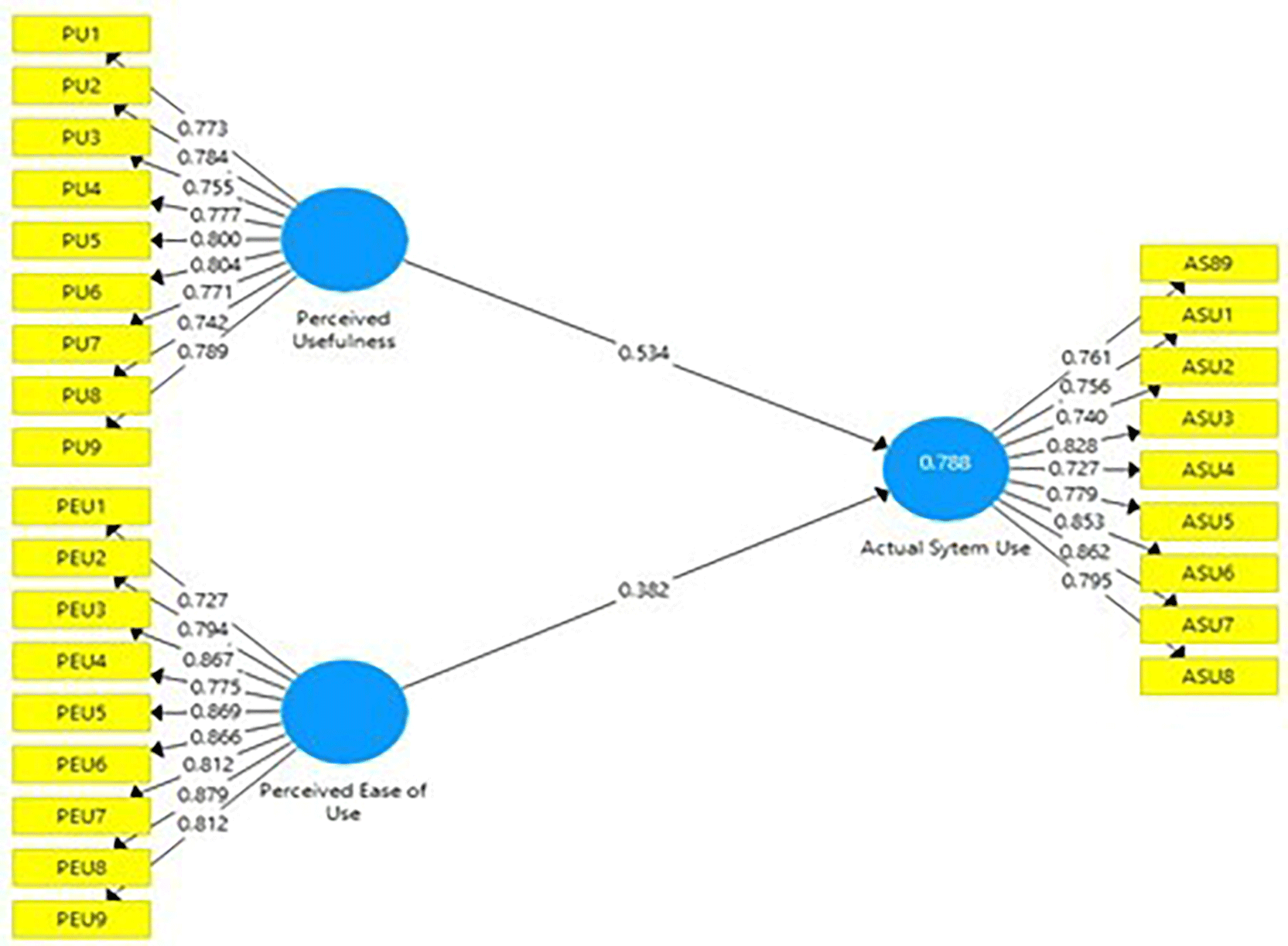
Figure 1 reports the outer loading values of all measurement items in the TAM-based model. All indicators exceed the recommended threshold of 0.70, confirming strong reliability and convergent validity of the indicators. For example, several items measuring Perceived Ease of Use (e.g., PEU5 = 0.869; PEU8 = 0.879) and Perceived Usefulness (e.g., PU6 = 0.804; PU5 = 0.800) exhibit particularly high loadings, indicating that these items strongly reflect their respective constructs.
Source: Author, 2026
Figure reports the outer loading values of all measurement items in the TAM-based model. All indicators exceed the recommended threshold of 0.70, confirming strong reliability and convergent validity of the indicators. For example, several items measuring Perceived Ease of Use (e.g., PEU5 = 0.869; PEU8 = 0.879) and Perceived Usefulness (e.g., PU6 = 0.804; PU5 = 0.800) exhibit particularly high loadings, indicating that these items strongly reflect their respective constructs.
The R2 value for Actual System Use is 0.788, indicating that nearly 79% of the variance in system use can be explained by Perceived Usefulness and Perceived Ease of Use. This high explanatory power underscores the model’s robustness in predicting behavioural adoption. Consistent with TAM theory, the results suggest that perceptions of usefulness are particularly decisive in determining actual usage, while ease of use also makes a significant contribution.
Overall, the measurement model demonstrates excellent construct validity and predictive power, providing a solid foundation for testing the hypothesized structural relationships. These findings not only support the methodological rigor of the study but also reinforce the theoretical argument that perceptual dimensions are critical in explaining QRIS adoption in the Indonesian context.
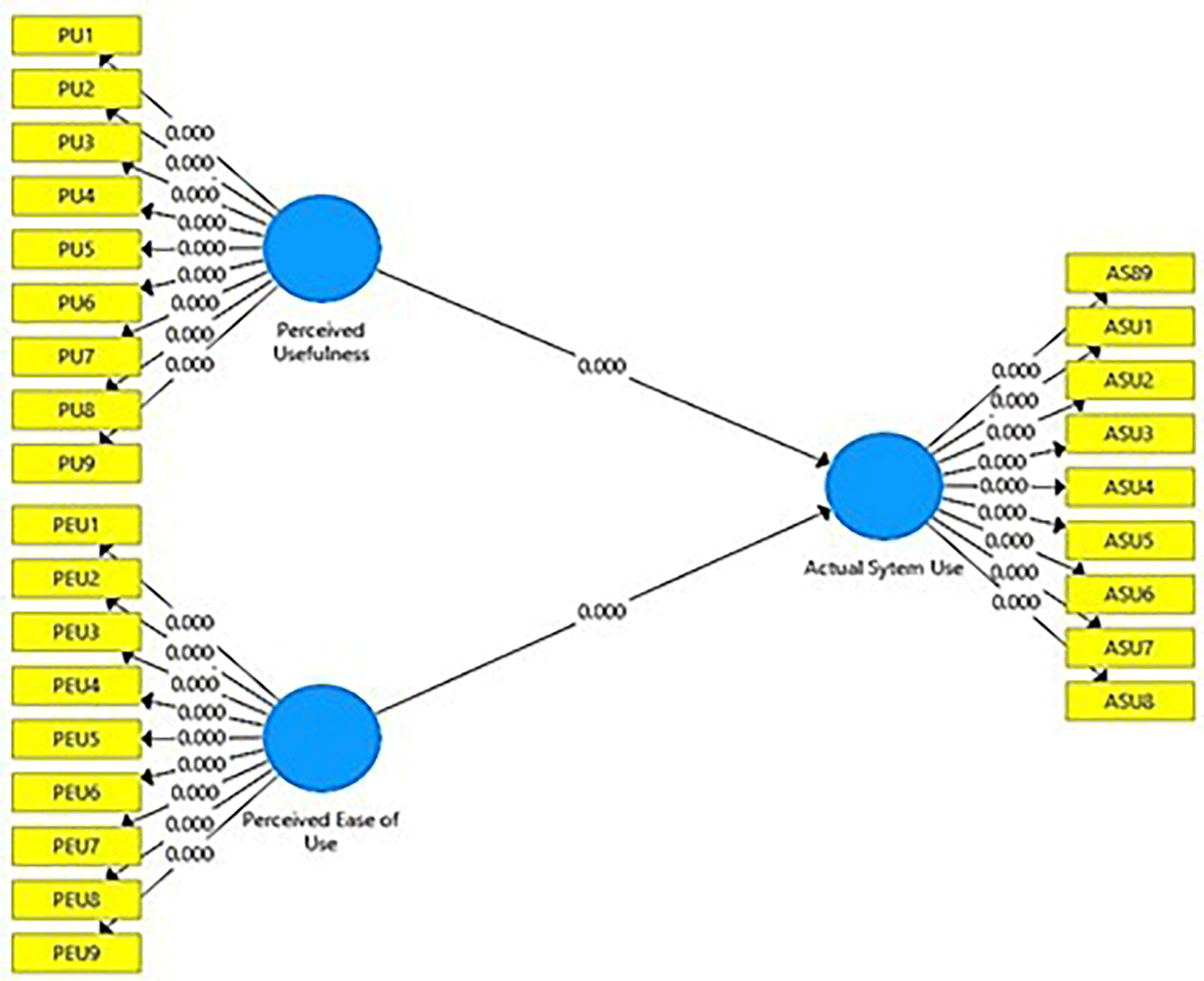
Figure 2 reports the significance levels of the measurement and structural model estimated using SmartPLS. All indicators load significantly on their respective constructs, with p-values of 0.000, confirming strong convergent validity across Perceived Usefulness, Perceived Ease of Use, and Actual System Use.
Source: Author, 2026
Figure reports the significance levels of the measurement and structural model estimated using SmartPLS. All indicators load significantly on their respective constructs, with p-values of 0.000, confirming strong convergent validity across Perceived Usefulness, Perceived Ease of Use, and Actual System Use.
At the structural level, both hypothesized relationships, Perceived Usefulness to Actual System Use and Perceived Ease of Use to Actual System Use, are highly significant (p < 0.001). These findings provide strong support for the Technology Acceptance Model (TAM), indicating that user perceptions of both usefulness and ease are decisive in shaping behavioral adoption of QRIS. Beyond statistical significance, the results highlight that educational interventions should not only simplify the user experience but also emphasize the practical benefits of QRIS. By strengthening both dimensions, the adoption of the dimensions can be accelerated among populations with varying levels of digital literacy.
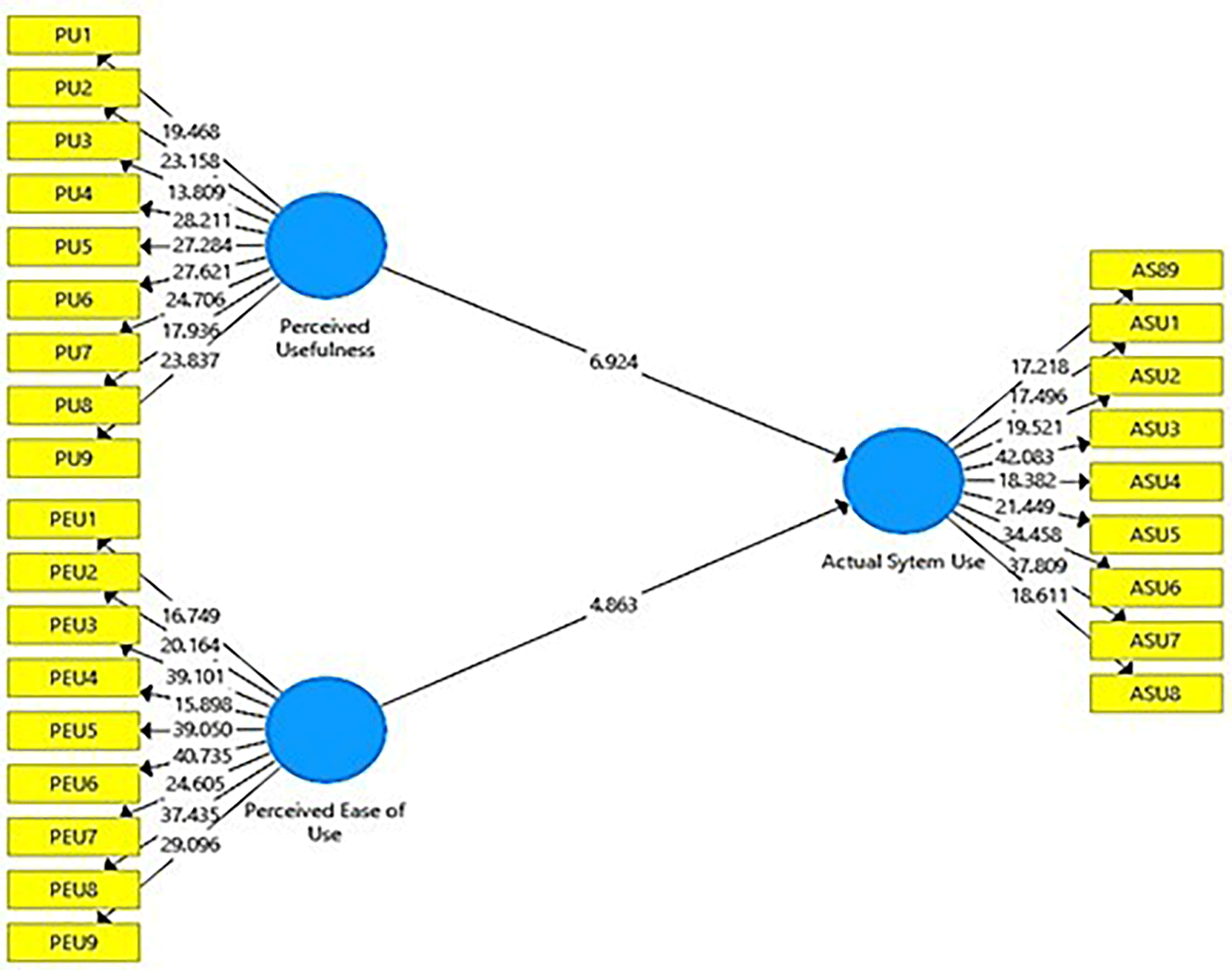
Figure 3 presents the t-statistics of the structural model estimated through SmartPLS. All measurement indicators demonstrate t-values well above the critical threshold of 1.96, confirming their significant contribution to their respective constructs. For example, several items of Perceived Usefulness and Perceived Ease of Use exhibit particularly high t-values, indicating strong indicator reliability.
Source: Author, 2026
Figure presents the t-statistics of the structural model estimated through SmartPLS. All measurement indicators demonstrate t-values well above the critical threshold of 1.96, confirming their significant contribution to their respective constructs. For example, several items of Perceived Usefulness and Perceived Ease of Use exhibit particularly high t-values, indicating strong indicator reliability.
At the structural level, both hypothesized paths are statistically significant: Perceived Usefulness to Actual System Use (t = 6.924, p < 0.001) and Perceived Ease of Use to Actual System Use (t = 4.863, p < 0.001). These results provide robust empirical support for the Technology Acceptance Model (TAM), reinforcing the dominant role of usefulness over ease of use in predicting behavioral adoption of QRIS.
Overall, the high indicator reliability and significant structural paths confirm the robustness of the model. More importantly, these findings underscore that user perceptions, particularly of usefulness, are crucial in driving adoption. This insight highlights the need for educational and communication strategies that emphasize the tangible benefits of QRIS, alongside its usability, to accelerate inclusive digital payment adoption.
The results show a clear divide in QRIS adoption between urban and rural respondents. Urban participants report higher use, supported by stronger networks, better internet access, and higher financial and digital literacy. Respondents in Yogyakarta city express greater confidence and frequency of use, which signals an enabling environment for diffusion. On the contrary, there are certain chronic challenges that influence the rural respondents, which include low literacy, poor infrastructure and low connectivity. One of the ways these trends are correlated is the idea that diffusion occurs in the conditions of infrastructural readiness and socio-cultural setting, which Chwiłkowska-Kubala et al. (2023) propose. Infrastructure and domestic capacities, including key, have effects on the paths to adoption.
This is the direct strategic educational influence of this rural-urban polarization. The rural barriers that are context confined would not be solved in the generic digital literacy programs. The practical benefits should be detailed in the programs; the problem of risk concerns should be discussed and the procedure of usage in the more familiar settings should be demonstrated step-by-step. That is unless country users are explicitly targeted, they have been locked out and inequality has been further reinforced (Dahmani & Ben Youssef, 2023). Training can be specifically done to be habit forming and trusting by associating QRIS with the usual transactions in the marketplaces and community centers (Nadeem et al., 2025). Age distribution is an argument in favor of the significance of the experience of digital tools. Younger respondents aged between 13 to 28 represent the sample mostly, and they are more responsive to QRIS that can be attributed to the fact that they use smartphones and internet services on a regular basis (Sarasi et al., 2025). The older respondents are overrepresented and underengaged that portrays skills and confidence gaps. The described tendency could be likened to the evidence provided by the Technology Acceptance Model that states that age and previous experience moderate perceived usefulness and ease-of-use (Purwatiningsih et al., 2025). The experience of a generation has an impact on the user in regards to the assessment of effort and benefit.
These intergenerational effects are channeled towards differentiation capacity building. The younger users can also use less advanced features such as record-keeping and budgeting with little training. Workshops ought to be less advanced, practice and demonstrations supported by peers and allow colonial populations to overcome anxiety and establish self-efficacy. Granić (2022) believed that the process of adoption is improved in the developing environments where the educational design is adaptive to the various needs of the learners. The applicability of pedagogical, technological, and cultural methods that are combined was also emphasized by (Sabiteka et al., 2025).
The respondents are also skeptical about the security of transactions, lack a clear image of QRIS mechanisms and lack a clear image of the actual benefits of QRIS (Maulidiya & Khusnudin, 2025). Such reservations show that adoption depends on cultural norms and trust, not only on system quality. These findings echo the challenges of digital transformation, where cash-based routines are deeply embedded. Díaz-Arancibia et al. (2024) emphasized that cultural change requires context-sensitive engagement that builds credibility. The trust and cultural fit are prerequisites for sustained adoption.
Trust building should be integrated into literacy programs rather than treated as a separate concern. Demonstrations in community settings, transparent explanations of fees and data handling, and visible support channels can increase confidence. Within TAM, Hamzah Muchtar et al. (2024) reaffirmed that perceived usefulness and ease must be accompanied by trust to translate intention into use. Communication strategies that include testimonials, trial periods, and merchant endorsements can normalize QRIS in everyday transactions (Hidayatullah et al., 2025). The trust-oriented education converts positive perceptions into regular use.
Educators can mobilise younger users as peer mentors for older groups and rural communities. Structured peer instruction, supported by simple guides and community champions, can scale learning at low cost while respecting local norms. Combining this with infrastructure improvements and targeted outreach to low connectivity areas creates a balanced approach that addresses both capability and access (Purwatiningsih et al., 2025). The study confirms that usefulness and ease of use drive adoption; however, progress depends on closing urban-rural gaps, addressing generational differences, and building trust through contextualized education. The adoption of QRIS presents both technological and educational challenges that require coordinated action.
Integrating fintech literacy into school and university curricula ensures that awareness is built early, while lifelong learning programs, workshops, and non-formal education provide opportunities for those outside formal institutions. Educational technology approaches such as gamified learning, mobile platforms, and context-based simulations offer innovative pathways to enhance engagement across diverse groups.
For policymakers, infrastructure development must be coupled with localized education initiatives that address cultural resistance and mistrust. Partnerships with community organisations, microfinance institutions, and cooperatives can contextualise the adoption of QRIS, ensuring that strategies are relevant and accessible (Darmadi et al., 2025). For practitioners, designing user-friendly training tools in conjunction with community-based trust-building initiatives can enhance confidence and mitigate adoption barriers. At the policy level, QRIS should be framed not only as a financial innovation but also as a social inclusion initiative that contributes to national goals of digital literacy and equity.
The results support the use of Technology Acceptance Model to explain the adoption of QRIS. Both perceived usefulness and perceived ease of use predict behavior, with usefulness being the more powerful predictor; however, the results depend on geography, generation and culture. These variations suggest that infrastructural deficits, uneven digital skills, and socio-cultural norms, including mistrust and a reliance on cash-based practices, hinder adoption (Nabila & Putri, 2025). The lesson learned is that alone the attributes of technology are not enough to ensure fair adoption. To be effective, diffusion entails interlinking of technical rollout and education to build skills and trust. Apprehension can be decreased by targeted digital and financial literacy, local most demonstration, and open communication regarding security and worth and increase participation by the same. Integrating such learning into schools, community colleges, and workplace training through context sensitive policies, match up capability with access. One of the requirements of QRIS adoption is the need to overcome the technical preparedness with the long-term socio-educational preparedness.
In conclusion, it is revealed that the Technology Acceptance Model is applicable in explaining why QRIS is adopted in Indonesia with perceived usefulness having a stronger impact on real use compared to ease of use. However, adoption remains uneven due to structural deficits in rural areas, generational differences in skills and confidence, and socio-cultural reservations about security and the value of cashless payments. The model’s explanatory power suggests that perceptions account for a substantial portion of the variance, but complementary interventions are still required. Priority actions include targeted infrastructure investment in low-connectivity areas, localized digital and financial literacy programs, trust-building demonstrations in community settings, and peer mentoring that mobilizes younger users to support older and rural groups. Policy should frame QRIS as a social inclusion initiative, aligning education with access, and partnering with community organisations to enhance relevance and reach. Limitations include a geographically bounded, youth-skewed sample and reliance on self-report, suggesting the need for longitudinal and mixed-methods studies that incorporate measures of trust, security, and distributional effects. The practical and equitable diffusion depends on coupling technological readiness with sustained socio-educational preparedness and confidence-building at the point of use. The central implication is that usefulness must be matched by access, capability, and trust to achieve inclusive digital transformation.
This study was conducted in accordance with institutional ethical standards for research involving human participants. Prior to data collection, ethical approval was obtained from the Research Ethics Committee of Universitas Negeri Yogyakarta (approval number: 595/UN34.12/PP/Pen/2026), with official permission granted by the Education and Youth Affairs Office of Yogyakarta City (approval number: 000.9/1378).
| Views | Downloads | |
|---|---|---|
| F1000Research | - | - |
|
PubMed Central
Data from PMC are received and updated monthly.
|
- | - |
Provide sufficient details of any financial or non-financial competing interests to enable users to assess whether your comments might lead a reasonable person to question your impartiality. Consider the following examples, but note that this is not an exhaustive list:
Sign up for content alerts and receive a weekly or monthly email with all newly published articles
Already registered? Sign in
The email address should be the one you originally registered with F1000.
You registered with F1000 via Google, so we cannot reset your password.
To sign in, please click here.
If you still need help with your Google account password, please click here.
You registered with F1000 via Facebook, so we cannot reset your password.
To sign in, please click here.
If you still need help with your Facebook account password, please click here.
If your email address is registered with us, we will email you instructions to reset your password.
If you think you should have received this email but it has not arrived, please check your spam filters and/or contact for further assistance.

Comments on this article Comments (0)