Keywords
COVID-19, Mental health, lived experiences, phenomenological-hermeneutic approach, stress, economic impact, social stigma, social support, multidisciplinary treatment strategies, multidisciplinary treatment teams

This article is included in the Emerging Diseases and Outbreaks gateway.
This article is included in the Coronavirus (COVID-19) collection.
COVID-19, Mental health, lived experiences, phenomenological-hermeneutic approach, stress, economic impact, social stigma, social support, multidisciplinary treatment strategies, multidisciplinary treatment teams
This revised version introduces substantial improvements in response to reviewer feedback, particularly strengthening methodological clarity, analytic rigor, and consistency with Interpretative Phenomenological Analysis (IPA). The manuscript now clearly identifies IPA as the sole analytic framework from the outset, and all previously inconsistent methodological terminology (e.g., content or thematic analysis) has been removed to ensure coherence.
The Data Analysis section has been expanded to provide a transparent, step-by-step description of the IPA process, including idiographic case analysis and cross-case synthesis. In addition, the trustworthiness approach has been revised to align with IPA-specific quality criteria (e.g., sensitivity to context, commitment and rigor, transparency and coherence), replacing earlier post-positivist terminology.
The Results section has been substantially rewritten to enhance interpretative depth, moving beyond descriptive reporting to emphasize participants’ meaning-making processes. Findings are now presented as interpretative thematic accounts, with improved idiographic focus and analytic structure. The integration of the Roy Adaptation Model (RAM) has also been refined, positioning it as an interpretative lens embedded within the analysis rather than a separate framework.
The Discussion has been strengthened through deeper theoretical interpretation, clearer alignment with IPA principles, and the integration of recent literature (2024–2025), particularly in relation to stress, stigma, adaptation, and meaning-making.
Conclusions and implications have been revised to avoid overgeneralization and to remain grounded in the study’s findings.
Additional revisions include language editing for clarity and consistency, improved citation accuracy, and corrections to reference formatting.
See the authors' detailed response to the review by Chomphunut Srichannil
See the authors' detailed response to the review by Jyoti Sharma and Mohammad Sidiq
See the authors' detailed response to the review by Cheah Phaik Kin
The COVID-19 pandemic has exerted a profound impacted global health, with over 219 million cases and 4.55 million fatalities reported as of October 10, 2021. Despite advancements in vaccine development and therapeutic interventions, the virus continues to evolve, posing ongoing challenges for public health systems worldwide. Governments have rapidly implemented containment strategies, including lockdowns and movement restrictions, leading to significant socio-economic disruptions and shifts in daily life. As a result, individuals have adopted various coping mechanisms to manage the uncertainty and instability caused by the pandemic (Nurunnabi et al., 2020).
By May 2022, COVID-19 cases had surged to 512 million globally, with a death toll exceeding 6.25 million (World Meter, https://www.worldometers.info/coronavirus/). Beyond the immediate morbidity and mortality associated with the virus, healthcare systems have struggled to maintain continuity of care, particularly for non-COVID-19 conditions. The pandemic has altered chronic illness management, disrupted emergency services, and contributed to a significant increase in mental health concerns, including stress, depression, and anxiety (Sing Joo, et al., 2021). Studies indicate that approximately 20% of COVID-19 cases require oxygen therapy, while 5% develop severe symptoms necessitating intensive care (Wu & McGoogan, 2020). Although much of the existing literature has focused on acute symptoms, there is growing recognition that COVID-19 has lasting psychosocial consequences. Patients report experiencing persistent symptoms such as fatigue, dyspnea, muscle pain, nausea, and heightened fear, all of which impact their overall well-being and recovery (Davis et al., 2019; Huang et al., 2020).
The mortality rate of COVID-19 has been estimated to range from 1% to 5%, but this varies depending on patients’ age group and the presence or absence of underlying diseases. The epidemiological distribution of mental health problems and associated factors are heterogeneous among COVID-19 patients. The current evidence suggests that a psychiatric epidemic is co-occurring with the COVID-19 pandemic, which necessitates the attention of the global health community (Hossain, 2020).
In Thailand, the pandemic has led to widespread psychological distress, financial instability, and healthcare disruptions. Anxiety, loneliness, and fear of infection have been particularly prevalent, affecting individuals across various demographics (Chutipattana et al., 2022). Psychological resilience has played a crucial role in mitigating these negative effects, with evidence suggesting that individuals with stronger coping mechanisms experience lower levels of stress and anxiety (Ruengorn et al., 2022). However, the crisis has also exposed disparities in mental health care accessibility, emphasizing the need for effective interventions that support vulnerable populations (Srichannil, 2020).
Between January 2020 and August 2023, Thailand reported over 4.7 million confirmed cases and 34,459 deaths, with more than 139 million vaccine doses administered (WHO, 2023).
To date, Thailand’s research response has largely focused on epidemiological surveillance, vaccine distribution, and healthcare system capacity (Lerthattasilp, Kosulwit, Phanasathit et al., 2020; Srifuengfung, Thana-Udom, Ratta-Apha, Chulakadabba, Sanguanpanich, & Viravan, 2021; Kerdcharoen, Kirdchok, Wonglertwisawakorn, Naviganuntana, Polruamngern, & Chinvararak, 2022). While these studied provide valuable insights into infection rates and systemic challenges, they often overlook the lived experiences of COVID-19 survivors. Existing qualitative research has largely focused on healthcare professionals, students, and individuals with underlying conditions—groups facing occupational burnout, academic challenges, and delayed treatments (Hossain et al., 2020; Nurunnabi et al., 2020; Rathnayake et al., 2021; Sing Joo et al., 2021). However, the specific psychosocial adaptation process of survivors themselves remain underexplored, particularly in the Thai and Southeast Asian context.
This study addresses this critical gap by applying Interpretative Phenomenological Analysis (IPA) and the Roy Adaptation Model (RAM) to examine how COVID-19 survivors in Thailand navigate stress, stigma, and social reintegration. By capturing their lived experiences, the research provides a nuanced understanding of adaptive process shaped by contextual hardships and rational resources. The findings aim to inform the development of targeted psychosocial interventions, enhance mental health service delivery, and support policy framework for post-pandemic recovery. In doing so, this study contributes to a more inclusive and patient-centered approach to public health preparedness and resilience.
The Roy adaptation model (RAM) serves as the theoretical framework for this study, deepening our understanding of the lived experiences and the impact of COVID-19 cases. The application of RAM in nursing research provides a structured yet flexible approach that enhances qualitative inquiry rather than limiting creativity. By offering a comprehensive model of adaptation, RAM enables researchers to interpret individuals’ responses holistically, allowing the study to capture diverse perspectives without imposing rigid constraints (Roy, 2009, 2011). While qualitative research thrives on open-ended exploration, RAM does not stifle creativity, but rather provides an adaptable analytical lens that supports thematic development. The model’s focus on focal, contextual, and residual stimuli aligns naturally with participants’ narratives, ensuring that emerging themes remain participant-driven while maintaining coherence and interpretative depth (Roy, 2009).
RAM (Roy, 2001, 2009, 2011) describes individuals as adaptive systems composed of interconnected elements that function as a unit, influenced by focal, contextual, and residual stimuli (Roy, 2009). These adaptive responses may result in positive adaptation (improved health and well-being) or maladaptation (prolonged distress and illness). In this study, RAM serves as a guiding framework to analyze how COVID-19 survivors navigate stress, stigma, and social reintegration, ensuring that mental health interventions are tailored to patients’ lived realities rather than predefined categories.
Additionally, our use of interpretative phenomenological analysis (IPA) as the analytic framework, which complements RAM by focusing on participants’ meaning-making processes. IPA’s idiographic and hermeneutic orientatation ensure that interpretations remain grounded in individual lived experiences. While RAM informs the theoretical structure, IPA guides the analytic depth, enabling a dual-layered approach that integrates empirical insight with conceptual rigor.
By leveraging RAM and IPA in tandem, the study maintains methodological integrity while enriching the interpretative process. This integration facilitates a nuanced exploration of adaptation, ensuring that findings reflect both the complexity of survivor experiences and the theoretical coherence necessary for advancing nursing and public health research.
This research employed Interpretative Phenomenological Analysis (IPA) to explore the lived experiences of COVID-19 survivors. IPA’s idiographic and interpretative stance allowed us to examine how individuals made sense of their illness and recovery experiences.
Fifteen participants were selected through purposeful sampling. As per the inclusion criteria, participants included COVID-19 survivors who had been discharged from the hospital and provided written consent for participation. COVID-19 cases that experienced stress or mental health problems were prevented from giving informed consent, and their participation was thus excluded.
This study employed interpretative phenomenological Analysis (IPA) as the sole analytic framework to explore the lived experiences of COVID-19 survivors. While the philosophical foundation of IPA is phenomenological and hermeneutic, all data collection and analysis procedures adhered strictly to IPA principles as outlined by Smith & Osborn (2015) and Smith & Nizza (2022). The research team developed semi-structured individual interview questions (Imkome & Moonchai, 2025), grounded in an extensive review of the literature focusing on adaptation and emotional responses. The question design was informed by previous research and structured around the Roy Adaptation Model (RAM), aiming to investigate how individuals navigated the psychological, social, and economic challenges posed by the pandemic.
RAM provided a flexible yet systematic framework for formulating interview questions, enabling the exploration of focal, contextual, and residual stimuli—elements crucial for understanding the adaptation process (Roy, 2009, 2011). This approach allowed participants to freely express their experiences beyond predefined categories, offering deeper insights into their coping mechanisms and psychosocial responses.
To ensure content validity, the interview guide was critically reviewed by three expert validators specializing in phenomenology and adaptation theory. Their evaluations confirmed that the questions maintained conceptual integrity, remained open-ended, and facilitated authentic narratives from participants.
The interview questions were aligned with key principles of the Roy Adaptation Model (RAM). For example, questions such as “How have you coped with the impacts of the COVID-19 outbreak on yourself, your family, and your community?” and “Who or what groups have helped you alleviate stress, and in what ways?” were designed to examine adaptation across physiological, self-concept, role-function, and interdependence domains, consistent with RAM’s core constructs.
Participants were recruited through the nursing offices of a hospital located in a different region of Thailand. Initially, their willingness to participate was assessed via phone calls, after which nurses provided comprehensive information regarding the interview process. Video interviews were conducted via Microsoft Teams at times convenient for participants, following a thorough explanation of the research objectives and the acquisition of both verbal and written informed consent.
Sampling continued until data saturation was reached, defined as the point at which no new themes emerged across successive interviews. Saturation was confirmed through iterative analysis and peer debriefing sessions, ensuring a comprehensive thematic framework reflective of participants’ lived experiences. All interviews were conducted by the lead researcher, a psychiatric nurse, in a neutral and supportive environment. Interview durations ranged from 25 to 60 minutes, with strict adherence to data anonymization procedures. In the final step, transcripts were returned to participants for review and correction, ensuring accuracy and validation of their narratives.
This project was approved by the Human Research Ethics Committee of Thammasat University (Science), Thailand (COA No. 119/2563). The research adhered to ethical standards established by the Institutional Review Board (IRB) and the Helsinki Declaration (2000). Prior to obtaining informed consent, all participants were informed about the study’s objectives, the safe protection of their data, and the associated risks and benefits. Participants were made aware of their right to withdraw from the study at any time.
Written informed consent was obtained from all participants before data collection commenced. Participation in the study was entirely voluntary, and the anonymity of participants was maintained throughout the research process. Confidentiality strategies were implemented, and identifying codes were assigned to the initial data collected from observations, interviews, and documentary analyses; access to this data was restricted to the research team.
The data were securely stored on the principal investigator’s password-protected computer until the conclusion of the study. After 24 months, all files were permanently deleted using “Secure Deletion Shredder,” a protected deletion program for Windows.
The research scope, risks, and benefits were explained to the participants; they were assured that anonymity and confidentiality would be maintained. They were informed that their participation in the research was voluntary (Imkome & Moonchai, 2022). We confirm that we obtained written and verbal consent to use data from the participants included in this study. The interview duration was determined based on the participants’ preferences, patience, and experiences. All interviews were recorded on video via Microsoft Teams of Thammasat University as a host and confidentially. The system automatically deletes data after recording for a month. The record was kept for a year for data checking and reference. Then, the computer of the researcher deleted the data and format.
Data were analyzed using IPA following the procedures outlined by Smith and Nizza (2022). This approach is grounded in idiographic and iterative principles, whereby each transcript is examined in detail to preserve the uniqueness of participants’ lived experiences before identifying patterns across cases.
The analysis proceeded through several iterative stages: a) Reading and re-reading: Each transcript was read multiple times to achieve immersion in the data, b) Initial noting: Exploratory comments were developed, focusing on descriptive, linguistic and conceptual aspects, c) Development of emergent themes: Initial notes were transformed into concise themes that capturing essential meaning, d) Searching for connections across themes: Themes were clustered into superordinate themes within each case (idiographic analysis), e) Moving to the next case: Each case was examined independently to preserve its individual context, and f) Cross-case analysis: Patterns across cases were identified to develop shared themes while maintaining sensitivity to divergence.
This process reflects IPA’s double hermeneutic, whereby participants make sense of their experiences, and the researchers interpret these sense-making processes.
To enhance interpretative depth, the Roy Adaptation Model (RAM) was integrated as a theoretical lens during the interpretative phase. RAM provided a structured framework for understanding adaptive responses across physiological, self-concept, role function, and interdependence modes (Roy, 2011).
Methodological rigor was supported through reflexivity, analytic memoing, and peer debriefing. Member checking was conducted by inviting participants to review transcript summaries for accuracy. All analyses were conducted manually to maintain fidelity to the idiographic and interpretative nature of IPA ensured a balance between participants’ original accounts and the researchers’ interpretative engagement.
This study ensure methodology rigor using quality criteria with IPA as recommended by Smith et al. (2022), including:
1. Sensitivity to context was achieved through engagement with relevant literature and careful attention to participants’ narrative. Rapport was established through empathetic interviewing conducted by the lead researcher, a trained in psychiatric nurse and therapeutic communication.
2. Commitment and rigor were demonstrate through in-dept data collection and detailed idiographic analysis of each case before cross-case synthesis.
3. Transparency and coherence were ensure through clear documentation of analysis procedures (Smith & Osborn, 2015; Alase, 2017), including coding processes, theme development, and interpretative decisions. Peer debriefing and regular analytic discussions supported consistency and reflexivity throughout the research and decision-making processes.
4. Impact and importance were addressed by meaningful and contextually grounded interpretations of participants’ lived experiences, supported by a comprehensive audit trail, analytic memos, and reflexive journaling.
5. The integration of the Roy Adaptation Model (RAM) further enhanced interpretative depth by situating participants’ experiences within broader adaptive processes. This combined approach ensured that findings remained grounded in participants’ accounts while offering theoretically informed insights into participants’ lived experiences (Smith & Nizza, 2022).
This section describes the participants’ understanding through a structural account of the findings, followed by a theoretical interpretation of the results.
Out of the 15 participants, 11.33% were unemployed, and 62.5% reported insufficient monthly family income (Table 1). During the interviews, all participants exhibited signs of physical survival; however, they demonstrated low levels of psychological integrity, manifesting as stress, fear, anxiety, communication difficulties, sleep disturbances, and impaired decision-making. Some participants were either unemployed or had recently lost their jobs. Nevertheless, they received social support from family, friends, and healthcare providers.
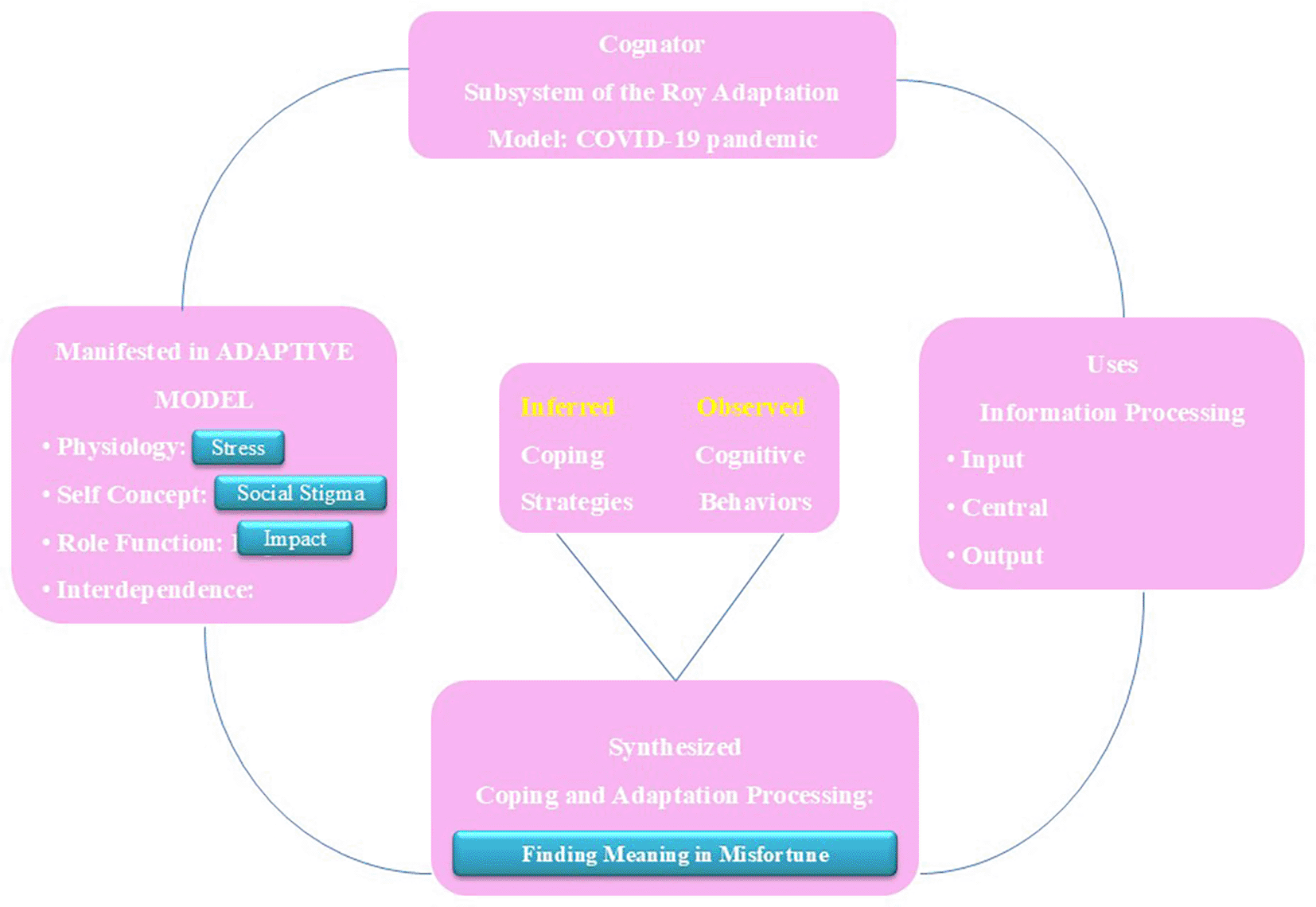
The data analysis revealed four key themes (see Figure 1). Respondents’ self-understanding at Level 1 underscores their immediate psychological, emotional, and social responses to the challenges posed by COVID-19. The findings indicate that participants experienced significant distress, characterized by heightened levels of stress, fear, anxiety, sleep disturbances, and difficulties in decision-making. These emotional response reflect the participants’ attempts to make sense of their disrupted realities, aligning with IPA’s emphasis on meaning-making. Economic instability and job loss further exacerbated these challenges, leading to increased uncertainty about their futures.
Despite these adversities, participants demonstrated adaptive coping mechanisms, largely supported by their social networks. Their narratives highlighted a dynamic process of self-awareness: some individuals recognized their personal resilience, while others contended with stigma and feelings of isolation. The data further emphasize the vital role of social support in alleviating emotional strain, contributing to a more stable psychological state for those who actively sought help.
These findings offer valuable insights into how individuals perceived and processed their experiences, underscoring the necessity for psychosocial interventions aimed at fostering resilience and facilitating reintegration into society.
The lived experiences of participants following COVID-19 infection revealed a rich tapestry of meaning centered on survival, adaptation, and redefinition of self within a disrupted social and economic landscape. The following superordinate themes emerged from idiographic analysis: Stress, Economic and Social Impact, Social Stigma, Social Support, and Finding Meaning in Misfortune. While each participant’s narrative was unique, the following interpretative synthesis highlights both convergences and points of divergence across cases ( Figure 1).
Stress: Disruption of Safety, Control, and Identity
Participants described stress not merely as reaction to physical illness but as a profound’ disrupted of their sense of safety, control, and personal identity. The experiences of infection was embedded within a broader context of uncertainty, isolation, and fear, which collective changed participants; assumptions about stability in everyday life. Rather than being a transient emotional response, stress appeared as an ongoing process of negotiating unpredictability and vulnerability.
For many participants, isolation during infection intensified feelings of uncertainty and existential insecurity. One participant reflected:
“It is stressful to be alone in the room. It was not easy to go out and find food. The city was locked down; what would happen next? Will our family be okay? Will the people who live in the community hate us?” (Cl. 1)
This account illustrates how stress extended beyond immediate physical concerns to encompass worries about family, community judgment, and future consequences. From an interpretative perspective, the participant’s narrative reflects a rupture in perceived continuity—where familiar social structures and routines could no longer provide reassurance. The experience of being physically separated from others appeared to amplify a sense of psychological disconnection, contributing to heightened anxiety.
Similarly, another participant described the progression of illness alongside increasing psychological distress:
“I felt like I would not survive. After being admitted to the hospital, I was completely unconscious for about 40 days.” (Cl. 9)
Here, stress is intertwined with a perceived confrontation with mortality. The participant’s account suggests that the illness triggered a shift from everyday concern to existential threat, where the boundary between survival and death became uncertain. This reflects a deeper level of meaning-making in which stress is not only experienced physically but interpreted as a challenge to one’s continued existence and identity as a “healthy person”.
Across cases, participants’ narratives indicate that stress was shaped not only by the disease itself but by the broader social and situational context—including lockdown measures, uncertainty about recovery, and fear of social reactions. In this sense, stress can be understood as a multidimensional experience, combining physiological discomfort, emotional instability, and social insecurity.
From an interpretative standpoint, these experiences can be understood as disruptions in participants’ sense of self and agency. The inability to predict outcomes or maintain control over daily life required individuals to continuously reinterpret their circumstances. This aligns with IPA’s emphasis on meaning-making, where participants actively attempt to reconstruct coherence in the face of disorienting events.
Viewed through the lens of the Roy Adaptation Model (RAM), stress can be interpreted as a focal stimulus that activated adaptive processes across multiple modes, particularly self-concept and interdependence. Participants’ accounts suggest that stress functioned as a triggering condition requiring psychological and social adjustment. However, the extent to which individuals were able to adapt varied depending on the availability of support, personal coping resources, and the severity of disruption experienced.
Overall, stress in this study is not simply an emotional response to illness but represents a complex, evolving process of negotiating uncertainty, redefining identity, and seeking stability within an altered reality.
Economic and social impact: Disruption of Security, Role Stability, and Future Orientation
Participants experienced the economic and social impact of COVID-19 as a profound disruption to their sense of security and stability in everyday life. Beyound the physical illness, the pandemic altered participants’ ability to maintain employment, fulfill social roles, and sustain their livelihoods. These disruptions were not mearly practical challenges but were deeply intertwined with participants’ sense of identity, responsibility, and perceived future.
Across accounts, financial instability emerged as a persistent source of psychological strain. Participants described how job loss, reduced income, and limited access to resources created a sense of ongoing vulnerability. One participant shared:
“When there was no job, there was no money. I kept saving money until I could not manage it. Shops were closed, so it was not easy to buy food. My salary was reduced when I returned to work because we were expected to help the company financially. Our expenditures remained the same, but our incomes were smaller.” (Cl. 1)
This narrative reflects more than economic hardship; it signals a breakdown in the expected balance between effort and reward that structures everyday life. From an interpretative perspective, the inability to maintain financial stability may have the threatened participants’ sense of competence and autonomy, particularly for those who identified strongly with their working roles of family responsibilities.
Similarly, another participant stated:
“COVID-19 is affecting work. I closed shop; cannot open now; no money.” (Cl. 13)
Although brief, this account conveys a stark and immediate collapse of economic security. The simplicity of the statement reflects the abrupt and uncontrollable nature of the disruption, where participants were left with limited capacity to influence their circumstances. This suggests a shift from a position of agency to one of constraint, where external conditions dictated their ability to act.
In addition to financial strain, participants described broader social consequences linked to economic instability. Reduced income and unemployment were associated with concerns about family well-being, social obligations, and community conditions. For example, one participant reflected on wider societal effects, suggesting that economic hardship could lead to increased social tension and insecurity:
“Maybe there are robbers and thieves because they do not have a choice.” (Cl. 3)
This account illustrates how participants extended their interpretation of personal hardship to a broader social context, highlighting a perceived erosion of social order. Such narratives suggest that economic disruption was experienced not only individually but collectively, influencing how participants understood their place within society.
From an interpretative standpoint, the economic and social impact of COVID-19 can be understood as a disruption to participants’ role function within the Roy Adaptation Model. The inability to work or contribute financially challenged established identities as providers, workers, and community members. At the same time, these disruptions also affected the self-concept mode, as participants grappled with feelings of inadequacy, uncertainty, and diminished control over their futures.
Overall, participants’ accounts suggest that economic and social consequences of COVID-19 were not isolated stressors but formed part of a broader process of destabilization. This process required individuals to reinterpret their roles, renegotiate their sense of responsibility, and confront uncertainty about the future. In this sense, economic disruption became a key site of meaning-making, where participants attempted to understand not only what had changed in their lives, but what those changes implied for who they were and who they might become.
Social stigma: Disrupted social identity and experiences of moral exclusion
Participants described social stigma as a deeply distressing aspect of their experience, extending beyond fear of illness to feelings of rejection, moral judgment, and social exclusion. Being identified as “infected” appeared to alter how others perceived and interacted with them, resulting in a disruption of their social identity and sense of belonging. Rather than being treated as individuals recovering from illness, participants often felt reduced to a symbolic representation of risk and contamination.
For many, stigma manifested through distancing behaviors and exclusion from everyday social spaces. One participant recalled:
“My mother gave them a gift and they returned it as if afraid it was infected with COVID-19.” (Cl. 8)
This account illustrates how ordinary acts of social connection became reinterpreted through the lens of fear and contamination. The rejection of a gift, typically a symbol of care and reciprocity, suggests a breakdown in shared social meaning. From an interpretative perspective, this reflects not only fear of infection but a deeper symbolic distancing, where the participant—and by extension their social identity—became associated with danger.
Similarly, participants described more explicit forms of exclusion and social rejection:
The room was locked when he returned to his condo; the owner had kicked him out.” (Cl. 11)
This experience represents a more extreme disruption of social belonging, where individuals were not only avoided but actively excluded from their living environment. Such accounts suggest that stigma operated at both interpersonal and structural levels, affecting participants’ access to fundamental aspects of daily life such as housing and community membership.
Participants also interpreted these experiences as forms of social judgment, where infection was perceived as a moral or personal failing. One participant reflected:
“You will be stigmatized by society as an infected person. Let us go together and not live in a normal society.” (Cl. 13).
This narrative highlights how stigma was internalized as a threat to one’s status within society. The idea of being unable to “live in a normal society” suggests a perceived transition from inclusion to marginalization, where participants questioned their place within the social order. From an IPA perspective, this reflects an ongoing process of meaning-making in which individuals attempt to understand how they are positioned—and repositioned—within their social world.
Across accounts, stigma was not experienced as a single event but as a cumulative and evolving process. Participants described anticipating negative reactions from others, which influenced their behavior, interactions, and willingness to disclose their illness. This anticipatory dimension of stigma suggests that social exclusion was not only externally imposed but also internally negotiated, shaping how participants navigated relationships and sought to protect themselves from further rejection.
Viewed through the lens of the Roy Adaptation Model (RAM), stigma can be interpreted as a residual stimulus, encompassing broader social and cultural attitudes that influenced participants’ adaptive responses. These experiences affected both the self-concept mode, through feelings of shame, fear, or diminished self-worth, and the interdependence mode, by disrupting relational connections and social support systems.
Overall, participants’ accounts suggest that social stigma profoundly affected their sense of identity and belonging. The experience of being labeled, avoided, or excluded required individuals to renegotiate their social position and reconstruct meaning in the face of altered interpersonal relationships. In this context, stigma was not merely a social reaction to illness but became a central component of the lived experience of COVID-19 recovery, shaping how participants understood themselves and their place within society.
Social support: Reconstructing connection and restoring emotional stability
Participants described social support as a central resource in navigating the uncertainty and emotional strain associated with COVID-19. Beyond practical assistance, support from family, friends, and healthcare providers played a crucial role in restoring a sense of connection, security, and psychological balance. These interactions were not merely functional but carried significant emotional and symbolic meaning, helping participants reinterpret their experiences and regain a sense of belonging.
For many participants, maintaining communication with family members provided a sense of continuity amidst disruption. One participant reflected:
“I call home every day, and I jog to my room to watch television.” (Cl. 2)
This account suggests that everyday interactions—such as phone calls or shared activities—served as stabilizing anchors in a context otherwise marked by isolation and uncertainty. From an interpretative perspective, these practices may represent an effort to preserve relational identity, where participants reaffirmed their roles as family members despite physical separation. The act of reconnecting with familiar relational patterns appeared to mitigate feelings of isolation and reinforce emotional resilience.
Support from friends also played an important role in shaping participants’ emotional responses. One participant recalled:
“He said hey, it is okay. You can take care of yourself. It is not a problem. He wanted to encourage us and not make us more stressed.” (Cl. 5)
This interaction reflects a shift from anticipated judgment to acceptance, suggesting that supportive communication helped to counteract fear and self-blame. The reassurance offered by others enabled participants to reinterpret their situation not as a personal failure, but as a shared human experience. In this sense, social support functioned as a protective mechanism, reducing emotional burden and facilitating a more compassionate self-understanding.
Healthcare providers were also frequently described as significant sources of support, not only through clinical care but through their interpersonal approach. Participants emphasized the importance of respectful communication, attentiveness, and continuity of care. These experiences appeared to foster trust and confidence during a period of vulnerability. For example, one participant noted:
“The doctors and nurses took good care of the patients, spoke well, cared for them, and encouraged them. They gave us medicines, checked the temperature and pressure, and always called to tell us. They provided detailed treatment care. The medical team is perfect.” (Cl. 4)
Such accounts suggest that professional care extended beyond medical treatment to include emotional reassurance and validation. From an interpretative standpoint, healthcare interactions contributed to restoring a sense of safety and predictability, which had been disrupted by illness and uncertainty.
Across narratives, social support can be understood as a dynamic process that enabled participants to move from states of fear and isolation toward connection and reassurance. Importantly, support was not only received but actively sought, indicating participants’ agency in managing their emotional and social needs. This highlights the relational nature of coping, where adaptation occurs through interaction rather than in isolation.
Viewed through the lens of the Roy Adaptation Model (RAM), social support can be interpreted within the interdependence mode, where relationships function as key adaptive resources. These connections provided both emotional and informational support, facilitating participants’ ability to cope with stress and restore psychological equilibrium. At the same time, support also reinforced the self-concept mode, as participants experienced themselves as valued, cared for, and socially connected.
Overall, participants’ accounts suggest that social support was not simply an external resource but a meaningful relational process that helped reconstruct a sense of belonging and emotional stability. In the context of COVID-19, where isolation and uncertainty were pervasive, supportive relationships played a vital role in enabling participants to make sense of their experiences and regain a sense of continuity in their lives.
Finding meaning in misfortune: Reconstructing self through growth and reinterpretation
Participants’ narratives revealed a shift from initial perceptions of misfortune toward a more complex process of meaning-making, in which the experience of COVID-19 was gradually reinterpreted as a source of personal insight, growth, and renewed purpose. This transformation did not occur immediately but appeared to emerge over time, as participants reflected on their experiences and began to integrate them into a broader narrative of their lives.
Initially, many participants framed infection as an unjust and disruptive event, often accompanied by feelings of helplessness and questioning. However, as their experiences unfolded, some began to reinterpret these difficulties in more constructive ways. One participant described this shift:
“It was good luck in bad luck. We felt lucky because we could not find an experience like this. Advertising for life insurance companies and interviews with other agencies, including this interview and conducted research, is something that other people cannot do because they have not been infected. I am fortunate in the misfortunes that I have to face in this life.” (Cl. 1)
This account reflects a reframing of adversity, where misfortune is no longer understood solely as loss, but as an experience imbued with value and opportunity. From an interpretative perspective, this suggests an active reconstruction of meaning, in which participants seek coherence by embedding suffering within a narrative of personal growth. The paradoxical expression “good luck in bad luck” illustrates this tension, indicating that participants simultaneously acknowledged hardship while attributing positive significance to it.
Similarly, another participant described a movement from initial despair toward a sense of contribution and purpose:
“At first, I felt unlucky. There was a feeling of’why so unlucky.’ But I was lucky enough to enter the treatment process until finally recovering and going out to live a normal life. I think that COVID-19 also brings good things, such as getting to know the medical system in Thailand. There is a line between the patient group and doctors in the medical personnel and equipment system. I will ask a lot because I want to know and check it out on Facebook. We will ask and check with the doctor. After getting the information, try to share it on Facebook with some friends. This infection was helpful. It is not just a punishment. It allows us to spread good things and benefit others.” (Cl. 5)
This narrative highlights a transition from self-focused distress to outward-oriented meaning. Recovery was not only experienced as physical healing, but as an opportunity to engage with others, share knowledge, and contribute to society. From an IPA perspective, this reflects a shift in identity—from passive recipient of illness to active agent of change—suggesting that meaning-making involved redefining one’s role and value within a broader social context.
Across participants, this process of finding meaning often involved integrating both positive and negative elements of the experience. Rather than denying suffering, participants appeared to reinterpret it in ways that allowed them to re-establish a sense of control and coherence. This aligns with the concept of cognitive and existential reframing, where individuals reconstruct their understanding of events in order to sustain psychological stability.
Importantly, meaning-making was also relational and contextual. Participants’ opportunities to reflect, share their experiences, and receive validation from others appeared to facilitate this transformation. In this sense, finding meaning was not solely an internal process but was shaped through interaction with social and healthcare systems that supported reinterpretation and recovery.
Viewed through the lens of the Roy Adaptation Model (RAM), this theme can be understood within the self-concept mode, where individuals renegotiate their identity and personal values in response to adversity. The reinterpretation of illness as an opportunity for growth suggests adaptive cognitive processing, where individuals integrate challenging experiences into a more resilient and coherent sense of self. At the same time, elements of the interdependence mode are evident, as participants’ desire to support others and contribute to society reflects a restoration of relational connectedness.
Overall, participants’ accounts suggest that finding meaning in misfortune represents a crucial adaptive process in the aftermath of COVID-19. Through reinterpretation, reflection, and engagement with others, individuals were able to transform experiences of disruption into sources of insight and purpose. This process highlights the capacity for psychological growth within adversity, illustrating how individuals actively reconstruct meaning to navigate and integrate challenging life events.
Adaptation is a concept that has been used to realize participants’ experiences, and further illumination can be gained through the Roy adaptation model (Roy, 2001, 2009). Based on this model, the participants’ stress, economic and social impact, social stigma, social support, and a sense that finding meaning in misfortune can be interpreted.
This model is based on the four dimensions as the person submitted to a scheme, including the stimulus, which generates the coping mechanisms and results that make up the individual, family, and community response. This scheme focuses on three stimulus types: 1) focal stimuli, which require stimulation, including fatigue, dyspnea, high fever, and cough, i.e., the signs and symptoms of COVID-19; 2) contextual stimuli, which can be defined as comorbidities; and 3) residual stimuli, which are described as internal and external factors, such as stress from unemployment, viral infodemic, financial problems, social stigma, and lack of appropriate Personal Protective Equipment (PPE).
Adaptative behavior is assessed in four modes: physiological, self-concept, role function, and interdependence. Additionally, the subdivided models are regulators, including the physiological mode, which we describe as the situation and function of people infected by COVID-19. This is pertinent since the body’s homeostasis is directly related to the lower probability of worsening symptoms. Secondly, the cognate coping mechanisms are self-concept, role function, and interdependence. The self-concept mode defines coping and highlights psychological and spiritual aspects. Indeed, considering the context of stress generated by this pandemic, asking for emotional support in chaotic times eases anguish and favors psychological well-being. The coping mechanism that complements the role function mode refers to the individual’s ability to understand their role in the world and the self-knowledge of their role in society. During the pandemic, this acknowledgment is necessary because the population does not participate in essential services; instead, it supports control measures when it fulfills social isolation measures such as visiting the hospital after an appointment.
In contrast, in the scope of essential services, health professionals, for example, legitimize their functional importance when they perform their duty with technical skills and humanity. The coping mechanism of the interdependence mode includes the affective demands of everyone. In fact, with a social distancing policy, it is common to observe anguish in the community, which has a particular need related to complete well-being. However, information and communication technologies can be alternatives to increasing physical distancing and its repercussions on the population’s biopsychosocial health. For the interdependence mode, social support from family and multidisciplinary treatment teams can decrease the experience of fear around the transmission and conditions related to COVID-19. Social stigma increases the participants’ stress, which increases the severity of COVID-19 (Sing Joo et al., 2021).
In conclusion, the theoretical interpretation of COVID-19 case perceptions showed that participants experienced stress, economic and social impact, stigma, and social support during the global COVID-19 pandemic. The participants’ adaptive process promoted their mental integrity and positively affected their health. Nonetheless, they discussed their existential perceptions during the interviews, raising questions about work and the future during crises. Knowledge gathered from this point of view will help plan to fight such crises in the future.
This study explored the lived experiences of individuals recovering from COVID-19 using IPA, with a focus on how participants made sense of stress, disruption, stigma, support, and recovery. The finding reveal that recovery from COVID-19 is not solely a biomedical process but a complex psychological and social journey, shaped by ongoing meaning-making and adaptive response.
Participants’experiences of stress extended beyond immediate physical symptoms and reflected a broader disruption of safety, predictability, and control. Isolation, uncertainty, and fear contributed to a sense of existential vulnerability, requiring participants to continuously reinterpret their circumstances.
These findings are consistent with recent qualitative evidence showing that pandemic-related stress is deeply tied to disruptions in daily routines, uncertainty, and psychological instability (Dewa et al., 2024; Sanatkhah et al., 2025). Importantly, the present study extends this literature by demonstrating how stress is not only experienced but interpreted, as participants attempt to restore coherence in their disrupted life narratives. From an IPA perspective, this reflects an active process of meaning-making in response to uncertainty.
Economic disruption and threats to role identity
The economic and social consequences of COVID-19 were experienced as deeply destabilizing, particularly in relation to participants’ role as workers and providers. Job loss and financial insecurity were interpreted as threats to personal identity, autonomy, and future stability.
This aligns with recent findings linking financial strain to psychological distress and reduced well-being in Covid-19 contexts (Hertz-Palmor et al., 2021; Nicola et al., 2020a). However, more recent work further highlights how such disruptions reshape individuals’ perceptions of identity and agency during recovery processes (MacLean et al., 2025). In the present study, participants’ accounts suggest that economic hardship is not merely situational but deeply embedded in identity reconstruction and future orientation.
Social stigma and disrupted belonging
Social stigma emerged as a particularly powerful component of participants’ experiences, affecting both interpersonal relationships and self-perception. Participants described being avoided, judged, or excluded, leading to a rupture in their sense of belonging and social identity. These experiences were often interpreted as moral judgment, where infection became associated with blame or social failure.
These findings are consistent with recent qualitative studies demonstrating that COVID-19-related stigma continues to impact individuals’ social relationships and access to care (Fahim et al., 2025; Nyaaba et al., 2025). Furthermore, stigma has been shown to influence long-term health outcomes by reinforcing social isolation and psychological distress (Damant et al., 2025). From an IPA perspective, stigma is not only externally imposed but internally processed, shaping how participants reinterpret their identities and social positions.
Relational support as a process of restoring stability
In contrast, social support was experienced as a key resource for restoring emotional balance and a sense of connection. Support from family, friends, and healthcare providers enabled participants to reinterpret their experiences in less threatening ways and regain a sense of security and belonging. Importantly, support was not only received but actively sought, reflecting participants’ agency in managing their recovery.
These findings are consistent with previous studies highlighting the protective role of social support during the pandemic (Nicola et al., 2020b; Rathnayake et al., 2021). Recent research continues to emphasize the protective role of relational support in mitigating stress and promoting psychological resilience during and after COVID-19 (Dewa et al., 2024). Importantly, this study contributes by showing that support is not simply received but actively co-constructed through interaction, reinforcing participants’ sense of identity and relational belonging.
Meaning-making and psychological growth
A key findings of this study is participants’ ability to reinterpret their experience of COVID-19 as meaningful rather than purely negative. Many participants described a shift from initial distress toward a sense of growth, gratitude, or renewed purpose, reflecting processes of post-traumatic growth observed in COVID-19 contexts (Azoulay et al., 2025). This process of “finding meaning in misfortune” represents an active reinterpretation of adversity, whereby individuals integrate difficult experiences into a broader narrative of personal development.
These findings resonate with earlier literature on post-traumatic and post-stress growth during the COVID-19 pandemic (Qi & Sheng, 2022; Gutiérrez-Cobo et al., 2021; Hu et al., 2021). More recent qualitative research further suggests that recovery is not a linear return to a pre-illness state, but rather involves redefining identity and adjusting to a “new normal” (MacLean et al., 2025). This perspective is consistent with emerging evidence highlighting meaning-making as a central component of psychosocial adaptation following COVID-19 (Eberhardt et al., 2024).
From an IPA perspective, meaning-making represents a dynamic process of identity reconstruction, in which individuals actively reinterpret adversity to restore coherence, continuity, and psychological equilibrium. Rather than remaining passive recipients of distress, participants in this study demonstrated agency in reshaping their experiences into sources of insight and personal growth. This interpretative process underscores the transformative potential of adversity and highlights the role of narrative integration in supporting long-term psychological adaptation.
Interpretation through the Roy Adaptation Model
The findings can be further understood through the Roy Adaptation Model (RAM), which highlights how individuals respond to environmental stimuli through adaptive processes. Stress and stigma function as focal and contextual stimuli, while social support serves as a key adaptive resource within the interdependence mode.
Recent studies also support the role of adaptive processes in shaping recovery trajectories and psychological outcomes in COVID-19 contexts (Damant et al., 2025). In this study, meaning-making represents adaptation within the self-concept mode, where individuals actively reconstruct identity and personal meaning in response to disruption.
The interview was conducted during community quarantine and after the participant was discharged from the hospital. The participants may have had stress and anxiety about their health status, long COVID, work, and economic problems; this may have prevented the authors from fully understanding the studied phenomena. In addition, the research consisted of a homogenous population of only 15 participants. Thus, a similar study that included these participants might have revealed different perceptions of experiences. The small sample size also increased the risk of bias.
The findings highlight nuanced, context-lived experiences of participants, suggesting the need for tailored psychosocial support strategies. While the study provide insight into adaptive process, broader policy implications should be interpreted cautiously, given the idiographic nature and limited sample of the study.
Policy implications
The findings highlight the need for a holistic approach to COVID-19 recovery that addresses psychosocial, relational, and economic dimensions. Interventions should support identity reconstruction, stigma reduction, and relational continuity, rather than focusing solely on symptom management.
At the policy level, efforts to reduce stigma and improve access to mental health services remain critical, particularly in digital and community settings (Fahim et al., 2025). Future research should further explore long-term meaning-making and adaptation processes across diverse sociocultural contexts.
Ethical approval was obtained from the Ethics Review Committee for Research Involving Human Research Participants (COA No. 119/2563) on 20 October 2020.
| Views | Downloads | |
|---|---|---|
| F1000Research | - | - |
|
PubMed Central
Data from PMC are received and updated monthly.
|
- | - |
Provide sufficient details of any financial or non-financial competing interests to enable users to assess whether your comments might lead a reasonable person to question your impartiality. Consider the following examples, but note that this is not an exhaustive list:
Sign up for content alerts and receive a weekly or monthly email with all newly published articles
Already registered? Sign in
The email address should be the one you originally registered with F1000.
You registered with F1000 via Google, so we cannot reset your password.
To sign in, please click here.
If you still need help with your Google account password, please click here.
You registered with F1000 via Facebook, so we cannot reset your password.
To sign in, please click here.
If you still need help with your Facebook account password, please click here.
If your email address is registered with us, we will email you instructions to reset your password.
If you think you should have received this email but it has not arrived, please check your spam filters and/or contact for further assistance.

Comments on this article Comments (0)