Keywords
Home collection, screening, non-responder, biomarker, lung cancer

This article is included in the Oncology gateway.
Home collection, screening, non-responder, biomarker, lung cancer
Lung cancer is the most common cause of cancer-related deaths in the UK1 causing more than 95 deaths per day. Unfortunately, a high proportion of patients are still diagnosed at a late and incurable stage, with 43.1% presenting with metastatic disease.2 Notably, lung cancer is increased in areas of social deprivation, with disproportionate incidence rates in the most deprived socioeconomic quintiles for both men and women. More than three-quarters of lung cancer diagnoses in the UK are predicted to be preventable, and two of the major risk factors are age and smoking, with 72% of cases occurring in patients with a history of smoking.
Earlier diagnosis of cancer improves the chance of cure by identifying the disease at a more localised stage where treatment options are more effective, and prognosis is improved. In 2007, the Cancer Reform Strategy3 put earlier diagnosis of cancer at the forefront of national plans to improve cancer outcomes and support a coordinated effort to accelerate progress. The NHS England Lung Cancer Screening Programme (LCS), formerly the Targeted Lung Health Check, was started in 2019, initially targeting areas of high deprivation and higher rates of lung cancer diagnosis. It is a national programme which is part of the NHS Long-Term Plan4 and The National Cancer Plan for England5 to improve early cancer diagnosis and survival. As part of the programme, individuals aged 55–74 years with a smoking history are invited to have a clinical lung health check with a healthcare professional (via telephone, video, or in-person consultation), and if deemed to be at high risk, they are offered a low-dose CT scan (LDCT) of their lungs.6 LDCT scanners are situated in specialist vehicles located in the community at multiple sites, in addition to those situated in local hospitals. Patients with suspected lung cancer will be notified and referred to their local rapid-access lung clinic. Those participants with no significant findings will be offered a repeat scan in 2 years’ time, while indeterminate findings may require earlier interval imaging according to the LCS protocol.6
At the time of writing, approximately 2 million people have been invited to participate in the LCS7 in England; however, only 49% of those invited attended an LCS risk assessment appointment. The success of screening programmes is dependent on engagement and participation; therefore, further research into methods to enhance engagement is required.
Studies investigating participation in LCS programmes have identified several multilevel barriers, including those related to LDCT, such as concern about unnecessary radiation exposure, cancer-related fear, and practical barriers, such as taking time off work, costs, and travel burden.8–11 Individuals from certain demographics, such as those who are disabled, morbidly obese, or imprisoned, may also be unable to partake in the current LCS programme as currently structured. In the UK, factors associated with non-uptake included older age (OR = 0.73, p < 0.001) and current smoking (OR = 0.70, p < 0.01).10 Among non-responders who provided a reason, two main themes emerged, with 46.8% reporting practical barriers such as travel and comorbidities and 18.4% reporting emotional barriers such as fear and avoidance of lung cancer information.10 One potential approach to overcoming practical and LDCT-related barriers and improving engagement and equity in LCS uptake is to offer self-administered, home-based tests as a pre-LDCT risk assessment. These approaches may be more convenient and acceptable for invitees, particularly given the acceleration of patient collected sampling methods during the COVID-19 pandemic.12
Urine home collection has been shown to be an acceptable sampling method for both women and men across different racial and ethnic groups in both the US and Europe.13–15 However, there are very limited data on the uptake rate in non-responding cancer-screening cohorts. In France, urine self-collection for human papillomavirus (HPV)-based testing, offered as part of cervical cancer screening, has been reported to increase participation in non-responding women by 3–5%.16,17
Urine collection for biomarker evaluation was recently cited in the NHS Cancer Plan5 as a target for biomarker development to assess the risk of cancer. Glycosaminoglycans (GAGs) are a family of polysaccharides found abundantly in the extracellular matrix of tissues and are an important component of the tumour microenvironment.18,19 Alterations in GAG structure and abundance have been shown to contribute to a range of different processes in cancer development, including metabolic reprogramming, persistent growth signals, immunosuppression, angiogenesis, and tumour invasion. The profiles of GAGs (termed GAGome) have been identified as a promising potential biomarker to improve the early detection of many different cancer types and several commercially available liquid biopsy assays will be made available to assess this, including one under development by Elypta AB to support the earlier detection of multiple cancers,20 an updated version of this assay will be used for the sample viability assessment in UH-CAN Lung.
UH-CAN Lung is a feasibility study to understand whether individuals who fail to respond to an LCS invitation (LCS non-responders) will complete and return a self-administered urine collection with an analysable sample for GAGome profile testing. The sampling kits will be sent to 1000 LCS non-responders, who may be at a higher risk of developing lung cancer. The sampling kits will also include a short participant questionnaire to evaluate participant ease and acceptability of using a urine home collection kit, participant trust in a urine-based test result, and reasons for non-engagement with the LCS programme.
The ultimate goal of the UH-CAN Lung study is to improve engagement in the LCS programme for individuals who have not responded to LCS invitations by offering them an alternative initial method of engagement. The aim is to try to overcome some of the potential barriers posed by the existing programme structure. The National Cancer Plan for England5 published in February 2026, sets out ambitions to improve and modernise the early detection pathway for cancer and cites the use of urine as a biomarker target. Optimising LCS engagement is an important component of the national initiative to improve early cancer diagnoses with approximately 1.28 million invitees failing to respond since the program commenced.7 Conceivably, alternative testing methods may help to improve engagement. Existing evidence9–11 supports the principle that home urine collection is acceptable as a sampling method. UH-CAN Lung represents a step towards identifying feasible options to increase engagement with LCS in people at increased risk of developing lung cancer. The results will inform the required sample size of a follow-up study aimed at evaluating the clinical utility of the test in identifying individuals at a high risk of cancer, including lung cancer, and will contribute to health economic calculations. The data obtained from the participant questionnaires will also help us assess key barriers to LCS engagement within this defined population and will inform future work to overcome such barriers.
Risks associated with this study are minimal, as participants will be utilising a non-invasive urine sampling device; therefore, adverse events are not anticipated. In the absence of receiving the UH-CAN Lung Home Testing Kit, the individuals involved have already opted not to respond to an LCS invitation; therefore, involvement with the study will not increase this risk. It will be clearly explained to all individuals who receive a home testing kit that they will not receive a result from this test and that it does not provide a substitute for their attendance at an LCS appointment. In addition, participant-facing documentation will advocate for engagement with the LCS program and may encourage the uptake of an appointment that could benefit the individual. This documentation was developed with Patient and Public Involvement (PPI) representatives from the study to ensure that all participant-facing documents are in clear, plain English that is felt to be accessible and acceptable. PPI representatives also attended regular Trial Management Group meetings as the patient voice in this study, which is particularly poignant given the nature of our aims. All the risks associated with the study were assessed and documented in the Trial Risk Assessment.
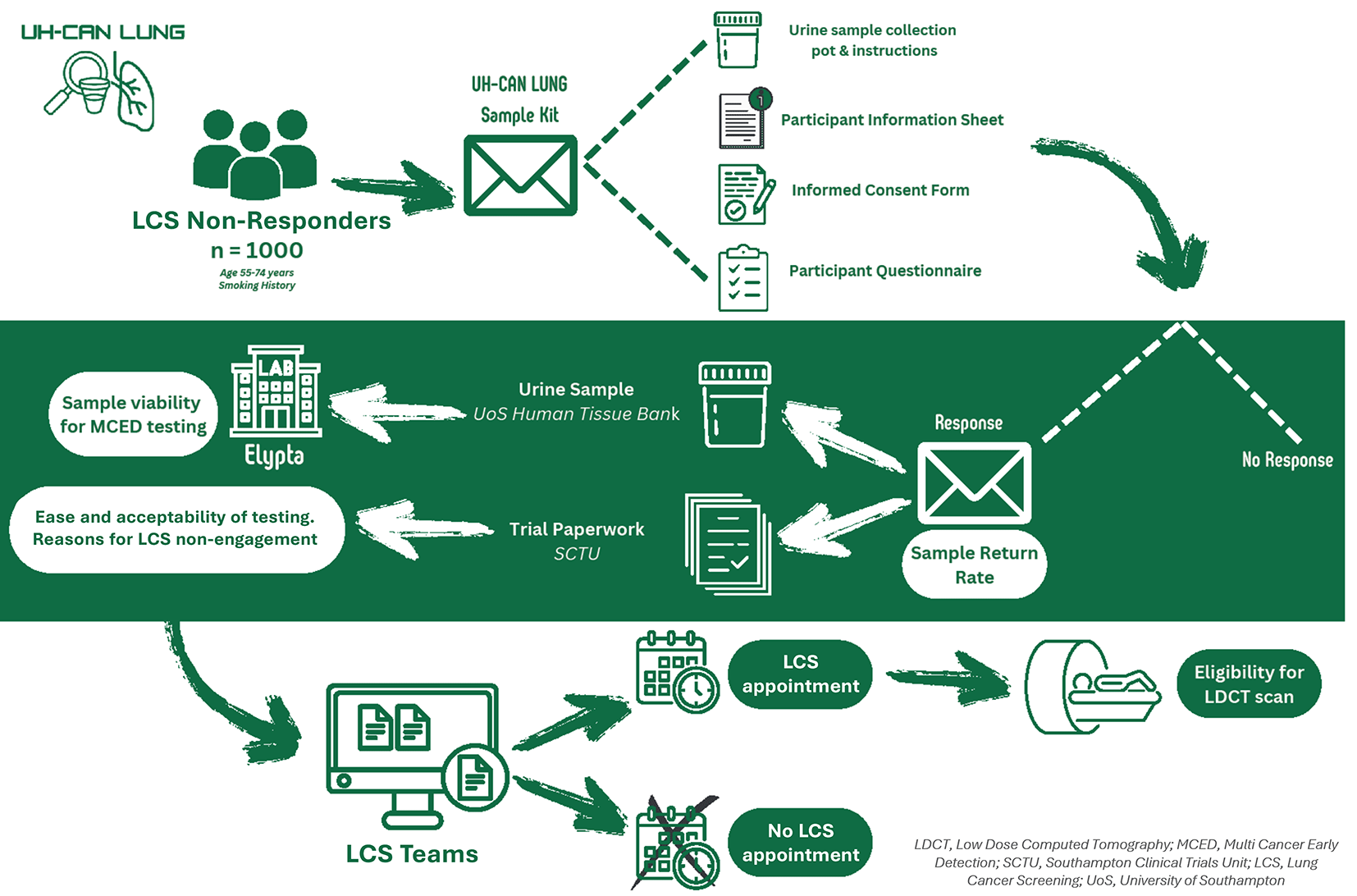
UH-CAN Lung is a non-interventional feasibility study that evaluates whether home-based self-collection of a urine sample may provide a viable option to improve engagement with the national LCS program in individuals who are eligible for, but do not respond to, repeated screening invitations. We will send 1000 sampling kits to LCS non-responders in the geographical regions of Eastleigh, Southampton, The New Forest, and Test Valley served by LCS Southampton. Participant sample kits included the following:
1) 1x 5 ml urine sample collection tube suitable for laboratory testing
2) 1x collapsable urine collection device
3) 1x urine sample collection instructions
4) 1x Participant Information Sheet (PIS)
5) 1x Informed Consent Form (ICF)
6) 1x Participant Questionnaire to ascertain reasons for non-engagement with the LCS program as well as ease and acceptability of the self-collection urine sample kit provided and trust in a urine test result.
Items 1–3 were purchased as the Safe2Pcanter kit from RDi International. A pre-paid mailing pack will also be provided within the UH-CAN Lung Kit to return the urine sample and questionnaire to the UH-CAN Lung researchers at the University of Southampton (UoS) Tissue Bank.
We hypothesise that practical access and LDCT-related participation barriers for LCS non-responders can be mitigated in part by offering home-based, urine self-collection, to enable sample assessment via a urine-based test.
At the time of submission of this manuscript, version 2 (08-Jul-2025) is the latest version of the study protocol. Important protocol modifications are reported to the relevant parties as part of the Southampton Clinical Trial Unit (SCTU) standard operating procedures.
Eligible participants for UH-CAN Lung will be identified via the SCTU collaboration with the LCS team in Southampton using an automated system to identify patients who have been invited and received two reminders to participate in the LCS programme but have not responded (classified as LCS non-responders). A list of 10,000 potential participants was provided to the SCTU by the LCS team of which 1000 were selected equally distributed between IMD rank 1–10, sex, and rural vs. urban subregions. Random sampling was used to select an appropriate number of participants within each stratum. The full inclusion and exclusion criteria are shown in Table 1 and the full study flow is shown in Figure 1. Following approval by the Confidentiality Advisory Group for permission to post kits to participants, the study was advertised on the social media accounts of the SCTU and University Hospital Southampton to enable people to opt out, if preferred. A period of one month was allowed between advertising and participant selection prior to posting the study kits.
| Inclusion Criteria | Exclusion Criteria |
|---|---|
| 1. Previous enrolment in the LCS programme |
Eligibility
Eligibility evaluation will be conducted in collaboration with the LCS team for Southampton alongside demographics of IMD rank, LSOA, age/DOB, sex, and rural versus urban environment. Potential participants will be identified as LCS non-responders in accordance with established LCS pathways (invited and reminded twice regarding eligibility for an LCS with no response received after two weeks of the second reminder). Eligible patients will be posted study kits for self-completion and return.
Consent
ICFs (Appendix 121) were provided with the study kits, and written consent was obtained by the participant returning the completed ICF to the UoS Tissue Bank with a urine sample, questionnaire, or both.
Questionnaire
To maximise the study value and information, we developed a bespoke questionnaire (Appendix 222) with five questions, multiple-choice answers, and a free text box for additional comments. A paper copy of the questionnaire was posted to the participants along with the PIS and ICF. Information from this questionnaire furthers our understanding in two ways.
1. We included questions to assess participants’ preferences for home sampling and feedback on the usability of the home urine collection kit.
2. The five questions were designed to enable us to improve our understanding of patient non-engagement with an LCS appointment and whether home sample collection is considered an accessible and appropriate alternative method of first contact for risk assessment.
In the interest of inclusivity, participation in the questionnaire and sample collection are independent, such that patients could provide feedback through the questionnaire without providing a urine sample if they wished, and vice versa.
Timepoint T1
The following assessments will be performed following return to the UoS Tissue Bank:
• Participant questionnaire assessment: Review of participant responses by the UH-CAN Lung trial data assistant and recording on a dedicated trial spreadsheet. Data stored in a password-protected folder to which only relevant designated SCTU staff working on the study will have access.
• Urine sample assessment by Elypta: Evaluation of a urine sample aliquot to confirm whether it is viable for GAGome analysis. This assessment is conducted in collaboration with the team at Elypta, who are developing a urine GAGome test.
• Creatinine concentration will be measured in an NHS pathology laboratory to standardise measurements.
The Southampton LCS Service will provide the following data:
• Assessment of LCS engagement in all participants invited to participate in UH-CAN Lung, including both appointment booking and attendance.
• Assessment of LDCT eligibility following LCS appointment attendance
• Number of suspected lung cancer diagnoses in participants who returned a consent form for UH-CAN Lung
Participants will be deemed to have engaged with the LCS programme if they book an appointment after being sent a urine home collection kit.
Regardless of whether an ICF was returned, data regarding their subsequent engagement with the LCS and LDCT eligibility will be collected via the data sharing agreement and collaboration established between the SCTU and the LCS team, unless the participant has opted out of this process. Participants did not need to be directly involved in this process. Opt-out instructions were provided in the PIS. Suspected lung cancer diagnoses will only be collected from participants who fully consented to follow-up by returning a signed consent form.
The target number of LCS non-responders who received a urine collection kit and questionnaire is 1,000. Currently, there is a lack of evidence regarding the likely kit return rate; therefore, establishing this is the core objective of this study. The table below outlines the certainty that can be expected for the return rate in a further study depending on the observed return rate with a study size of 1,000, using the formula 1.96 x √(rate x (1-rate) /n) and shown in Table 2.
Values show approximate 95% confidence interval half-widths that would be expected in a future study of 1,000 participants, based on the return rate observed in the current study.
| Return rate | 95% confidence interval |
|---|---|
| 10% (100/1,000) | +/− 0.6% |
| 20% (200/1,000) | +/− 1.2% |
| 30% (300/1,000) | +/− 1.8% |
| 40% (400/1,000) | +/− 2.4% |
| 50% (500/1,000) | +/− 3.1% |
The statistical analysis of this feasibility trial is mainly descriptive, focusing on estimation rather than hypothesis testing. The final analysis will summarise the data collected as part of the demographic and limited clinical information gathered (age, sex, characteristics of the local neighborhood [IMD, air quality, access to healthcare], ethnicity (if available), smoking status, and intensity). All personal data needed to deliver the study will be de-identified and/or removed prior to the analysis. A full statistical analysis plan will be developed before the final trial analysis.
Primary Endpoint
The primary objective of the UH-CAN Lung Study was to evaluate the feasibility of utilising a urine home collection test as a viable alternative method of engaging LCS non-responders with lung cancer screening. This will be assessed by comparing the number of LCS non-responders that returned viable urine samples that could generate analysable GAGome result data to support testing with those who do not. This is presented as a proportion (with an associated 95% CI) of all 1000 participants invited to provide a sample.
Secondary Endpoints
Secondary endpoints will be presented as the proportion (with 95% CI) of LCS non-responders invited to provide a self-administered urine sample (target: 1000 invitees).
• Return a self-administered urine sample for cancer screening
• Go on to book a screening assessment within the LCS programme
• They were subsequently eligible for low-dose CT (LDCT) screening within the NHS LCS programme.
The proportion of participants who returned a signed consent form and were diagnosed with suspected lung cancer following LDCT will also be reported.
Questionnaire responses on the ease and acceptability of using the self-administered urine test, as well as reasons for non-engagement with the LCS programme, will be reported as counts and percentages to identify key barriers.
UH-CAN Lung is an observational feasibility study that will investigate whether home urine collection could be an alternative mechanism of engagement in Lung Cancer Screening in non-responders.
The study was designed with the primary aim of understanding how many participants from the 1000 who were selected and posted a home urine collection kit will return a sample. This information will allow us to evaluate whether the return rate is sufficiently high to develop a larger study to evaluate a urine-based biomarker for lung cancer in this population.
Additionally, this study will enable an understanding of non-responders’ perceptions of acceptability and motivation to engage in a home urine test. This will include a 5-point questionnaire with multiple choice answers (Appendix 222) assessing whether participants find the home urine collection kit acceptable and easy to use, whether they would trust the results, whether a home urine test would encourage engagement with the LCS, and reasons for non-response to their LCS invitation.
Participants are advised that they could return a urine sample, questionnaire, or both to ensure that we were able to gather as much information as possible. We also ask for permission to collect information from the LCS program about whether participants go on to book an appointment, as our PIS encourages them to do so. If participants do go on to engage with the LCS program, this has the potential to identify additional patients at high risk of lung cancer who would otherwise have not been assessed through this initiative.
If the results of this study are promising, there are two main directions for future research. The first is to inform the design of a larger study evaluating home urine collection in this cohort, while also assessing emerging urine-based biomarkers, such as those developed by Elypta, which uses changes in GAG profiles as cancer signals. Second, while this study focuses on urine-based testing to improve engagement with lung cancer screening, the same methods can be applied to other sample-based tests and other cancer types to evaluate whether it can improve engagement with current screening programs or be utilised as an initial community-based triage test, as cited in the recent National Cancer Plan for England.5
| Views | Downloads | |
|---|---|---|
| F1000Research | - | - |
|
PubMed Central
Data from PMC are received and updated monthly.
|
- | - |
Provide sufficient details of any financial or non-financial competing interests to enable users to assess whether your comments might lead a reasonable person to question your impartiality. Consider the following examples, but note that this is not an exhaustive list:
Sign up for content alerts and receive a weekly or monthly email with all newly published articles
Already registered? Sign in
The email address should be the one you originally registered with F1000.
You registered with F1000 via Google, so we cannot reset your password.
To sign in, please click here.
If you still need help with your Google account password, please click here.
You registered with F1000 via Facebook, so we cannot reset your password.
To sign in, please click here.
If you still need help with your Facebook account password, please click here.
If your email address is registered with us, we will email you instructions to reset your password.
If you think you should have received this email but it has not arrived, please check your spam filters and/or contact for further assistance.

Comments on this article Comments (0)