Keywords
Triple-negative breast cancer, chemotherapy, immunotherapy, PD-L1, homologous recombination deficiency, biomarker-driven therapy, Asia.

This article is included in the Oncology gateway.
Triple-negative breast cancer, chemotherapy, immunotherapy, PD-L1, homologous recombination deficiency, biomarker-driven therapy, Asia.
Triple-negative breast cancer (TNBC) is one of the most aggressive subtypes of breast cancer with a poor prognosis compared to other subtypes, characterized by the absence of estrogen receptor (ER), progesterone receptor (PR), and HER2 (human epidermal growth factor receptor 2) expression.1 This subtype accounts for approximately 15%–20% of all breast cancer cases and is generally found in younger women and is associated with high recurrence rates and significant mortality. The absence of hormonal therapy and HER2 targets means that chemotherapy remains the primary intervention in the management of TNBC, both in the neoadjuvant and adjuvant settings. However, the response to this chemotherapy varies greatly among patients, posing a major challenge in its clinical management.1,2
Chemotherapy response in TNBC is often measured through pathologic complete response (pCR), which is defined as the absence of invasive tumor residue in the breast and lymph nodes after neoadjuvant chemotherapy. Several studies have shown that achieving pCR correlates with improved overall survival and disease-free survival in TNBC patients, making pCR an important prognostic marker in clinical research and practice. Research published in 2025 shows that pCR after neoadjuvant chemotherapy is associated with better long-term outcomes in patients with early-stage TNBC, providing strong evidence that response to chemotherapy plays a significant role in improving patient prognosis.3
This systematic review aims to evaluate and synthesize the latest evidence on chemotherapy response in patients with triple-negative breast cancer. Specifically, the objectives of this study are to identify factors that influence chemotherapy response, whether clinical, molecular, or therapeutic characteristics, and to explore potential biomarkers that can be used to predict treatment response. These biomarkers can cover various aspects, such as the expression of certain proteins, genetic mutations, and molecular profiles that can affect the effectiveness of therapy. Previous studies have shown that biomarkers such as p53, BRCA1/2, and PD-L1 play an important role in predicting response to chemotherapy in TNBC.4 Further research on these biomarkers is expected to result in more accurate and personalized predictive tools for TNBC treatment.
In addition, this study will analyze various chemotherapy approaches used in TNBC, ranging from standard regimens to experimental therapies that are currently being developed. Some chemotherapy regimens that are often used in TNBC include doxorubicin, paclitaxel, and carboplatin. Combination regimens involving two or more chemotherapy drugs have also been explored in various clinical trials to increase the effectiveness of treatment. However, although standard chemotherapy has provided some benefits, many patients experience serious side effects, such as peripheral neuropathy, extreme fatigue, and an increased risk of infection, which reduce the patient’s quality of life.5
The methods used in this review include systematic searches of various medical and scientific databases to identify relevant studies, including clinical trials, observational studies, and meta-analyses discussing chemotherapy response in TNBC. Studies included in this review will cover publications from the last five years that discuss conventional chemotherapy therapy and combinations with other drugs, as well as studies involving patients with TNBC at various stages of the disease. Literature searches will be conducted using relevant keywords, such as “chemotherapy response,” “triple-negative breast cancer,” “Asia,” and others, which will be performed in the PubMed database.
This review is expected to provide a deeper understanding of the mechanisms underlying chemotherapy response in TNBC, as well as provide guidance for the development of more personalized and effective therapies in the future. The findings from this review may also contribute to improvements in treatment strategies and patient management for TNBC, which remains a major challenge in the medical world. With a more integrated and evidence-based approach, it is hoped that patients with TNBC will receive more appropriate and effective treatment, which in turn will improve their survival rates and quality of life.
This systematic review was conducted in accordance with the Preferred Reporting Items for Systematic Reviews and Meta-Analyses (PRISMA) 2020 guidelines. A comprehensive literature search was performed using the PubMed database to identify relevant studies evaluating chemotherapy and immunotherapy responses in patients with triple-negative breast cancer (TNBC) in Asian populations. The search strategy employed a combination of keywords and Boolean operators, including “triple-negative breast cancer”, “chemotherapy response”, and “Asia”.
The initial search identified 31,888 records. After keyword refinement, 118 records remained for title and abstract screening, of which 31,770 were excluded. Subsequently, 54 articles were assessed for full-text eligibility. Following full-text review, 47 studies were excluded for not meeting the predefined inclusion criteria. Ultimately, 7 studies were included in the qualitative synthesis.
Studies were included if they involved patients with histopathologically confirmed TNBC, evaluated chemotherapy alone or in combination with immunotherapy (e.g., pembrolizumab, atezolizumab, or eribulin), were conducted in Asian populations or reported Asian subgroup analyses, and provided clinical outcomes such as pathologic complete response (pCR), overall survival (OS), or progression-free survival (PFS). Only articles published in English within the last five years were considered. Studies were excluded if they were not specifically focused on TNBC, did not evaluate chemotherapy-based treatment, were conducted exclusively in non-Asian populations without subgroup analysis, lacked quantitative clinical outcome data, or were case reports, narrative reviews, or methodologically inappropriate designs.
Data extraction was performed independently by two reviewers, and discrepancies were resolved through discussion until consensus was achieved. Extracted data included study characteristics (author, year, and design), patient population, treatment regimens, evaluated biomarkers (such as PD-L1, homologous recombination deficiency (HRD), BRCA mutations, tumor mutational burden (TMB), and tumor-infiltrating lymphocytes (TILs)), clinical outcomes (pCR, OS, and PFS), and safety profiles.
The methodological quality of the included studies was assessed using the Mixed Methods Appraisal Tool, which allows evaluation across different study designs, including randomized controlled trials and observational studies. Each study was appraised according to the relevant MMAT criteria based on its design.
Due to heterogeneity in study design, treatment regimens, and reported outcomes, a qualitative synthesis was performed without conducting a meta-analysis. Ethical approval was not required, as all data were derived from previously published studies.
The study selection process is illustrated in Figure 1. ( Figure 1) A total of 31,888 records were initially identified through database searching. After keyword refinement, 118 records were screened, of which 31,770 were excluded. Subsequently, 54 full-text articles were assessed for eligibility, and 47 studies were excluded for not meeting the predefined inclusion criteria. Ultimately, 7 studies were included in the qualitative synthesis.
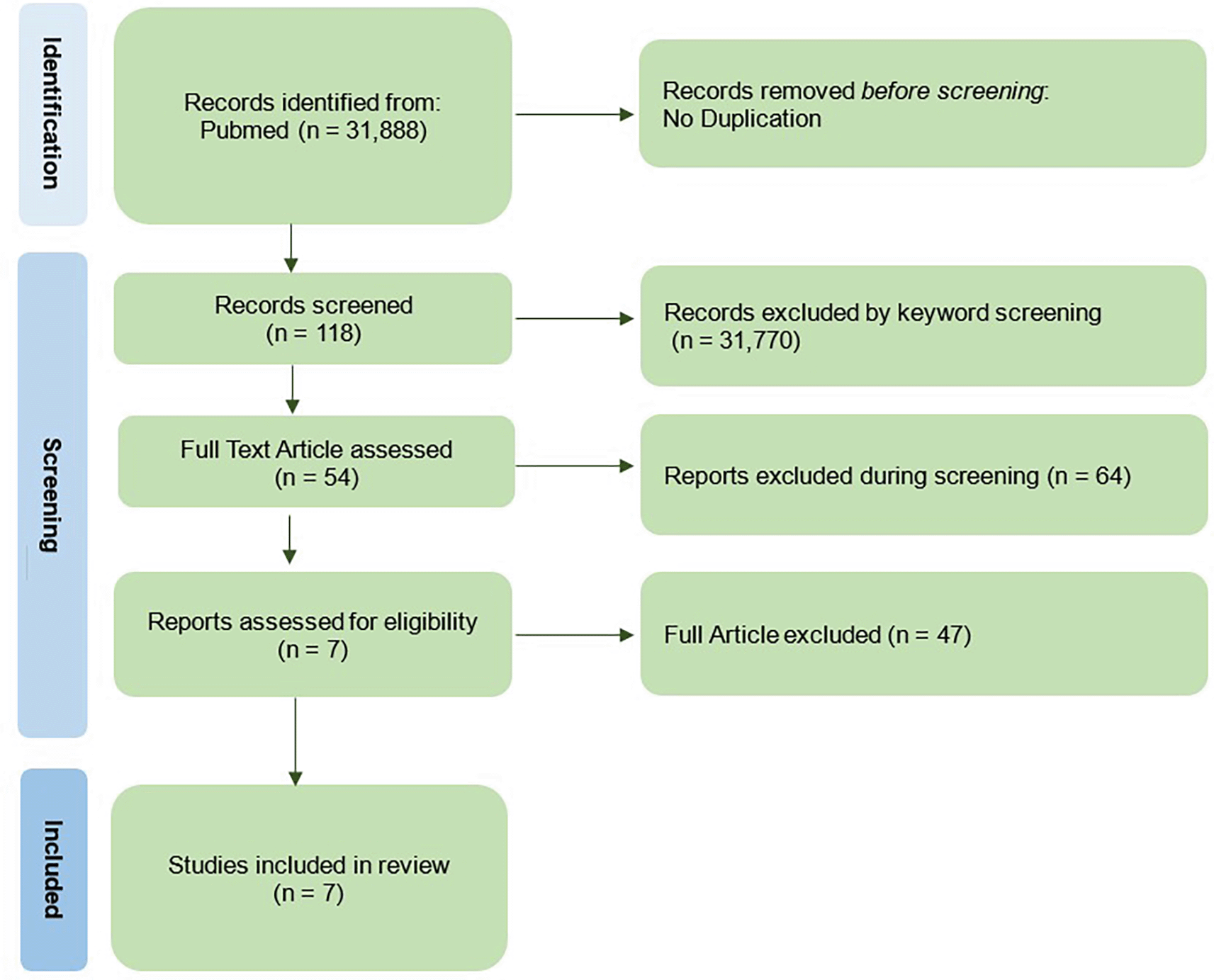
This figure illustrates the identification, screening, eligibility assessment, and inclusion of studies based on PRISMA 2020 guidelines. A total of 31,888 records were identified through database searching. After screening, 118 records were assessed, of which 31,770 were excluded. Subsequently, 54 full-text articles were evaluated, and 47 were excluded. Finally, 7 studies were included in the qualitative synthesis.
The included studies comprised a mix of randomized controlled trials, subgroup analyses, and observational designs evaluating chemotherapy and immunotherapy responses in Asian patients with triple-negative breast cancer (TNBC). Sample sizes ranged from 36 to 622 participants, with study populations originating from diverse Asian regions, including Japan, Korea, Taiwan, and Southeast Asia.
Across studies, treatment strategies varied from conventional chemotherapy regimens to combinations with immune checkpoint inhibitors, particularly pembrolizumab and atezolizumab, as well as biomarker-guided approaches involving agents such as eribulin.
A wide range of biomarkers was investigated to predict treatment response and clinical outcomes. These included programmed death-ligand 1 (PD-L1) expression, homologous recombination deficiency (HRD), tumor-infiltrating lymphocytes (TILs), tumor mutational burden (TMB), BRCA mutations, and microRNA-223, reflecting the growing emphasis on precision-based therapeutic strategies in TNBC. ( Table I).
Across the included studies, the addition of immune checkpoint inhibitors to chemotherapy consistently demonstrated improved clinical outcomes compared to chemotherapy alone. In particular, pembrolizumab combined with chemotherapy showed significant improvements in both progression-free survival (PFS) and overall survival (OS) in metastatic TNBC, as well as increased pathologic complete response (pCR) and event-free survival (EFS) in early-stage disease.
Similarly, atezolizumab combined with chemotherapy resulted in higher pCR rates compared to standard chemotherapy, although findings from smaller subgroup analyses should be interpreted with caution. In contrast, conventional chemotherapy alone showed variable response rates, highlighting the heterogeneity of treatment response in TNBC.
Biomarker status played a critical role in predicting treatment response across studies. PD-L1 expression was consistently associated with improved response to immune checkpoint inhibitors, with PD-L1–positive patients demonstrating greater benefit in terms of pCR, PFS, and OS.
In addition, HRD-positive status was associated with enhanced response to platinum-based and eribulin-based chemotherapy regimens, suggesting a potential role of genomic instability in treatment sensitivity. Other biomarkers, including TILs and TMB, were also linked to improved clinical outcomes, particularly in patients receiving pembrolizumab-based therapies.
Conversely, elevated microRNA-223 expression was associated with chemotherapy resistance and poorer prognosis, indicating its potential role as a negative predictive biomarker.
Overall, the safety profiles of combined chemotherapy and immunotherapy regimens were consistent with previous reports. Common adverse events included peripheral neuropathy and hematologic toxicity, with a higher incidence of grade 3–4 events observed in some combination regimens. However, no unexpected safety signals were reported, and most adverse events were considered manageable.
Notably, low-dose pembrolizumab demonstrated a lower incidence of peripheral neuropathy, suggesting a potential role in reducing treatment-related toxicity, particularly in resource-limited settings. ( Table II, Table III, Table IV).
The findings of this systematic review demonstrate that the addition of immune checkpoint inhibitors to chemotherapy consistently improves treatment outcomes in patients with triple-negative breast cancer (TNBC), particularly in Asian populations. Across the included studies, combination regimens involving pembrolizumab or atezolizumab were associated with higher pathologic complete response (pCR) rates and improved survival outcomes compared with chemotherapy alone, highlighting the growing role of immunotherapy as a standard component of TNBC treatment.6–9 These findings are consistent with global evidence, suggesting that the therapeutic benefit of immunotherapy extends across different populations, including Asian patients.
Pembrolizumab-based regimens showed consistent benefits across studies, with significant improvements in pCR and event-free survival (EFS). Evidence from KEYNOTE-522 demonstrated that pembrolizumab combined with neoadjuvant chemotherapy significantly increased pCR and EFS compared to chemotherapy alone, with benefits observed across both PD-L1–positive and PD-L1–negative subgroups.6,7 This suggests that pembrolizumab may exert its therapeutic effect beyond PD-L1 expression alone, potentially through broader activation of the tumor immune microenvironment. These findings reinforce its role as a key therapeutic agent in TNBC, particularly in early-stage disease.
In contrast, the efficacy of atezolizumab appeared to be more dependent on PD-L1 expression. Studies evaluating atezolizumab in combination with chemotherapy demonstrated improved pCR rates, particularly among patients with PD-L1–positive tumors.8,9 This difference may reflect variations in mechanisms of action between immune checkpoint inhibitors targeting PD-1 versus PD-L1 pathways. Consequently, patient selection based on biomarker status becomes essential, as treatment efficacy may vary depending on tumor immunogenicity and immune microenvironment characteristics.
In addition to immunotherapy, biomarker-driven treatment strategies also emerged as an important component in improving TNBC outcomes. Homologous recombination deficiency (HRD) was associated with enhanced response to platinum-based and eribulin-containing regimens, indicating that genomic instability may increase tumor sensitivity to DNA-damaging agents.10 Furthermore, tumor-infiltrating lymphocytes (TILs) and tumor mutational burden (TMB) were associated with improved response to immunotherapy, supporting their role as predictive biomarkers of immune activation. Conversely, elevated microRNA-223 expression was associated with chemotherapy resistance and poorer survival outcomes, suggesting its potential role as a negative prognostic marker.11 These findings collectively highlight the importance of integrating molecular and immunological biomarkers into treatment decision-making.
From a clinical perspective, these results support a more personalized approach to TNBC management. Pembrolizumab-based regimens may be considered broadly applicable across patient subgroups, whereas atezolizumab may provide greater benefit in patients with PD-L1–positive tumors. In Asian populations, these considerations are particularly relevant due to differences in healthcare accessibility and economic constraints. The potential use of modified or lower-dose immunotherapy regimens may represent a pragmatic strategy to improve treatment accessibility while maintaining clinical benefit in resource-limited settings.11
Despite these promising findings, several limitations should be acknowledged. First, the number of included studies was relatively small, and heterogeneity in study design, treatment regimens, and outcome reporting precluded quantitative synthesis. Second, several studies were subgroup or secondary analyses of larger trials, which may limit the generalizability of findings to broader Asian populations. Third, variability in biomarker assessment methods across studies may have influenced the consistency of reported outcomes.
Overall, this review highlights the evolving landscape of TNBC treatment in Asia, where the integration of immunotherapy and biomarker-driven strategies has significantly improved clinical outcomes. Future research should focus on optimizing biomarker-guided treatment selection, standardizing assessment methods, and developing cost-effective therapeutic strategies to enhance accessibility and maximize patient benefit across diverse healthcare settings.
In conclusion, the addition of immune checkpoint inhibitors to chemotherapy significantly improves clinical outcomes in patients with triple-negative breast cancer (TNBC), including those in Asian populations. Pembrolizumab-based regimens demonstrate broad efficacy across patient subgroups, while the benefit of atezolizumab appears to be more dependent on PD-L1 expression, underscoring the importance of biomarker-driven treatment strategies.
The integration of molecular and immunological biomarkers, such as PD-L1, HRD, and TILs, plays a critical role in optimizing therapeutic response and advancing precision medicine in TNBC. In addition, considerations of treatment accessibility and cost are particularly relevant in Asian settings, where modified therapeutic approaches may enhance feasibility without compromising effectiveness.
Overall, these findings support the growing role of immunotherapy combined with chemotherapy as a standard approach in TNBC management. Future studies should focus on refining biomarker-guided treatment selection, standardizing assessment methods, and developing cost-effective strategies to improve patient outcomes across diverse healthcare settings.
| Views | Downloads | |
|---|---|---|
| F1000Research | - | - |
|
PubMed Central
Data from PMC are received and updated monthly.
|
- | - |
Provide sufficient details of any financial or non-financial competing interests to enable users to assess whether your comments might lead a reasonable person to question your impartiality. Consider the following examples, but note that this is not an exhaustive list:
Sign up for content alerts and receive a weekly or monthly email with all newly published articles
Already registered? Sign in
The email address should be the one you originally registered with F1000.
You registered with F1000 via Google, so we cannot reset your password.
To sign in, please click here.
If you still need help with your Google account password, please click here.
You registered with F1000 via Facebook, so we cannot reset your password.
To sign in, please click here.
If you still need help with your Facebook account password, please click here.
If your email address is registered with us, we will email you instructions to reset your password.
If you think you should have received this email but it has not arrived, please check your spam filters and/or contact for further assistance.

Comments on this article Comments (0)