Keywords
Bundibugyo ebolavirus, Ebola outbreak 2026, GP1 glycoprotein, Informational Spectrum Method, ISM, phylogenetic analysis, viral evolution, viral tropism, emerging viruses, functional phylogeny

This article is included in the Emerging Diseases and Outbreaks gateway.
This article is included in the Ebola collection.
This article is included in the Ebola Virus collection.
Bundibugyo ebolavirus, Ebola outbreak 2026, GP1 glycoprotein, Informational Spectrum Method, ISM, phylogenetic analysis, viral evolution, viral tropism, emerging viruses, functional phylogeny
The ongoing outbreak of Ebola virus disease caused by Bundibugyo ebolavirus (BDBV) has renewed global concern regarding the emergence of genetically and antigenically distinct filoviruses for which effective medical countermeasures remain limited. Although previous Ebola outbreaks have stimulated the development of vaccines, therapeutics, and molecular diagnostic tools, the majority of these interventions were primarily optimized for Zaire ebolavirus and may not provide adequate effectiveness against Bundibugyo ebolavirus.
In response to the escalating epidemiological situation, the World Health Organization declared the outbreak a significant public health emergency requiring intensified international surveillance, rapid diagnostic deployment, and accelerated scientific investigation. The situation is particularly concerning because no licensed vaccine or specific antiviral therapy currently exists for Bundibugyo ebolavirus infection. As a consequence, outbreak management relies predominantly on supportive clinical care, isolation measures, and epidemiological control strategies.
An additional challenge associated with the current outbreak is the reduced performance of existing Ebola diagnostic assays when applied to the circulating Bundibugyo virus strains. Several currently available molecular and immunological tests were developed using genomic and antigenic characteristics of other Ebola virus species, particularly Zaire ebolavirus. Genetic divergence within diagnostically relevant viral regions may therefore reduce assay sensitivity and compromise reliable early detection. Such limitations may significantly impair epidemiological surveillance and delay containment efforts during active transmission.
The absence of species vaccines and therapies, together with concerns regarding diagnostic reliability, highlights the urgent need for rapid analytical approaches capable of identifying biologically important viral changes during ongoing outbreaks. Detailed characterization of emerging Bundibugyo virus variants may provide important insights into viral evolution, functional adaptation, immune recognition and therapeutic strategies.
Of the more than 50 documented outbreaks of Ebola virus disease, only two prior outbreaks were caused by Bundibugyo ebolavirus, in 2007 and 2012. Consequently, one of the key prerequisites for understanding the biological and epidemiological properties of the current 2026 outbreak is to determine whether the circulating virus differs functionally from the Bundibugyo viruses responsible for the previous outbreaks.
Previous studies have shown that important biological properties of newly emerging viruses can be rapidly characterized using the Informational Spectrum Method (ISM), a virtual spectroscopy-based approach for protein analysis.1,2 A major advantage of this method is that it requires no experimental or structural data other than the primary protein sequence, enabling immediate analysis directly after viral isolation and sequencing. ISM has previously been successfully applied for early characterization of emerging viruses, including influenza viruses,3 COVID-19,4 and Ebola virus,5 during the initial phases of epidemics and pandemics.
In the present study, ISM was applied to the analysis of the GP1 glycoprotein of Bundibugyo ebolavirus. The obtained results demonstrate substantial differences in the informational properties of GP1 from the 2026 virus compared with viruses from the 2007 and 2012 outbreaks. These differences may significantly influence viral tropism as well as immunological characteristics relevant to viral recognition and immune response.
GP1 glycoprotein sequences of Bundibugyo ebolavirus (BDBV) from the 2007 and 2012 outbreaks were retrieved from the GenBank database (https://www.ncbi.nlm.nih.gov/genbank/) under the following accession numbers: KC545396, KC545395, KC545394, KC545393, FJ217161, MT583344, MT583343, MT742157, NC_014373, MT680262, MT680261, MT680260, MT680245, MK028834, MK028835, and MK028856.
At the time of analysis, only one GP1 sequence from the ongoing 2026 BDBV outbreak had been publicly released: PP_006XHKB.1.6
Sequence analysis was performed using the Informational Spectrum Method (ISM), a virtual spectroscopy approach previously described in detail elsewhere.1 In this method, protein sequences are converted into numerical series by assigning to each amino acid a value corresponding to its electron-ion interaction potential (EIIP),2 a parameter associated with the electronic characteristics relevant for intermolecular recognition and interaction processes.7
The resulting numerical signal is further analyzed by Fast Fourier Transformation (FFT), generating an informational spectrum composed of characteristic frequencies and their corresponding amplitudes. Specific frequencies detected in the spectrum reflect the presence of structural motifs with related electronic properties that are associated with particular biological functions of the analyzed protein.
Comparison of informational spectra from different proteins enables identification of frequency components linked to shared functional or biological properties. Because the analysis is based on distribution of electronic characteristics along the sequence rather than on positional identity of amino acids, the method does not require prior sequence alignment. This approach enables rapid functional characterization of newly identified proteins directly from sequence data.
Phylogenetic relationships among analyzed GP1 proteins were evaluated using the ISM-based phylogenetic algorithm ISTREE, described previously in detail elsewhere.8 In contrast to conventional homology-based phylogenetic approaches, ISTREE groups sequences according to similarities in their informational and functional characteristics derived from ISM analysis.
For the present study, the distance matrix was calculated using amplitudes at characteristic ISM frequencies identified in the analyzed GP1 proteins as quantitative measures of similarity between sequences. The obtained distance matrix was subsequently used for construction of the phylogenetic tree.
To evaluate informational similarities between previously circulating Bundibugyo ebolaviruses (BDBV) and the virus responsible for the ongoing 2026 outbreak, informational spectra (IS) and cross-spectra (CS) of GP1 glycoproteins were analyzed using the Informational Spectrum Method (ISM).
Comparison of the informational spectra of GP1 proteins from the reference BDBV strain NC_014373 isolated during the 2007 outbreak6 and the 2026 isolate PP_006XHKB.1 revealed substantial differences in their dominant spectral characteristics ( Figure 1a, b). Although both proteins retained common informational components, the relative amplitudes of the dominant frequencies differed significantly, suggesting altered functional and biological properties of the 2026 virus.
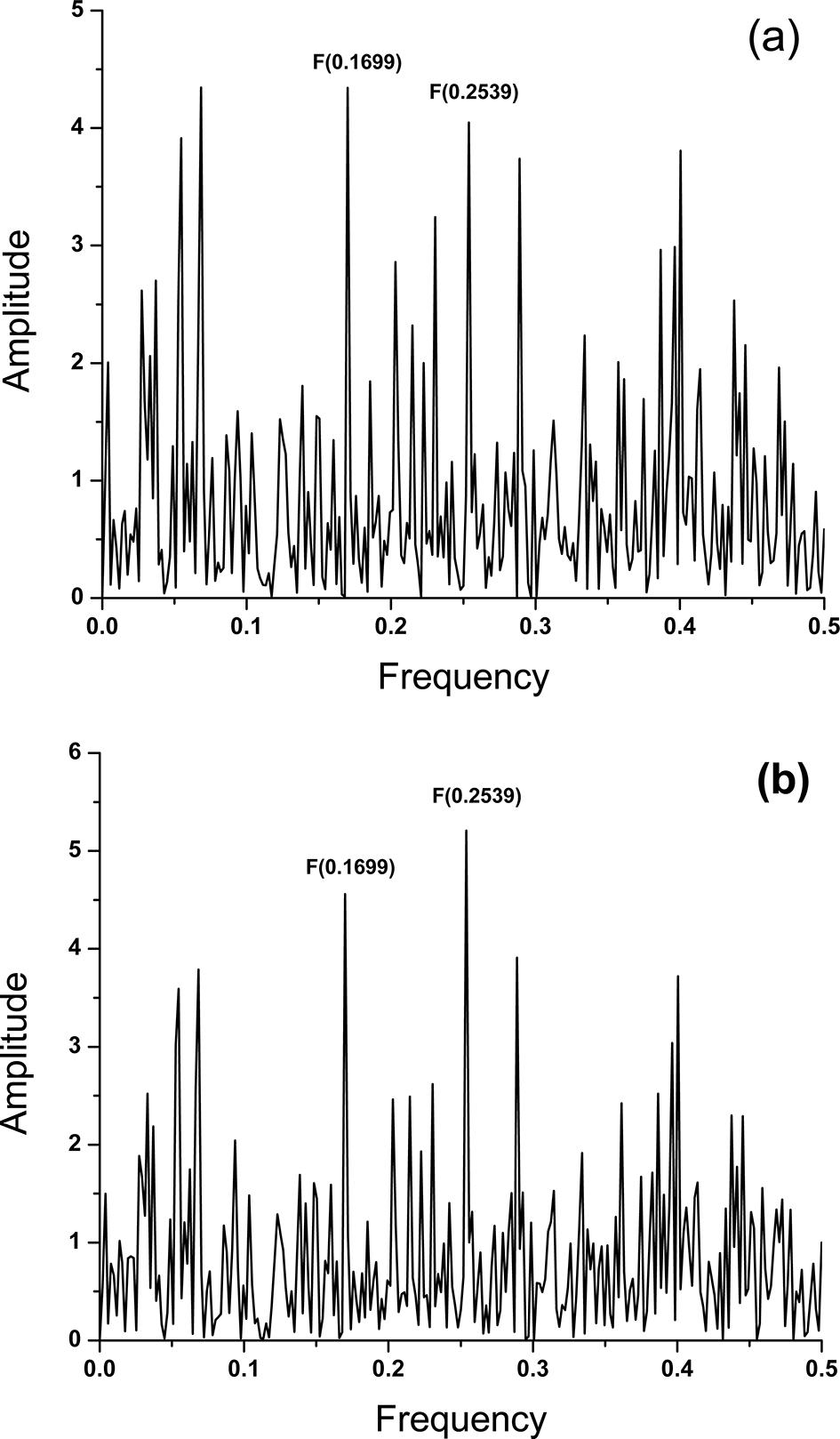
The abscissa represents the frequencies from the Fourier transform of the sequence of electron-ion interaction potential corresponding to the amino-acid sequence of proteins. The lowest frequency is 0.0 and the highest is 0.5. The ordinate represents the amplitude.
To identify informational characteristics conserved among all analyzed BDBV isolates from 2007, 2012, and 2026 outbreaks, the consensus cross-spectrum was calculated using GP1 proteins from all 17 analyzed viruses ( Figure 2). Two dominant frequencies, F(0.1699) and F(0.2539), were identified in the consensus spectrum. According to the ISM concept, dominant frequencies in consensus spectra correspond to informational components associated with specific biological interactions shared among analyzed proteins. In the case of viral glycoproteins, such frequencies are generally related to interactions with principal host factors, including cellular receptors or other proteins involved in viral attachment and entry.
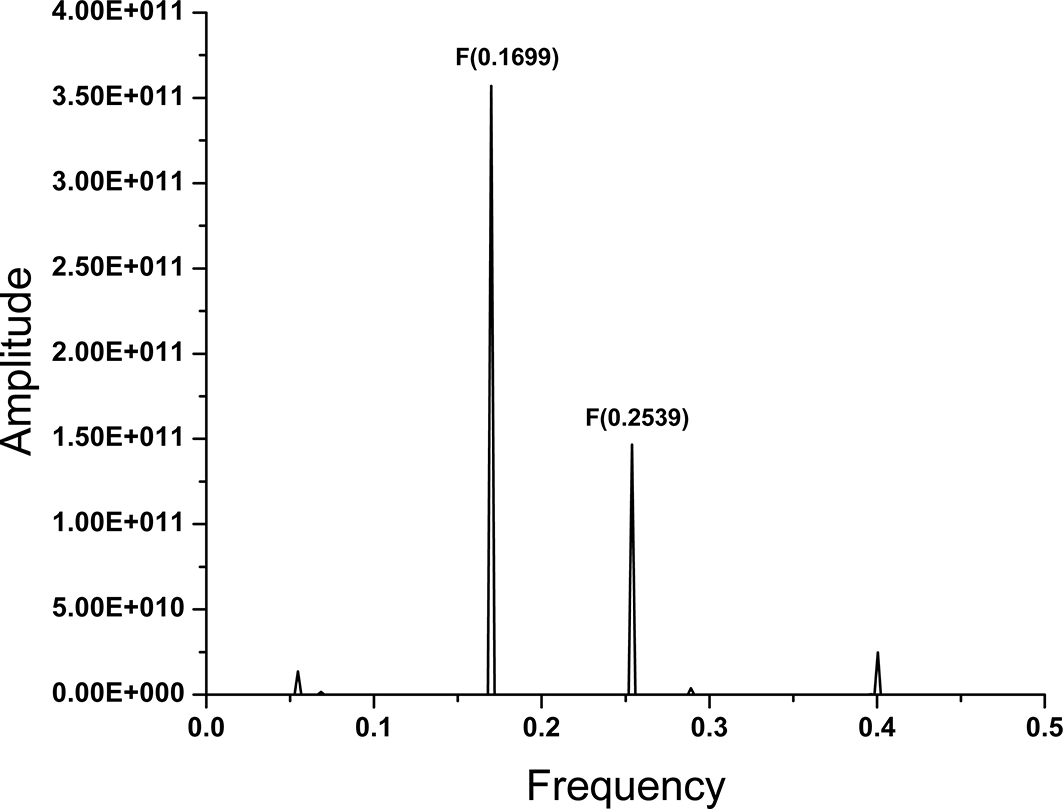
The abscissa represents the frequencies from the Fourier transform of the sequence of electron-ion interaction potential corresponding to the amino-acid sequence of proteins. The lowest frequency is 0.0 and the highest is 0.5. The ordinate represents the amplitude.
An important observation is that the frequency F(0.1699) represents the dominant informational component in previously circulating BDBV strains from 2007 and 2012, whereas the 2026 virus shows marked predominance of the frequency F(0.2539). This finding suggests that the currently circulating virus may possess altered preferences in intermolecular recognition and interaction compared with earlier BDBV isolates. Since GP1 represents the major receptor-binding component of the Ebola virus glycoprotein complex, changes in its informational characteristics may influence viral tropism, efficiency of host-cell recognition, tissue specificity, transmissibility, and immune recognition.
To further investigate the relationship between the 2026 virus and previously circulating BDBV strains, an ISM-based phylogenetic analysis was performed using the ISTREE algorithm ( Figure 3a). The obtained phylogenetic tree clearly separates the 2026 isolate into an independent cluster distinct from viruses isolated during the 2007 and 2012 outbreaks. This result strongly supports the existence of substantial functional divergence of the current virus despite belonging to the same viral species.
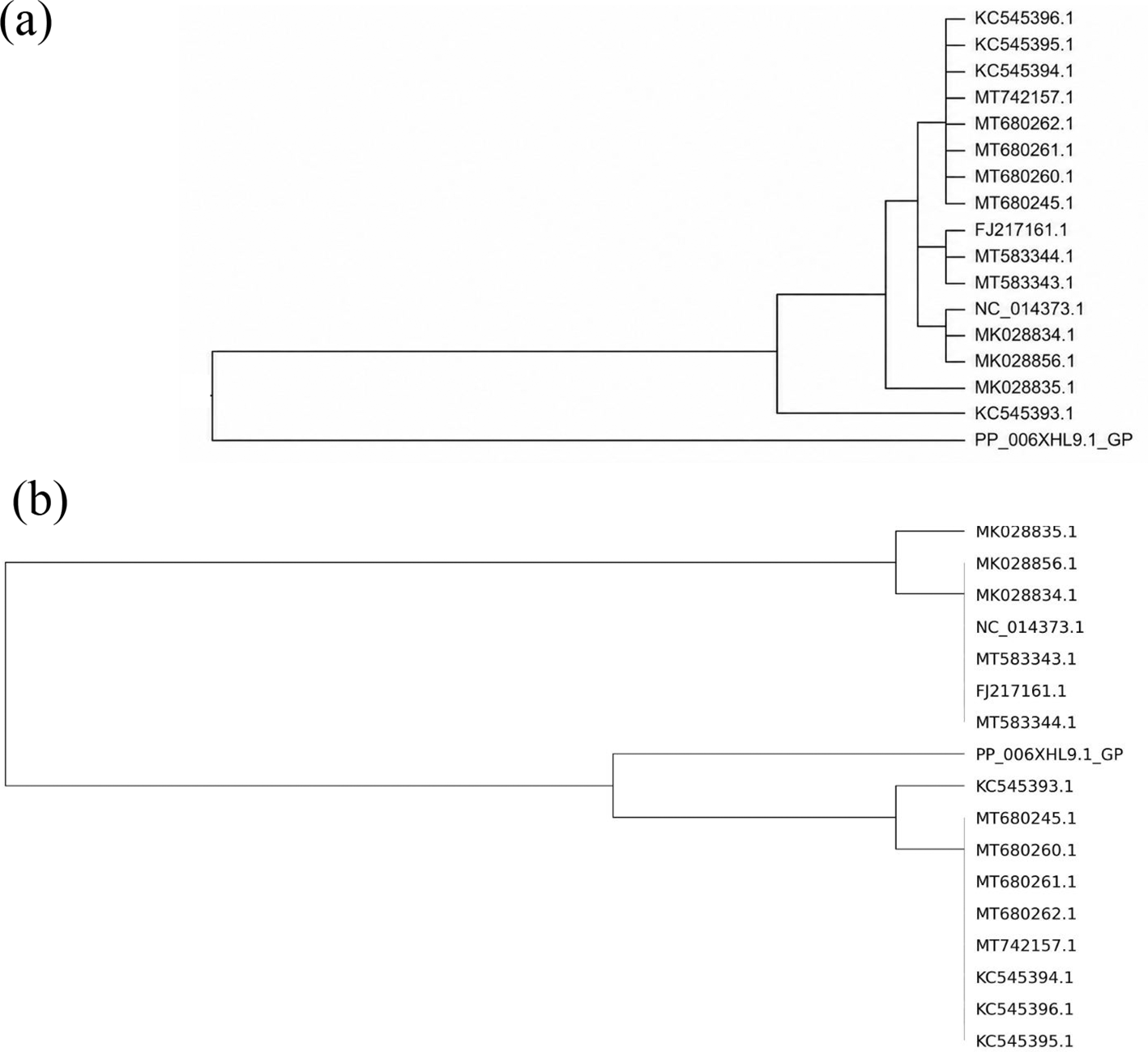
(a) The informational spectrum method-based phylogenetic tree. The frequencies F(0.1699) and F(0.2539) as the distance measure were used. (b) The homology-based phylogenetic tree.
In contrast, conventional homology-based phylogenetic analysis grouped the 2026 virus together with viruses from the 2012 outbreak ( Figure 3b), indicating relatively high sequence similarity and absence of major evolutionary divergence at the level of primary sequence homology. The discrepancy between the two phylogenetic approaches is particularly important. While conventional phylogenetic analysis primarily reflects evolutionary relatedness based on sequence identity, ISM-based analysis reflects similarities and differences in informational and functional properties encoded within the sequence.
These findings may have important practical implications for the current outbreak. The observed shift in dominant informational characteristics of GP1 could partially explain why existing Ebola vaccines, or therapeutic strategies developed mainly against previously characterized Ebola viruses may show reduced effectiveness against the current BDBV strain. Even relatively limited sequence changes can substantially alter long-range intermolecular recognition properties detected by ISM, potentially influencing antigenicity, receptor interactions, or immune recognition without producing dramatic changes in overall sequence homology.
The presented results also demonstrate the importance of functional sequence analysis during the earliest phases of emerging outbreaks. One of the major advantages of ISM is that it requires only protein sequence information and can therefore be applied immediately after viral sequencing, before structural, biochemical, or experimental data become available. This enables rapid identification of potentially significant functional changes in newly emerging viruses during periods when timely information is critical for public health response.
The present study demonstrates that the GP1 glycoprotein of the Bundibugyo ebolavirus responsible for the 2026 outbreak possesses significantly altered informational characteristics compared with viruses from the 2007 and 2012 outbreaks. ISM-based analysis revealed substantial functional divergence of the current virus that was not detected by conventional homology-based phylogenetic analysis.
The observed shift in dominant informational frequencies suggests possible changes in intermolecular recognition properties of GP1 that may influence viral tropism, host interactions, immune recognition, and medical countermeasures developed for previously circulating Ebola viruses. Considering the absence of licensed vaccines and targeted therapies for Bundibugyo ebolavirus, rapid identification of such functional differences may be of considerable importance for outbreak monitoring and future development of species therapeutic strategies.
The obtained results further support the usefulness of the Informational Spectrum Method as a rapid analytical platform for early functional characterization of newly emerging viruses directly from sequence data, before structural, biochemical, or experimental studies become available. In situations where immediate understanding of viral properties is essential for public health response, such capability may provide valuable support for early epidemiological assessment, identification of potentially important viral changes, prioritization of experimental studies, and faster implementation of measures aimed at limiting epidemic and pandemic spread.
| Views | Downloads | |
|---|---|---|
| F1000Research | - | - |
|
PubMed Central
Data from PMC are received and updated monthly.
|
- | - |
Provide sufficient details of any financial or non-financial competing interests to enable users to assess whether your comments might lead a reasonable person to question your impartiality. Consider the following examples, but note that this is not an exhaustive list:
Sign up for content alerts and receive a weekly or monthly email with all newly published articles
Already registered? Sign in
The email address should be the one you originally registered with F1000.
You registered with F1000 via Google, so we cannot reset your password.
To sign in, please click here.
If you still need help with your Google account password, please click here.
You registered with F1000 via Facebook, so we cannot reset your password.
To sign in, please click here.
If you still need help with your Facebook account password, please click here.
If your email address is registered with us, we will email you instructions to reset your password.
If you think you should have received this email but it has not arrived, please check your spam filters and/or contact for further assistance.

Comments on this article Comments (0)