Keywords
Sepsis in PICU, Prevention, Inflammatory markers, Early diagnosis

This article is included in the Manipal Academy of Higher Education gateway.
Sepsis in PICU, Prevention, Inflammatory markers, Early diagnosis
Sepsis is a global public health issue owing to its high prevalence and associated mortality, morbidity, and economic burden. It is a leading cause of PICU admission; both incidence and mortality remain high even with improvements in diagnosis and management in low- and middle-income countries.1
The incidence of pediatric sepsis is approximately 22 per 100,000 person-years, and that of neonatal sepsis is approximately 2202 cases per 100,000 live births worldwide, totalling 1.2 million cases of pediatric sepsis annually.2 The case-fatality rate for pediatric sepsis following diagnosis is estimated to be 25%.3 Most of the fatalities caused by sepsis are due to refractory shock or multiple organ dysfunction syndrome, and many die during the first 48–72 h of treatment.4,5 This suggests that early diagnosis of sepsis can contribute to the mitigation of the burden of the disease.
Recent evidence strongly suggests that systemic immune responses are of primary importance in the etiology and course of sepsis.6 A positive blood culture result is the current gold standard for the diagnosis of pediatric sepsis.7 The typical turnaround time for blood culture results is 48–72 h after sample collection, and early detection of sepsis is difficult due to the lack of certain clinical signs.8,9 Therefore, to identify sepsis early, a sensitive and user-friendly bedside diagnostic tool is required.
Zhu et al. revealed that the neutrophil-lymphocyte ratio (NLR), platelet-lymphocyte ratio (PLR), and systemic immune-inflammatory index accurately predict pediatric sepsis.10 Systemic Inflammation Response Index (SIRI), Pan immune Inflammation Value (PIV), and Monocyte to Lymphocyte Ratio (MLR) values in the sepsis group of neonates were reported to be greater than those in the control group in a study by U Cakir et al.11 In this study, we established that SII, SIRI, PIV, NLR, MLR, and PLR are useful markers in the early diagnosis of sepsis among PICU patients in the Indian population.
Zhu et al. conducted a thorough investigation. SII had the highest predictive value, while the neutrophil-to-lymphocyte ratio and platelet-to-lymphocyte ratio could also accurately predict pediatric sepsis. SII yielded the highest AUC value at 0.82, with a sensitivity of 78% and specificity of 87% at optimal cutoff concentrations of approximately 936. The AUC value was 0.74, with an optimal cut-off concentration of 4.2, sensitivity of 75%, and specificity of 72% for NLR. PLR yielded an AUC value of 0.66 with an optimal cut-off concentration of 59.6, exhibiting a sensitivity of 73% and 63% specificity.10
An accessible and credible systemic inflammatory index for the diagnosis of Early Onset Sepsis in very low birth weight preterm newborns is SIRI when combined with other indicators, as per a study by Cakir et al. The AUC value of SIRI for predicting EOS was 0.803.11
A study by Seda Aydogan et al. found that SII and NLR have predictive power to identify neonatal sepsis in infants with CHD. The AUC for SII was 0.76 (70% sensitivity, 70.5% specificity).12 Güngör et al. showed that SII is a predictor of UTIs in babies. AUC for SII was 0.84 (95% CI: 0.78-0.89).13
Research by Runqiang Liang et al. found that the SII was crucial for diagnosing serious bacterial infections in newborns. The AUC was 0.805 (95%CI: 0.759–0.852). At a cutoff value of 0.082, the maximum specificity and sensitivity were 0.809 (95%CI: 0.787–0.831) and 0.719 (95%CI: 0.641–0.797), respectively.14
Cakir et al. found that a higher SII level (≥78.2) may be a predictor of the development of RDS in premature infants. The AUC value of the SII was 0.842.15 It was found that SII, SIRI, PIV, and NLR were significantly increased in infants with hypoxic-ischemic encephalopathy when compared to the control group in a study by Burak Ceran et al. The areas under the curve for NLR, PLR, MLR, SII, SIRI, and PIV to predict HIE were 0.808, 0.597, 0.653, 0.763, 0.686, and 0.663, respectively.16
Another study by Kawalec et al. showed that the SII and NLR were promising prognostic markers in children with burns, and higher NLR and SII values were related to longer hospitalization.17 A study by Mathews et al. showed that the SII has been used frequently as a biomarker to determine the load of inflammation in certain illnesses, like diabetic kidney injury and severe COVID-19. It was observed that the non-The survivor group had a higher SII than the survivor group. Interestingly, the pattern of the SII was consistent with that of the NLR and PLR. These are believed to provide more comprehensive assessment of patient inflammatory status. NLR increase predicted mortality of 61.1%, and a PLR increase of 77.8%. Decreasing trends in the NLR and PLR were both closely related to better survival. Rise in PLR had higher sensitivity, specificity, PPV, NPV, and an overall accuracy of 72.73% (p < 0.001) for predicting mortality.18
Frans et al. used NLR, PLR, MLR, and MPV as indicators of mortality in sepsis in the pediatric population. This study indicated that NLR was the best indicator of sepsis-related mortality. The cut-off value of NLR as a diagnostic marker for sepsis was 3.52 with a sensitivity, specificity, positive predictive value (PPV), negative predictive value (NPV), and odds ratio (OR) of 82.50%, 47.50%, 61.11%, 73.08%, and 4.26 (p < 0.004), respectively.19
The early identification of sepsis is key to managing and reducing morbidity and mortality. The extent of sepsis also aids treatment modalities and provides insights into the course of antibiotics required. Bedside parameters will also help reduce the need to wait for a culture report before starting the course of treatment.
This prospective, observational study was conducted in the pediatric intensive care unit (PICU) at the Regional Advanced Pediatric Care Center, Mangalore, a tertiary care referral hospital. This study was conducted between November 2024 and March 2025 after obtaining approval from institutional ethics committee at Kasturba Medical College in Mangalore granted ethical clearance on 21/11/24 (Protocol No: IECKMCMLR-11/2024/644). The study is done as per STROBE guidelines for observational study ( Figure 1). We adhered to all ethical parameters as per Declaration of Helsinki.
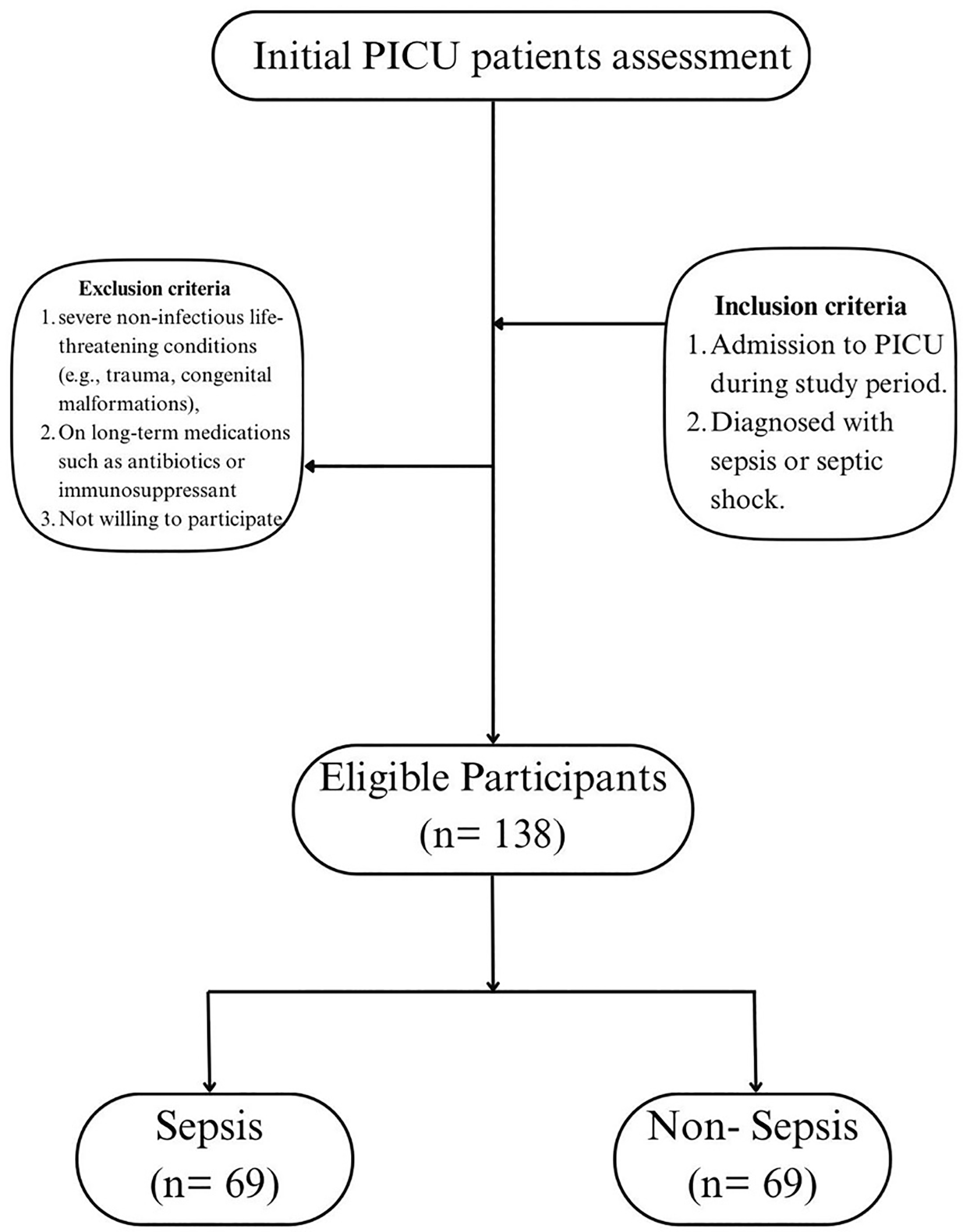
Participants who fulfilled the following criteria were included in the study: (1) admission to the PICU during the study period and (2) diagnosis of sepsis or septic shock according to the Third International Consensus Definitions (2016). Patients were excluded if they had (1) severe non-infectious life-threatening conditions (e.g., trauma, congenital malformations), (2) were on long-term medications such as antibiotics or immunosuppressants, or if (3) they were not willing to participate.
Based on previous research, it was found that the mean PLR in the sepsis group was 62.5, with a standard deviation of 37.3, whereas for the non-sepsis group, the average PLR was 80.4 with a Standard deviation of 26.2. Considering the same 80% power and 95% confidence interval, the sample size was estimated to be 69 patients in each group. Thus, there were 138 PICU patients, 69 patients with sepsis, and 69 patients without sepsis. Consecutive sampling was used to select the participants from the sepsis group. Open Epi Version 3.01 was used to calculate the sample size.10 Figure 1 shows the STROBE flow diagram for recruitment of cases.
Data were collected at the time of PICU admission after obtaining written informed consent from parents/guardians. Blood tests, including a complete blood count (CBC) which were sent as part of the PICU protocol, were considered for the study. CBC was calculated using the Sysmex XN 1000 automator used in our laboratory. For patients who had multiple CBC reports within 24 hours, only the first value was considered for consistency. The collected data included demographic information (age and sex) and clinical diagnosis. All tests were performed in the hospital’s central diagnostic laboratory following standardized protocols. From the collected data, the SII, SIRI, PIV, NLR, MLR, and PLR were calculated using the following formulae:
1. Systemic Immune Inflammatory Index (SII) = neutrophil * platelet/lymphocyte17
2. Systemic Inflammation Response Index (SIRI) = neutrophil * monocyte/lymphocyte18
3. Pan Immune Inflammation Value (PIV) = neutrophil × platelet × monocyte/lymphocyte19
4. Neutrophil to Lymphocyte Ratio (NLR)10
5. Platelet to Lymphocyte Ratio (PLR)10
6. Monocyte to Lymphocyte Ratio (MLR)11
Sepsis and septic shock were defined according to the 3rd International Consensus Definition of 2016. Sepsis is defined as a suspected or documented infection with an acute increase of ≥ 2 Sequential Organ Failure Assessment (SOFA) points. Septic Shock is diagnosed when sepsis and vasopressor therapy are needed to elevate MAP ≥ 65 mmHg and lactate >2 mmol/L (18 mg/dL) after adequate fluid resuscitation. The definitions of the systemic inflammatory indices were based on previously validated formulas.
The data was entered and analysed using IBM SPSS (Statistical Package for Social Sciences) Statistics for Windows Version 29.0. Armonk, NY: IBM Corp. Descriptive statistics were presented as medians and standard deviations. The scores between the case and control arms were compared using an independent-sample t-test. Statistical significance was set at P < 0.05. to assess the predictive ability of the diagnostic markers ROC analysis was done. Additionally, the optimum cut-off values were determined using the Youden Index.
A total of 138 patients in the PICU were included in the study. Fifty percent of the patients belonged to the sepsis group. Table 1 shows participants’ demographic details. The median age was significantly higher in the sepsis group than in the non-sepsis group (P < 0.001). Of the 69 participants in the sepsis group, 56.52% were male, whereas in the non-sepsis group, 46.37% were male.
| SEPSIS GROUP (n = 69) (n (%)) | NON- SEPSIS GROUP (n = 69) (n (%)) | |
|---|---|---|
| Age (Median (SD)) | 8.00 (5.108) | 2.00 (4.414) |
| Gender of patient | ||
| Male | 39 (56.52) | 32 (46.37) |
| Female | 30 (43.47) | 37 (53.62) |
Table 2 shows laboratory parameters of the patients. Compared to the sepsis group the non-sepsis group had lower total WBC counts and neutrophil counts. Values of total WBC count (p < 0.001), Neutrophil count (p < 0.001) and Lymphocyte count(p < 0.001) were found to be statistically significant. Values of Monocyte count (p = 0.649) and Platelet count (p = 0.472) were not found to be statistically significant.
Table 3 shows systemic inflammatory indictors of the patients. Values of NLR (p < 0.001), PLR (p < 0.001), MLR (p < 0.001), SII (p < 0.001), SIRI (p < 0.001), PIV (p < 0.001) were all found to be statistically significant. This indicates that each of the six inflammatory markers were able to accurately predict the incidence of sepsis.
To evaluate the predictive power of NLR, PLR, MLR, SII, SIRI, and PIV for sepsis, the area under the curve (AUC) values were computed using receiver operating characteristic (ROC) curves. The Youden index was used to determine the cutoff points ( Tables 4 & 5).
| INDICATORS | AUC | p VALUE | 95% CI | |
|---|---|---|---|---|
| Lower bound | Upper Bound | |||
| NLR | 1.000 | <0.001 | 1.000 | 1.000 |
| PLR | 0.827 | <0.001 | 0.756 | 0.898 |
| MLR | 0.858 | <0.001 | 0.795 | 0.920 |
| SII | 0.944 | <0.001 | 0.902 | 0.986 |
| SIRI | 0.950 | <0.001 | 0.916 | 0.985 |
| PIV | 0.880 | <0.001 | 0.823 | 0.937 |
| INDICATORS | CUT OFF VALUE | SENSITIVITY | SPECIFICITY |
|---|---|---|---|
| NLR | 1.957 | 100% | 100% |
| PLR | 96.158 | 84.1% | 73.9% |
| MLR | 0.2285 | 76.8% | 81.2% |
| SII | 571727.20760 | 92.8% | 89.9% |
| SIRI | 1284.4100 | 94.2% | 84.1% |
| PIV | 774006913.47 | 73.9% | 94.2% |
ROC curve analysis demonstrated that the NLR had an unprecedented predictive value for sepsis, with an AUC of 1.000 (p < 0.001), indicating perfect discrimination between septic and non-septic patients ( Figure 2). Although such exceptional diagnostic performance is rare in clinical practice, this result may be attributed to the study population, where patients with sepsis likely had a severe inflammatory response characterized by profound neutrophilia and lymphopenia. Extreme elevation in NLR suggests that septic patients may have had fulminant infections, leading sharply to distinct immune profiles, differentiating them from the non-sepsis group. SIRI and SII also showed remarkably high predictive ability with AUC values of 0.950 and 0.944, respectively, in highly significant tests (p < 0.001), reinforcing their status as robust markers of systemic inflammation. PIV exhibited robust prognostic capability with an AUC equal to 0.880 and p value less than 0.001, while PLR and MLR displayed considerable discriminatory ability between patients with sepsis and those without sepsis, with AUC values of 0.827 and 0.858, respectively, with p values less than 0.001. Systemic inflammatory indices, particularly the NLR, may serve as highly effective biomarkers for sepsis in critically ill pediatric patients in resource-scarce settings.
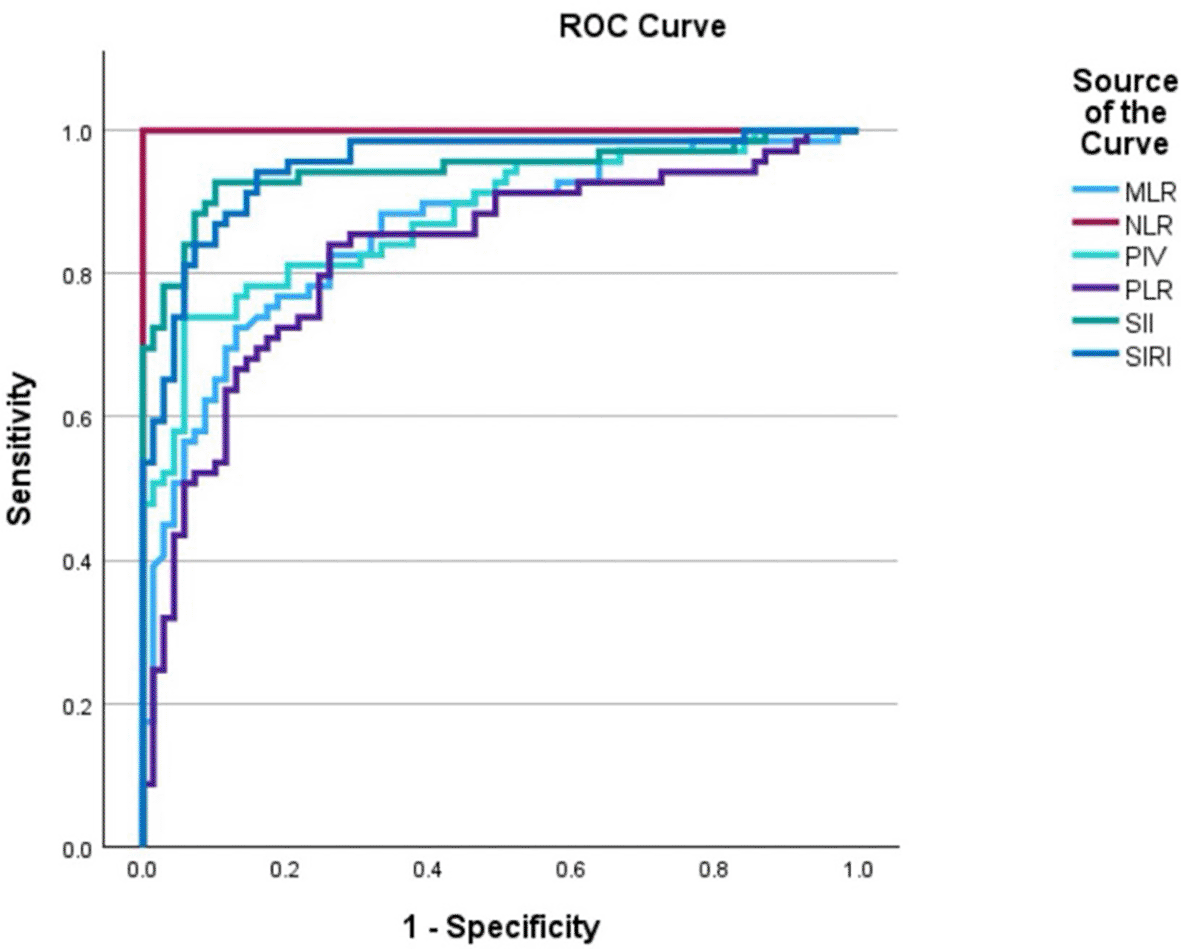
Systemic inflammatory indices play a significant role in predicting sepsis in critically ill pediatric patients. These findings highlight a peculiar inflammatory signature in sepsis patients with grossly elevated NLR, PLR, MLR, SII, SIRI, and PIV underscoring the immune system dysregulation inherent in sepsis. NLR’s strikingly high AUC value of 1.000 suggests extremely severe infection and systemic inflammation in septic patients, reflective of an extreme immune response. Such perfect discriminatory power may be largely attributed to the inclusion of patients with advanced or fulminant sepsis, in which neutrophilia and lymphopenia manifest quite pronouncedly. SIRI with an AUC of 0.950 and SII with an AUC value of 0.944 showed remarkably excellent predictive ability beyond the NLR, reinforcing their role as robust markers. The predictive strength of PLR, MLR, and PIV further supports their potential utility in sepsis diagnosis quite early on. The cut-off values identified here provide actionable thresholds aiding clinical decision-making, thereby facilitating prompt intervention and resulting in markedly improved outcomes. These findings underscore the potential of systemic inflammatory indices to serve as swiftly deployable biomarkers for early sepsis detection in pediatric ICU settings. Implementation of their diagnostics could facilitate earlier treatment initiation in critically ill pediatric patients, thereby significantly improving survival rates and markedly reducing morbidity.
Sepsis persists as a substantial morbidity and mortality factor in gravely ill pediatric patients, necessitating the early identification of reliable diagnostic markers. Systemic inflammatory indices have emerged as bedside markers for sepsis detection, largely because of the inherent limitations of blood culture. NLR, PLR, MLR, SII, SIRI, and PIV are markedly elevated in patients with sepsis, reinforcing their putative role as indicators of systemic inflammation. Systemic inflammatory indices were significantly higher in septic patients than in the non-sepsis group, consistent with the findings of Shanshan Zhu et al.10 The significant elevation of SII in the sepsis group supports the findings of Liang et al., who identified its crucial role in detecting serious bacterial infections in neonates.14 Similarly, Cakir et al. found that systemic inflammatory markers such as SII and PIV were valuable in diagnosing neonatal conditions, which aligns with our results, where PIV demonstrated strong predictive potential.15
Our findings further emphasize the utility of PLR, which was significantly elevated in patients with sepsis, supporting the findings of Güngör et al., who found PLR to be an independent predictor of neonatal infections.13 Additionally, the study by Mathews et al. suggested that a rise in PLR is closely associated with worsening inflammatory burden, which is consistent with our observation that PLR was significantly higher in the sepsis group.18
NLR, which had the highest AUC in our study, was previously identified as a strong predictor of sepsis in pediatric patients. However, the exceptionally high predictive value observed in our study suggests that the included patients with sepsis may have had severe infections, with profound neutrophilia and lymphopenia. Pasaribu et al. previously identified the NLR as a strong marker of sepsis mortality,19 and our findings suggest that its role in early diagnosis may be even more significant.
Although Cakir et al. found that SIRI was a useful marker for diagnosing early onset sepsis,11 our study did not find it to be as strong a predictor as the other indices. Similarly, while thrombocytopenia has been well documented in sepsis, our study found no significant difference in platelet counts between the sepsis and non-sepsis groups. This suggests that while platelet-related indices, such as PLR and SII, are reliable predictors, absolute platelet count alone may not be sufficient for early diagnosis.
Overall, our findings indicate that systemic inflammatory indices, particularly the NLR, SII, PLR, and PIV, are effective predictors of sepsis in critically ill pediatric patients. Their accessibility and ease of calculation make them valuable bedside markers, potentially reducing delays in diagnosis and facilitating early interventions. Further multicenter studies are needed to validate these findings and establish standardized cutoff values for clinical applications.
The generalizability of the findings may be limited because this study was conducted in a single center setting. Results may differ significantly between adult and neonatal populations, whereas study population populations may differ in spopulation, spopulation, spopulation, spopulation, spopulation, spopulation, spopulation, spopulation, and spopulation. Systemic inflammatory indices showed strong predictive ability, yet external validation with a fairly large multicenter cohort remains necessary to confirm clinical applicability. Future research should rigorously incorporate such indices into sepsis screening protocols and evaluate their effectiveness in real-world clinical settings.
The findings of this study underscore the potential of systemic inflammatory indices, particularly NLR and SII, as reliable markers for the early detection of sepsis. NLR shows remarkably high predictive accuracy, suggesting its huge potential as a primary diagnostic tool in patients at exceptionally high risk. These indices could enable prompt therapeutic interventions by facilitating early diagnosis, thereby markedly improving patient outcomes in the PICU setting. Further large-scale studies validating these findings and exploring their integration into routine clinical practice are urgently required.
| Views | Downloads | |
|---|---|---|
| F1000Research | - | - |
|
PubMed Central
Data from PMC are received and updated monthly.
|
- | - |
Provide sufficient details of any financial or non-financial competing interests to enable users to assess whether your comments might lead a reasonable person to question your impartiality. Consider the following examples, but note that this is not an exhaustive list:
Sign up for content alerts and receive a weekly or monthly email with all newly published articles
Already registered? Sign in
The email address should be the one you originally registered with F1000.
You registered with F1000 via Google, so we cannot reset your password.
To sign in, please click here.
If you still need help with your Google account password, please click here.
You registered with F1000 via Facebook, so we cannot reset your password.
To sign in, please click here.
If you still need help with your Facebook account password, please click here.
If your email address is registered with us, we will email you instructions to reset your password.
If you think you should have received this email but it has not arrived, please check your spam filters and/or contact for further assistance.

Comments on this article Comments (0)