Keywords
White Paper, ELIXIR Strategy, Community Roadmap, EuroFAANG, FAANG, Domestic Animal Phenomics, Domestic Animal Genomics, Informatics, Data Science

White Paper, ELIXIR Strategy, Community Roadmap, EuroFAANG, FAANG, Domestic Animal Phenomics, Domestic Animal Genomics, Informatics, Data Science
Domestic animals are defined as having been bred and adapted to meet human needs. They meet the needs of humans in many ways, including as sources of food, workforce, transportation, leisure, companionship, and as key components of many human cultures. They also contribute to agroecosystems by shaping rural landscapes, enhancing soil fertility by producing manure and maintaining biodiversity on marginal and grazing lands.
Domestic animals face several challenges across different contexts:
• Sustainable animal production in a changing climate: Animal-based food production represents a significant challenge to climate change mitigation because livestock, particularly ruminants, contribute to greenhouse gas emissions. They are also vulnerable to drought and heat stress caused by the changing climate, and modern breeding programmes must mitigate these effects. However, with a rapidly growing human population, the demand for animal-derived protein and other food products is increasing. The challenge is now to produce the same amount of food from fewer animals more sustainably, i.e., from a lower number of highly productive animals that require less input, reducing environmental cost.
• Emerging diseases and the need for genomic resilience: Global climate change has led to an increased risk of contagious and vector-mediated diseases, some of which are zoonoses; and when, coupled with increased antimicrobial resistance, understanding the genomic drivers of disease resilience for all domestic animals is essential to mitigate the threat of future disease outbreaks.
• Robustness is a key trait for future livestock: In addition to improving resilience, improving robustness is a common objective for all animal farming systems, including those based upon workforce and transportation, which are still important in many regions of the world. Robust animals that can survive extreme events, such as disease outbreaks or drought, and go on to reproduce, represent valuable genetic resources.
• Welfare challenges from breeding and management practices: A range of welfare issues also pose challenges for domestic animals, including the preferential selection of extreme traits due to skewed breeding objectives, and pressure to rapidly change housing, management systems, or breeding programmes in response to climate-related impacts.
• Maintaining genetic diversity: Several companion animal breeds exhibit high levels of inbreeding and founder effects, which increase the frequency of genetic diseases leading to increased morbidity or early mortality. This phenomenon has also been observed in several highly selected livestock breeds, including the widely used Holstein-Friesian dairy cattle.
• Aligning animal production with societal expectations: Domestic animal welfare and health are a priority in Europe, to a greater extent than in many regions of the world. However, meeting societal expectations is a challenge for animal producers, scientific researchers and associated stakeholders across the domestic animal sectors worldwide.
• Implementing the 3Rs in scientific research: In scientific research, the widespread adoption of the 3Rs (Replacement, Reduction and Refinement) principle for the use of live animals necessitates the timely adoption of advanced in silico, in vitro, and in vivo methodologies, which involve complex technology and protocol development.
Opportunities to address these challenges include:
• Developing data infrastructure according to the FAIR data principles (Findable, Accessible, Interoperable, Reproducible),1 through resources including the FAANG Data Portal.2
• Breeding for increased feed efficiency and reduced rumen size in ruminants3 to lower input use and greenhouse gas emissions.
• Integrating microbiome profiling into breeding strategies to improve animal health and performance.
• Conserving genetic diversity by supporting locally adapted and resilient breeds.
• Introducing genetic screening and genomic evaluation in species where these tools are not yet used, to reduce the accumulation of deleterious alleles.
• Using advanced paleogenomics techniques with zooarchaeological samples for understanding the origins, history, and evolution of domestic animals.4
• Developing cellular technologies to link genome and phenome data across in vitro and in vivo systems, from cell to whole-animal scale.
• Applying genome-wide CRISPR screens in vitro to identify targets for genome editing that improve disease resistance5–7 and welfare traits.8
• Using sensor data and high-throughput phenotyping with genetics to enable informed, efficient, and sustainable breeding decisions.9
Genome sequencing technologies and steady improvements in functional annotation of domestic animal genomes10–12 have advanced our understanding of genetic diversity and how the genome is expressed and regulated in different species, breeds and populations. Yet, much still needs to be done to link genome information to real-world outcomes such as trait improvement. Better integration of genome and phenome information in domestic animals is essential and underpinned by efficient use of data and data resources. As a community of researchers, we need to shift our focus from being descriptive to being predictive; this is a primary objective of data science, which is expected to extract new knowledge from big data.
To meet the challenges described above, productive new collaborations need to be developed across fields, including genetics, biochemistry, microbiology, physiology, nutrition, immunology, and disciplines relevant to data science such as quantitative biology, statistics, computer science, and mathematics. Thus far, a holistic approach has proven difficult with limited sharing of data, data tools and resources across fields. A dedicated ELIXIR community of scientists focused on domestic animal genomics and phenomics will help address the data resource and management challenges towards a shared goal of sustainably managing and maintaining healthy populations of companion animals and productive and sustainable farmed animals.
ELIXIR is a European life sciences infrastructure which supports the management of public research data and coordinates access to life science resources, helping researchers maximise the impact of life science research on public health, the environment, and the economy.13
Until relatively recently, the research landscape for domestic animals was highly divided, mostly by specialisation on a single species. From 2018, six H2020 projects, with the common aim of providing genomic resources to inform precision breeding in farmed animals, came together under the umbrella of the ‘EuroFAANG’ (https://eurofaang.eu) and were the first to connect species-specific projects (https://data.faang.org/projects). Collectively, the projects produced very large omics datasets for pig and chicken (GENE-SWitCH and Geronimo), cattle (BovReg and Rumigen), six teleost fish species (AQUA-FAANG) and the ruminant microbiome (Holoruminant). The concerted efforts of these projects demonstrate what is possible in terms of data analysis, integration and development of shared resources and expertise by working together as one community under the EuroFAANG umbrella. The EuroFAANG projects led to further community infrastructure development, including the nf-core special interest group in animal genomics (https://nf-co.re/special-interest-groups/animal-genomics ), and the Horizon Europe INFRA-DEV EuroFAANG Research Infrastructure (EuroFAANG RI) concept development project (https://eurofaang.eu). The EuroFAANG RI Project led to further integration between the farmed animal genome and phenome communities and was co-developed into a proposal, submitted to the 2026 update of the ESFRI Road Map, entitled GenoPHEnix (https://genophenix-ri.eu/), merging the concepts of EuroFAANG with existing H2020 INFRAIA infrastructures for farmed animal phenotyping, PigWeb (https://www.pigweb.eu), SmartCow (https://smartcow.eu/) and AquaExcel 3.0 (https://aquaexcel.eu). The involvement of ELIXIR nodes in these projects ( Table 1) provides opportunities to build on ELIXIR networks to link and expand collaboration within and between projects and develop shared data management strategies based on the foundation provided by ELIXIR core data resources.
Table 1 highlights the scope and diversity of projects and the informatics and data management needs facing the domestic animal science research space, particularly in terms of infrastructure and resources.
As part of the process of maturing from a Focus Group to a Community, we aim to initiate community activities including: (1) cataloguing ELIXIR Services that support domestic animal genomics and phenomics research; (2) developing recommendations for connecting genomics and phenomics research infrastructures for domestic animals through ELIXIR; and (3) coordinating ELIXIR Node participation in Horizon Europe (HE) infrastructure project proposals such as GenoPHEnix (https://genophenix-ri.eu), the HE cluster 6 topic calls, EU COST Actions and the topics of the future European Commission’s work programme.
Since its establishment in 2024, the Domestic Animals Genome and Phenome (DAGP) Focus Group has been developing connections with the ELIXIR platforms and communities, which are summarised in Table 2. In addition, synergies with the activities of the communities for Biodiversity, Plant Sciences, Single-cell Omics and Federated Human Data are well established through shared activities and described in more detail below.
In domestic animal populations, data recording standards for phenotyping studies, e.g., longitudinal observational studies, are minimal and require improvement. To achieve this, we are working with the Plant Science Community to align with their commonly used ISA standardisation14 efforts for minimal information recording, as well as working with the biodiversity community to adapt the ABCD (Access to Biological Collection Data) standard for domestic animals.
Members of the DAGF Community will contribute high-quality single-cell RNA-seq (scRNA-seq) data to open, standardised infrastructures. However, direct community submission to the Single Cell Expression Atlas (scEA) (https://www.ebi.ac.uk/gxa/sc/home) is not yet supported, and metadata gaps limit interoperability with other ELIXIR resources. To remedy this, we have discussed aligning metadata standards between resources such as Annotare (https://www.ebi.ac.uk/fg/annotare/login/) and the FAANG Data Portal (https://data.faang.org) pre-archiving, to facilitate easier data ingestion. This will enhance FAIR practices, support multimodal data integration and interoperability by evaluating how existing metadata standards align in practice to identify concrete opportunities for harmonisation across FAANG and the scEA.
Genome-to-phenome (G2P) research in domestic animals is constrained by industry reluctance to share genotype and phenotype data due to intellectual property and privacy concerns. This limits data reuse and joint analysis across sectors, undermines FAIR data sharing principles and is slowing progress in food security-relevant genomics. We are addressing this challenge by evaluating data encryption as a technical and community-ready solution for secure G2P data sharing, linking with similar activities led by the Federated Human Data community.
The DAGP community will contribute directly to the five broad objectives of the Biodiversity, Food Security and Pathogens (BFSP) priority area within ELIXIR strategy (Federation, FAIR Data, Analysis, Standards, Training). These contributions are described in detail in the sections below.
The FAANG Data Portal currently supports the domestic animal genomics community through open sharing of data, following the FAIR principles,1 complete with standardised rich metadata. The Data Portal is described in detail in Harrison et al. 2021,2 briefly: FAANG projects produce a standardised set of multi-omic assays with resulting data placed into ELIXIR core database resources (https://elixir-europe.org/platforms/data/core-data-resources). To ensure this data is easily findable and accessible by the community, the portal automatically identifies and collates all submitted FAANG data into a single, easily searchable resource. The Data Portal supports direct download from multiple ELIXIR data and metadata repositories, including the European Nucleotide Archive (ENA) and BioSamples, to enable seamless access to all FAANG data from within the portal itself. The portal provides a range of predefined filters, powerful predictive search, a catalogue of sampling and analysis protocols and automatically identifies publications associated with any dataset. To ensure all FAANG data submissions are high-quality, the portal includes powerful contextual metadata validation and data submissions brokering to the underlying ELIXIR data repositories. The portal also has the flexibility to incorporate new technical infrastructure to effectively deliver new data types and technologies to best fit the needs of the domestic animal science community. Through the DAGP Focus Group, we have explored options to provide data via the FAANG Data Portal for emerging species, including insects, and encrypted proprietory genotype and phenotype data.
A key strategic aim for the emerging DAGP community is to expand the FAANG Data Portal to include observational data types, including phenotypic measurements and image data, bringing new ELIXIR archives, including BioStudies and the BioImage Archive, into the portal infrastructure. This will empower agrobiodiversity and food security-relevant research by reducing the need for observational data submissions to disparate repositories, promoting FAIR principles to enhance data reuse and joint analysis across sectors, and providing a highly standardised data submission system for all animal agriculture data. To facilitate this, appropriate metadata standards for recording animal phenotype information in BioSamples will need to be developed, building on the published FAANG, Vertebrate Breed Ontology and ELIXIR Plant Science Community standards and ensuring compatibility and interoperability across resources for multi-modal submissions across ELIXIR Core Data Resources. We will also co-develop mechanisms with data producers that facilitate the capturing of key information during data production to facilitate easier pre-archive processing, curation and ingestion. In parallel, we plan to explore expanding the functionality of the FAANG Data Portal to provide a searchable and unified view of phenotypic measurement and image data, providing a powerful resource to integrate omics technologies with complementary observation data, enabling solutions to the grand challenges outlined in the BFSP strategy.
An increasing amount of domestic animal-related data is now being produced through sequencing. Sequencing provides access to genetic diversity and sheds essential light on key molecular processes. These include gene expression levels and various epigenetic analyses that help improve our understanding of the dynamics of gene expression and its intricate relationship with genetic diversity. The substantial advancements in sequencing technology mean that these fundamental questions can now be addressed using high-throughput sequencing, with the raw data effectively represented as counts mapped onto a reference genome.
Of course, the devil is in the details, and a wide variety of sequencing technologies now co-exist at multiple levels, including acquisition methodologies and interpretation algorithms. Yet, achieving seamless integration across datasets, experiments, and species is often crucial for maximising the potential of these data. This is why ENCODE15 and similar large-scale distributed projects were initially presented as major models in the initial FAANG white paper.11 Indeed, one of the main achievements of ENCODE is arguably the capacity to generate enormous amounts of data perfectly comparable across sites and assays for human and mouse.
In the meantime, the landscape of large-scale genomics analysis has significantly evolved, particularly for biodiversity. Domestic animal genomics is now closely connected to a broader global effort aimed at characterising the genomes of all animal species on Earth, as exemplified by the Earth BioGenome Project (https://www.earthbiogenome.org). While the specific needs of domestic animal research may differ from those of strictly ecological studies, there are compelling reasons why data generated by the animal genomics community and the domestic animal genomics community should remain interoperable. One key reason is the identification of evolutionary constraints. From an evolutionary perspective, genomic data can provide crucial insights into the emergence of traits in wild species and their subsequent harnessing through domestication, particularly with the integration of paleogenomics data across time transects e.g.4 Similarly, studying the genomics of closely related wild species can enhance our understanding of disease resistance across species and improve strategies for managing genetic diversity.16 One example is the DoGA Atlas project for the domestic dog (https://www.doggenomeannotation.org/), which provides an expression atlas of promoters and genes for 100 tissues from both domestic dog breeds and wolves, enabling high resolution disease mapping.17 These considerations explain why the domestic animal genomics community has a strong interest in developing computational tools within a framework that ensures the highest level of interoperability—not just within its research community but also across related fields with similar goals.
In recent years, an increasing number of scientific communities have adopted FAIR principles for software development and implementation. In the context of animal genomics, one of the most advanced European initiatives is the Darwin Tree of Life (DToL) (https://www.darwintreeoflife.org), which utilises Nextflow technology to implement pipelines following the nf-core standard.18 More recently, the six H2020 projects under the EuroFAANG umbrella have joined forces to adopt the nf-core standard collectively. The adoption process is detailed in the recently published nf-core update,19 which highlights both the necessity of the FAIRification process for pipelines and the feasibility of a gradual transition. This transition ensures that fragmented ecosystems remain functional while progressing toward greater interoperability. Given that large-scale funding for a uniform transition to a unified computational framework is unlikely, the DAGP Community must propose a pragmatic path toward computational FAIRification while maximising integration with minimal constraints.
The computational framework associated with EuroFAANG is a cornerstone of its long-term sustainability. This framework serves four primary purposes:
1. It provides practical solutions for the community to manage and maximise the value of generated data.
2. It ensures that datasets can be compared and interoperated across consortia and species, enabling data consolidation for the most informative analyses.
3. It guarantees long-term data interoperability while addressing two conflicting realities: on the one hand, sequencing technologies will continue to improve, becoming more precise and affordable; on the other hand, older datasets—produced under less advanced standards—will still contain key information essential for improving newer datasets.
4. It is designed to be compatible with industrial developments.
These objectives can be effectively met through the implementation of robust standards. Establishing community-wide standards will therefore be a key mission of the DAGP Community, ensuring that these emerging standards align with the outlined objectives through active community participation.
A community-driven approach is particularly effective for fostering the emergence of standards in a bottom-up manner. This strategy was successfully demonstrated in the development of nf-core standards19 and FAANG community metadata standards,20 which were initially defined collaboratively and refined over time.
The ability to predict biological outcomes at the cell, tissue, and organismal level (i.e., the genotype-to-phenotype challenge, G2P) relies on the timely adoption and integration of in silico, in vitro, and in vivo technologies. In vitro systems include immortalised cell lines, primary cells, stem cell lines and organoids (miniaturised and simplified versions of organs produced in three dimensions, “3D”, derived from adult or embryonic stem cells), and more complex micro-physiological systems such as Organ-on-Chip (OoC), that are microfluidic cell culture devices inhabited by living cells arranged to simulate tissue- and organ-level physiology.21 In vitro systems are amenable to an extensive array of biochemical perturbation and genetic modification (such as genome editing) techniques for fundamental and translational research and can be phenotyped by existing assays such as bulk and single-cell omics and imaging. Among 3D models, organoids have been developed and used across the main farm animal species for a wide range of scientific goals,22,23 while the development of OoCs, is still in its infancy.
Widespread use of 3D and complex cell models in farm animal sciences is hindered by the need to adapt existing lab methodologies across different species and to improve reproducibility. A primary challenge is the rapid pace of evolution of methods, coupled with the need to control the biological and technical variation inherent to these systems. For example, one relevant feature for G2P research in farm animals is the interest in cryopreserving “in vitro populations” by the implementation of adequate cryobanking of non-sterile tissues still enabling organoid derivation.24 On the other side, immortalised cell lines have been instrumental in validating specific molecular hypotheses from in vivo studies and in generating new hypotheses. CRISPR screens25 can be used to identify genetic determinants of host response to important infectious diseases, nutrient uptake or other environmental challenges. This approach facilitates insight into the mechanisms regulating traits that, especially in the case of infectious diseases, are virtually impossible to study in vivo e.g.7,26 or that constitute extremely complex traits well studied in vivo, such as feed efficiency.27 The limitations of immortalised cell lines remain their limited physiological representation of the physiology of the target tissue, and the non-representation of the genetic background between individuals within and between populations.
The improvement of metadata requirements and the progressive standardisation of protocols and processes, from biobanking to FAIR data production and sharing (see “Consolidated computational tools and pipelines for genomic analysis”), is an essential prerequisite for exploiting the full potential of these models for linking cell, tissue and whole animal scale knowledge. Currently, the FAANG Data Portal rule sets include the metadata requirements for “purified cells”, “cell culture”, “cell lines” and “organoid” that link each cell model to the original organism and tissue, and to the data generated at all levels. This expansion and improvement of metadata rules is an ongoing process relying on the progressive adaptation of existing metadata requirements defined in other species (e.g., Organoid network of the Human Cell Atlas portal: https://data.humancellatlas.org/hca-bio-networks/organoid).
Since 2023, one of the core objectives of the EuroFAANG RI project has been to prepare the communities of in vitro model users to exploit the full potential of these systems for advancing excellent open-science and to face the challenges of animal sciences in sustainable agriculture. To date, networking, training and dissemination activities have focused on:
• Promoting best practices (experimental protocols sharing, identification of new relevant metadata) by expanding the current community and connecting with relevant initiatives in the human and model animals’ field.
• Mapping of European animal biobanks to coordinate and expand their range of services, including new sets of biobanking rules for the cryopreservation and sharing of tissues, germplasms, stem cells, as well as edited cell lines, in connection with other European initiatives.
• Facilitating bilateral competitive research for the breeding industry stakeholders.
• Documenting the state-of-the-art of technologies and approaches most relevant to tackle the in vitro-in vivo challenge.
In addition, digital twins provide AI based in silico models that add a further dimension to the in vitro-in vivo challenge. They are virtual models of individual animals, herds or populations that use real-time data from sensors, such as wearables, to monitor, analyse and predict phenotypes such as health, behaviour, and environmental conditions. The model provides simulations to test different management strategies before implementation to improve animal health, welfare and productivity. They can enable, for example, anticipation of disease outbreaks in poultry and optimisation of feeding strategies based on environmental variables such as pasture health in dairy cattle.28 The concept enables a constant data exchange between the ‘real’ animal and in silico model, allowing management decisions to be made remotely in ‘real-time’ minimising costly in vivo management interventions and increasing productivity and sustainability.28 As digital twins are data derived entities, they are highly dependent on accurate metadata, which can pose a challenge. The potential they offer though to link in vivo, in vitro and in silico to predict biological outcomes across multiple levels (cell, tissue, individual, herd/population) is exciting, particularly for minimising the need for costly and invasive in vivo research.
There are several real-world outcomes of relevance to the BFSP strategy that could be achieved in domestic animals through cross-community interactions and shared objectives. One example is leveraging FAIR data and data resources to understand the genomic drivers of resilience to pathogens. The applicability of functional and integrative genomics approaches to understanding host-pathogen interactions and the infection biology of important livestock diseases has been demonstrated over the last decade using in vitro macrophage infection models for the intracellular mycobacterial pathogens that cause bovine tuberculosis (bTB) and Johne’s disease.29,30 For example, integration of transcriptomics (RNA-seq, microRNA-seq) and epigenomics (ChIP-seq) data sets revealed mechanisms responsible for the profound reprogramming of bovine alveolar macrophages in response to infection with Mycobacterium bovis, the causative agent of bTB.31–33 Multi-omics experiments, focusing on infectious diseases in livestock, have the potential to guide future breeding programmes aimed at enhancing disease resilience through biology-driven selection and genome editing, including using high-throughput CRISPR screens to identify functional variants.5,6
Other examples include the consolidation of genomic data resources for conserving biodiversity34 at local and regional levels through developing data standards for biobanking, and tools and workflows for pangenome analysis and structural variant effect prediction in breeds and populations, such as Ensembl Compara.35 Links with the microbiome community and resources such as MGNify and Ensembl microbes35 can also inform agricultural sustainability, for example, providing resources to characterise the microbiome of low and high-methane-emitting ruminants. Datasets processed by these resources and provided to the community could facilitate industry stakeholders to breed for improved sustainability by selecting efficient, low-methane-emitting animals.
The DAGP Focus Group included members from many European and global initiatives and these will expand further as the DAGP Community grows. For example, the GenoPHEnix proposal (https://genophenix-ri.eu) to the 2026 update of the ESFRI Road Map aims to build a consolidated infrastructure for farmed animal science and biobanking in Europe to generate readiness to meet future challenges to the Agri-Food sector and has the following five aims:
• To sustainably produce and manage healthier farmed animals, with the highest welfare standards.
• To more accurately exploit animal variability through enhanced phenotyping and genotyping capacity.
• To contribute to the 3Rs (Replacement, Reduction and Refinement) in animal research by providing suitable models for deep phenotyping in vitro as well as in vivo.
• To advance the analysis of genome function, combined with the collection of deep phenotype information at cell, tissue, animal and on-farm/population level resolution.
• To provide tools and knowledge, from the above four aims, for optimal and more precise breeding considering sustainable management practices, and conservation of genetic diversity.
The data infrastructure proposed for GenoPHEnix will expand the FAANG Data Portal to include phenotype data in line with ELIXIR BFSP strategic priorities to provide linked omics and phenotype data to the community.
Members of the DAGP Community also participate in international committees dedicated to developing standards for animal recording, such as the International Committee for Animal Recording (ICAR) (www.icar.org) and have strong links with consortia aiming to capture local and global genomic diversity, such as the Ruminant T2T genome Project36 and Bovine PanGenome Project.37 Several members are also on the steering committees of large-scale genomics initiatives for domestic animals, such as the FAANG12 and FarmGTEx projects.38 They are therefore ideally placed to ensure the needs of the emerging DAGP Community are represented globally. DAGP Focus Group activities, including a workshop at the ‘ELIXIR All Hands’ conference in 2025, led to discussions with the AG2PI initiative in the USA39 around data encryption and methods for sharing of proprietary data from industry stakeholders. Over the coming five years there will also be potential to run shared training workshops and develop shared objectives with the Animal Breeding - RCN: Farm Animal Genomics Collective in the US (https://portal.nifa.usda.gov/web/crisprojectpages/1032104-animal-breeding-rcn-farm-animal-genomics-collective.html). In Europe two COST Actions, EU-LI-PHE, focused on livestock phenomics (https://eu-li-phe.eu), and Insect-IMP (www.cost-insectimp.eu), focused on improving insect breeding, provide networking opportunities and the potential to capture the needs of both additional domestic species and countries in Europe that are not currently represented in the ELIXIR DAGP Community.
A RoadMap for 2025-2030 for the DAGP Community is provided as a separate document describing the main objectives and examples of the tasks required to achieve them.40 In Figure 1 below, the timeline for establishing the Community is shown, including the Focus Group activities.
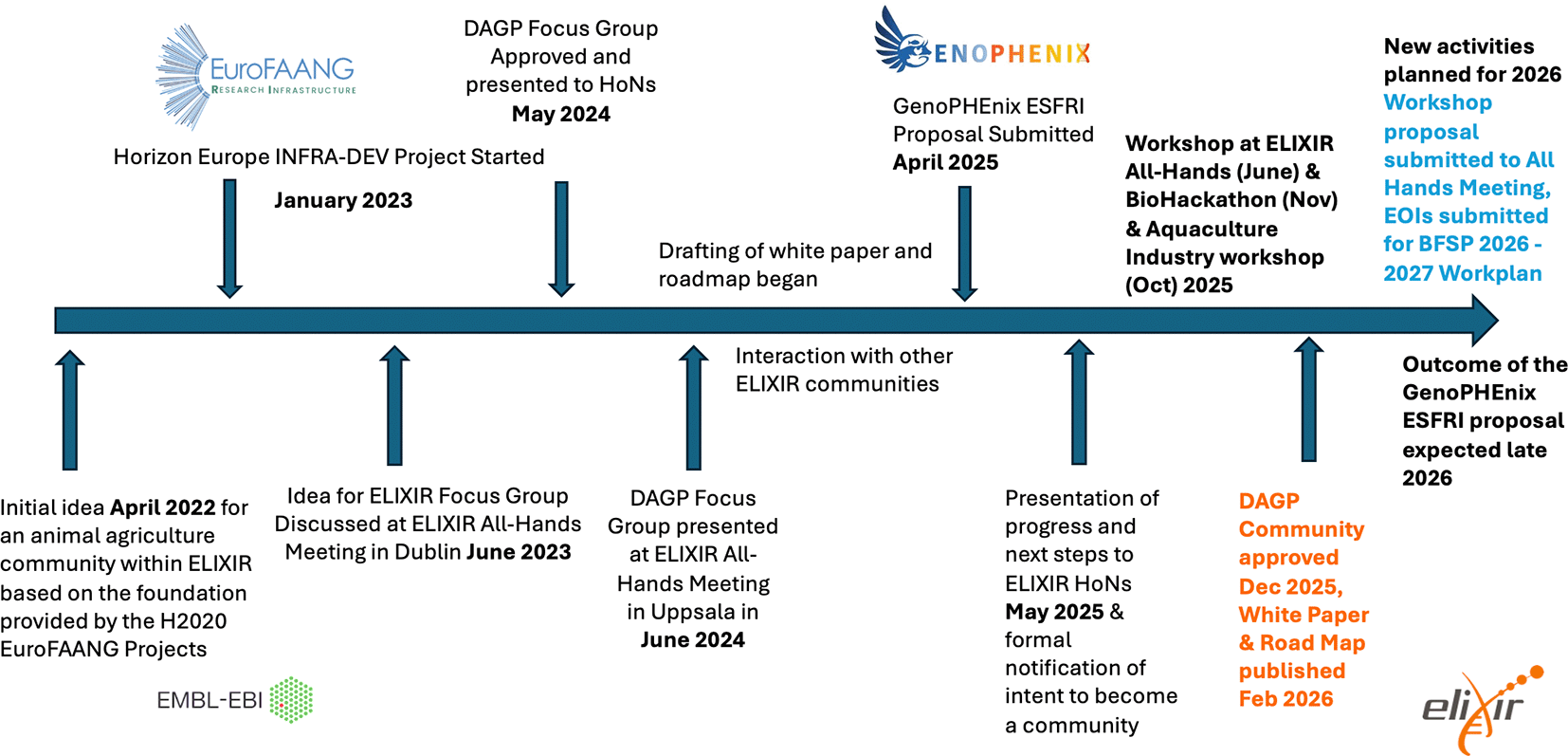
Focus Group activities included a workshop held at the ELIXIR All Hands Meeting in June 2025 to expand the FAANG Data Portal, and a ELIXIR BioHackathon workshop to develop minimal reporting standards for farmed animals based on the Plant Science Community standards in November 2025. In addition, with ELIXIR Norway an ELIXIR industry day took place in Oslo in October 2025, focused on innovating the aquaculture sector with big data resources, which brought together participants from the aquaculture sector from industry and academia. These activities will help to plan community needs and determine which are the highest priority.
The ELIXIR DAGP Focus Group defined the following six initial key priorities for the ELIXIR DAGP Community:
1. Consolidation and standardisation of phenomic data and metadata, including standardised recording of longitudinal behavioural measurement data and image data into ELIXIR core data resources.
2. Consolidation of data/metadata across submission platforms to improve interoperability, access and sharing, e.g., single-cell data, and as a basis for adoption of new methodological standards.
3. Sharing of proprietary data from industry partners using secure data encryption methods.
4. Development and harmonising of best practices for bio-banking data and samples, building community best practices.
5. Establishing Persistent Unique Identifiers (PUIDs) for all data types related to a given animal.
6. Better integration of omics data with phenotype data, e.g. through expansion of existing resources to incorporate phenotyping data, such as the FAANG Data Portal (https://data.faang.org/home), to increase data visibility, accessibility, and interoperability.
To achieve these initial priorities, we are participating in ELIXIR implementation calls and BFSP Science Tier Work Programme development. We will also leverage other EU and international funding opportunities, and the GenoPHEnix proposal to the 2026 update of the ESFRI Road Map, to ensure continuous support for the community goals.
| Views | Downloads | |
|---|---|---|
| F1000Research | - | - |
|
PubMed Central
Data from PMC are received and updated monthly.
|
- | - |
Provide sufficient details of any financial or non-financial competing interests to enable users to assess whether your comments might lead a reasonable person to question your impartiality. Consider the following examples, but note that this is not an exhaustive list:
Sign up for content alerts and receive a weekly or monthly email with all newly published articles
Already registered? Sign in
The email address should be the one you originally registered with F1000.
You registered with F1000 via Google, so we cannot reset your password.
To sign in, please click here.
If you still need help with your Google account password, please click here.
You registered with F1000 via Facebook, so we cannot reset your password.
To sign in, please click here.
If you still need help with your Facebook account password, please click here.
If your email address is registered with us, we will email you instructions to reset your password.
If you think you should have received this email but it has not arrived, please check your spam filters and/or contact for further assistance.

Comments on this article Comments (0)