Keywords
CO₂ emissions; fossil fuel consumption; renewable energy; ecological transitions; welfare systems; environmental governance

This article is included in the Climate gateway.
This article is included in the Public Health and Environmental Health collection.
CO₂ emissions; fossil fuel consumption; renewable energy; ecological transitions; welfare systems; environmental governance
First, the theoretical framework was strengthened, moving from a general formulation of the institutionalist approach toward a more explicit integration of the concept of the “ecological welfare state.” This revision includes a more in-depth discussion of institutions as contextual factors rather than merely descriptive elements, thereby enhancing conceptual coherence and addressing previous concerns about limited theoretical articulation.
Second, the methodological section was expanded and clarified. The revised version incorporates key justifications, including the use of the Generalized Method of Moments (GMM), control of endogeneity, careful instrument selection to avoid overfitting, explanation of Variance Inflation Factor (VIF < 2), and discussion of stationarity using the Im–Pesaran–Shin (IPS) test. Additionally, limitations such as omitted variable bias and cross-sectional dependence are explicitly acknowledged, improving overall scientific transparency.
Third, the interpretation of variables was refined, particularly concerning CO₂ emissions. While the initial version implied more direct effects, the revised manuscript appropriately emphasizes their indirect impact through climate change, achieving better alignment with the existing literature.
Furthermore, the results were more carefully nuanced. Strong causal claims are avoided, and appropriate caveats are introduced regarding heterogeneity, average effects, and potential model limitations (e.g., non-significant AR(1)).
Finally, the academic writing and internal consistency were enhanced, with improved alignment between hypotheses, variables, and results, as well as greater precision in terminology.
See the authors' detailed response to the review by Matheus Koengkan
Environmental degradation is a multidimensional and progressive process characterized by the deterioration of natural ecosystems, primarily driven by anthropogenic activities that exceed the resilience thresholds of ecological systems. As explained by Long and Steel,1 this phenomenon weakens the structural and functional integrity of ecosystems, accelerates biodiversity loss, and disrupts essential ecological dynamics. The overexploitation of natural resources—exacerbated by agricultural expansion, unplanned urbanization, and pollution—has surpassed the carrying capacity of many ecosystems, diminishing their ability to provide essential services.2,3
Climate change further intensifies this trend through rising temperatures, increased climatic variability, and sea-level rise, amplifying the negative socioeconomic impacts in vulnerable regions.4
From an institutionalist perspective, these environmental risks cannot be detached from the design and effectiveness of formal norms, regulatory agencies, and governance structures. As noted by,5,6 institutions play a decisive role in shaping policy responses and determining how societies internalize environmental externalities. Thus, environmental degradation represents not only a biophysical process but also an institutional failure that perpetuates poverty, territorial exclusion, and socio-environmental vulnerability.7
In the 21st century, life expectancy must be interpreted as an outcome conditioned by both environmental and institutional determinants of well-being. Environmental degradation—through biodiversity loss, pollution, and resource depletion—directly undermines the conditions required for a healthy and dignified life, particularly among vulnerable populations.
As argued by,8,9 sustainable well-being requires acknowledging the intrinsic link between quality of life and ecological integrity. Building on this, institutionalist theory posits that the design and strength of public institutions shape and condition the effects of environmental degradation on social outcomes, including health,9,10 rather than acting as directly measured mediating mechanisms within the empirical model.
Accordingly, life expectancy should be linked to the institutional capacity to integrate environmental justice, territorial resilience, and intergenerational equity into public policy. However, in this study, such institutional dimensions are not directly measured but are considered as contextual factors shaping the observed relationships.11,12
Consequently, the welfare state must transcend its traditional redistributive focus and incorporate ecological risks as structural components of long-term social policy.13
Empirical evidence confirms that air pollution, extreme weather events, and climate change exacerbate public health crises, disproportionately affecting low-income populations, older people, and children.13–15
These environmental stressors not only reflect ecological imbalances but also reveal institutional weaknesses, especially when welfare systems lack adaptability and robustness to mitigate their effects.16,17
In rural and agricultural regions, phenomena such as food and water insecurity—stemming from ecological degradation—undermine livelihoods and access to essential services.18
As highlighted in institutionalist studies, these outcomes are not inevitable but depend on the strength and coherence of governance systems. In this context, state intervention must evolve from reactive mechanisms toward proactive strategies, including climate-resilient infrastructure, integrated planning, and regulatory reforms that prioritize social and environmental justice.19,20
This reorientation entails developing an “ecological welfare state” capable of addressing the overlapping demands of sustainability, equity, and resilience through institutional innovation and multilevel coordination.9,10
Rethinking life expectancy within the ecological crisis framework requires reconfiguring its institutional foundations to embed the governance of environmental commons. This case includes adopting participatory governance tools, environmental impact assessments, and socio-ecological planning instruments that strengthen co-responsibility and legitimacy in public investment. Regulatory frameworks must reflect the interdependence between environmental integrity and social rights, moving beyond fragmented policy responses.
As emphasized by,5 institutions shape the incentives, constraints, and capacities of actors to respond effectively to complex challenges. Therefore, integrating scientific and local knowledge, ensuring equitable access to resources, and reinforcing institutional accountability can enhance the transformative potential of welfare regimes. In sum, reinforcing life expectancy as a central indicator of sustainable development requires embedding ecological dimensions as both preconditions and drivers of equitable and resilient societies.
Although previous studies have documented the effects of air pollution, CO2 emissions, and fossil fuel use on life expectancy,21,22 few have analyzed these relationships within a normative and institutional framework that incorporates the logic of the welfare state. This study seeks to bridge that gap by integrating environmental degradation variables—such as CO2 emissions and fossil fuel dependency—into a dynamic empirical model of life expectancy, framed within the concept of an “ecological welfare state”.9,10,23 In doing so, it aligns environmental outcomes not only with public health but also with the structural role of state intervention in providing collective goods, regulating externalities, and mitigating ecological risk through formal institutions.
The relationship between environmental degradation and life expectancy has attracted growing attention over recent decades, particularly in light of global climate change and its impact on public health. Foundational studies have linked ecological deterioration—including pollution, biodiversity loss, and climate variability—to adverse health effects, especially among vulnerable populations.1–3
These findings highlight how environmental stressors disrupt ecosystem services essential to human well-being, such as access to clean air and water.
While numerous empirical studies have documented the adverse effects of CO2 emissions and fossil fuel consumption on life expectancy,22,24 and others have emphasized the importance of access to safe drinking water,25,26 most have treated these variables in isolation, without situating them in an institutional context. This study addresses that gap by applying institutionalist theory, which emphasizes that development outcomes are shaped not only by economic or environmental factors but also by the quality, design, and responsiveness of institutions.27,28
Under this framework, we argue that environmental degradation affects life expectancy through both direct and institutionally mediated channels. Strong institutions—such as comprehensive welfare states, effective environmental agencies, and inclusive infrastructure policies—can mitigate the harmful effects of pollution and ecological risks by providing essential services and regulatory safeguards.9,10
Conversely, weak institutions exacerbate vulnerability by failing to internalize environmental costs and ensure equitable service provision.
This study proposes two key hypotheses:
(1) Higher CO2 emissions and fossil fuel consumption reduce life expectancy by exposing populations to greater environmental risks. However, the magnitude and direction of these effects are expected to vary across countries with different institutional and socioeconomic contexts.
(2) The use of renewable energy sources improves life expectancy by strengthening resilience and reducing ecological pressures.
To empirically test these hypotheses, a dynamic panel data model is estimated using the Generalized Method of Moments (GMM) for 20 European Union countries over the period 2000–2020, capturing both temporal dynamics and unobserved heterogeneity.21,29
Our contribution lies in integrating environmental and institutional variables within a theoretical model of life expectancy, offering a broader understanding of how public health outcomes are shaped by ecological risks and institutional capacity in a comparative European context.
According to,24 life expectancy refers to the average age an individual is expected to reach under specific social and health conditions. However, this measure goes beyond a mere demographic estimate.
As noted by,30 life expectancy reflects not only the general health status of a population but also the cumulative effects of socioeconomic and environmental conditions, as well as effective access to essential services such as safe water, education, and healthcare.
In this sense,22 highlights that environmental degradation—measured through CO2 emissions—has a significant negative impact on life expectancy. In other words, countries with higher levels of environmental pollution tend to experience a greater decline in population well-being.
Analyzing environmental degradation requires incorporating indicators that capture both direct environmental pressures and their collateral impacts on quality of life. In this study, five representative variables are selected: carbon dioxide (CO2) emissions, fossil fuel consumption, and the share of renewable energy in the energy mix. Institutional structures play a critical role in mediating these relationships, as they determine the efficiency, equity, and responsiveness of public health and environmental policies influencing longevity.27
CO2 emissions—recognized as a primary contributor to global greenhouse gases—originate mainly from the combustion of fossil fuels in electricity generation, transportation, and industrial production. However, CO2 should not be considered a local air pollutant with direct effects on human health. Instead, its relevance lies in its contribution to climate change, which may indirectly affect health outcomes through mechanisms such as rising temperatures, increased climate variability, and broader environmental degradation. In Europe, despite progress in decarbonization, the correlation between economic prosperity and emissions remains evident, particularly in high-income countries where per capita energy consumption is high.
According to,31 although this relationship is more pronounced in Latin America, European countries are not exempt, as their industrial legacy, high mobility patterns, and energy-intensive lifestyles continue to pose environmental challenges.
Reference 32 further notes that in the European context, sectors such as transportation and manufacturing remain significant sources of emissions, driven by urbanization and the persistent dependence on fossil-based energy systems.
However, unlike many regions, Europe has made substantial progress in diversifying its energy matrix, integrating renewable sources such as wind, solar, and hydropower. These measures—alongside energy efficiency policies and clean technologies—are central to the European Green Deal’s ambition to achieve climate neutrality by 2050.33,34
The effectiveness of these mitigation strategies largely depends on institutional governance, which influences both regulatory enforcement and technological diffusion.25,35
Fossil fuel use remains one of the main drivers of environmental degradation, as it constitutes the primary source of CO2 emissions, one of the most significant greenhouse gases contributing to climate change.26,36
Despite being a non-renewable, finite resource, its exploitation remains intensive globally.
According to,36 even if humanity were to exhaust all existing reserves—a process that could take several centuries—the climatic consequences for the planet’s balance would be catastrophic. Therefore, relying on the natural depletion of fossil fuels cannot be considered a viable or responsible strategy in the face of the current climate crisis.
Today, key sectors such as industry, transportation, and electricity generation remain heavily dependent on coal, oil, and natural gas. This dependence intensifies the emission of pollutants that, once released into the atmosphere, can travel long distances, producing transboundary effects on air quality, public health, and global climate stability.21,37
Institutional capacity, including the ability to regulate energy transitions and enforce environmental standards, remains a central variable in managing fossil fuel dependence.
The deployment of renewable energy is widely recognized as a key factor and strategic opportunity to mitigate the adverse effects of climate change and advance toward a sustainable development model.
According to,38 urban areas account for more than 70% of global greenhouse gas (GHG) emissions, underscoring the urgency of transitioning to clean, sustainable energy sources.
Among the most viable alternatives are solar, wind, geothermal, and hydropower, which not only substantially reduce emissions but also promote energy diversification and decrease dependence on fossil fuels. This transition further generates co-benefits, including improved air quality, growth in local green economies, and enhanced energy resilience against future shocks.33,38
Promoting these technologies—supported by coherent public policies and green financing mechanisms—is essential to meeting the climate targets set under the Paris Agreement. The institutional environment—through regulatory stability, investment incentives, and public–private partnerships—conditions the pace and inclusivity of this energy transformation.
When examining the relationship between life expectancy and environmental degradation, it is crucial to recognize that the issue transcends biophysical factors such as deforestation, rising global temperatures, or greenhouse gas emissions. What is ultimately at stake is human life, public health, and the quality of life of millions of people. Each environmental indicator reflects deeply rooted social and institutional dimensions, as ecological deterioration disproportionately affects vulnerable populations through systemic inequalities and governance gaps.
From an institutionalist perspective, these outcomes underscore the state’s central role as a regulator of environmental risks, an active provider of collective goods, and a redistributor of environmental protections. As emphasized by,9 integrating ecological sustainability into the design of life expectancy metrics requires acknowledging the interdependence between social systems and environmental governance.
In this context, well-being should not be defined solely in terms of income or service access, but also by the institutional capacity to ensure environmental conditions that sustain life. Understanding how ecological factors influence well-being thus becomes an urgent institutional challenge, not only for academic research but also for the design of resilient public policies grounded in equity, environmental justice, and long-term social protection frameworks.38
Gross Domestic Product (GDP) per capita was transformed using natural logarithms because its values were considerably higher than those of the other variables. This transformation helped stabilize the variance, reduce skewness, and ensure that the data could be processed and analyzed on an equal basis with the other indicators included in the econometric model.
The objective of this study is to analyze the behavior of the factors contributing to environmental degradation and their impact on life expectancy in European Union member countries. To this end, a quantitative research approach was employed, using panel-data regression models that capture both temporal and cross-sectional variability throughout the study period.
The data were obtained from the Our World in Data platform (https://ourworldindata.org/data), which compiles information from multiple international organizations — including the World Bank, OECD, and leading academic institutions. The data were downloaded in CSV format and subsequently filtered for analysis. The platform provides environmental, social, and public health statistics for EU countries.
The study sample comprises the following 20 countries: Austria, Belgium, Bulgaria, Croatia, Czechia, Denmark, Finland, France, Germany, Greece, Hungary, Ireland, Italy, Luxembourg, the Netherlands, Poland, Portugal, Romania, Spain, and Sweden.
To ensure a more representative analysis of Europe’s economic and environmental realities, countries were classified into two groups based on their average GDP per capita over the study period (2000–2020). Specifically, countries with higher average income levels were categorized as high-income, while those with relatively lower average income levels were classified as middle-income. This classification follows a relative grouping approach within the sample, allowing for the identification of structural differences in economic capacity, institutional context, and environmental dynamics.
Although this classification does not strictly follow external thresholds such as those defined by the World Bank, it provides a consistent and internally comparable framework for analyzing heterogeneity across countries. However, this approach may introduce some limitations related to sample-specific grouping, which should be considered when interpreting the results.
• The high-income group includes: Luxembourg, Ireland, Denmark, Sweden, the Netherlands, Austria, Finland, Germany, Belgium, and France.
• The middle-income group includes: Italy, Spain, Czechia, Portugal, Greece, Hungary, Poland, Croatia, Romania, and Bulgaria.
This classification enables the exploration of structural differences and distinct patterns in the relationship between environmental degradation and life expectancy. The analysis period covers 2000 to 2020.
Although institutional quality constitutes a central element of the theoretical framework, it is not explicitly included as a separate variable in the econometric specification. Instead, institutional differences are indirectly captured through the classification of countries into high- and middle-income groups, which reflect structural variations in governance capacity, regulatory frameworks, and welfare systems. This approach allows for the exploration of heterogeneous effects across institutional contexts, although it does not permit direct testing of institutional mediation.
In line with institutional theory, which emphasizes the role of governance structures, public policies, and institutional conditions in shaping social outcomes (6,27), this study integrates environmental and infrastructure indicators as reflections of the state’s capacity to regulate, provide, and adapt to ecological challenges ( Table 1). Further information is available in the Mendeley open repository.39
| Type of variable | Variable | Conceptual definition | Unit of measurement | Source |
|---|---|---|---|---|
| Dependent | Life Expectancy | A summary measure of population health that estimates the average number of years a person is expected to live based on current mortality rates.40 | Years | Our World in Data |
| Independent | CO2 Emissions | Amount of carbon dioxide released into the atmosphere, a process in which gases absorb part of the sun’s energy, thereby causing an increase in temperature.41 | Metric tons of CO2 per person per year | Our World in Data |
| Independent | Fossil Fuel Consumption | Primary source of air pollution and greenhouse gas emissions; there are three primary types of fossil fuels: coal, oil, and natural gas.42 | Percentage (%) of total energy consumption | Our World in Data |
| Independent | Use of Renewable Energy as a Primary Energy Source | Natural processes that can be repeated and allow the generation of clean and inexhaustible energy.43 | Percentage (%) of total energy consumption | Our World in Data |
| Independent | GDP per capita at constant prices (log-transformed) | Market value of the final goods and services produced in an economy during a given period of time.44 | U.S. dollars (log) | World Bank |
While the model includes key environmental and economic variables, it does not incorporate additional controls such as healthcare expenditure, education, urbanization, or demographic structure. This choice reflects a parsimonious specification based on data availability and comparability across countries and over time. However, the exclusion of these variables may introduce omitted variable bias, as life expectancy is influenced by multiple socio-economic and demographic factors. Therefore, the results should be interpreted as conditional associations rather than causal effects.
CO2 emissions and fossil fuel consumption were included because they play complementary, non-redundant roles from both theoretical and empirical perspectives. Although fossil fuel combustion is the primary anthropogenic source of CO2 emissions,45 the impact of each variable on public health and life expectancy may operate through distinct mechanisms.
• Fossil fuel consumption reflects a country’s energy structure and dependency, as well as its energy intensity and the effectiveness of transition policies.38
• CO2 emissions, in contrast, represent a cumulative environmental outcome associated with climate change processes, which may indirectly affect human health through environmental and climatic pathways rather than direct exposure effects, particularly via mechanisms such as temperature increases and environmental degradation.24,38
The logarithm of GDP per capita was used because its raw values were substantially higher than those of the other variables. This adjustment stabilizes variance, reduces skewness, and enables comparability across all indicators in the model.
The literature treats these two environmental dimensions—energy use and emissions—as distinct, justifying their simultaneous inclusion in multivariate econometric models. For example,21,22 note that although emissions stem from fossil energy use, their behavior may vary depending on energy efficiency, fuel type (coal, gas, oil), and the adoption of mitigation technologies such as carbon capture and storage.
Empirically, this study confirms that collinearity between these variables does not compromise model robustness. The Variance Inflation Factor (VIF) values remain well below the critical threshold (VIF < 2), validating their simultaneous inclusion. Moreover, considering both variables enhances explanatory power by distinguishing between sources of environmental stress (energy use) and their direct environmental effects (emissions) on life expectancy—thus avoiding the omission of key analytical dimensions.
To formally specify the econometric structure, a dynamic panel data model estimated through the Generalized Method of Moments (GMM) was adopted, following.46 This methodology controls for unobserved heterogeneity, potential endogeneity among explanatory variables, and autocorrelation in the error terms—issues commonly found in macro-level longitudinal data.
The basic form of the model is:
Where:
• : Change in life expectancy for country iii at time ttt (dependent variable).
• : Lagged change in life expectancy, capturing the dynamic nature of the process.
• : Lagged change in fossil fuel consumption (% of energy use).
• : Lagged change in CO2 emissions (metric tons per capita).
• : Lagged change in the share of renewable energy in total energy supply.
• : Lagged change in natural logarithm GDP per capita (current USD), included as a control variable.
• ε it: Error term, assumed to be uncorrelated with the instruments used.
In the GMM estimation, instruments were constructed using lagged values of the endogenous variables, following the standard Arellano–Bond approach. To avoid overfitting and instrument proliferation, the number of instruments was deliberately restricted by limiting the lag depth and collapsing the instrument matrix. This procedure ensures a parsimonious specification while maintaining the validity of the instruments. As a result, the total number of instruments remains relatively low (8), which is appropriate given the sample size and helps improve the robustness and replicability of the estimates.
The decision to transform the variables into first differences is primarily guided by the IPS unit root test results, which suggest non-stationarity in levels and stationarity after differencing. However, it is important to recognize that this decision is not based solely on the IPS outcomes. Given the dynamic nature of the model and the need to avoid spurious regression results, differencing is also consistent with standard practices in GMM estimation when variables are integrated of order one.
At the same time, it is acknowledged that the IPS test assumes cross-sectional independence, which may not fully hold in the context of European Union countries due to their economic and environmental interconnections. Therefore, while the transformation provides a consistent estimation framework, the potential presence of cross-sectional dependence represents a limitation. Future research could address this issue by applying second-generation panel unit root tests that explicitly account for such dependencies.
From an institutionalist perspective, this model is particularly well-suited to capturing the cumulative effects of public policies over time, reflecting how institutional stability, regulatory frameworks, and welfare-state interventions shape the capacity to respond to environmental challenges. The use of a dynamic specification, incorporating lagged effects and infrastructure variables, enables testing for persistent features of institutional performance.
This specification aligns with established empirical practices in environmental economics and public health, where dynamic relationships and persistence effects are common. By integrating environmental, infrastructural, and economic indicators within a dynamic and institutionally informed framework, the model provides robust empirical evidence on the determinants of life expectancy in the European Union over the period 2000–2020.
Figure 1 illustrates the temporal evolution between 2000 and 2020. The dependent variable in the analysis is life expectancy, while the independent variables include fossil fuel consumption, CO2 emissions, renewable energy use, and GDP per capita.
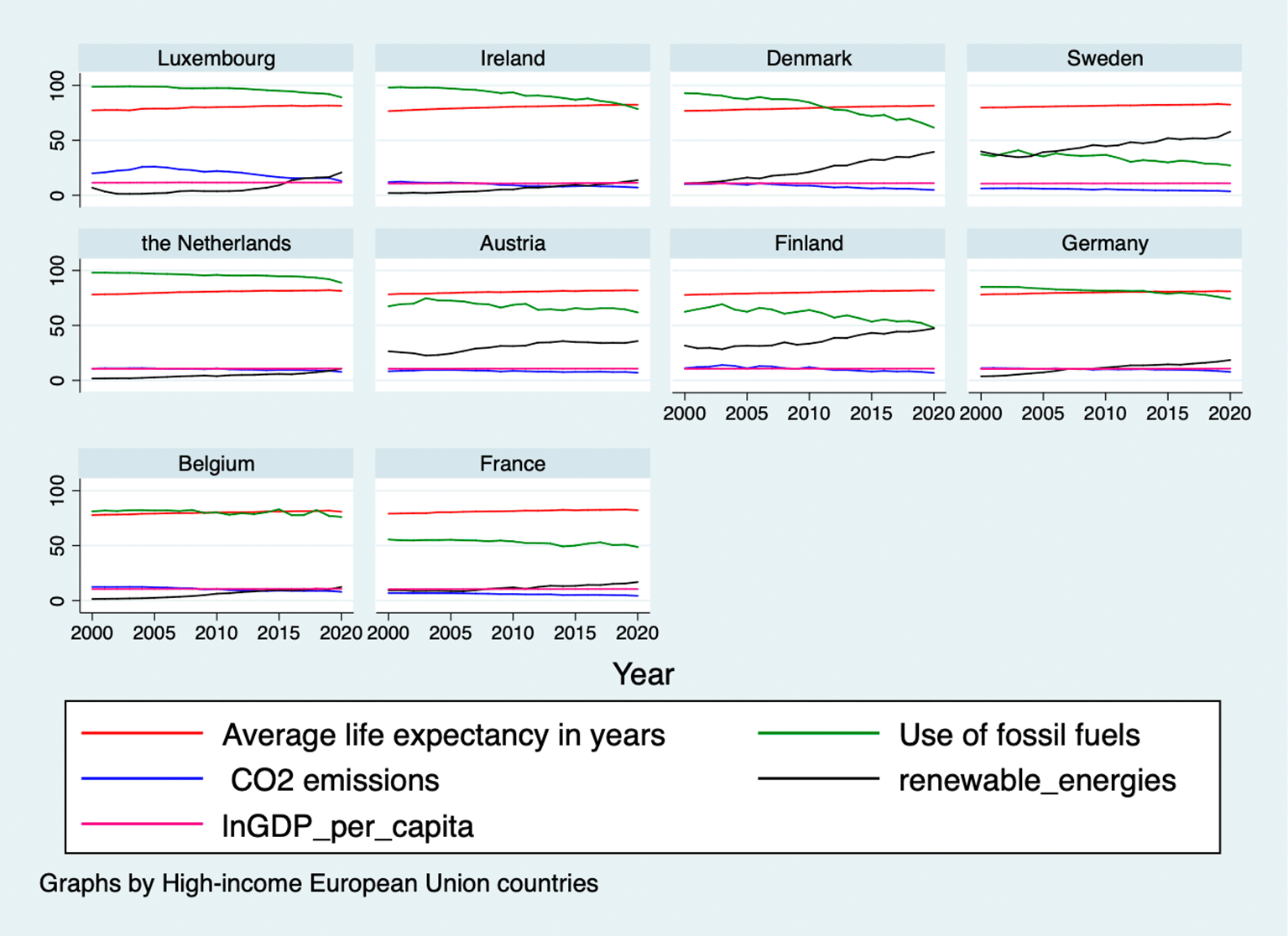
The charts for high-income European countries present key trends in the relationships among environmental, economic, and health factors.
First, life expectancy remains relatively stable across all countries, with marginal but consistent increases during the 2000–2020 period. This study reflects the consolidation of strong health and welfare systems—characteristic of developed economies—where improvements in longevity tend to be sustained over time.
Second, fossil fuel use is declining in several countries, particularly Denmark, Sweden, and Germany, indicating progress in the energy transition. However, in countries such as Luxembourg and Ireland, fossil fuel consumption remains comparatively high, suggesting that energy dependence remains a structural challenge.
Similarly, renewable energy use is on the rise in most countries, particularly in Denmark, Sweden, and Germany, highlighting the impact of environmental policies on the energy matrix. Nonetheless, this growth has not yet been sufficient to replace dependence on fossil fuels entirely.
Finally, CO2 emissions show relative stability or slight reductions, consistent with the gradual adoption of sustainability-oriented policies. Overall, the results indicate that although the energy transition is advancing in these high-income countries, reconciling economic growth (lnGDP per capita) with environmental sustainability remains a persistent challenge—particularly in nations with greater reliance on fossil energy.
The descriptive results presented in Table 2 provide an overview of the behavior of the variables analyzed in high-income European countries.
First, life expectancy averages 80.26 years, with low variability (standard deviation of 1.42) and a range of 76.54 to 83.05 years. These values indicate relatively high and homogeneous levels of longevity across the countries analyzed.
Regarding fossil fuel use, the mean is 74.07% of the energy matrix, with considerable dispersion (standard deviation of 19.82) and values ranging from 27.14% to 99.08%, suggesting substantial differences in energy dependence across countries.
CO2 emissions average 9.82 metric tons per capita, ranging from 3.54 to 25.95, indicating heterogeneity in environmental pressure among countries.
Renewable energy use averages 18.13%, with high variability (standard deviation of 14.85%) and values ranging from 1.28% to 57.83%, reflecting uneven adoption of renewable energy sources.
Finally, GDP per capita (log-transformed) averages 10.77, with low dispersion (0.29) and a range of 10.41 to 11.62 indicating relatively similar income levels within this group.
The analysis of medium-income European Union countries reveals consistent patterns in the relationship between environmental and economic variables and life expectancy. In general, life expectancy maintains a relatively stable upward trajectory, though at a more moderate slope than in high-income countries.
Fossil fuel consumption shows a gradual decline in most cases, reflecting ongoing energy transition processes, although levels remain comparatively high in countries such as Romania, Bulgaria, and Greece.
In contrast, renewable energy use is growing notably, particularly in Portugal, Romania, and Bulgaria, where expansion is more pronounced. This increase reflects policy-driven transitions toward sustainable energy sources.
However, CO2 emissions show slight but persistent increases in several countries, underscoring the challenges of decoupling economic growth from environmental pressures.
Finally, GDP per capita shows moderate growth, although disparities among countries remain evident, with southern and eastern European states showing slower progress.
These findings emphasize that institutional capacity and public policy frameworks play a decisive role in mediating the impact of environmental and economic changes on health outcomes ( Figure 2).
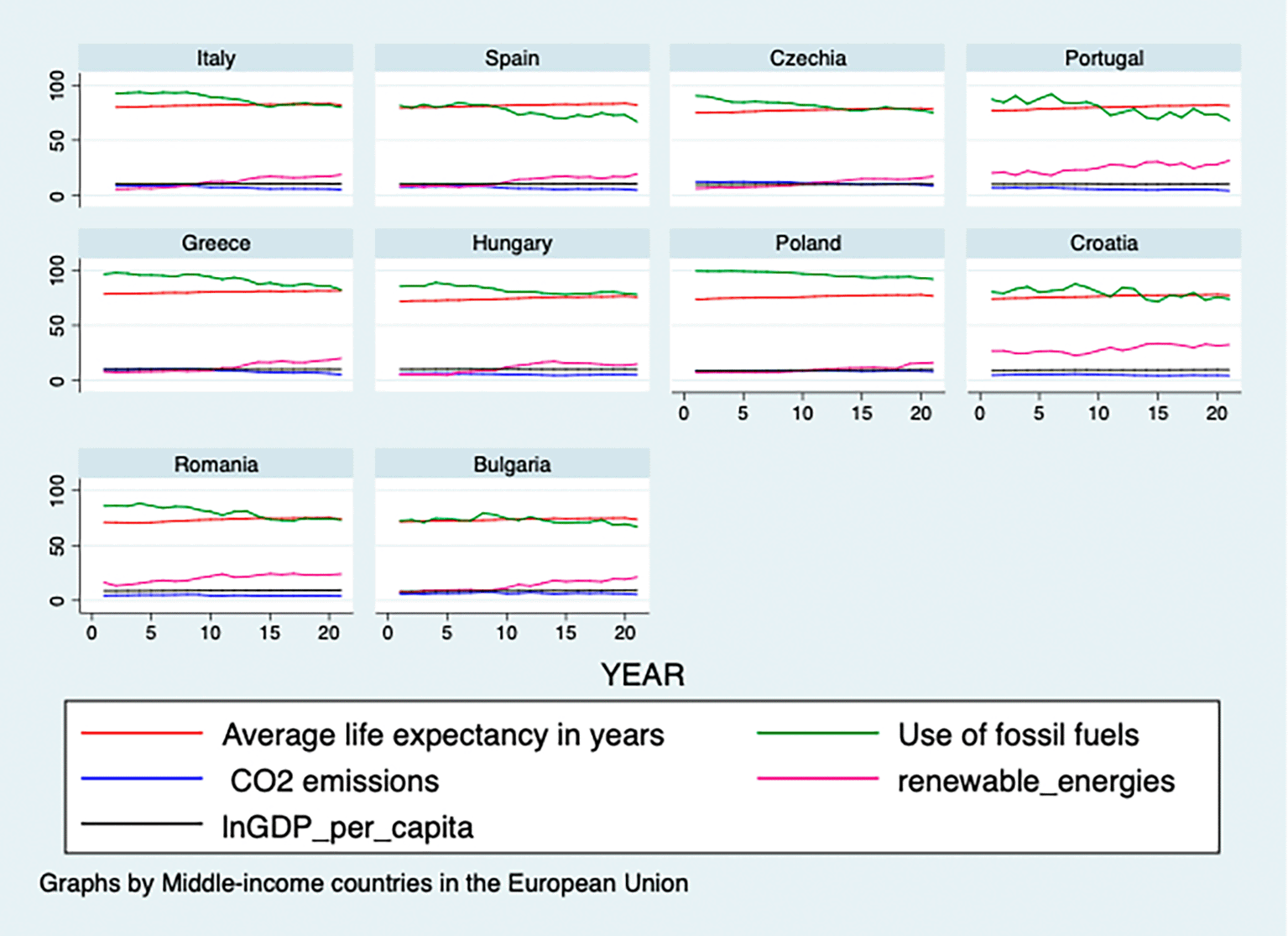
The graphical evidence presented in Figures 1 and 2 suggests the presence of heterogeneous trajectories across countries, particularly in the evolution of environmental and economic variables. While the econometric model addresses part of this heterogeneity by grouping countries into high- and medium-income categories, it assumes homogeneous slope coefficients within each group. This simplifying assumption facilitates estimation but may not fully capture country-specific dynamics. Therefore, the results should be interpreted as average effects within groups rather than country-specific relationships.
The results presented in Table 3 summarize the descriptive statistics for medium-income European Union countries.
Life expectancy averages 77.45 years, with a standard deviation of 3.34 and a range of 70.81 to 83.47 years indicating moderate variability across countries.
CO2 emissions average 6.80 metric tons per capita (standard deviation of 2.16), ranging from 3.80 to 12.50, indicating variation in environmental pressure levels.
Renewable energy use averages 15.70% (standard deviation of 7.37), with values ranging from 4.63% to 33.61, suggesting differences in the adoption of renewable energy sources.
GDP per capita (log) averages 9.62, with a standard deviation of 0.52 and a range of 8.22 to 10.43, reflecting variation in economic performance within the group.
The following sections present a comparative analysis of the relationship between environmental degradation and life expectancy, differentiating the results for high- and medium-income countries. This segmentation enables the identification of specific patterns and the contrast of how environmental variables affect population health across different institutional and socioeconomic contexts.
For high-income European countries Table 4 reports the results of the Im–Pesaran–Shin (IPS) unit root test used to examine the stationarity properties of the panel data. This test evaluates the null hypothesis that each series contains a unit root against the alternative of stationarity.
The results indicate that, in levels, none of the variables exhibit statistical evidence of stationarity, as all p-values exceed the 0.05 threshold. For instance, life expectancy presents a p-value of 1.0000, while CO2 emissions and fossil fuel consumption show p-values of 0.3164 and 0.9577, respectively, implying that the null hypothesis of non-stationarity cannot be rejected.
When the variables are transformed into first differences, the test results change substantially, with all series displaying statistically significant p-values (p < 0.05). This suggests that the variables become stationary after differencing, indicating that they are most likely integrated of order one. Such properties justify their inclusion in dynamic panel models such as GMM.
Nevertheless, it is important to consider that the IPS test relies on the assumption of cross-sectional independence and may be affected by heterogeneity across panel units. In the European context, where countries are economically and environmentally interconnected, cross-sectional dependence is a plausible concern. Consequently, the stationarity results should be interpreted with caution, as they may not fully reflect the complexity of the underlying panel structure.
The Arellano–Bond,47 test results for high-income European countries indicate no statistically significant autocorrelation in the first-differenced residuals at either AR(1) or AR(2) levels. While the absence of AR(2) autocorrelation is consistent with the validity of the model, the lack of significant AR(1) autocorrelation is less typical in first-differenced specifications and should be interpreted with caution. This outcome may reflect sample-specific characteristics or limitations in the model specification and therefore does not provide strong confirmatory evidence regarding the dynamic structure of the model.
This result is relevant because it ensures that the residuals do not exhibit short- or medium-term serial correlation—a necessary condition for the validity of GMM estimators. Consequently, it confirms that the instruments used are appropriate and that the dynamic model is correctly specified, providing robustness and consistency to the results obtained ( Table 5).
| Order | z | Prob > z |
|---|---|---|
| 1 | −0.88 | 0.378 |
| 2 | 0.29 | 0.768 |
Table 6 presents the Variance Inflation Factor (VIF) values for each explanatory variable included in the model. This test evaluates the degree of collinearity among independent variables, which is essential to ensure the validity of econometric estimates.
| Variables | VIF |
|---|---|
| Life expectancy | 1.95 |
| Use of fossil fuels | 1.82 |
| CO2 emissions | 1.40 |
| Use of renewable energy as a primary source of energy | 1.26 |
| lnGDP per capita | 1.24 |
As a general rule, VIF values below 5 indicate no serious multicollinearity, while values below 2 are considered optimal. The results show that all explanatory variables exhibit low VIF values, indicating the absence of problematic multicollinearity in the model.
Table 7 presents the results of the Hansen test for overidentifying restrictions in the GMM model. The chi2(2) statistic is 0.28, with an associated probability of 0.600.
| restrictions: chi2(2) = 0.28 | Prob > chi2 = 0.600 |
Since the p-value is greater than 0.05, the null hypothesis of valid instruments cannot be rejected. This case implies that the instruments used in the model are uncorrelated with the error term, thereby reinforcing the reliability of the estimated model.
Although the Hansen test results suggest that the instruments are valid, it is also important to consider the number of instruments relative to the sample size. In this study, the number of instruments (8) remains well below the number of cross-sectional units, reducing the risk of instrument proliferation and overfitting. This supports the reliability of the GMM estimates. Nevertheless, as in any dynamic panel model, the potential sensitivity to instrument specification should be acknowledged.
Before estimating the dynamic model using the Arellano–Bond Generalized Method of Moments (GMM), a diagnostic test was conducted to identify possible heteroscedasticity in the model variables. The results indicated that some variables exhibited this issue, potentially compromising estimator efficiency. To address this limitation and ensure robust results, the GMM model was estimated with robust standard errors, yielding consistent estimates even in the presence of heteroscedasticity.
The dynamic estimation following Arellano and Bond (1991) for high-income European countries yields several key findings. Table 8 presents the results of the dynamic panel-data estimation using the Arellano–Bond Generalized Method of Moments (GMM) for high-income European Union countries.
| Group variable: COUNTRY Time variable: YEAR | Number of obs | 190 | ||
|---|---|---|---|---|
| Obs per group | ||||
| min | 19 | |||
| Avg | 19 | |||
| Max | 19 | |||
| Number of instruments | 8 | Prob > chi2 | 0.0000 | |
First, the dependent variable, life expectancy, shows a negative but statistically insignificant coefficient. Although the coefficient of the lagged dependent variable is not statistically significant, its magnitude suggests a moderate degree of persistence in life expectancy. However, this result should be interpreted with caution, as the lack of statistical significance prevents drawing strong conclusions about temporal dependence.
Second, a significant result is observed for fossil fuel use, with a positive, statistically significant coefficient. This study indicates that, in these countries, fossil fuel consumption is associated with higher life expectancy. A significant result is observed for fossil fuel use, with a positive and statistically significant coefficient. This finding indicates a positive association between fossil fuel consumption and life expectancy in high-income countries. However, this result should be interpreted with caution. Rather than representing a causal relationship, it may reflect alternative mechanisms such as omitted variable bias, reverse causality, or measurement issues. For example, higher-income economies with advanced healthcare systems and infrastructure may simultaneously exhibit higher energy consumption and better health outcomes.
In contrast, both CO2 emissions and renewable energy use show statistically insignificant coefficients, suggesting that their marginal impact on life expectancy is weak in high-income countries—probably because public health outcomes are already supported by well-established welfare and environmental institutions.
Similarly, GDP per capita does not show a significant effect, suggesting that additional economic growth in advanced economies does not directly translate into measurable improvements in life expectancy.
For the group of medium-income countries, Table 9 reports the results of the Im–Pesaran–Shin (IPS) unit root test applied to the main variables to determine their integration orders. This test is used in panel-data models to verify the presence of a unit root (H0) versus the alternative hypothesis of common stationarity (H1).
According to statistical criteria, p-values below 0.05 indicate rejection of the null hypothesis and suggest that the series is stationary.
The results show that none of the variables is stationary in levels, since all exhibit p-values greater than 0.05. For example, the life expectancy variable has a p-value of 1.0000, and CO2 emissions a p-value of 0.2573, indicating the presence of a unit root in their original form.
However, when the test is applied to first differences, several variables become stationary: life expectancy (p = 0.0025), CO2 emissions (p = 0.0023), renewable energy use (p = 0.0003), and GDP per capita (p = 0.0439). These results suggest that the variables are integrated of order one, satisfying the conditions for their inclusion in dynamic models such as GMM.
However, it is important to note that the IPS test assumes cross-sectional independence and may be sensitive to panel heterogeneity. Given the integration of European economies and potential interdependencies among countries, the presence of cross-sectional dependence cannot be ruled out. Therefore, these results should be interpreted with caution, as they may not fully capture the underlying data structure.
Table 10 presents the results of the Arellano–Bond test applied to the medium-income European countries to assess the presence of autocorrelation in first-difference errors.
| Order | z | Prob > z |
|---|---|---|
| 1 | −1.10 | 0.269 |
| 2 | −0.85 | 0.393 |
The results show that for order 1, the z statistic is −1.10 with a probability of 0.269, while for order 2, the z statistic is −0.85 with a probability of 0.393.
Since in both cases the p-values exceed 0.05, the null hypothesis (H0) of no autocorrelation in the residuals cannot be rejected. The results of the Arellano–Bond48 test for medium-income European countries indicate that no statistically significant autocorrelation is detected in the first-differenced residuals at either the AR(1) or AR(2) levels. While the absence of second-order autocorrelation (AR(2)) is consistent with the assumptions of the model, the lack of evidence of first-order autocorrelation (AR(1)) is somewhat unusual in this type of specification and should therefore be interpreted with caution. This pattern may be associated with specific characteristics of the sample or potential limitations in the model specification and thus does not provide conclusive confirmation of the estimated dynamic structure.
Table 11 reports the Variance Inflation Factors (VIFs) for the explanatory variables in the model to assess multicollinearity. This indicator detects potential redundancies among independent variables that could distort econometric estimates.
| Variables | VIF |
|---|---|
| Use of fossil fuels | 3.29 |
| CO2 emissions | 1.32 |
| Use of renewable energy as a primary source of energy | 1.27 |
| lnGDP per capita | 1.04 |
As a general rule, VIF values below 4 are considered acceptable.
In this case, the results indicate no serious multicollinearity among variables, since all values fall below the critical threshold. The variable use of fossil fuels (3.29) has the highest VIFs, though they remain within a manageable range. Other variables—CO2 emissions (1.32), renewable energy use (1.27), and GDP per capita (1.04)—show low collinearity.
The Hansen test for overidentification yields χ2(2) = 1.85, with a p-value of 0.396, confirming the validity of the instruments used in the estimation. Since the p-value exceeds 0.05, there is no evidence of correlation between the instruments and the error term, avoiding overfitting issues and ensuring the consistency of the GMM model results ( Table 12).
| restrictions: chi2(2) = 1.85 | Prob > chi2 = 0.396 |
The dynamic panel-data estimation results for medium-income European countries are presented in Table 13. First, lagged life expectancy shows a positive coefficient (1.30), although not statistically significant (p = 0.603), suggesting weak temporal persistence of this variable within the group of countries analyzed.
| Group variable: COUNTRY Time variable: YEAR | Number of obs | 189 | ||
|---|---|---|---|---|
| Obs per group | ||||
| min | 18 | |||
| Avg | 18.90 | |||
| Max | 19 | |||
| Number of instruments | 8 | Prob > chi2 | 0.0000 | |
Second, fossil fuel use shows a positive coefficient (0.043), but it is not statistically significant (p = 0.273), indicating a relationship without sufficient statistical evidence.
However, two relevant findings emerge:
• CO2 emissions have a negative and statistically significant effect (−0.71; p = 0.044), consistent with the expected adverse impact of environmental degradation on population health in medium-income countries. The associated confidence interval is fully negative, reinforcing the robustness of this relationship. This result suggests that, in these contexts, environmental pressures translate more directly into health outcomes, possibly reflecting limitations in regulatory capacity, environmental governance, or health system resilience. Therefore, higher levels of emissions are associated with reductions in life expectancy.
• Renewable energy use shows a positive and statistically significant association (0.26; p = 0.047), indicating a positive association with life expectancy within this group of countries.
Finally, GDP per capita does not exhibit a statistically significant effect on life expectancy (p = 0.258). This result is accompanied by a relatively large standard error and a wide confidence interval, indicating a high degree of uncertainty in the estimated coefficient. Consequently, no robust conclusions can be drawn regarding the role of income in explaining variations in life expectancy within this group of countries.
The empirical findings provide partial but relevant support for the proposed hypotheses.
Regarding Hypothesis 1—that higher CO2 emissions and higher fossil fuel consumption reduce life expectancy—the results show differentiated dynamics by income group. In high-income European countries, fossil fuel consumption has a positive, statistically significant effect on life expectancy—a counterintuitive result suggesting that, in advanced economies, fossil fuel use remains linked to economic activity and health infrastructure. By contrast, CO2 emissions display a negative but not significant coefficient, indicating that their harmful impact is not yet statistically detectable in the short term. In medium-income countries, fossil fuel consumption is not significant, whereas CO2 emissions show a negative and significant association with life expectancy.
With respect to Hypothesis 2—that renewable energy use improves life expectancy—the evidence is more substantial, albeit asymmetric. In medium-income countries, renewable energy use shows a positive, statistically significant effect, confirming that expanding sustainable energy sources contributes to resilience and yields measurable health benefits. In contrast, in high-income countries, renewables do not exhibit significant effects on life expectancy, which may be explained by the fact that, once countries have reached high levels of welfare and universal health coverage, additional improvements in environmental quality are less likely to produce immediate or detectable changes in longevity within the relatively short time horizon of the analysis.
This study provides relevant evidence by showing that the relationship between environmental factors and life expectancy differs across country groups with distinct economic and structural characteristics. While these differences may be associated with variations in institutional capacity and governance frameworks, the empirical model does not directly test these mechanisms. Therefore, institutional factors should be interpreted as contextual elements rather than as empirically verified causal effects. In this sense, the observed differences between high- and medium-income countries may reflect a combination of institutional, economic, and structural conditions that shape how environmental pressures translate into health outcome.23,49
A more direct assessment of the role of institutional capacity would require additional robustness checks, such as the inclusion of interaction terms, subgroup regressions using institutional proxies (e.g., governance indicators), or alternative model specifications. Although these extensions are beyond the scope of the present study, they represent a relevant avenue for future research and would contribute to strengthening the empirical identification of institutional mechanisms.
From a methodological perspective, the results should be interpreted considering that the model focuses on a parsimonious set of environmental and economic variables. While this allows for identifying clear associations with life expectancy, it does not explicitly incorporate additional socio-economic determinants—such as healthcare expenditure, education, urbanization, or demographic structure—which are known to influence health outcomes. As a result, the estimated relationships may capture broader dynamics that combine environmental and socio-economic effects.
In addition, the European context is characterized by a high degree of regional integration, where environmental and economic processes frequently extend beyond national borders. As noted in the literature,21,37 phenomena such as transboundary pollution and interconnected energy systems suggest that part of the observed relationships may be influenced by cross-country interactions. While the model captures average effects within country groups, these should be interpreted as aggregate patterns that may partially reflect such interdependencies.
Similarly, the time span of the analysis (2000–2020) includes major global disruptions, such as the global financial crisis and the onset of the COVID-19 pandemic, which have been shown to affect economic and health dynamics.14,16 In this context, the results should be understood as average relationships over time, rather than as responses to specific short-term shocks.
Furthermore, the empirical specification assumes homogeneous effects within country groups. While this approach facilitates comparative analysis, it may not fully capture country-specific trajectories, as highlighted in previous studies on panel heterogeneity.21,22 Therefore, the estimated coefficients should be interpreted as general patterns rather than uniform effects across all countries within each group.
Within this framework, the results reveal differentiated dynamics across income levels. In high-income European countries, life expectancy exhibits limited temporal variation, suggesting that institutional maturity contributes to stable health outcomes. The positive association observed between fossil fuel consumption and life expectancy should be interpreted with caution, as it may reflect underlying structural factors—such as higher levels of economic development and more advanced healthcare systems—rather than a direct causal relationship.24,28 In this context, the absence of significant effects from CO2 emissions, renewable energy use, and GDP per capita reinforces the idea that well-established welfare and environmental systems may buffer marginal environmental variations.10,25
These findings can be further interpreted through an institutional lens. Previous research highlights that development outcomes and well-being are shaped not only by economic or environmental conditions, but also by governance quality, social capital, and institutional capacity.49 In this framework, institutions operate as mediating structures that influence the extent to which environmental risks translate into health outcomes. Accordingly, the stronger and statistically significant negative effect of CO2 emissions observed in middle-income countries may reflect weaker regulatory enforcement, limited public health infrastructure, and lower adaptive capacity. In contrast, in high-income countries, more robust welfare systems and environmental governance frameworks may partially offset these adverse effects, reducing their observable impact on life expectancy.
In contrast, medium-income European countries show greater sensitivity of health outcomes to environmental conditions. CO2 emissions are negatively associated with life expectancy, indicating that environmental pressures may translate more directly into health outcomes in these contexts, consistent with previous findings.22,24 At the same time, renewable energy use shows a positive association, which may reflect broader processes of environmental and socio-economic transition. However, this relationship likely operates through indirect mechanisms—such as improvements in environmental quality or reductions in pollution exposure—that are not explicitly captured in the empirical model, as suggested in related studies.21,26,36,50
Since the model does not include mediating variables—such as air quality indicators or environmental health measures the underlying transmission channels remain unobserved. Therefore, the results should be interpreted as reduced-form associations rather than structurally identified causal relationships. This interpretation is consistent with the broader literature, which emphasizes the complexity of linking environmental factors to health outcomes through multiple indirect pathways.
From a policy-oriented perspective, the results are consistent with the relevance of differentiated strategies that consider the institutional and structural characteristics of each country group. In high-income countries, the challenge lies in advancing regulatory innovation and integrating environmental sustainability into welfare systems. In medium-income countries, strengthening institutional capacity and promoting cleaner energy transitions appear particularly relevant. However, these implications should be interpreted as indicative rather than prescriptive, given that the empirical analysis does not directly evaluate specific policy interventions.
This study contributes to the literature by examining the relationship between environmental degradation and life expectancy in the European Union, highlighting how these dynamics differ across countries with distinct economic and structural characteristics. The empirical results indicate that the effects of environmental factors on population health are not uniform, but vary depending on contextual conditions associated with income levels and broader institutional environments.
In high-income European countries, the findings suggest that environmental variables such as CO2 emissions and renewable energy use do not exhibit statistically significant effects on life expectancy, while fossil fuel consumption shows a positive association. However, this result should be interpreted with caution, as it may reflect underlying structural factors—such as advanced healthcare systems, higher levels of economic development, or other omitted variables—rather than a direct causal relationship.
In contrast, medium-income European countries show a more pronounced sensitivity of health outcomes to environmental conditions. CO2 emissions are negatively and significantly associated with life expectancy, indicating that environmental pressures may translate more directly into adverse health outcomes in these contexts. At the same time, renewable energy use is positively associated with life expectancy, although this relationship should be interpreted as an indirect association rather than a direct causal effect, given that the model does not explicitly capture the underlying transmission mechanisms.
Overall, the results suggest that environmental and economic factors interact with broader contextual conditions, which may include institutional, structural, and socio-economic elements, although these are not directly modeled in the empirical specification. Therefore, the findings should be interpreted as reduced-form relationships rather than structurally identified causal effects.
From a policy perspective, the results support the relevance of differentiated approaches that account for country-specific conditions when addressing environmental and public health challenges. However, these implications should be interpreted with caution. While the study adopts an institutional framework to contextualize the findings, the econometric model does not directly test specific institutional mechanisms or policy interventions.
Consequently, broader proposals—such as the transformation toward an “ecological welfare state”—should be understood as theoretical extensions consistent with the conceptual framework of the study, rather than as empirically validated conclusions. Future research could build on these findings by incorporating explicit institutional indicators, mediating variables (such as air quality), or alternative modeling approaches that allow for the identification of causal mechanisms and policy effects.
In addition, further studies could extend the analysis by accounting for spatial interactions, structural breaks, and heterogeneous country dynamics, which may play a significant role in shaping environmental and health outcomes in integrated regions such as the European Union. Addressing these dimensions would contribute to a more comprehensive understanding of the complex relationships between environmental degradation, institutional conditions, and population well-being.
| Views | Downloads | |
|---|---|---|
| F1000Research | - | - |
|
PubMed Central
Data from PMC are received and updated monthly.
|
- | - |
Provide sufficient details of any financial or non-financial competing interests to enable users to assess whether your comments might lead a reasonable person to question your impartiality. Consider the following examples, but note that this is not an exhaustive list:
Sign up for content alerts and receive a weekly or monthly email with all newly published articles
Already registered? Sign in
The email address should be the one you originally registered with F1000.
You registered with F1000 via Google, so we cannot reset your password.
To sign in, please click here.
If you still need help with your Google account password, please click here.
You registered with F1000 via Facebook, so we cannot reset your password.
To sign in, please click here.
If you still need help with your Facebook account password, please click here.
If your email address is registered with us, we will email you instructions to reset your password.
If you think you should have received this email but it has not arrived, please check your spam filters and/or contact for further assistance.

Comments on this article Comments (0)