Keywords
KRAS mutation, colorectal cancer, clinicopathological features, tumor location, histological grading

This article is included in the Oncology gateway.
KRAS mutation, colorectal cancer, clinicopathological features, tumor location, histological grading
Colorectal cancer (CRC) is a malignancy originating from the epithelial lining of the colon and rectal mucosa, with significant morbidity and mortality worldwide. In 2020, CRC incidence reached 1.9 million cases with more than 930,000 deaths, and according to Globocan 2022, it ranks fourth in incidence among all cancer types globally and fifth in mortality rate. The disease arises through complex interactions between genetic and environmental factors, including family history, inflammatory bowel disease, lifestyle factors such as obesity, smoking, and dietary patterns, with approximately 90% of new cases occurring in individuals aged over 50 years.1,2
Colorectal carcinogenesis is understood as a heterogeneous disease at the genetic level, developing through several pathways including chromosomal instability (CIN), microsatellite instability (MSI), and the CpG island methylator phenotype (CIMP) pathway. The CIN pathway is the most common, occurring in 85% of sporadic CRCs, characterized by mutations in oncogenes or tumor suppressor genes such as APC, KRAS, PIK3CA, BRAF, SMAD4, or p53. Among these, KRAS is the most commonly mutated oncogene, occurring in approximately 40% of all CRC cases, resulting in constitutive activation of the KRAS protein which controls intracellular signaling pathways regulating cell proliferation, differentiation, and survival.3,4
The American Society of Clinical Oncology recommends that all metastatic CRC patients undergo KRAS gene mutation testing, particularly candidates for anti-EGFR monoclonal antibody therapy. Patients with wild-type KRAS respond well to anti-EGFR therapy, while those with KRAS mutations do not benefit from such treatment. Additionally, KRAS mutation status has prognostic implications, with studies showing that CRC patients with KRAS gene mutations have poorer prognosis. Adenocarcinoma is the most common histopathological finding, occurring in 90% of CRC patients, with some studies suggesting associations between KRAS mutation status and specific histopathological subtypes and tumor locations.5,6
Understanding the relationship between KRAS gene mutation status and clinicopathological features is crucial for appropriate management of CRC patients. Previous studies have reported varying associations between KRAS mutations and factors such as age, sex, tumor location, and histological grading, with some indicating that KRAS mutations are more frequent in the proximal colon and associated with mucinous adenocarcinoma. However, these relationships may vary across populations. This study aims to determine the relationship between KRAS gene mutation status and clinicopathological features of CRC patients in Makassar, Indonesia.3,7
This was an observational analytic study with a retrospective cohort design using medical record data and KRAS gene mutation examination results. The study was conducted at Dr. Wahidin Sudirohusodo General Hospital and its network hospitals from May 2025 until the sample size was fulfilled, using secondary data (medical records).
The study population was colorectal adenocarcinoma patients who had undergone KRAS gene mutation status examination at Dr. Wahidin Sudirohusodo Hospital and its network hospitals. The study sample comprised subjects meeting the inclusion criteria. The eligibility criteria for this study included individuals aged over 18 years, diagnosed with colorectal adenocarcinoma diagnosis from histopathology results and having KRAS gene examination results and a willingness to follow study procedures and examinations. Before data collection began, the sampling procedure was explained verbally to the participants, and those who understood it were subsequently asked to sign the informed consent form provided.
1. Age was defined as length of life (since birth or existence). Objective criteria: Age was determined based on patient’s birth date recorded in medical records according to identity card.
2. Sex was defined as biological differences in form, characteristics, and function between males and females.
3. Clinical manifestations were defined as the main signs and symptoms experienced by CRC patients at diagnosis. Objective criteria: Clinical manifestations of CRC patients could include constipation, diarrhea, abdominal pain, bloody bowel movements, weakness, and weight loss.
4. Histopathological grading was defined as tumor description based on the degree of abnormality of cancer cells and tumor tissue. Objective criteria:
o Well-Differentiated Adenocarcinoma: Well-differentiated tumor containing >95% glandular structures
o Moderately-Differentiated Adenocarcinoma: Moderately differentiated tumor containing 50–95% glandular components
o Poorly-Differentiated Adenocarcinoma: Poorly differentiated tumor containing 5–50% glandular components
o Undifferentiated Adenocarcinoma: Undifferentiated tumor containing <5% glandular components
5. Tumor location was defined as the anatomical location of the tumor. Objective criteria:
6. KRAS gene mutation status was defined as PCR examination results expressed based on presence or absence of KRAS gene mutation. Objective criteria:
Data processing was performed using SPSS® (Statistical Package for Social Science) version 26 (IBM® production). Comparison of data proportions used X2 (Chi-square) or Fisher’s exact test when data did not meet chi-square test requirements. Comparison of means or analysis for normally distributed data used Independent T-Test, and for non-normally distributed data used Mann-Whitney. Multivariate analysis of categorical independent variables with categorical dependent variables was tested using logistic regression. Variables found to have significance value p < 0.05 in multivariate analysis were presented as odds ratios (OR) with 95% confidence intervals. Variables were considered significant if p < 0.05.
This study collected 33 colorectal adenocarcinoma patients who had undergone KRAS gene mutation status examination at Dr. Wahidin Sudirohusodo General Hospital and its network hospitals from May 2025 based on medical record data. Subject characteristics based on KRAS gene mutation are presented in the Table 1. Most subjects were aged ≥50 years (75.8%) and male (54.5%). A total of 57.6% of CRC patients had left-sided tumor location, and most (42.5%) patients had moderately differentiated tumors. Based on KRAS gene mutation, results showed that 42.4% were mutant type and 57.6% were wild type.
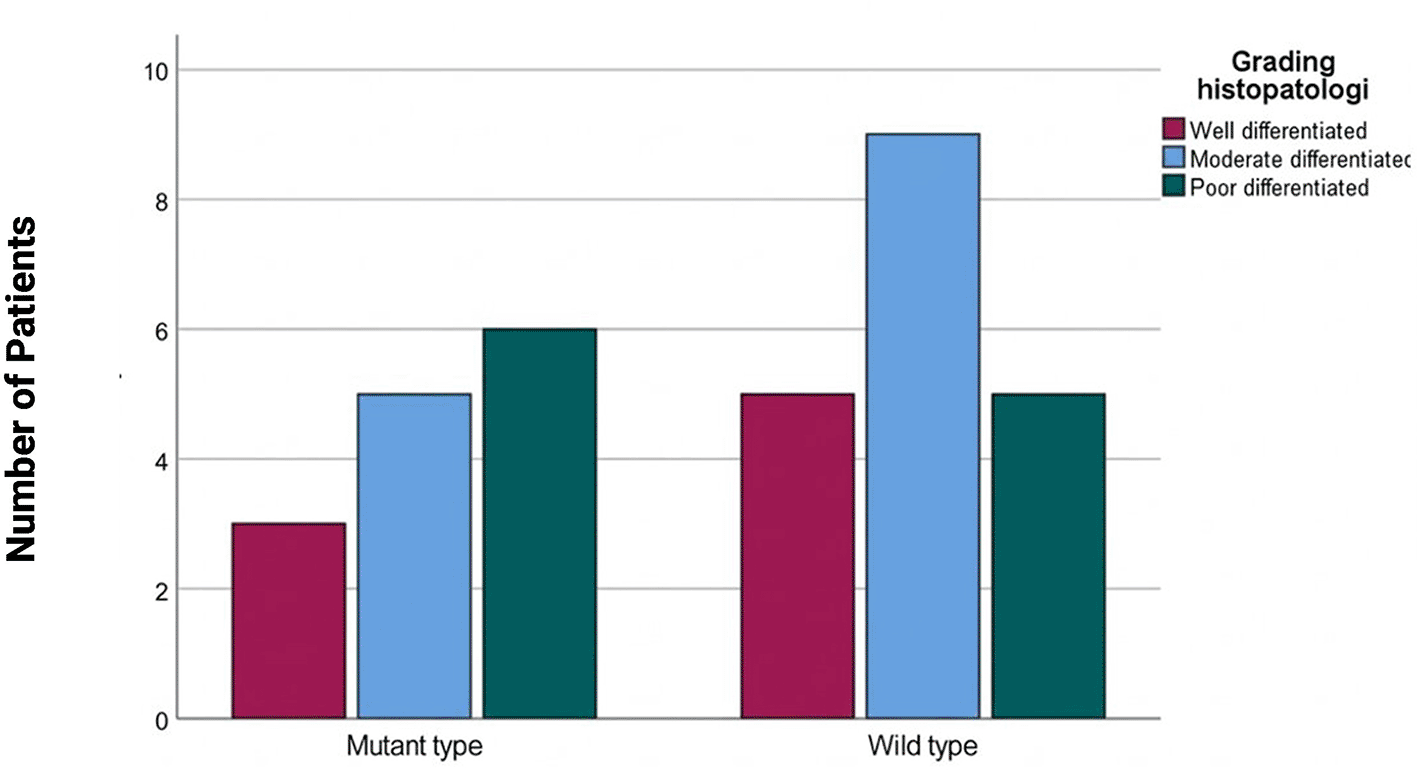
The relationship between KRAS gene mutation status and histopathological grading is presented in Table 2 and Figure 1. Results in Table 2 show no significant relationship between KRAS gene mutation and histopathological grading (p > 0.05). Among patients with KRAS mutant type, most (42.9%) had poor differentiated histopathological grading. Among patients with KRAS wild type, most (47.4%) had moderate differentiated histopathological grading.
| Histopathological grading | Mutant type (n = 14) | Wild type (n = 19) | p-value |
|---|---|---|---|
| Well differentiated | 3 (21.4%) | 5 (26.3%) | |
| Moderate differentiated | 5 (35.7%) | 9 (47.4%) | 0.607 |
| Poor differentiated | 6 (42.9%) | 5 (26.3%) |
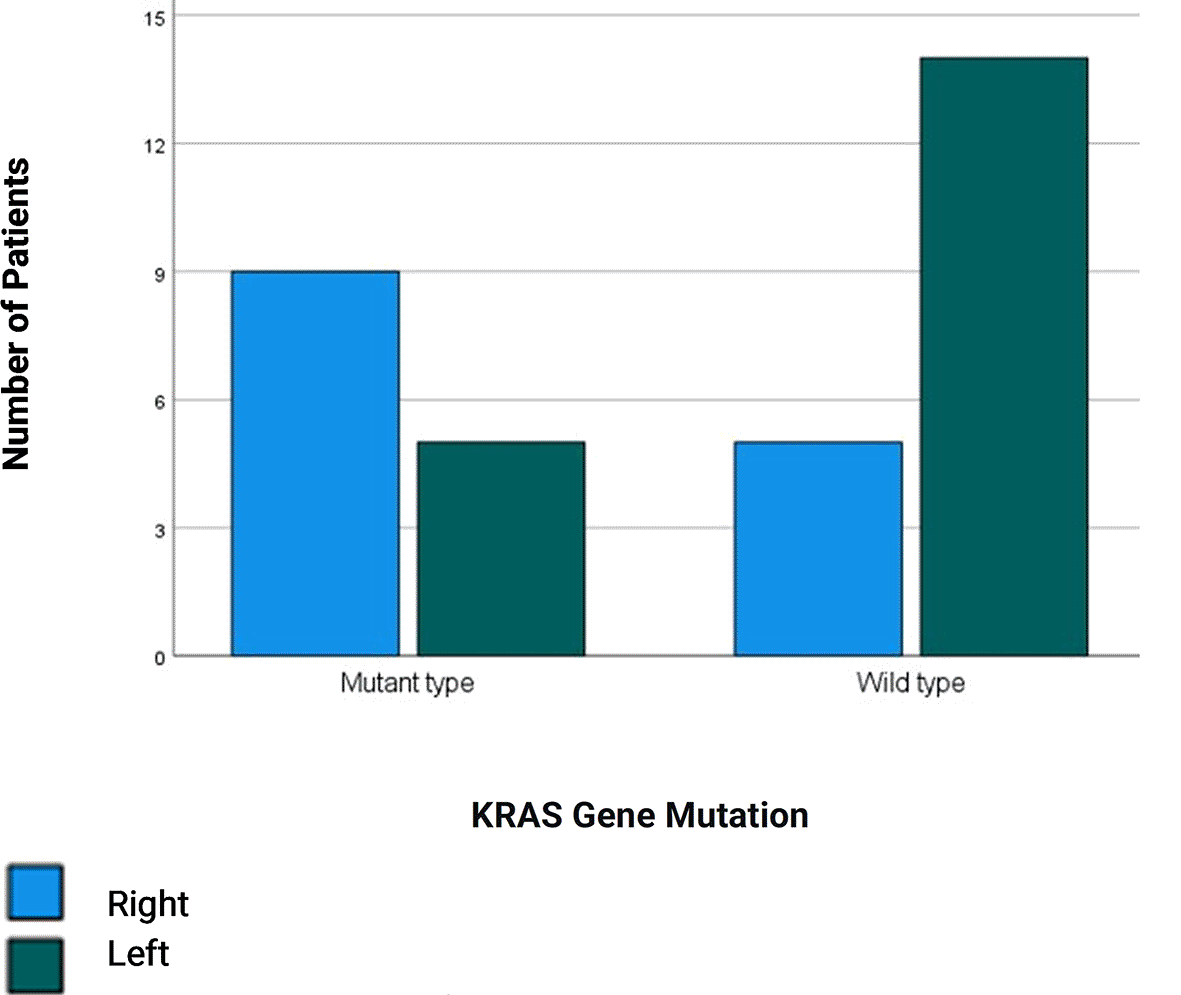
The relationship between KRAS gene mutation status and tumor location is presented in Table 3 and Figure 2. Results in Table 3 show a significant relationship between KRAS gene mutation and tumor location (p < 0.05), although based on specific location, no significant relationship was found (p > 0.05). Among patients with KRAS mutant type, most (64.3%) had right-sided tumor location, while KRAS wild type patients mostly (73.7%) had left-sided tumor location.
This study included 33 colorectal adenocarcinoma patients, with the majority aged ≥50 years (75.8%) and male (54.5%), consistent with global epidemiology showing that approximately 90% of new CRC cases occur in patients over 50 years and men have approximately 30% higher risk of developing CRC.3,8 The frequency of KRAS gene mutations in this study was 42.4% mutant type and 57.6% wild type, aligning with previous reports that KRAS mutations occur in approximately 40% of CRC cases worldwide, though frequencies vary across populations.9,10 KRAS mutations act as significant oncogenic drivers in colorectal cancer, influencing therapeutic response and prognosis, with mutant type associated with poorer outcomes compared to wild type.11,12
Regarding histopathological grading, this study found no significant relationship between KRAS gene mutation status and histological grading (p = 0.607), although patients with KRAS mutant type predominantly had poor differentiated tumors (42.9%) while wild type patients mostly had moderately differentiated tumors (47.4%). While some studies have reported associations between KRAS mutations and poor differentiation,13,14 our results align with Lee et al. who found no significant difference in differentiation grade between KRAS mutant and wild type in CRC patients.16 This lack of association may be due to the heterogeneity of KRAS mutation alleles, as specific mutations such as Q61 have been shown to correlate with poor differentiation, which was not examined in this study.14
A significant relationship was found between KRAS mutation status and tumor location (p = 0.040), with KRAS mutant type predominantly located in the right colon (64.3%) and KRAS wild type predominantly in the left colon (73.7%). These findings are consistent with studies reporting that right-sided colon cancers exhibit higher aggressiveness and are associated with distinct carcinogenesis pathways, with higher KRAS mutation frequency in right-sided compared to left-sided tumors.3,15,16 Abdelgadir et al. reported that right-sided primary CRC has the highest prevalence of mutated tumors (64%), with specific KRAS mutations showing significantly increased likelihood of right-sided tumors.17 The distribution of KRAS mutations predominantly in right-sided tumors occurs through the chromosomal instability pathway, and understanding this relationship can aid early screening and prognosis, as right-sided tumors often remain occult until advanced stages presenting with anemia symptoms, while left-sided tumors tend to cause obstructive symptoms earlier.4,11
The association between KRAS mutant type and right-sided tumors aligns with the understanding that tumorigenesis and mutation processes differ based on tumor sidedness, influenced by factors such as diet, genetics, tumor biology, embryological origin, and luminal microenvironment.15 This study has limitations including a small sample size, single-center design, and examination of only two clinicopathological aspects (tumor location and histopathological grading) without specific allele analysis. Nevertheless, these findings contribute to the understanding of CRC characteristics in the Indonesian population and support the importance of KRAS mutation testing for therapeutic decision-making, particularly regarding anti-EGFR therapy eligibility.5,6 Further multicenter studies with larger sample sizes examining additional clinicopathological aspects such as tumor stage and specific mutation alleles are warranted.
Based on research results and discussion, it can be concluded that tumor location is associated with KRAS mutation status (mutant type and wild type), while histopathological grading is not associated with KRAS mutation status (mutant type and wild type). Most KRAS gene mutations (mutant type) are located in right-sided tumors, while KRAS wild type is predominantly located in left-sided tumors.
| Views | Downloads | |
|---|---|---|
| F1000Research | - | - |
|
PubMed Central
Data from PMC are received and updated monthly.
|
- | - |
Provide sufficient details of any financial or non-financial competing interests to enable users to assess whether your comments might lead a reasonable person to question your impartiality. Consider the following examples, but note that this is not an exhaustive list:
Sign up for content alerts and receive a weekly or monthly email with all newly published articles
Already registered? Sign in
The email address should be the one you originally registered with F1000.
You registered with F1000 via Google, so we cannot reset your password.
To sign in, please click here.
If you still need help with your Google account password, please click here.
You registered with F1000 via Facebook, so we cannot reset your password.
To sign in, please click here.
If you still need help with your Facebook account password, please click here.
If your email address is registered with us, we will email you instructions to reset your password.
If you think you should have received this email but it has not arrived, please check your spam filters and/or contact for further assistance.

Comments on this article Comments (0)