Keywords
Merkel Cell Carcinoma (MCC), Neuroendocrine Carcinoma, Axillary Mass, Immunohistochemistry, Cytokeratin, Deep Dermal

This article is included in the Oncology gateway.
Merkel Cell Carcinoma (MCC), Neuroendocrine Carcinoma, Axillary Mass, Immunohistochemistry, Cytokeratin, Deep Dermal
Merkel Cell Carcinoma (MCC) is an aggressive but rare primary neuroendocrine carcinoma of the skin.1 Initially described as ‘trabecular carcinoma’, the name was changed to MCC with the discovery of neurosecretory granules resembling Merkel cells.1,2 Its aggressive nature is characterized by its rapid metastasis to the lymph nodes and distal organs.1
An increase in incidence rate of MCC from 2% to 4% is seen worldwide. A rise in incidence from 0.15 in 1986 to 0.7 in 2016 per 100,000 people in US populations was observed, exceeding melanoma and solid tumours. While the European Union historically saw a low incidence of MCC at 0.13 per 100,000 person-year, more recent regional data from Great Britain revealed a 12-fold increase, reaching a peak incidence of 1.78 per 100,000 person-year.3
MCC predominantly affects the elderly, presenting with a median age of 75 at the time of diagnosis, with men more commonly affected than women.1–3 The risk of developing MCC is significantly lower in individuals with people of colour, as the vast majority of cases, approximately 95%, occur in fair-skinned populations.2,3 Individuals with suppressed immune systems, including those managing conditions such as HIV/AIDS, chronic lymphocytic leukaemia or recipients of organ transplants and autoimmune therapies have an elevated risk for developing MCC.1,4 The most common location of this tumours is in areas exposed to the sun, such as the head and neck, extremities and rarely in the torso and extracutaneous sites.3,5 Very often, at the time of detection of these tumours, there is locoregional metastasis, therefore the presence of a primary MCC in an axillary area which is rich in lymph nodes requires the exclusion of primary tumour formation in the nearby regions.2
The development of MCC is hypothesized to follow a dual pathway involving either viral oncogenesis with the integration of the Merkel Cell Polyomavirus (MCPyV) or significant mutational burden from UV radiation. The latter, driven by chronic ultraviolet radiation induces extensive genomic mutations through the cumulative damage of cellular DNA.1,3 UV exposure can be related to both viral and non-viral carcinogenesis by contributing to the immunosuppression or mutations. Therefore, combined etiology is plausible with the UV exposure aiding the virus in carcinogenesis by preparing a pro-oncogenic environment.4
The precise cell of origin for MCC remains a subject of ongoing investigation with evidence suggesting that both MCPyV-positive and MCPyV-negative tumours may arise from distinct, though potential overlapping lineages. Although MCC was traditionally presumed to originate from Merkel cells due to their shared immunophenotype, this hypothesis has been increasingly challenged by evidence suggesting alternative epithelial, fibroblastic, lymphoid, and neural crest developmental lineages.1,4,6 Current research points to dermal fibroblast-like progenitors as the likely source for MCPyV-positive MCC, which undergo viral-induced reprogramming. Conversely, MCPyV-negative MCC is thought to arise from epidermal keratinocyte stem cells that accumulate extensive somatic mutations, subsequently undergoing neuroendocrine transdifferentiation.4,6
Grossly, MCC typically presents as rapidly growing, firm, painless, solitary nodule, most often located on sun-exposed areas such as the head and neck or extremities.1,2 Histologically, MCC presents as an expansile and diffusely infiltrating mass predominantly located within the dermis and occasionally in subcutaneous tissue.1 Only few cases are observed where the tumour is characterized by primary proliferation within the deep dermis, that lacks any direct communication with the overlying epidermal layer.7,8 While the axillary region is an infrequent site for such a presentation, documented cases of primary ectopic or deep-seated MCC highlight the potential for aggressive local and nodal involvement even in the absence of traditional cutaneous appearance.7
The patient is a 58-year-old male who presented with a one-year history of a firm, painless mass in the left axilla. The lesion demonstrated progressive enlargement over time. His recent medical history is notable for a surgical intervention three months prior to treat a pigmented lesion on the right lower eyelid, which was histologically confirmed as a benign pigmented seborrheic keratosis.
Following the emergence of the axillary mass, a PET/CT scan was performed, initially thought to be a metastatic involvement of the left axillary lymph nodes. The patient was subsequently referred to the Surgical Oncology Department by a multidisciplinary oncology team to undergo lymph node dissection for diagnostic clarification and to locate a potential primary lesion. He has no known allergies.
Clinical evaluation confirmed a significant, palpable mass within the left axillary region. Preoperative imaging via PET/CT confirmed the presence of hypermetabolic activity localized to the axillary lymph nodes, suspicious for malignancy. No other primary cutaneous lesions were initially identified during the clinical workup, suggesting the need for surgical exploration and histological analysis to differentiate between a primary tumour and metastatic disease.
The patient underwent a radical excision of the cutaneous lesion and a thorough axillary lymph node dissection. Following initial treatment, the patient received postoperative radiotherapy. A follow-up PET/CT scan indicated a localized recurrence. Therefore, a second radical excision was performed, followed by an additional course of adjuvant radiotherapy to ensure local regional control.
Histological analysis revealed a malignant neoplasm characterized by solid, trabecular, and nested growth patterns (Figure 1A). The tumour was composed of epithelioid and polygonal cells featuring eosinophilic cytoplasm, vesicular nuclei, and distinct granular chromatin. The tumour mass was encapsulated, with thin fibrous septa compartmentalizing the tumour nests.
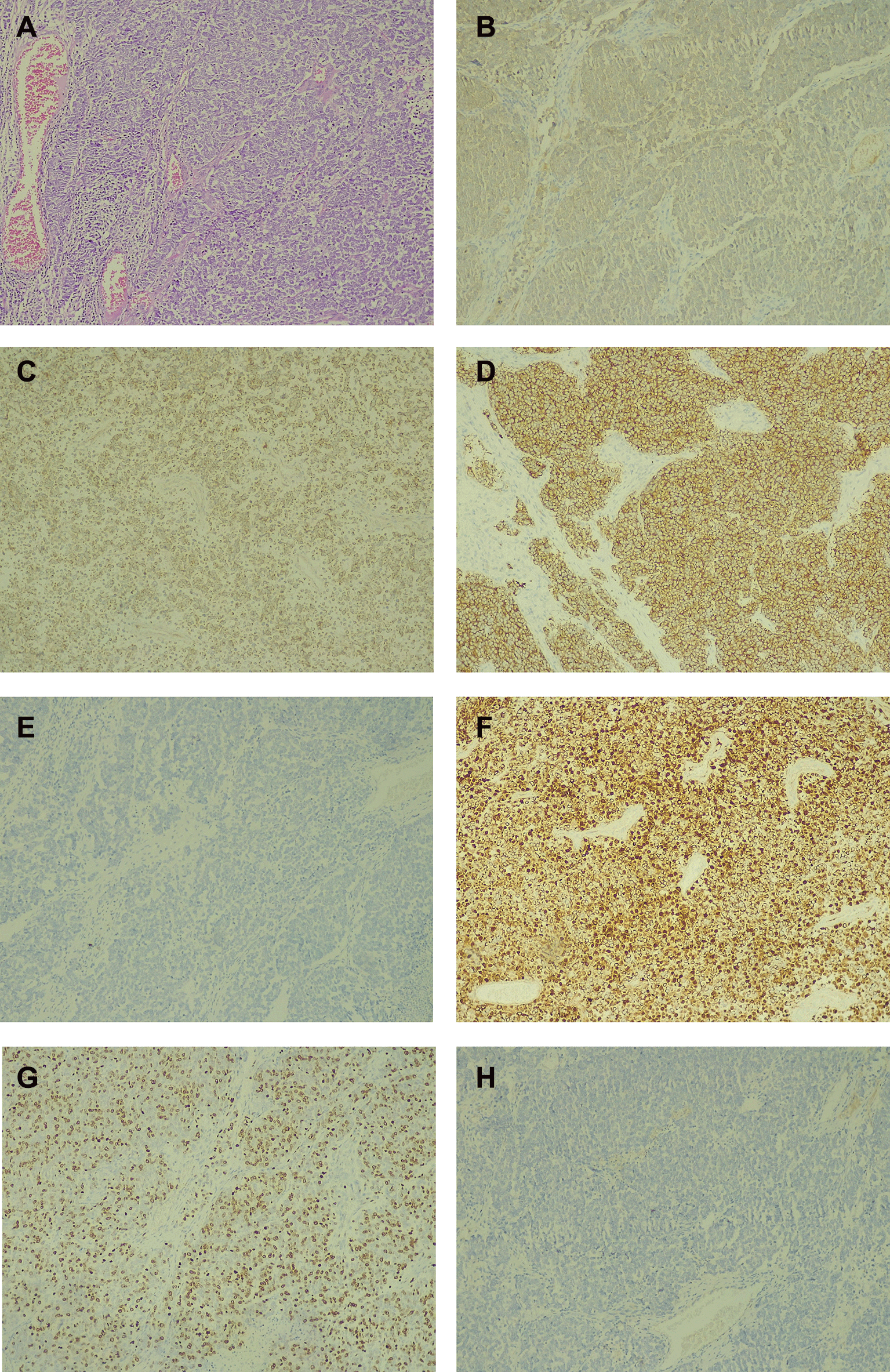
A total of 23 lymph nodes were harvested. Through the lymph node analysis, four nodes tested positive for metastatic involvement consistent with the primary tumour and lymphovascular invasion was identified. The remaining 19 nodes exhibited reactive changes, specifically sinus histiocytosis and chronic hyperplastic lymphadenitis.
To confirm the diagnosis, an immunohistochemistry panel was performed (Figure 1B-H). The tumour cells exhibited diffuse cytoplasmic immunoreactivity for CK AE1/3, Neuron-Specific Enolase (NSE), Chromogranin A, and Synaptophysin, confirming both epithelial differentiation and neuroendocrine lineage. Conversely, the tumour was negative for Thyroid Transcription Factor 1 (TTF-1) and Cytokeratin 7 (CK7), aiding in the exclusion of primary pulmonary or common glandular origin. The Ki-67 proliferation index was approximately 90%, reflecting a high proliferative index.
The histopathological and immunohistochemistry findings were consistent with Merkel Cell Carcinoma of the deep dermis in the axillary region, in pathological stage – pT3 N1 Mx (G3) R0.
Following the second surgical intervention and subsequent radiotherapy, the patient was placed under close dispensary observation. Follow-up diagnostics, including a chest X-ray and abdominal ultrasound, showed no evidence of distant metastatic spread. The patient remains stable and continues to undergo regular oncological surveillance to monitor for further recurrence.
MCC primarily manifests in areas subjected to chronic solar exposure, with the head and neck region accounting for approximately 50% of documented cases.3,9 However, there are reports that document occurrence of MCC in the axilla, which is an atypical site and our patient’s presentation in this region illustrates that MCC can arise in less common anatomical area.10,11 MCC typically originates from the dermis and extends into the subcutaneous tissue.1,9 But in our case, the tumour is observed to arise from the deep dermal layer with predominant subcutaneous growth pattern. However, the origin of MCC in the subcutaneous tissue alone is debatable. A previous report has shown the clinical and pathological features of three unusual soft tissue tumours primarily affecting the subcutaneous tissue in the groin of elderly patients.12 Another report displayed primary subcutaneous growth of MCC in the left arm of a 63-year-old woman.13
While MCC is typically seen to arise from sun-exposed areas and the dermis, our case highlights that the presentation of this tumour remains diverse and an atypical anatomical location alone should not preclude a diagnosis of MCC.
The patient’s clinical course was partially consistent with the classic AEIOU mnemonic for MCC: asymptomatic, expanding rapidly and older than 50 years, while immunosuppression, a high-risk factor for progression; and ultraviolet-exposed site was not reported. Our patient’s lesion was asymptomatic and showed rapid, progressive growth, which are hallmarks for MCC. This case is clinically complex because the patient initially presented with symptomatic axillary lymphadenopathy in the absence of a readily identifiable primary cutaneous lesion on initial imaging. Moreover, there are reports on MCC representing lymph node metastasis with no identifiable primary site.14,15 The diagnostic challenge was emphasized by the subsequent need for radical excision of the primary cutaneous site following the identification of the metastatic nodal disease, a sequence sometimes observed in MCC due to the phenomenon of immune-mediated regression of the primary tumour.15–17
Pathological diagnosis of MCC presents significant challenges due to its morphological and cytological overlap with other “small-round-blue cell” malignancies such as Basal Cell Carcinoma (BCC), metastatic small cell carcinoma of the lung (SCLC), cutaneous lymphoma, malignant melanoma, Ewing sarcoma, and neuroblastoma; therefore, it requires a comprehensive immunohistochemical strategy as morphological similarities often create significant diagnostic challenges.2 The histological features, such as monomorphic cell populations and “salt and pepper” chromatin are non-specific and are shared by several other aggressive neoplasms.1,9 Therefore, morphology alone is insufficient for a definitive diagnosis. The differential diagnosis is broad and a precise immunohistochemical panel is mandatory to differentiate MCC from these mimics, as misdiagnosis could lead to inappropriate therapeutic interventions.
A standard diagnostic panel involves confirming MCC through positive staining for CK20 and various neuroendocrine markers, while simultaneously ruling out mimics through the absence of TTF-1 and CK7 etc.2,6 Specifically, immunohistochemistry is essential for differentiating MCC from cutaneous mimics such as BCC, which is CK20 negative.1,6 Furthermore, the differential diagnosis against metastatic neuroendocrine carcinomas, particularly SCLC, is vital, as these tumours often display TTF-1 positivity which is generally absent in primary cutaneous.1,2,6
Immunohistochemistry plays a crucial role in distinguishing MCC from other skin tumours. Neuroendocrine markers are consistently expressed, typically including Synaptophysin, Chromogranin A, CD56, and NSE.1,2,9 MCC is classically negative for markers such as CK7 and TTF-1.6
To establish a definitive diagnosis and exclude a pulmonary origin, a specialized immunohistochemistry panel was performed. A positive test for Synaptophysin and Chromogranin A, confirmed neuroendocrine differentiation. The specific marker for MCC, CK20 was not performed but CK AE1/3 was positive. The exclusion of SCLC was achieved through the absence of TTF-1 and CK7 expression in our patient’s tumour, which are frequently positive in SCLC.
Staging was performed according to the American Joint Committee on Cancer (AJCC) criteria, classifying the patient as pT3 N1 Mx (G3) R0.18 Therefore, this patient was classified under stage III. The recurrence rate of MCC is higher in patients with lymphovascular invasion even in the post-excision phase.9,19 Considering our patient was with regional lymph node metastasis, the thorough follow-up and the adjuvant radiotherapy prevented further recurrence and highlights the need for lymph node dissection and monitoring patients with this aggressive cancer.
In conclusion, the predominant deep dermal and subcutaneous growth pattern as well as tumour localization in the axilla are uncommon forms of MCC. This case highlights the diagnostic complexities associated with MCC when it presents in an atypical location, such as the axilla. The patient’s clinical course began with asymptomatic axillary lymphadenopathy and progressed to a diagnosis of high-grade neuroendocrine carcinoma localized within the deep dermis, highlighting the hidden nature of this malignancy. Specifically, the absence of a detectable primary cutaneous lesion at the time of initial presentation suggests a rare instance of an occult primary or potentially an immune-mediated regression, a phenomenon that necessitates a high index of clinical suspicion.
The definitive identification of the tumour relied on the systemic immunohistochemical evaluation rather than the morphology alone. By confirming neuroendocrine differentiation and specifically excluding metastatic small cell lung cancer and adenocarcinoma through the absence of TTF-1 and CK7, this case demonstrates how targeted molecular profiling is essential for guiding the differential for small-blue-round cell tumours. Finally, the high proliferative index and deep-seated nature of the mass illustrate the aggressive biological behaviour of MCC even in the absence of typical sun-exposed cutaneous markers. This report serves as a clinical reminder that MCC must remain a key consideration for deep-seated axillary masses as its atypical anatomical distribution can easily lead to diagnostic delays and unfavourable prognosis in a rapidly progressing disease.
This work is consistent with the ethical standards of our institution. As this is a single case report, there was no requirement for a formal ethical committee approval under our policy. Written informed consent from the patient to publish their clinical details and histopathology images was obtained. No inclusion of patient’s personal information has been done to protect their identity.
| Views | Downloads | |
|---|---|---|
| F1000Research | - | - |
|
PubMed Central
Data from PMC are received and updated monthly.
|
- | - |
Provide sufficient details of any financial or non-financial competing interests to enable users to assess whether your comments might lead a reasonable person to question your impartiality. Consider the following examples, but note that this is not an exhaustive list:
Sign up for content alerts and receive a weekly or monthly email with all newly published articles
Already registered? Sign in
The email address should be the one you originally registered with F1000.
You registered with F1000 via Google, so we cannot reset your password.
To sign in, please click here.
If you still need help with your Google account password, please click here.
You registered with F1000 via Facebook, so we cannot reset your password.
To sign in, please click here.
If you still need help with your Facebook account password, please click here.
If your email address is registered with us, we will email you instructions to reset your password.
If you think you should have received this email but it has not arrived, please check your spam filters and/or contact for further assistance.

Comments on this article Comments (0)