Keywords
Mortality rate, Mortality, Predictors, COVID-19, Tanzania.

This article is included in the Emerging Diseases and Outbreaks gateway.
This article is included in the Coronavirus (COVID-19) collection.
Mortality rate, Mortality, Predictors, COVID-19, Tanzania.
On 31 December 2019, the WHO was informed of a cluster of cases of pneumonia of unknown cause detected in Wuhan, Hubei Province, China. This condition is due to the severe acute respiratory syndrome coronavirus-2 (SARS-CoV-2), causing a range of clinical signs including fever, cough, asthenia, or respiratory distress. The virus has spread rapidly worldwide since its outbreak with the World Health Organization (WHO) declaring it a pandemic (WHO, 2020). As of July 8, 2022, more than 500 million cases of COVID-19 have been reported across the world, resulting in more than 6 million deaths [WHO, 2022].
The global COVID-19 data showed America, Asia, and Europe to be the most hit continents with COVID-19 with poor survival rates among cases as compared with other continents like Africa which had better survival.1 The first confirmed case of COVID-19 in Africa was reported in Egypt on February 14, 2020, and on April 19, 2020, Egypt has reported a 3144 cases rate of COVID-19 and 239 deaths. The case fatality rate of COVID-19 varies across countries with an average of 4.2 ± 3.8, among the older population.2,3
In China, Most of the mortality cases were reported among men, and less than half had underlying diseases including diabetes, hypertension, and cardiovascular disease.4,5
There is a better survival rate of COVID-19 patients, who are not living with comorbidities, such as hypertension, diabetes, liver disease, renal disease, neurological disease and immunocompromised. Studies done in Iran,6 Five European countries,7 and Nigeria.8
In 2020, South Africa, Egypt, Morocco, Nigeria, and Ghana were the African countries with the highest number of cases of COVID-19.9 Mortality were higher among older age, chronic disease and travel history. But with lower mortality rate of 5.6% compared to European countries.10 Africa have been threatened by insufficient infrastructure and weak healthcare systems, putting the social-economic status of Africa under control.11 Some highlight in Africa have been mentioned as a predictors of low mortality includes high temperature, humidity, early use of BCG vaccination, and possibly a different viral subtype.12
In Tanzania, the first case of COVID-19 was imported on 16th March 2020 and declared by the Ministry of Health, Community Development, Gender, Elderly and Children [MoHCDGEC] on 14th April 2020 that there was a community transmission, with more than five hundred (509) confirmed cases and 21 deaths related to COVID 19.13 Currently, we have more than 35,000 confirmed cases and more than 800 deaths as of July 8, 2022 [MoHCDGEC, 2022; Worldometer, 2022].
Interventions to improve survival among COVID-19 cases include ongoing vaccination, Infection Prevention and Control (IPC) policy through the use of personal protective equipment/gear, continuous education, community engagement, and protection of high-risk groups including health care workers, older adult and those with underlying conditions or comorbidities. United kingdom,14 Demark,15 Tanzania16–18 However, the number of new infections and deaths attributed to COVID-19 continue to spike in various communities and regions, In 2021 Kilimanjaro and Mwanza regions which are surrounded by Kenya and Uganda in the Northern and Northwestern part of Tanzania were the most regions affected by the disease. [MoHCDGEC, 2021], Currently more than 3 Million people have received at least one the vaccine of COVID-19.19 Therefore, this study aimed to determine mortality rate and predictors of mortality among COVID-19 patients in Northern Tanzania.
This was a Hospital-based retrospective cohort study, which involved the analysis of all COVID-19 patients admitted at KCMC from 10th March 2020 to 26th January 2022 which comprises of all four waves, to determine the mortality rate and predictors of mortality among COVID-19 patients at KCMC Hospital in Northern-Tanzania.
Data available on the excel isolation database was used, whereby the patient’s information on sociodemographic characteristics, clinical features and comorbidities was obtained by retrieving them from the electronic medical record files. The electronic files contain such information from the patients was filled in by the clinicians. A total of 1117 COVID-19 patients were retrieved from the electronic files, but only 547 confirmed patients records were complete and therefore available for analysis in this study.
All COVID-19 patients admitted at KCMC Hospital in Northern Tanzania from 10th March 2020 to 26th Jan 2022 whose information’s were available in the dataset. The study excluded participants whose information’s were incomplete such as unknown discharge status, date of admission and date of discharge. Data used in this study were collected between 10th March 2020 to 26th Jan 2022 by recollecting information from all admitted COVID-19 cases. A total of 1117 COVID-19 patients were retrieved from the electronic files, but only 547 confirmed patients records were complete and therefore available for analysis in this study again duplicate patients record were identified and removed before analysis (Figure 1).
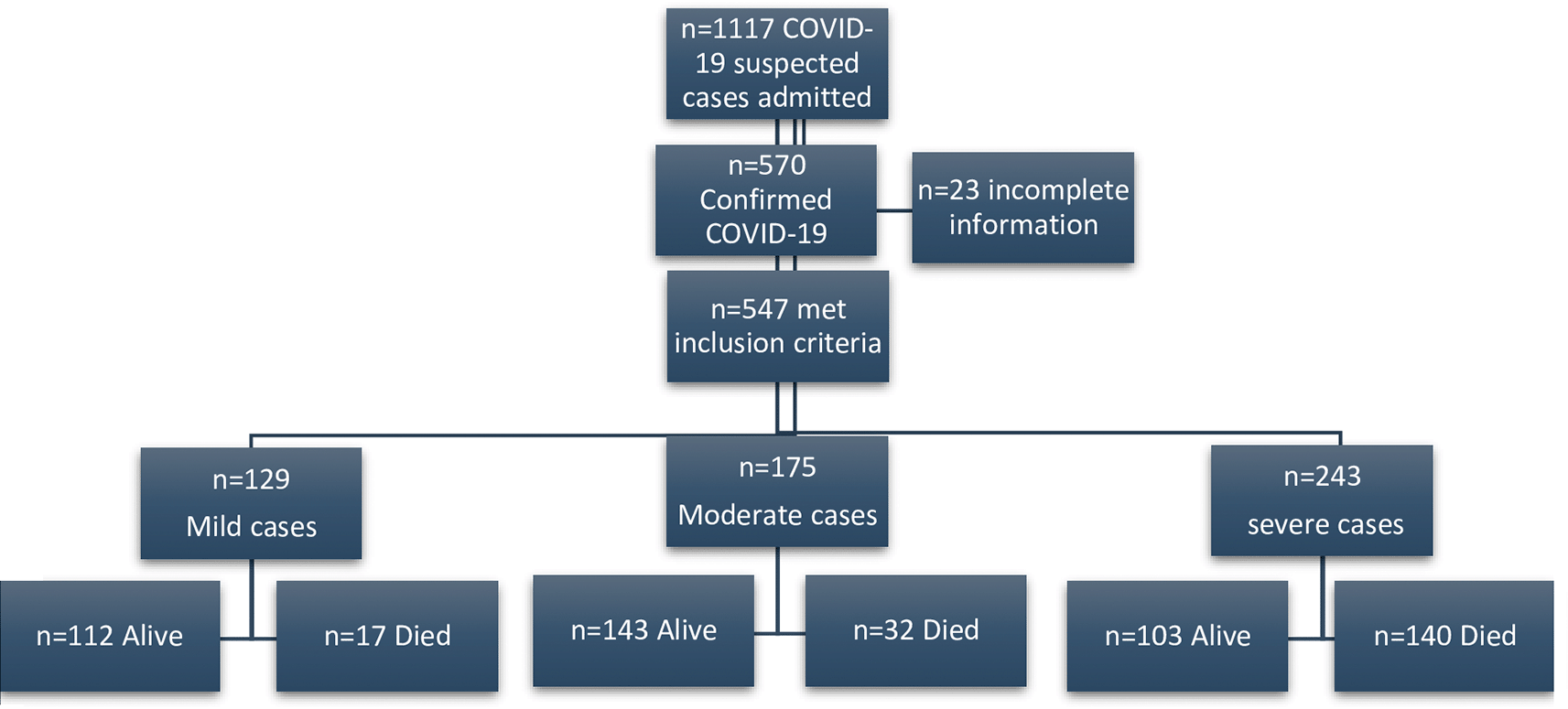
(KCMC isolation excel database, 2020–2022).
The dependent variable (event) was death due to COVID-19, and was defined based on the certified cause of death due to COVID-19 documented in the patient electronic files. Coded as 1 if the patient died and 0 If the patient survived to the discharge date.
Independent variables included patients socio-demographic characteristics, Clinical features at admission and comorbidities. The study’s selection and categorization of independent variables were based on previous literature.20
Patients background characteristics include age in years (<60 and ≥60 years), Sex (Male and Female) and Region (Arusha, Kilimanjaro and others) and were measured based on relative or patient self-report and presentation.
Clinical features were measured based on defined WHO cutoff point, Disease severity Oxygen saturation ≥94% on RA + No clinical or radiological evidence of pneumonia (mild), 90–94% on RA+ clinical or radiological evidence of non-severe pneumonia (moderate), 80–89% on RA+ clinical or radiological evidence of severe pneumonia (severe),whereby Fever, headache, nausea, Cough, Difficulty in breathing, Chest pain, generalized body weakness, sore throat, runny nose, smell loss, loss of taste, Abdominal pain and diarrhea were recorded and measured based on patient/relative report and clinician assessment (“Yes” if had any & “No” if had not).
Includes Hypertension, Diabetes, Liver disease, Asthma, Renal disease, Neurological disease, Immunodeficiency, Malignancy were measured if patient had history of comorbidities or was taking any anti-comorbidities drugs i.e. Antihypertensive Antidiabetic, Antiviral, Anticancer drug, and management he/she was receiving (“Yes” if had any & “No” if had not) while Abnormal chest x-ray and abnormal lung auscultation were defined based on radiological finding (“Yes” if abnormal & “No” if normal).
Data were cleaned, checked for consistency, quality, summarized, and analyzed using Stata version 15 (Stata corp. 2017. Stata statistical software: Release 15. College Station, TX: StataCorp LLC). In Descriptive statistics, numerical variables (age and Oxygen saturation at the time of attending hospital) were summarized by median (IQR) while categorical variables were summarized by frequency and percentages. Pearson Chi-square or Fisher’s exact (for <5 expected count in a cell) was used to test the association between mortality and socio-demographic, clinical and comorbidities features, A significance level of 0.05 was used. Kaplan-Meier survival estimate showing overall survival experience: and Nelson-Aalen cumulative hazard plots with Log-rank test was used to compare the mortality experience. Predictors of mortality were assessed by using survival models including, Cox, and Weibull regression. a Akaike Information Criterion and graphical test of Weibull hazard assumptions a straight line was obtained and hence prove that the Weibull model is adequate for this analysis,21 Weibull regression was found to be best fit for this analysis. Weibull regression model which take into account a time variable was used to determine the predictors of mortality.
Crude Weibull regression was carried out to identify the association between mortality and sociodemographic, clinical and comorbidities variables. The Crude hazard ratio (CHR) and corresponding 95% CIs were reported whereby some variables of clinical significance based on literature such as hypertension, diabetes, age, sex, and those with a p-value of ≤0.1 were considered in the adjusted analysis. The Akaike information Criterion was used for model selection where the model with the smallest Akaike was considered as the best fit. Multivariable analysis of exposures had a significant association with the outcome and those with p-value of ≤0.1 were entered in the development of the final model. The variables with the p-value of ≤0.05 in the final model were considered as statistically significant. Adjusted hazard ratio (AHR) and corresponding 95% CIs were reported.
Ethical consideration
Permission letter to use COVID-19 data with reference No. KCMC/P.I/Vol.IX was granted from KCMC Hospital executive director office. Patient ID were used to maintain confidentiality.
Ethical approval to carry out the current study was obtained from the Kilimanjaro Christian Medical College Research Ethics and Review Committee (KCMU-CREC) with clearance number PG 15/2021.
Consent form
For secondary data analysis of existing COVID-19 patient records used retrospective, de-identified data, therefore, individual informed consent was not required, as the study qualified for a waiver of consent approved by the ethics committee in accordance with institutional and national ethical guidelines for minimal risk record-based research.
Among 547 patients who tested positive to COVID-19 and met inclusion criteria, the majority of them 324 (60%) were aged 60 years and above with a median age of 63 (IQR: 50–75). Of whom 547, More than half of them were males 310 (56.7%), ( Table 1). Most of them were present with the following clinical features fever 333 (60.8%), Severe form of disease 243 (44.4%), Difficult in Breathing 424 (73.3%), Chest pain 252 (46.1%), Generalized Body Weakness 390 (71.3%), more than half of the participants 375 (68.6%) were exposed during wave 2 & 3, their median oxygen saturation at the time of attending the hospital was 70% (IQR: 53–82), ( Table 2) majority of the participants 491 (90%) were from the Kilimanjaro region with abnormal chest x-ray 458 (83.7%), abnormal lung auscultation 274 (50.1%), hypertension 255 (46.6%) and diabetes 159 (29.1%) being the most common comorbidities ( Table 3).
Of 547 COVID-19 patients, 189 (34.6%) died and 358 (65.5%) were discharged alive. Their median survival time was 7 days (IQR: 3–12 Days). The overall mortality rate was 32.33 per 1000 person-day. Mortality occurred in 141 (43.5%) of the elderly patients (P < 0.001), 113 (36.5%) in male patients but was not statistically significant (P = 0.285) and 172 (35.0%) from Kilimanjaro region (P = 0.742), ( Tables 2 & 3).
Clinical features, Death was statistically higher in 140 (57.6%) of patients with severe form of disease (P < 0.001), 154(38.4%) among patients who present with difficulty in breathing (P = 0.002), 133 (35.5%) and 31 (43.7%) in patients exposed during wave 2 & 3 and 4 respectively (P = 0.03), 19 (25.7%) in patients who reported to loss taste but was marginally significant higher (P-value =0.084) and in 10 (22.7%) which was also marginally significantly higher among who reported to have diarrhea episodes (P-value 0.085) ( Table 2).
Comorbidities, Mortality also occurred in 66 (41.5%) patients with diabetes (P = 0.028), 172 (37.6%) in patients with abnormal chest x-ray (P < 0.001), 110 (40.2%) in patients with abnormal lung auscultation (P = 0.006), and 13 (54.2%) in patients with renal disease (P = 0.003) (Table 3).
The Kaplan-Meier curve depicts overall survival among COVID-19 patients admitted to KCMC Hospital over the course of the study. Nelson-Aalen cumulative hazard plots and the log rank test reveal differences in mortality experience. The mortality rate per 1000 person-day was (MR = 46.7, 95%CI; 39.4–55.4) in patients over 60, and (MR = 37.1, 95%CI; 30.8–44.5) in male patients. Furthermore, patients with moderate and severe forms of the disease had mortality rates of (MR = 19.2, 95%CI; 13.3–27.4) and (MR = 55.0, 95%CI; 46.4–65.2), respectively. The mortality rate among patients presenting with breathing difficulties was (MR = 35.4, 95%CI; 30.1–41.6), and in diabetic patients was (MR = 39.4, 95%CI; 30.7–50.6). The mortality rate in hypertensive patients was (MR = 36.9, 95%CI; 30.0–45.2). Patients with abnormal chest x-rays and lung auscultations had a mortality rate of (MR = 34.5, 95%CI; 29.6–40.2) and (MR = 37.8, 95%CI; 31.2–45.9), respectively, and those with renal disease had a mortality rate of (MR = 37.8, 95%CI; 31.2–45.9) (Figure 2).
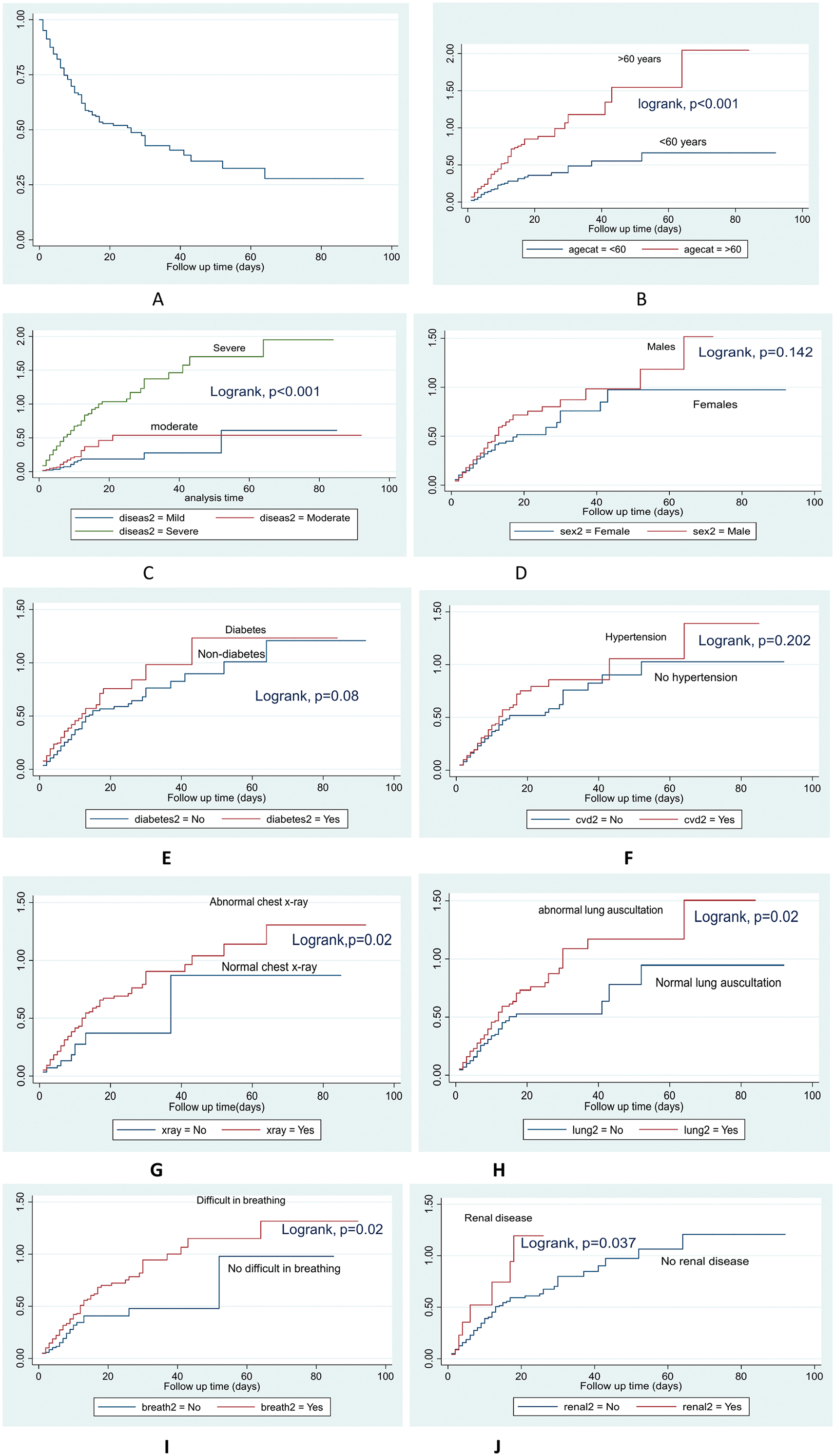
The predictors associated with COVID-19 mortality are displayed in ( Tables 4, 5, and 6). In crude analysis, the hazard of mortality among patients aged ≥60 years was 2.62 times significant higher, compared to those aged <60 years (CHR = 2.62; 95%CI 1.88–3.66; P < 0.001). Males had 1.35 times significant higher the hazard of mortality compared to females (CHR = 1.35; 95%CI 1.00–1.83; P = 0.049). Compared to the mild form of the disease, patients with moderate form had a 1.91 times higher hazard of mortality (CHR = 1.91; 95%CI 1.03–3.53; P < 0.041). Compared to the mild form of the disease, patients with the severe form had a 5.54 times higher hazard of mortality (CHR = 5.54; 95%CI 3.25–9.44; P < 0.001). Patients who present with Difficult breathing had 1.56 times the significant higher hazard of mortality compared to those without (CHR = 1.56; 95%CI 1.06–2.28; P = 0.023), compared to patients living without diabetes, diabetes patients had 1.33 times the significant higher hazard of mortality (CHR = 1.33; 95%CI 0.98–1.82; P = 0.066). Patients found with abnormal chest X-rays had 1.75 times the significant higher hazard of mortality compared to patients without abnormal chest x-ray, (CHR = 1.75; 95%CI 1.06–2.88; P = 0.028). Patients with abnormal lung auscultation had 1.41 times the significant higher hazard of mortality compared to a patient with normal lung auscultations (CHR = 1.41; 95%CI 1.05–1.89; P = 0.024). Lastly, compared to patients without renal disease, patients with renal disease had a 1.89 times higher hazard of mortality (CHR = 1.89; 95%CI 1.08–3.33; P = 0.027).
| VARIABLE(S) | CHR (95%CI) | P-value |
|---|---|---|
| Age cat | ||
| < 60 | 1 | |
| 60+ | 2.62(1.88,3.66) | <0.001 |
| Sex | ||
| Females | 1 | |
| Males | 1.35(1.00,1.83) | 0.049 |
| Reporting Region | ||
| Arusha | 1.00(0.29,3.53) | 0.993 |
| Kilimanjaro | 1.08(0.35,3.39) | 0.891 |
| Others | 1 |
In adjusted analysis, Higher significant hazard of mortality were among elderly aged ≥60 years (AHR = 2.01; 95%CI 1.41–2.87; P < 0.001), Male patients (AHR = 1.27; 95%CI 0.93–1.73; P = 0.128), Patients diagnosed with moderate (AHR = 1.67; 95%CI 0.89–3.13; P = 0.112) and severe form of disease (AHR = 4.44; 95%CI 2.56–7.73; P < 0.001), those exposure during wave 2&3 (AHR = 1.58; 95%CI 1.03–2.41; P = 0.036) and in diabetes patients (AHR = 1.25; 95%CI 0.88–1.79; P = 0.212) ( Table 7).
This study aimed to determine the mortality rate and predictors of mortality among COVID-19 patients at KCMC hospital in northern Tanzania. The overall proportion of death due to COVID-19 among the studied patients was 34.6%. Similar findings in Italy 37.6%,3 Congo 32%,20 Tanzania 31.8%.22 Different findings: India 14.4%,23 Tanzania 14.9%.24 It may be due to diseases severity, pre-existing comorbidities and advanced age.
The overall mortality rate was 32.3 per 1000 person-day, Different findings in USA 12.4 per 1000 person day,25 Ethiopia 6.35 per 1000 person-day26, Iran 1.07 per 1000 person-day,27 North west Ethiopia 4.7 per 1000 person-day,28 16.2 per 1000 person-day29 possible explanation may be healthcare setting and accessibility, geographical location or personal behaviors.
The median survival time was 7 days (IQR:3–12). Similar to findings in East India 8 days (IQR:7–10),30 Ethiopia 9 days (IQR:8–12),26 USA 5 days(IQR:3–10),25 Tanzania 3 days (IQR:1–6),24 12 days Congo,20 Different findings in Ethiopia 44 days(IQR:28–74)29. Probable reasons living environment, Setting in which the patient receive care and attitudes toward COVID-19.
Older patients had a higher hazard of mortality compared to younger patients less than 60 years. This findings is similar to the population-based cohort study and three retrospective cohort studies conducted in Northern Italy,3 Brazil,31 the Democratic Republic of Congo20 and Tanzania22 respectively. This observation amongst the elderly may be due to immunodeficiency, and comorbidities as it increases with age, which results in higher morbidity and mortality several others study elaborate this Italy,32 Europe,33 China,34 Tanzania.24
Mortality among males with COVID-19 were higher compared to females. In adjusted analysis, this study demonstrates significant sex differences in risk though it was marginally significant, similar to other studies conducted in a different part of the world including a large cohort study conducted in Milan Italy,32 metanalysis-UK,35 Cross sectional-US,36 Sweden,37 case-control study-Wuhan,34 Tanzania,38 Different findings in Congo and Tanzania found that there is no statistically significant difference in risk of mortality by sex,20,24 observed risk may be due to sex-specific hormone, immune response, Higher expression of Angiotensin-converting enzymes, Risk-taking behaviors and lifestyle, comorbidities, irresponsible attitudes toward the COVID-19 pandemic frequent hand washing, wearing masks and home stay, hormones difference.37,38
Mortality due to COVID-19 was significantly higher in proportions among patients with moderate (18.3%) and severe forms of the disease (57.6%) compared to those with mild forms (13.2%). In the adjusted analysis, moderate and severe forms of the disease were found to be associated with mortality. Similar to the previous published work in other part of world in Wuhan-china,34 China,39 Oman,40 India,23 East-India which report 54.64% of mortality among patient with severe and 5% mild to moderate41 compared to study conducted in Italy among COVID-19 patients presenting with mild symptoms,42 observed differences can be explained by geographical factors or chance, Weak immune functions, elderly age, limited organ compensatory function, more basic disease before infections, poor history of medical seeking behaviors in Africa setting, higher neutrophils count, lower lymphocytes and platelet count.23,39,40
Being exposed to waves 2&3 was a significant predictor of mortality according to this study’s findings after adjusting for age, sex, hypertension, diabetes, wave 1&4, Abnormal lung auscultation, abnormal chest x-ray and renal disease. The waves exposure happened at different times across the world. Therefore the findings of these waves are not consistent at all compared to other settings as they occurred at different times and settings. Low mortality was observed among patients exposed to waves 1 and 4 respectively.
Different studies reported a higher risk of mortality among elderly patients with one or more than two pre-existing Comorbidities especially Hypertension, diabetes, and renal disease in this study appeared to be a predictors of mortality among COVID-19 patients in the studied cohort with AHR > 1, though were not statistical significance at P-value <0.05, Despite of these variables remained in the final Weibull regression model, But in agreement with other previous epidemiological studies, several studies demonstrated this, Northeast brazil,31 Wuhan-china,34 Tanzania-22 and in Tanzania- again,24 In contrast to Brazil-,43 Nigeria-,44 which found diabetes and hypertension as important risk factors for severity and mortality in COVID-19 infected people. This observed difference may be due to lifestyle, eating habits, sedentary lifestyle and low prevalence of Non-Communicable diseases in sub-Saharan Africa.
Mortality was higher in elderly male patients, with severe form of disease who were exposed during wave 2&3 and those with any comorbidities Therefore more attention should be provided among older patients, and ensuring standard and supportive care at primary health facilities are available. These findings are similar to the others done in a different part of the world through external validation by a larger database is needed.
More attention to older men patients as the findings of this study shows being older male increase the risk of mortality.
Ensure that standard and supportive care are also available at the primary health facilities to allow early intervention to take place among patients diagnosed with the severe form of the disease because some patients were transferred late to referral hospitals which turnout in poor clinical outcome.
A further large multicenter quantitative study should be carried out by using both signs, symptoms, pre-existing comorbidities, laboratory parameters, and radiological and pathological findings to identify the potential predictors of mortality among COVID-19 patients, thus can allow external validation. Furthermore, a clinical trial study is needed to explore the sex differences in susceptibility, severity and outcomes of coronavirus diseases in 2019.
| Views | Downloads | |
|---|---|---|
| F1000Research | - | - |
|
PubMed Central
Data from PMC are received and updated monthly.
|
- | - |
Provide sufficient details of any financial or non-financial competing interests to enable users to assess whether your comments might lead a reasonable person to question your impartiality. Consider the following examples, but note that this is not an exhaustive list:
Sign up for content alerts and receive a weekly or monthly email with all newly published articles
Already registered? Sign in
The email address should be the one you originally registered with F1000.
You registered with F1000 via Google, so we cannot reset your password.
To sign in, please click here.
If you still need help with your Google account password, please click here.
You registered with F1000 via Facebook, so we cannot reset your password.
To sign in, please click here.
If you still need help with your Facebook account password, please click here.
If your email address is registered with us, we will email you instructions to reset your password.
If you think you should have received this email but it has not arrived, please check your spam filters and/or contact for further assistance.

Comments on this article Comments (0)