Keywords
Keywords: Primary open-angle glaucoma, diagnosis, screening, Primary healthcare, secondary health care, and tertiary healthcare.

This article is included in the Eye Health gateway.
Keywords: Primary open-angle glaucoma, diagnosis, screening, Primary healthcare, secondary health care, and tertiary healthcare.
Glaucoma is an optic neuropathy with an anteriorly progressive, chronic course, generally characterised by elevated intraocular pressure.1–3 It is one of the leading causes of irreversible blindness and visual impairment (VI) worldwide.4–6 In its progression, glaucoma primarily leads to visual field loss, ultimately followed by total loss of vision or blindness.7 The conclusive diagnosis of glaucoma is characterised by optic disc changes, reduced visual fields, and intraocular pressure greater than 21mmHg, with the latter not applying in normal-tension glaucoma.8–10 Albeit identified mostly in people over 60 with a family history, glaucoma has been found to have a higher prevalence amongst people of African origin.8,11 Among the different types of glaucoma, primary open-angle glaucoma (POAG) has a significant prevalence at a younger age on the African continent. Globally, people of African origin are four times more likely to be diagnosed with POAG than their Caucasian counterparts.9,12,13 As such, screening for POAG is vital, especially on the African continent, to avoid preventable blindness and the scourge of avoidable visual impairment (VI).14
As the most common type of glaucoma, POAG accounts for more than 86% of glaucoma cases globally.15 Further to this, POAG is the most prevalent among people of African descent, especially in Sub-Saharan Africa (SSA).2,12,16,17 Owing to its asymptomatic nature, early detection and diagnosis are crucial, and are best facilitated by frequent screenings at the primary healthcare level.18 Early interventions, coupled with glaucoma management and treatment, can prevent disease progression and ultimately prevent blindness.5 Consequently, screening or early detection of POAG is essential as it enhances successful treatment and management. The ability to detect the eye disease prior to retinal damage and reduced visual acuity aids the prevention of VI and irreversible blindness for many patients, reducing POAG prevalence in that particular setting.
Previous studies have shown that POAG can be managed successfully if diagnosed early, additionally irreversible blindness can be avoided too.10 The primary or first level of care is where health education and screening are easily accessed, with minimal barriers and at affordable rates, further ensuring a reduction in the progression of eye diseases.19 Unfortunately, it is frequently the level of healthcare that is most neglected, for general and ocular care.19
Primary eye care is the provision of accessible, affordable, and aimed at increased reach with no inhibitions or barriers to access. Primary eye care enables health systems to improve and respond to a compounded and changing world with an aging population. A major suggestion in the inaugural World Report on Vision, was to realign the care model in accordance with the United Nations World Health Assembly’s strong decision on “Integrated people-centered eye care”, including preventable vision impairment and blindness. Prioritizing the development of the eye care workforce to serve communities at the primary level of care, and ensuring well-planned eye care referral systems from the primary level for prompt treatment for eye conditions such as POAG, are key priorities for effective delivery of eye care. The most cost-effective way to reduce the impact of Vision Impairment is to ensure maximum effectiveness through PEC practitioners (optometrists and ophthalmic nurses) at the PHC level to ensure adequate screening and referrals for expedited intervention and treatment.19
This review is pivotal as it maps evidence on POAG screening and first detection, if no screening was conducted. Further to this, the review highlights key role players in the screening and first detection of POAG, as well as the major barriers to the detection and management of POAG. Literature search showed a paucity in studies centered on POAG screening, especially on the African continent, despite this being a leading cause of VI for people of African descent. This review aims to identify factors contributing to the screening and first diagnosis of this irreversibly blinding condition. Emerging data amplified gaps in the primary health system, which could assist policymakers and clinical coordinators in strategies to upscale screening programs and alleviate the burden of preventable blindness globally.
A preliminary search for existing scoping reviews on the screening and diagnosis of primary open-angle glaucoma (POAG) at the primary healthcare level was conducted using the Cochrane, JBISRIR, OSF, and PROSPERO databases. No registered or published reviews of this nature were found.
We conducted a scoping review of published literature with the following objectives:
• To critically appraise the evidence on Primary open-angle glaucoma screening
• To clearly outline barriers to early detection of primary open-angle
• To explore evidence on POAG screening at the primary health care level
• To explore interventions on POAG diagnosis beyond the primary health care level
The conduct and design of the study were guided by the scoping review framework suggested by Arksey and O’Malley’s (2005), with contributions from guidelines by Levac et al. (2010). Arksey and O’Malley (2005) suggested a scoping review framework with the following five stages: (1) defining the review question and developing criteria for including studies; (2) searching for studies addressing the review question; (3) selecting studies meeting the criteria for inclusion in the review; (4) charting the data from the studies meeting the criteria for inclusion; and (5) collating, summarizing, and reporting the results.
The review results were reported following the Preferred Reporting Items for Systematic Reviews and Meta-Analyses extension for scoping reviews (PRISMA-ScR).20 The completed checklist can be accessed on a Zenodo repository via the following link: https://doi.org/10.5281/zenodo.17150984 Mapping evidence on primary open angle glaucoma screening/diagnosis at primary health care level: A scoping review. Prior to the study commencement, the review protocol was registered on the Open Science Framework at http://osf.io/k958p, and published in the F1000Research Journal referenced as https://doi.org/10.12688/f1000research.158131.1.21
To determine the research question’s eligibility for this scoping review project, we applied the PCC (Population, Concept, and Context) nomenclature framework, recommended by the Joanna Briggs Institute (JBI) Manual for Evidence Synthesis: 2020 Edition22 as shown in Table 1.
The following research questions were addressed in this scoping review:
• What evidence exists on primary open-angle glaucoma screening?
• What are the limitations to early detection of POAG?
The eligible studies were included only after two independent reviewers, PN and AZ, thoroughly evaluated and confirmed their eligibility based on the criteria outlined in the PCC framework.
Primary studies addressing the main review questions were found by a subject specialist. The first author collaborated to create a thorough search strategy, scoping and repeatable searches of reliable bibliographic databases, indexing services, and platforms, followed by other supplementary information sources. Before it was tested on a selection of records from the PubMed database, the draft search strategy was reviewed by all the authors to ensure that the indexing terminology and Medical Subject Headings (MeSH) descriptors were used correctly.
These studies were screened to determine whether they qualified for inclusion in this review or not. PN carried out all of the primary electronic searches, and TSS did the supplementary systematic searches with the help of expert librarians from the University of KwaZulu-Natal, utilising a predetermined search strategy as indicated in Table 2 below.
The first author conducted a manual search by looking through the “Related articles” to find more studies. A variety of databases, including PubMed, Web of Science, Science Direct, Scopus, and EBSCOhost, were systematically searched for peer-reviewed articles published in English from the date of inception and May 2024. Under the EBSCOhost platform, the following databases were explored: Academic Search Complete, Health Source: Consumer Edition, Health Source: Nursing/Academic Edition, and Open Dissertation. To find relevant articles, the searches employed both free-text and controlled vocabulary phrases (like MeSH). Systematic reviews and other forms of published literature review papers, whether or not they were peer-reviewed, were not included; only primary research studies were. To locate more primary studies, however, the reference lists of relevant reviews, preprints, conference abstract papers, and full-text articles were combed. All of the citations discovered once the search was finished were added to EndNote version 21. The second author conducted an independent search to ensure no resources were overlooked during the process.
Two independent reviewers conducted a multi-step study selection process in accordance with Preferred Reporting Items for Systematic Reviews and Meta-Analysis extension for scoping reviews (PRISMA-ScR) to minimise bias and errors. The study selection process consisted of three screening stages:
• Title Screening: conducted by authors PN and TSS.
• Abstract Screening: This was performed by the two authors using a pre-designed tool through Google Forms, attached as supplementary document S1.23 Any discrepancies that arose during this stage were resolved through a Microsoft Teams meeting with the third author.
• Full-Text Article Screening: Similar to the abstract screening, this was done independently by the two authors, with disagreements addressed in a Microsoft Teams meeting with the third author. This stage also utilised a pre-developed tool designed on Google Forms. The tool is attached as supplementary document S2.24
After completing the full-text screening, the two reviewers conducted a secondary search of the reference lists of all included studies to identify any relevant articles that may have been overlooked during the initial database search. All studies that reported the prevalence, screening, and diagnosis of POAG at any level of health care were included for data extraction, while studies focusing on other types of glaucoma were excluded.
After conducting a full-text screening of the articles, two independent reviewers, PN and ZM, extracted data from all the included resources using a data extraction tool designed with Google Forms (Supplementary document S3).25 This data extraction tool can be found in Supplementary Document S3, in the Zenodo repository at this link: https://doi.org/10.5281/zenodo.17097386 Mapping evidence on the screening/diagnosis of primary open angle glaucoma.
The authors extracted data, which was subsequently verified by the third author. All discrepancies were resolved through discussion, with the third author available for additional input where necessary. The two reviewers worked independently to collate data, including the study aim, sample size, was the screening or diagnosis was done, where the screening was conducted, theoretical approach, and the methods used for data collection and analysis. This process was carried out in duplicate to minimise data entry errors and bias.
The data from the scoping review were further analysed for the purpose of identifying emerging themes. By reading the included articles over a few times, themes were identified and categorised, adapting the approach outlined by Braun & Clarke for analysis.26 Steps undertaken to identify themes and sub-themes included: Familiarization, Generating initial codes, Searching for themes, Reviewing themes, Defining and Naming themes, and finally Writing up. Familiarization refers to reading the included articles repeatedly to ensure a deep understanding of the data in its entirety and context. Generating Initial Codes pertains to systematically identifying data by reading to describe features of interest. Searching for themes is where one assembles information from all the articles to identify relevance into potential themes. Reviewing themes involves refining themes to ensure the accuracy of the information. Defining and Naming Themes refers to distinctly defining what each theme is about and giving it a relevant name. Writing up, which is the final step and refers to combining the analysis into a logical narrative linking back to the research question.
Although ethical clearance may not have been strictly necessary for this scoping review since it utilizes publicly available resources, it was still a requirement to obtain ethical approval. This review is part of a larger research project that investigates the barriers and challenges related to the prevalence of glaucoma, particularly in detecting Primary Open Angle Glaucoma at the primary healthcare level. The ethical clearance was obtained from the Biomedical Research Ethical Committee at the University of KwaZulu-Natal (BREC/00007182/2024).
The electronic search strategy identified a total of 393,728 articles. Out of these, 393,555 resources were excluded during title screening because their titles were not relevant to this review. The remaining 173 resources were exported to an EndNote library, created specifically for this study. Of these, 86 resources were excluded due as duplicates. During abstract screening, 52 more resources were excluded, and an additional 17 resources were excluded during full-text screening for reasons outlined in Figure 1 below. Ultimately, a total of 18 resources met the eligibility criteria and were included in this review, along with an additional three resources obtained during a supplementary search.
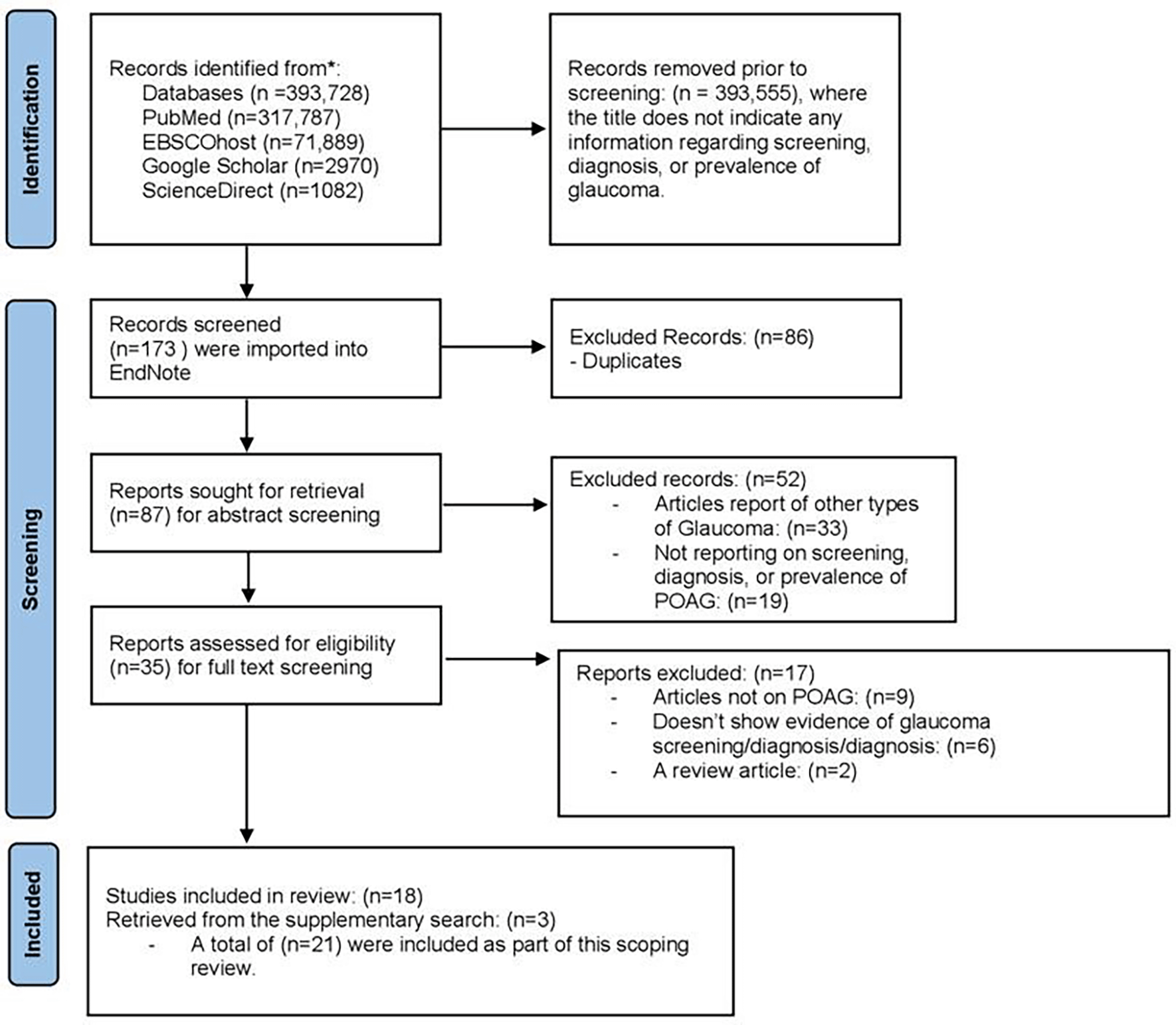
PRISMA CHART deposit in Zenodo repository with link: PRISMA CHART on challenges and barriers of primary open-angle glaucoma screening at primary healthcare level DOI: https://doi.org/10.5281/zenodo.18169208.
A total of 21 resources were included in this review study, as outlined in Table 3 below. Among these, nine studies involved participants from Africa; one from Morocco, and eight specifically from Sub-Saharan Africa. While most studies were assumed to be screening studies, a review of the methodologies revealed that only seven actually met the criteria for screening, as the remaining studies focused on diagnosis (n=14). Additionally, the majority of the studies were conducted at the secondary healthcare level (n=12), while a minority were conducted at the tertiary healthcare level (n=3). In most cases, ophthalmologists were responsible for performing the screenings or diagnoses (n=12). In two studies, optometrists were involved, while the remaining studies (n=7) had screenings or diagnoses conducted by nurses, technicians, general practitioners, or other medical personnel. The equipment used for screening and diagnosis varied among the studies, however, visual acuity, intraocular pressure, and visual field assessments were conducted in all studies.
Our scoping review aimed to identify factors contributing to screening, and early detection and diagnosis of POAG. We explored evidence on POAG, and identified enablers and barriers to early detection, especially at the primary health care level. Early diagnosis of POAG is particularly crucial in sub-Saharan Africa, as this condition it is one of the most prevalent causes of irreversible blindness in people of African descent.29,30 Evidence, however, affirmed various factors that emerged as inhibitors to early detection and screening of POAG, as discussed below.
Various studies have documented significant resources constraints affecting screening and diagnosing of POAG within their respective health settings.3,13,31,32 Scarce resources encompassed insufficiently trained staff, inadequate equipment, and deficient funding mechanisms.3,16,33 In comparable contexts, characterised by equipment shortages and underfunded healthcare infrastructure, countries such as Nigeria, Ghana, Tanzania and Kenya implemented social health insurance schemes that facilitated resource allocation to healthcare facilities enhancing patient accessibility to essential services.34 Ensuring robust institutional frameworks and governance structures to ensure availability of basic resources in POAG management would enhance screening efficacy and mitigate visual impairment resulting from ocular disease-related complications.34
Characteristically, patients in some studies presented with chief complaints indicative of pre-existing POAG manifestation.13,31,32,35 However, two additional studies used structured questionnaires comprising appropriately selected items as foundational screening instruments for POAG.3,27 These screening tools incorporated clearly delineated family and medical history inquiries, which were administered during the patient evaluation process.32,33 Consistent with existing evidence demonstrating an association between POAG and individuals with a positive family history of glaucoma or specific glaucoma-related comorbidities, the present findings corroborate the established data. Such patients warrant enhanced surveillance, given their elevated risk for disease development.6,34
Notwithstanding the markedly elevated prevalence of glaucoma-related blindness in low-income countries, particularly throughout Sub-Saharan Africa (SSA),13,17 this review identified only a single study specifically addressing glaucoma screening practices within the SSA region.35 Conversely, seven studies reported on the diagnostic evaluation of the condition.12,16,29,35–38
Globally, the ratio of patients to ophthalmologists is concerningly low.12,27,36–39 As ophthalmologists are highly trained medical surgeons, It is concerning that most screenings and diagnoses, in these studies, were performed by this specialist cadre.12 This situation is exacerbated by the fact that these eye specialists are often located at secondary or tertiary healthcare levels, where they deal with managed of advanced disease. The lack of screening at a primary health level compromises their time and skill, deviating their attention from serious disease management and undermining the early detection of glaucoma.37 It has been reported that most patients diagnosed at these levels had already lost some degree of peripheral vision.37 To improve early detection, it is crucial to conduct screenings at the primary healthcare level, with basic management and treatment being administered by optometrists as primary eye health practitioners. This approach would reduce the workload on ophthalmologists, allowing them to focus more on surgical procedures. This review further indicated that few optometrists are involved in the screening of POAG, as only two studies reported optometrists performing screenings.33,38 Apart from being primary gatekeepers of eye care, optometrists are more accessible and better distributed to patients for early detection and diagnosis compared to eye specialists.38 Overall, the scarcity and distribution of human resources in eye care was identified as a significant barrier to the early detection of POAG.16,27,33
Accessibility challenges, particularly related to transportation and reaching rural areas, also pose significant obstacles.28,31,40 Infrastural deficiencies, Inadequate equipment and poor healthcare facility conditions play a huge role in inhibiting healthcare at primary healthcare level.40 Socio-cultural factors such as limited health literacy, preferences for traditional medicine and gender-based barriers contribute to the underutilization of primary healthcare (PHC) services. Furthermore geographical obstacles, inadequate referral system and ineffective policy implementation impede the effectiveness of PHC. Overcoming these challenges necessitates a comprehensive, multi-faceted strategy.40 Abolaji Kehinde and Okunlola argued that expanding health insurance schemes and providing government subsidies for vulnerable populations can enhance financial access which can be part of the solution for healthcare lack of accessibility.40
A lack of public awareness regarding the seriousness of POAG and the importance of early detection has been identified as a barrier.6,13,39,41 The world Health Organization (WHO) package of Essential noncommunicable Disease Interventions (WHO PEN) was developed to support the prevention, early and treatment of noncommunicable diseases.42 These interventions are cost effective and action oriented strategies, already implemented in high income countries which has had a huge impact in lowering disease and increasing level of health care,unfortunately this is yet to be executed in in low income countries hence the high prevalence of diseases.42 Also community engagement, health education and effective policy enforcement are essential for addressing socio-cultural and governance related challenges that contribute to lack of disease awareness by population in low income countries. Additionally in agreement with the study, Tesema A suggested improving accessibility through mobile health services, telemedicine and intergration of primary healthcare with secondary healthcare can strengthen service delivery and disease awareness.42
The absence of a standardized global screening protocol, defining required equipment and guidelines for glaucoma screening, was noted as a limitation in this study.32,39,41 The use of different equipment by different health professionals in each study reveals inconsistencies and a lack of uniformity in diagnosing primary open-angle glaucoma. There is no standardised framework dictating how screenings and diagnoses should be conducted, leading to a high prevalence of cases. Additionally, many studies demonstrated varying limitations in diagnostic techniques and equipment related to glaucoma screening at the primary healthcare level.37
Moreover, the increasing demand for eye care personnel has contributed to delays in the early detection of POAG, with many patients having to wait over six months to see a specialist.27,28 Follow-up care has also been identified as a challenge; due to long waiting times, patients often do not return to the hospital until they have lost their vision significantly, resulting in poor prognosis and ineffective treatment outcomes.43
The current scoping review highlights the lack of screening for primary open-angle glaucoma at the primary healthcare levelThe research underscores the critical importance of glaucoma screening at the primary healthcare level to prevent irreversible damage from glaucoma, which has reached alarmingly high levels particularly in sub-Saharan Africa. Implementing screening programs is necessary and valuable tool for reducing the incidence of glaucoma. Subsequent benefits include the reduction in the prevalence of avoidable blindness caused by POAG; beneficial for public health and overall state welfare, especially in African countries. It is also cost-effective, as it would minimise governments’ financial assistance to grant beneficiaries whilst alleviating the workload on already limited human resources for eye care.
A compelling case exists for the systematic incorporation of POAG screening within primary care settings as a strategy to halt disease progression, diminish the global prevalence of avoidable blindness, and mitigate the financial burden borne by affected populations resulting from insufficient early intervention. The realization of comprehensive screening and timely detection requires the allocation of adequate human resources, provision of essential diagnostic equipment, and development of standardized clinical protocols.
| Views | Downloads | |
|---|---|---|
| F1000Research | - | - |
|
PubMed Central
Data from PMC are received and updated monthly.
|
- | - |
Provide sufficient details of any financial or non-financial competing interests to enable users to assess whether your comments might lead a reasonable person to question your impartiality. Consider the following examples, but note that this is not an exhaustive list:
Sign up for content alerts and receive a weekly or monthly email with all newly published articles
Already registered? Sign in
The email address should be the one you originally registered with F1000.
You registered with F1000 via Google, so we cannot reset your password.
To sign in, please click here.
If you still need help with your Google account password, please click here.
You registered with F1000 via Facebook, so we cannot reset your password.
To sign in, please click here.
If you still need help with your Facebook account password, please click here.
If your email address is registered with us, we will email you instructions to reset your password.
If you think you should have received this email but it has not arrived, please check your spam filters and/or contact for further assistance.

Comments on this article Comments (0)