Keywords
Artificial Intelligence, Democracy, Misleading Information, Regulation, Risk, Systematic Literature Review, Transformation.

This article is included in the Artificial Intelligence and Machine Learning gateway.
This article is included in the Political Communications gateway.
This article is included in the AI & Democracy collection.
Artificial Intelligence, Democracy, Misleading Information, Regulation, Risk, Systematic Literature Review, Transformation.
Artificial intelligence (AI) is the science and engineering that fundamentally developed to enable machines to exhibit intelligent behavior, either through the imitation of human cognitive capacities or computational approaches capable of efficiently solving complex problems and adaptability (Darda & Pendse, 2025; Monostori, 2019). Its implementation is realized in the form of systems and algorithms that can perform various functions such as learning, reasoning, decision-making, natural language understanding, and large-scale data analysis that previously required human intervention (Darda & Pendse, 2025; Frownfelter-Lohrke, 2025; Monostori, 2019). In the past decade, the development of AI has brought significant transformations to the landscape of political campaign and communication, the ecosystem of digital platforms, as well as the practices of governance and democracy in various countries (Baltezarević et al., 2025; Kasych et al., 2023; Shark, 2025). AI can be understood not only as a technical instrument but also as being integrated into various aspects of democracy, which makes AI-based platforms the new gatekeepers that actively shape political preferences, information consumption patterns, and citizen participation levels in the democratic process (Aragani et al., 2025).
Furthermore, AI replicates human capabilities and surpasses them by way of massive data processing and complex computation that develops multidisciplinary approaches by integrating computer science, cognitive psychology, and engineering (Darda & Pendse, 2025; Hand, 2005). This development makes AI an increasingly adaptive, autonomous technology with a wide range of applications across various strategic sectors. However, this expansion also presents contextual problems in the form of ethical challenges, accountability, and the potential for unequal distribution of technological benefits, which underscores its position as a transformative innovation with significant social and industrial implications (Chakrobartty, 2025; Setiawati et al., 2025). The transformation then increasingly shows that the challenges of AI in democracy are multidimensional, where the interaction between technology and institutions produces new, complex dynamics that have not yet been fully anticipated. On one hand, AI is capable of enhancing the efficiency of political communication and accelerating the circulation of information, but on the other hand, it also increases the risks of disinformation, perception manipulation, polarization, and the erosion of democratic legitimacy.
For example, the interaction between humans and cognitive machines can enhance the potential for the formation of a ‘future brain for public governance’ which can maintain the viability of democracy amidst cognitive machine disruptions, strengthen public governance capabilities in processing complexity, and coordinate social priorities (Casares, 2018). In addition, the emergence of AI technologies such as deep fakes demonstrates how AI can distort political reality and influence voter preferences in a non-transparent manner, thereby threatening the integrity, fairness, and accountability of the electoral process (Ahmed et al., 2025; Goswami & Sachdeva, 2025). Therefore, in this study, AI is understood as an ambivalent socio-technical entity, both as an enabler of governance innovation and a disruptor that has the potential to shift the distribution of power and diminish the quality of deliberative democracy. A further consequence is that AI has been able to change the fundamental conditions of how democracy functions, is protected, and is debated (Raikov, 2018; König & Wenzelburger, 2020; Burton, 2023; Coeckelbergh & Sætra, 2023; Perez Casares, 2018).
Although research related to AI and democracy has rapidly developed, this field of study still retains a relatively fragmented thematic structure, with discussions occurring separately. This can be identified where some studies focus on information and algorithm issues (Neyazi et al., 2024; Bayer, 2024; Łabuz & Soczyński, 2025; De-Santis et al., 2026); others focus on regulation, ethics, and governance (Vesnic-Alujevic et al., 2020; Hongladarom, 2021; Rauchfleisch et al., 2025; van Drunen, 2025; Fasel & Weerts, 2025); and yet others focus on practices and systemic transformations of democracy (Raikov, 2018; Teplyshova, 2026; König & Wenzelburger, 2020; Coeckelbergh & Sætra, 2023; Perez Casares, 2018). Moreover, the development of studies tends to be more sensitive in mapping risks rather than framing AI to strengthen democracy. As a result, the available knowledge today is more comprehensive in addressing issues related to how to tame AI in the context of democracy rather than how AI can be designed to strengthen the capacity of democracy. This condition then emphasizes the importance of an integrative approach, through a systematic literature review, to bridge the fragmentation of the literature to comprehensively understand how AI influences, shapes, and reconstructs contemporary democratic practices.
In line with that objective, this article will address the following research question. First, how have previous studies shaped the landscape of AI and democracy research? Second, what are the main clusters that emerge, and what are their conceptual, methodological, and substantive characteristics? Third, how do the articles position AI within democracy? Fourth, what theoretical, methodological, and substantive gaps remain in AI and democracy research? By formulating questions at three levels simultaneously, namely descriptive, analytical, and critical, this article is expected to contribute to the mapping of the field of study and the formation of a more integrated research agenda for the study of AI and democracy.
This research employs the Systematic Literature Review (SLR) method, referencing the Preferred Reporting Items for Systematic review and Meta-Analyses (PRISMA) 2020 framework to systematically, transparently, and verifiably search, screen, and synthesise literature to identify trends in the development of Artificial Intelligence (AI) usage in elections and its urgency in Indonesia (Page et al., 2021; Višić, 2022). According to the PRISMA 2020 framework, the methodological stages in this article include formulating the rationale and objectives of the review, establishing inclusion and exclusion criteria, selecting information sources, developing the search strategy, screening articles, data extraction, bias risk assessment, thematic synthesis, and reporting selection results through flow diagrams and study characteristic tables (Page et al., 2021). This systematic review was not formally registered in any review registry, and no formal review protocol was prepared; therefore, no protocol amendments were applicable during the review process.
The literature search strategy was conducted through the internationally reputable journal database Scopus Q1 to obtain credible and relevant articles on the topic of AI usage in elections, using the search string “Artificial Intelligent” OR “AI” AND “Democracy” AND “Election” AND “Law” AND “Policy.” The search focused on identifying empirical studies and theoretical reviews that explore the development of AI and the urgency of forming regulations related to AI usage in general elections.
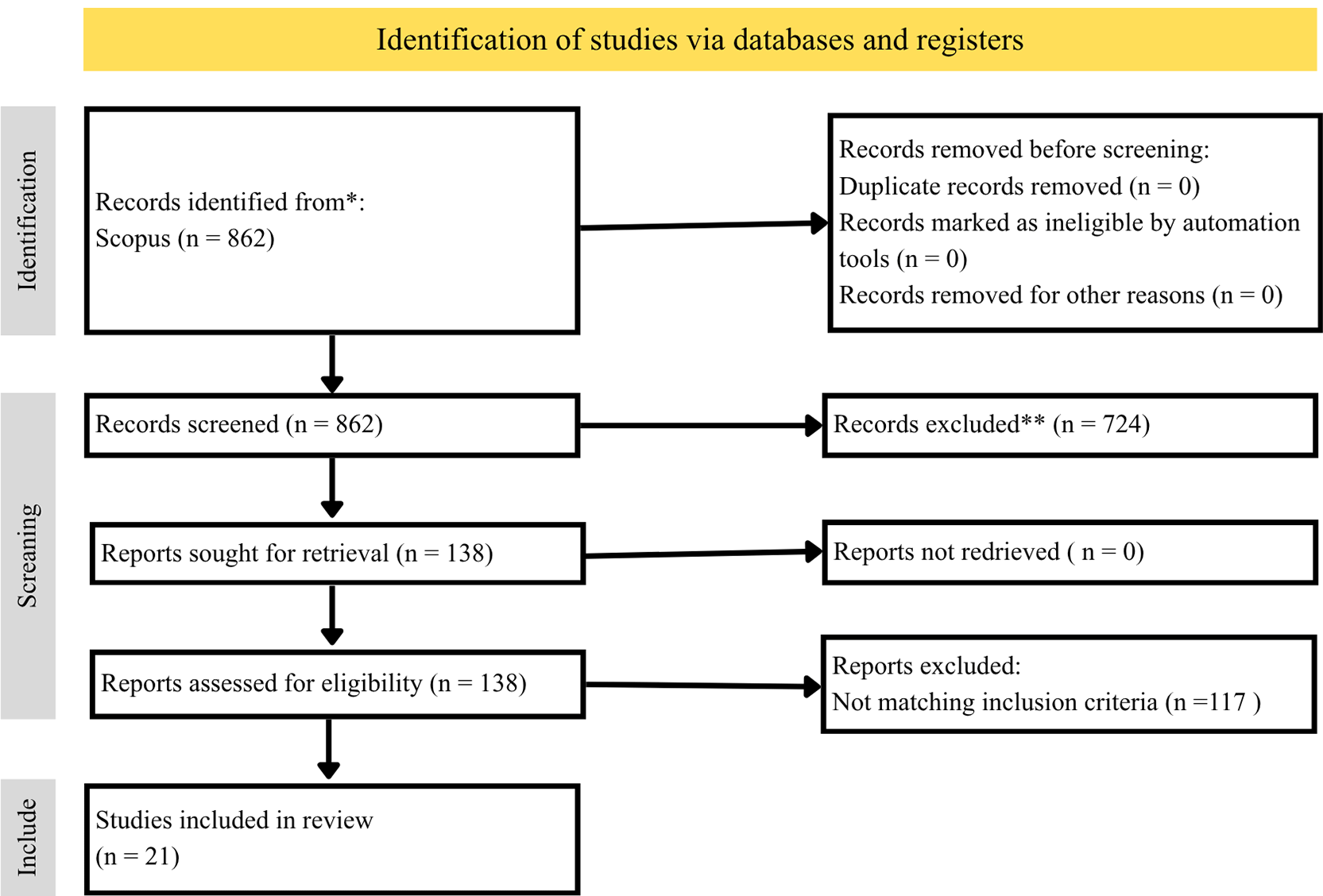
The inclusion criteria in this study include Scopus Q1 articles, limited to English-language articles published between 2016 and 2026, in the form of research articles and review articles. And substantively discuss Artificial Intelligence (AI) in relation to democracy, particularly those relevant to issues of elections, legal policies, governance, political communication, democratic practices, or democratic transformation. Conversely, articles that do not meet these criteria will be excluded at the exclusion stage. Based on the screening process that has been conducted, out of a total of 862 articles that had not yet been selected, 138 articles were obtained after being filtered according to the established search string. The final result yielded 21 articles that are most relevant for further analysis.
The screening process was conducted in stages following the systematic flow of PRISMA 2020. In the initial stage, the initial interval yielded 138 articles based on the search string and the established search criteria. Next, a duplicate remover was used to eliminate articles that were indexed multiple times, leaving only the relevant articles for analysis. At the title screening stage, researchers filter articles based on the relevance of the title to the research topic. The articles that pass then proceed to the abstract screening stage, where the abstracts are read to ensure substantive relevance to the research focus, including connections to governance, election, political communication, or democratic transformation. The next stage is full text screening, which involves a thorough review of the article’s content to ensure compliance with inclusion criteria, both in terms of substance, approach, and contribution to the issue of AI regulation in elections. Based on all these stages, a final inclusion of 21 relevant articles suitable for further analysis was obtained, as illustrates in Figure 1. To ensure the credibility and relevance of the included studies, the screening process also considered methodological clarity, thematic relevance, and consistency of findings using the evaluation criteria (Q1–Q6). This qualitative appraisal was conducted to minimise potential bias in the synthesis process and to strengthen the reliability of the thematic analysis.
The criteria evaluated included:
Q1: Relevance to artificial intelligence in electoral contexts.
Q2: Relevance to governance, regulations, or policy issues.
Q3: Connection with political communication or democratic transformation.
Q4: Clarity of search objective.
Q5: Methodological clarity and coherence.
Q6: Relevance of findings to AI regulation in elections.
The data extraction stage was conducted on 21 articles that passed through the entire screening process and met the inclusion criteria. This process aims to identify, categorise, and simplify important information from each study so that it can be analysed systematically. Data extraction is conducted in a structured manner using a synthetic matrix that contains a number of key variables relevant to the research objectives. The coding variables used in this study include: (1) Article number as a unique identifier for each study. (2) Year of publication to identify trends in the development of the research. (3) Author to facilitate source tracking. (4) Article title to describe the focus of the research. (5) Journal/publisher to see credible publication sources. Based on these variables, the selected articles are summarized in Table 1.
The use of these variables allows the synthesis process to be conducted in a more structured and comparative manner, thereby facilitating researchers in identifying trends, research gaps, and the direction of studies related to the use of AI in elections and its regulatory implications. Confidence in the body of evidence was strengthened through the inclusion of peer-reviewed Scopus Q1 publications, consistency of thematic findings across studies, and methodological coherence among the selected articles.
Thematic grouping in this research is conducted inductively, classified based on patterns, issues, and findings from 21 articles that passed the screening stage, without using predetermined categories. This stage begins with open coding of the findings from each article to identify recurring key issues, such as disinformation, political campaigns, governance, and AI regulation in the context of democracy. The initial codes were compared and classified into temporary clusters based on thematic similarities.
Based on a systematic literature review of 21 articles on the interaction between artificial intelligence (AI) and democracy, this study applies thematic coding to identify the main themes in previous research. The analysis results show the presence of three prominent thematic clusters, each consisting of a different number of articles: Cluster 1 (Risks of Misleading Information, 5 articles), Cluster 2 (AI, Regulation, and Governance of Democracy Protection, 7 articles), and Cluster 3 (AI and the Systemic Transformation of Democracy, 9 articles). Each article is categorized into a single cluster based on the relevance of its thematic focus.
This categorization reflects various conceptual, methodological, and substantive perspectives that have been developed in AI and democracy research. These clusters not only reveal the main areas of focus that have been studied but also provide a framework for understanding how AI is positioned within the context of democracy and highlight the theoretical, methodological, and substantive gaps that remain open for further research. Thus, the following discussion will explore each cluster in detail, linking the findings to research questions and highlighting the contributions and limitations of the existing literature.
This research cluster comprises 5 final articles published between 2024 and 2026. The geographical distribution of the studies spans a wide range of regions, including Asia (Taiwan, Malaysia, Singapore, India), Latin America (Ecuador), and Europe (Germany, Sweden, Poland, Hungary), alongside a global perspective through European Union regulations. All articles are formal scientific studies, with study types varying from quantitative empirical research to conceptual-theoretical frameworks. The research methodologies predominantly employ cross-national surveys to measure public perception regarding the utilization of AI in democratic practices. In addition, experimental analyses of AI outcomes were also conducted.
Thematic mapping of the literature identifies various AI technology objects, including AI-powered search engines, manipulative videos (deepfakes), content ranking algorithms, and AI-driven political advertisements. The democratic objects examined encompass election integrity, government legitimacy, political communication between candidates and voters, and the quality of the public discourse space. Overall, the literature exhibits a strong tendency toward a risk-oriented approach, as researchers heavily explore the threats of AI technology to democratic stability rather than its transformative opportunities.
This research cluster highlights the issue regarding the potential misuse of AI technology, which can distort facts or obscure informational contexts, thereby leading the public to erroneous conclusions. The primary focus of this group of studies is to evaluate the extent to which algorithm-based manipulation can undermine public trust in political processes, and how future regulations can curb such distortions. By employing cross-national surveys and comparative analyses of algorithmic behavior, the findings reveal that the threat of misleading information manifests in highly subtle yet hazardous forms. One of the discovered phenomena is “hallucination” in search engines, which convincingly creates fake news sources or misattributes historical facts (Brantner et al., 2025). Furthermore, the use of deepfakes in political advertising has proven capable of manipulating candidates’ physical traits to project a pseudo-competence that significantly deviates from reality (Łabuz & Soczyński, 2025). The studies within this research cluster are reinforced by theoretical foundations to dissect the social impacts of the technology. For instance, the Ship of Theseus Paradox is utilized to analyze the identity crisis of politicians whose digital images have been entirely altered by AI (Łabuz & Soczyński, 2025). In conclusion, this cluster underscores that the contemporary challenge in democratic practices is not merely the dissemination of fake news, but rather the erosion of integrity within the information ecosystem. This condition necessitates ethical standards and stringent oversight, as mandated by the AI Act, to safeguard transparency and integrity in future political communication (Bayer, 2024).
This cluster consists of 6 articles published from 2020 to 2025, focusing on how AI can be regulated in the conduct of elections with the aim of protecting democracy. Geographically, the areas that are the majority of the study’s focus are countries that are already affiliated with the digital world or are moving toward digitalization, such as Europe, the United States, Asia (Taiwan and Thailand), and Brazil in South America. All articles are composed scientifically with various theories and concepts used. The majority of research methods used in this cluster are qualitative, with some combination of other methods such as analysis. The emergence of these two methods is very likely because this cluster essentially discusses the analysis of the implementation of existing regulations and the way the regulations are applied.
Mapping the articles in this cluster provides an overview of how international and national regulations influence the application of AI, the role and public perception of AI in politics, and the social and ethical impact of AI, as well as the dependence on AI and media infrastructure. Overall, this cluster illustrates the tendency to focus on the real impact of AI’s use and application in state life, extending beyond the creation of regulations and their implementation to encompass the social and economic fabric of a country’s society and its region.
This cluster asserts that the development of AI and its regulations and devices are multidimensional challenges that fundamentally affect democracy. International regulations such as the DSA and AI Act serve as frameworks that aim to regulate the global use of AI, but their implementation must be adapted to local contexts and political power (Rauchfleisch et al., 2025; Bueno & Canaan, 2024). On the other hand, public perception of AI in politics is greatly influenced by psychological and cultural factors, which affect support for regulation and the use of AI in the democratic space (Hongladarom 2021). Additionally, social and ethical aspects are at the forefront, particularly concerning privacy, bias, and media control. Regulations must be able to protect human rights while also addressing the risks of algorithm misuse and AI infrastructure concentrated in the hands of large companies (Fasel & Weerts, 2025; Vesnic-Alujevic et al., 2020). The media’s dependence on AI infrastructure from large companies highlights the need for regulations that are not only horizontal but also capable of addressing disparities in resources and transparency so that the media can continue to perform its democratic functions (Bueno & Canaan, 2024). Overall, this cluster highlights the need for an adaptive, transparent, and inclusive regulatory framework to ensure that AI innovation does not compromise the principles of democracy, information diversity, and media freedom.
This research cluster consists of 7 (seven) articles published between 2018 and 2024. The geographical distribution of these studies encompasses a global scope, including Australia, Russia, and several European countries (Germany, Austria, Sweden, and the United Kingdom). All articles are scholarly works sourced from high-reputation journals, including Q1 journals such as Government Information Quarterly, Futures, Telecommunications Policy, and Technology in Society. The research methods employed are primarily conceptual-theoretical. Additional methods include systematic model development used to examine the relationship between technology (AI) and democratic governance, as well as narrative analysis.
The article mapping in this cluster examines various AI objects, including convergent technologies (integration), autonomous cognitive machines, automated decision-making systems, Generative AI systems, and algorithmic content recommendation systems (Recommender Systems/Algorithms). All of these objects are employed in decision-making processes, content mapping to shape algorithmic extremism, and as media for creating simulated realities. The democratic objects studied encompass several aspects: political accountability systems, sustainable democratic governance, and the balance of public space against threats of radicalism and polarization. The literature in this cluster reveals a paradigm shift in which AI transitions from being a digital instrument to becoming a systematic transformation agent the “brain of the future” in public governance. AI is also used as an instrument to prevent potential threats to human beings and to the principles of technocracy-democracy.
This cluster examines the transformation of democracy as a consequence of the development of Artificial Intelligence (AI), particularly in the shaping of public opinion, the shifting role of human agency in political decision-making, and the control of information. The central issue of this research cluster is to investigate the extent to which AI functions as an element that strengthens democracy, or merely as a disruptive force that degrades the substance of the democratic order specifically with regard to the accountability of the political system (König & Wenzelburger, 2020). The approach adopted demonstrates that beyond its impact on operational aspects, AI also affects the structure of power distribution and access to information within global democracy (Robertson & Maccarone, 2023; Casares, 2018).
One of the key findings in this cluster states that AI is capable of generating political tendencies that filter and recommend content to users. This has the potential to diminish the quality of public discourse, as users are influenced by information that has been filtered through algorithms (König & Wenzelburger, 2020). Furthermore, the reality of echo chambers and political polarization increasingly reinforced by the presence of AI fosters social fragmentation, political violence, and radicalism. This occurs because the information in circulation tends to validate the identity of particular groups rather than prioritizing objectivity (Burton, 2023). In this regard, AI cannot be assessed merely as a tool, but rather as an actor that drives democratic crises through systematic information manipulation and disinformation.
Furthermore, this research cluster demonstrates that AI contributes to increasing democratic inequality, resulting from disparities in data and technology access. Certain actors with advanced technological capabilities can leverage AI to control the flow of political information, while marginalized groups face limited access to AI (Robertson & Maccarone, 2023). In addition, the complexity arising from the intersection of technological advancement and human agency has the potential to diminish critical thinking capacity and the active civic participation of citizens in democratic processes (Coeckelbergh & Sætra, 2023). Over time, this situation creates distortions in democracy, as decision-making becomes increasingly reliant on automated systems, thereby reducing the space for human involvement (Coeckelbergh & Sætra, 2023).
Beyond this perspective, the research cluster also offers the view that AI has the potential to create efficiency in government administration (smart governance). AI can process data rapidly, facilitate decision-making, and enhance interaction within network-based democratic systems (Raikov, 2018; Casares, 2018). AI can be utilized as a tool to strengthen deliberative processes and political consensus, although it still presents challenges with regard to accountability and transparency.
Overall, this research cluster demonstrates that the primary challenge to democracy in the age of AI does not lie in technological innovation itself, but rather in the transformation of power from human beings to algorithmic systems, and the potential degradation of fundamental values such as transparency, justice, and participation. It is therefore imperative that AI governance and regulation be established in a manner that preserves the harmony between technology and the protection of democracy. This is essential to ensure that technology remains under human control and does not diminish the legitimacy of political systems in the future.
Democratic system can be considered ideal when it contains a sustainable relationship between the government and its citizens, focusing on two concepts: responsiveness, which means the political system must accept demands and changes in preferences from its citizens; and accountability, which requires policymakers to justify their actions and face consequences from the public (König & Wenzelburger, 2020). Democracy must accommodate, first, a public space that is free for expressing opinions and unbiased information regarding politics. Second, equal opportunities for citizens to participate in policy-making. Third, the transparency of information so that citizens can assess the performance of the government (König & Wenzelburger, 2020).
The ideal democracy in the status quo has never been realised due to issues of political manipulation, information overload, and special interests that existed long before AI emerged (König & Wenzelburger, 2020). Post the emergence of AI, several pieces of literature show AI’s involvement in the realm of democracy and practical politics. (De-Santis et al., 2026; Coeckelbergh & Sætra, 2023; Raikov, 2018). This development creates two opposing sides. On one hand, AI becomes a tool to navigate information overload, enhance public participation in decision-making, and make public services more efficient and fair (König & Wenzelburger, 2020; Coeckelbergh & Sætra, 2023; Casares, 2018; Slaughter, 2024; De-Santis et al., 2026). On the other hand, the negative effects of the emergence of AI worsen the existing situation (status quo) by creating a fragmented public and paving the way for an AI-driven technocracy where democratic deliberation is replaced by algorithmic truth (König & Wenzelburger, 2020; Coeckelbergh & Sætra, 2023; De-Santis et al., 2026; Łabuz & Soczyński, 2025).
Global AI governance and digital media policies are currently experiencing a shift toward binding legal frameworks due to the influence of the Brussels effect (Vesnic-Alujevi, 2020; Bueno & Canaan, 2024), such as the Digital Services Act (DSA) by the EU (Bayer, 2024; Fasel & Weerts, 2025; Bueno & Canaan, 2024) and the AI Act (De-Santis et al., 2026). These regulations have become a symbolic benchmark for other countries, as attempted by Brazil through the Brazil Fake News Bill, but actual regulatory convergence is often limited by local incompatibilities, such as a lack of domestic institutional capacity to enforce rules in a European style (Bueno & Canaan, 2024).
This architectural system (Rauchfleisch et al., 2025) has been transformed through three different periods, from the early era of non-state intervention to the period where the state was seen as a threat to freedom to the current “co-interventionist” paradigm, where the state and private platforms jointly manage and moderate content (Fasel & Weerts, 2025), similar to what is happening in America and Taiwan (Rauchfleisch et al., 2025). As a result, the efforts to absorb EU regulations (Bayer, 2024; Fasel & Weerts, 2025; Bueno & Canaan, 2024) create a paradox in non-European countries like Thailand (Hongladarom, 2021). The national AI ethics guidelines prioritize industrial competitiveness and bureaucratic convenience over the protection of public rights. Unlike the European rights-driven model, Thailand’s framework excludes public participation and places the responsibility for AI security on the “User” instead of the developer, serving as a “cosmetic facade” to demonstrate alignment with international standards while maintaining traditional conservative values (Hongladarom, 2021).
The model developed by the EU attempts to balance individual and collective rights (Bueno & Canaan, 2024; Vesnic-Alujevi, 2020), but its implementation efforts are often considered to fail in protecting journalism from the power of platforms (Big Tech) (Brantner et al., 2025; Van Drunen, 2025). In the end, its architecture remains fragmented (Bueno & Canaan, 2024) due to the lack of a unified global standard. The EU’s risk-based approach platform regulation model is considered to conflict with the more unregulated or state-centred models of the US and China (Bueno & Canaan, 2024; Fasel & Weerts, 2025; Rauchfleisch et al., 2025).
The integration of AI into democracy represents a fundamental paradigm shift in the foundation of societal information, a transition from political deliberation to a structure mediated by data (König & Wenzelburger, 2020; Casares, 2018). This transformation places democracy at a “critical juncture”, where society must choose between “AI-enhanced democracy” that enhances human agency or “AI-driven technocracy” that replaces decision-making with algorithms in the name of efficiency. (Coeckelbergh & Sætra, 2023This transformation means making AI the primary “actor” in the decision-making system. AI-mediated communication thus creates a tension between technological rationalisation and democratic trust, resulting in a paradox where high institutional trust can lead citizens to maintain a positive perception of deepfakes and AI, even when they are concerned about the spread of misinformation (Neyazi et al., 2024).
Deepfakes in the literature present a profound epistemic problem likened to the “Ship of Theseus” paradox because AI-generated avatars allow politicians to eliminate performance deficits thru digital modification, making it nearly impossible for the “epistemically unprepared” observer to distinguish the original identity from the AI output (Łabuz & Soczyński, 2025). Furthermore, “algorithmic gatekeepers” such as content ranking and generative search engines now actively select and present data in narrative form, often leading to information homogenisation, marginalisation of regional perspectives, and the creation of misinformation that lacks original sources (Brantner et al., 2025; Judit Bayer, 2024).
The above leads to an AI-driven technocracy, where the “technocratic temptation” encourages society to bypass complex human considerations in favour of unclear algorithmic “correctness.” Moreover, AI and algorithms are identified not only as tools to combat extremism but also as active contributors to radicalism, polarisation, and politically motivated violence by design (Coeckelbergh & Sætra, 2023; Brantner et al., 2025; Rauchfleisch et al., 2025). Ultimately, the survival of future democracies depends on moving toward a model of “transparency by design,” which prioritises algorithmic literacy, human oversight, and the formation of a “collective brain” for public governance that aligns technological complexity with human-centered democratic values. (Casares, 2018; König & Wenzelburger, 2020; Hongladarom, 2021; Vesnic-Alujevic et al., 2020).
The relationship between AI and democracy is a complex and multidimensional issue that cannot be fully understood from a single perspective. AI is not merely a technical tool in contemporary political practice, but also a force that influences the information ecosystem, regulatory governance, and democratic structures. In the realm of information, research findings indicate that AI has the potential to amplify risks to democracy through the production and dissemination of misleading information, deepfakes, and algorithmic recommendations that can reinforce polarization and echo chambers. This situation indicates that the challenges facing democracy in the AI era are no longer limited to the prevalence of fake news, but also include the erosion of the integrity of public information and the declining ability of citizens to access objective, transparent, and accountable information. In the regulatory sphere, the development of global frameworks such as the AI Act and the Digital Services Act demonstrates that democracy requires AI governance that is more robust, adaptive, and focused on protecting public rights.
This study emphasizes that the fragmented state of the literature on AI and democracy must be bridged through an integrative approach so that the relationship between information risks, regulation, and the transformation of democratic systems can be understood as a unified whole. The existing literature still tends to focus more on identifying the risks of AI than on outlining how AI can be designed to strengthen democratic capacity. If not managed properly, AI risks pushing democracy toward algorithmic technocracy where political decisions are increasingly determined by automated systems that are not fully transparent or accountable which is undermining democratic values.
Furthermore, the review did not employ formal quantitative synthesis or meta-analysis techniques, limiting the ability to statistically assess heterogeneity and publication bias across studies. Future research should develop empirical studies on the role of AI as a corrective mechanism against the erosion of democratic legitimacy, particularly in enhancing information transparency, the quality of public deliberation, and trust in the electoral process. Such studies are expected to broaden the discourse by framing AI not only as a threat to democracy but also as an instrument that can be designed and regulated to restore democratic legitimacy. Furthermore, a more in-depth study is needed on how regulatory frameworks and governance can shape the democratic use of AI, particularly in the context of political communication and elections. Further research also needs to examine the factors that strengthen public resilience against political manipulation generated by AI, including digital literacy, trust in institutions, media verification practices, and citizens’ ability to identify political content, especially in the Asian region where the responsibility for AI usage still heavily relies on users.
| Views | Downloads | |
|---|---|---|
| F1000Research | - | - |
|
PubMed Central
Data from PMC are received and updated monthly.
|
- | - |
Provide sufficient details of any financial or non-financial competing interests to enable users to assess whether your comments might lead a reasonable person to question your impartiality. Consider the following examples, but note that this is not an exhaustive list:
Sign up for content alerts and receive a weekly or monthly email with all newly published articles
Already registered? Sign in
The email address should be the one you originally registered with F1000.
You registered with F1000 via Google, so we cannot reset your password.
To sign in, please click here.
If you still need help with your Google account password, please click here.
You registered with F1000 via Facebook, so we cannot reset your password.
To sign in, please click here.
If you still need help with your Facebook account password, please click here.
If your email address is registered with us, we will email you instructions to reset your password.
If you think you should have received this email but it has not arrived, please check your spam filters and/or contact for further assistance.

Comments on this article Comments (0)